
Outdoor technology advances quickly, and there have been substantial advancements since our last round of best GPS watch evaluations. Top-of-the-line equipment are more powerful (but also more costly). Mapping is becoming more affordable. At most pricing tiers, battery life has increased. But the fundamental question remains: why spend extra money on a high-tech outdoor watch when a cheap digital watch would do? What can GPS watches do better than smartphones for individuals accustomed to smartphone navigation?
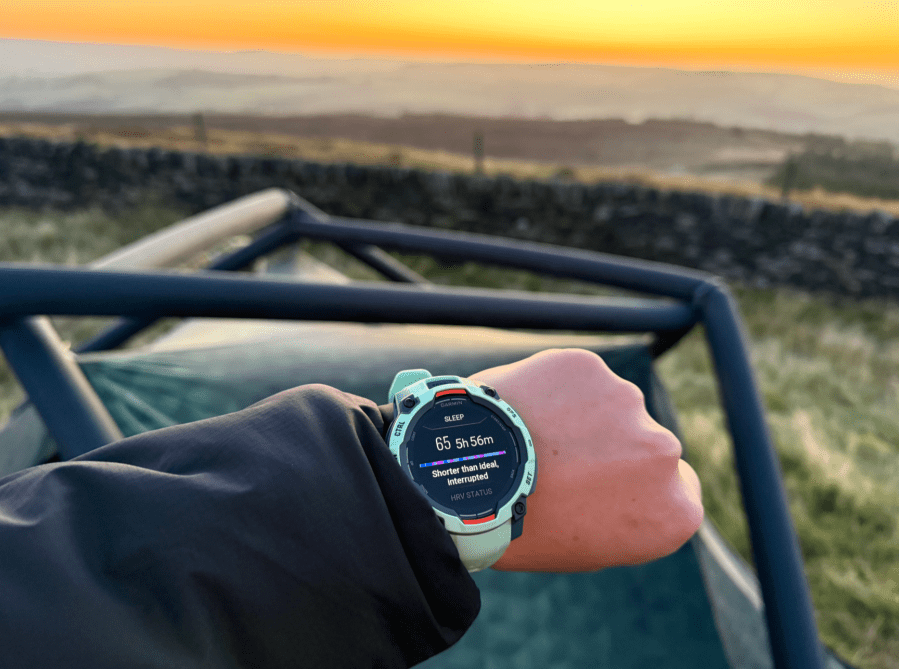
Main image: The Garmin Instinct 3 – a sleep doctor with no filter | Credit: Francesca Donovan
In 2021, I pointed out that tracking your walk with a phone will likely drain the battery far more quickly than using a watch. However, phones have bigger batteries now, making battery life less of a concern. If you have a new, top-end phone, and know how to conserve its battery on the hill, go ahead and use it for tracking your walks. But if your phone is a few years old with an ageing battery, using a GPS watch will save your phone’s battery for taking pictures, viewing maps or dialling mountain rescue in an emergency.
A GPS watch will communicate with your phone and can be used for fitness tracking, whilst some models are ideal as a navigation sidekick, providing quick reference to data such as elevation, position and distance hiked. Although you can do this with a smartphone – or by pacing/timing with a map and compass – having this info glanceable on your watch can be very convenient. And if you don’t want a nav tool on your wrist, and just want something cheap and cheerful to record your walk stats, there are plenty of fitness trackers to choose from.
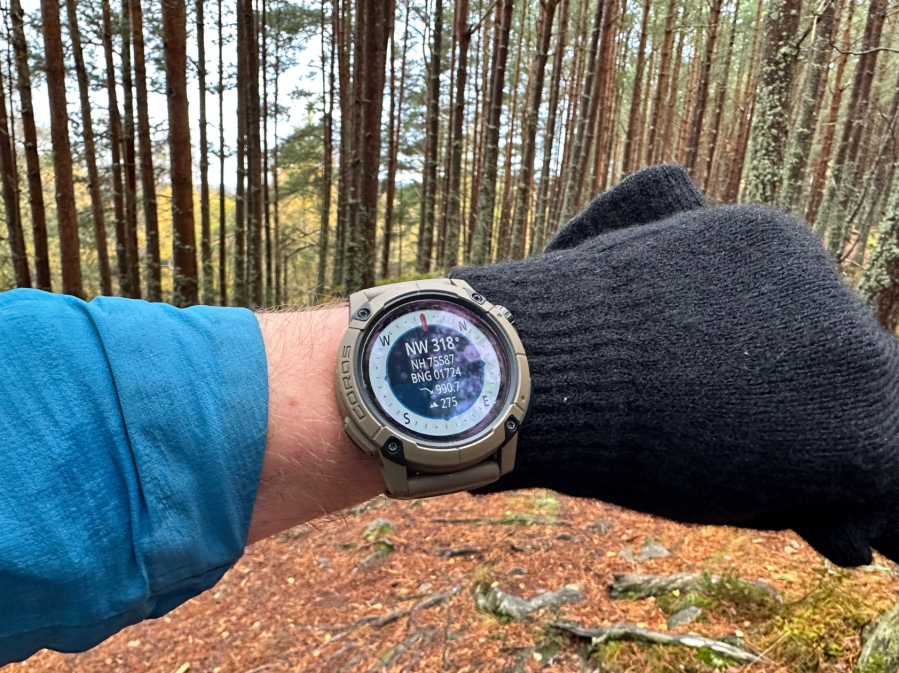
GPS watches need skill and experience to use safely. Whilst some are capable of replacing a traditional GPS, others are far more basic and have no navigation functions. Understand what kind of device you have and what it can do, and never rely solely on one.
Should you choose to invest in an adventure companion smartwatch, it’ll likely become one of your most expensive bits of kit alongside your tent. Unlike a tent designed for the single-function of shelter, however, smartwatches come with an array of added extras – above and beyond the GPS capabilities that prioritised by hillwalkers – so it can feel like an uphill struggle to pick which one best suits you and your budget.
These days, GPS smartwatches should offer you a combination of tools. It’s a ‘Choose Your Own Adventure’ smorgasbord of specs and multi-sport options. You can now wear a lightweight computer on your wrist that’ll track an open water swim as simply as it’ll plan your own trail run workout, or display your daily stress levels and then ping you the emails causing them to spike!
Our advice is to start with what you expect from your new watch’s mapping capabilities. If it is a wearable to replace smartphone navigation you’re after, you can rule out some models which only offer basic breadcrumb tracking on non-AMOLED screens. There are still few watches that are as detailed and easy to use as paper and compass; incidentally still the cheapest method of positioning yourself in the landscape. But, with impressive GPS accuracy, rugged watches can still offer valuable route reassurance.
Customisation is key for those not wanting to utilise all the bells and whistles, so expect a learning curve with any new device. Familiarise yourself with its quirks before you take it into the hills and never rely on a GPS smartwatch alone. However, get the balance of specs right for your budget, and you may wonder how you were ever without the simplicity of at-a-glance walk stats, fitness tracking, and even the ability to tell the time!
Why you can trust The Great Outdoors
The Great Outdoors is here to help you make the most of your time outside. We have been helping people to explore from sea to summit, valley to mountain top for over 40 years. Our gear tests remain completely impartial. If you are wary of websites that only review brands that advertise with them, or sceptical of social media accounts always singing the praises of their latest freebie, you’ve come to the right place! Our reviews rank #1 for rigour, trustworthiness, and independence, and our gear testing team is the most experienced in Britain. With over 200 years’ experience between us, we are professional mountain leaders and instructors, wildlife photographers and rangers, outdoor authors, guidebook writers and trail addicts.
Our picks of the best GPS watches
| Quick List |
|---|
| Best overall: Coros Vertix 2S (available from Decathlon) |
| Best value: Coros Nomad (available from Tredz) |
| Best mapping: Garmin Enduro 3 (available from Cotswold Outdoor) |
| Best battery life: Polar Grit X2 Pro (available from Polar) |
| Lightest in test: Garmin Instinct 3 (available from Cotswold Outdoor) |
Best overall
Coros Vertix 2S
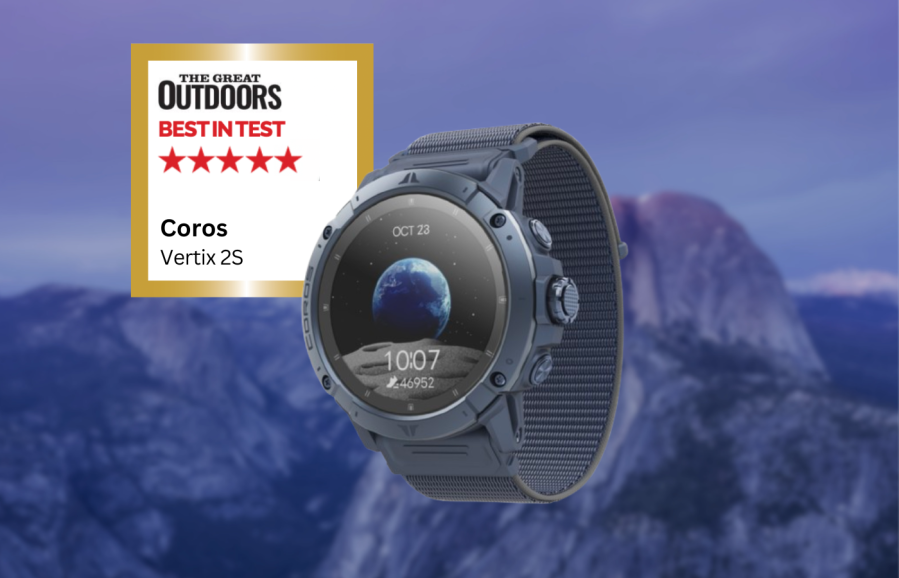
Kirsty Pallas’ Best in Test
While the Vertix 2S is in the higher price bracket, if you need a watch with excellent battery life, and a variety of activity functionality, then it’s a really solid option.- excellent mapping
- big buttons
- lots of activity options
- bulky case size
- elevation and grid ref not on main activity screens
| Quick specs |
|---|
| Price: $699 | £599 (available from Decathlon) Weight: 70g with nylon strap Case size: 50.3×50.3×17.6mm Screen: 1.4” Transreflective Always on LCD Battery life: 118 hours OS grid ref: Yes Mapping: Yes Operation: Buttons and touch screen coros.com |
Through a whole summer and autumn of using the Coros Vertix 2S, it’s barely come off my wrist! I’ve been really impressed with all of the functionalities of it across a variety of activities, and it’s kept me right a few times too! As a GPS watch, the Coros Vertix 2S has so many features. There are three levels of GPS you can use, which affect the battery life, but you can easily switch depending on the types of activities you’re doing. The standard and all systems on are good for general navigation across the hills, but Dual Frequency is really useful if you’re planning to go up or down steep ground, whether that’s rock climbing or canyoning. It does however more than half the 118 hour use which you can get from the standard GPS tracking, bringing it down to 43 hours of use.
With lots of use on rocky ground and on bikes, I’ve only managed to put one scratch on it, so it’s extremely durable! It also can measure a whole load of body metrics, including sleep and HRV, offer workouts, fitness tests, and show your overall training efforts. It syncs with multiple third party apps, and connects to your phone for notifications, although these don’t show up while you’re tracking an activity. While the Vertix 2S is in the higher price bracket, if you need a watch with excellent battery life, and a variety of activity functionality, then it’s a really solid option.
Read more: Kirsty’s full Coros Vertix 2S review
Best for mapping
Garmin Enduro 3
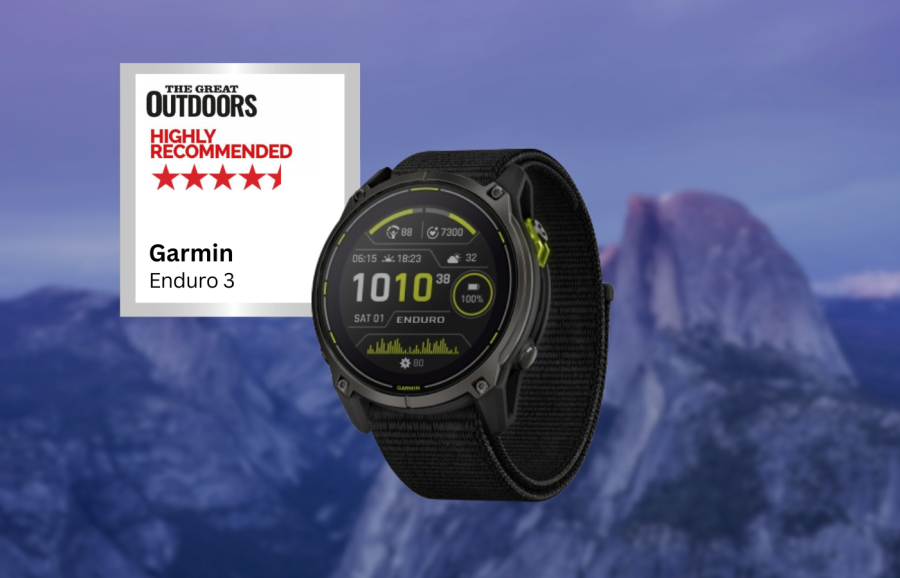
Fiona Russell highly recommends
The Garmin Enduro 3 is a sophisticated GPS watch with long-lasting battery life and, while pricey, it’s not the most expensive on the market.- battery life
- flashlight
- mapping
- GPS accuracy
- size
- complexity
- non AMOLED screen
- chunky
| Quick specs |
|---|
| Price: $899.99 | £769.99 (available from Cotswold Outdoor) Weight: 63g (with canvas strap) Case size: 51 x 51 x 15.7mm Screen: Memory-in-Pixel (MIP) (Non AMOLED) Battery life: up to 80 hours in GPS only mode, extended to 144 hours with solar charging (with dual/all GPS on) OS grid ref: Yes Mapping: Yes Operation: Buttons and touch screen www.garmin.com |
The stand-out feature of the Garmin Enduro 3 is an astonishingly long battery life, even better than the brand’s top-of-the-range Fenix 8 models. Yet, the Enduro 3 costs less than the Fenix 8 and its RRP is £150 cheaper than the previous Enduro 2. Another highlight is mapping. I own the first model of the Enduro and while I love it, especially the battery life, it has only breadcrumb navigation. The Enduro 3 has a choice of mapping, with Garmin’s vector-based TopoActive maps pre-loaded. Another bonus feature is the flashlight. I thought this would be a gimmick but I use it almost daily; to find something inside my pack or in my tent at night, to locate the keyhole in our house door or to find the bathroom at night!
As with many GPS watches, there are dozens of other features that come as standard. The list of activities to track is mind-boggling. Anyone for “rucking”, snowmobile or jumpmaster?! I’ve mainly used hike, trail run, open water and gravel bike, and the watch provides excellent and very accurate tracking for route, distance, pace, time, ascent, descent, elevation, position, grid reference and more. There is tracking for various health statistics, such as Pulse OX, ECG, sleep patterns, menstrual cycle and “Fitness Age”. These are useful indicators rather than a substitute for medical attention but interesting all the same. More useful, in my opinion, is Garmin safety tracking with the ability to notify others if you are in difficulty in the great outdoors, as well as incident detection and live tracking.
Read more: Fiona’s full Garmin Enduro 3 review
Best battery life
Polar Grit X2 Pro

Chris Townsend highly recommends
This is a fully-featured and tough outdoor smartwatch which is simple to use and boasts a good battery life.- bright screen
- easy-to-use buttons
- battery life
- durability
- mapping
| Quick specs |
|---|
| Price: $799.99 | £649 (available from Polar) Weight: 79g (with strap) Case size: 49mm Battery life (with GPS on): 140 hours single-frequency GPS, 43 hours dual-frequency OS grid ref: no Mapping: Yes Operation: 5 buttons www.polar.com |
The Grit X2 Pro is a tough outdoor watch with a number of useful features for walkers. It has a stainless steel case and sapphire glass screen so it doesn’t need special care, important for an outdoor watch. It is waterproof to 100 metres, so fine in the heaviest downpour as I discovered on a very wet day in the Monadh Liath. The display is another good point. It’s bright and clear and easy to see in any light from thick mist to blazing sunshine and has a touchscreen that works fine when it’s raining. There are five buttons on the sides. These are raised with rough surfaces and although small are easy to use with cold fingers and thin gloves. Cycling through the various options and screens is straightforward and there’s no need to memorise sequences of button presses.
The Grit X2 Pro has single and dual-frequency GPS. The last should really be called five frequency as that’s how many satellite systems it can use. I found the single-frequency GPS works fine out in the open and uses much less battery power than dual-frequency. The latter works faster in dense forests however. Basic maps (of open source/street view type) of Europe and North America come installed, more detailed ones can be downloaded from the Polar Flow website. The watch can also be linked to Komoot and Strava. You can record your route and use a breadcrumb trail to get back to your starting point. The battery life is pretty good, especially in the single-frequency GPS mode. I used the watch on a four day trip during which I never took it off and there was still some life in the battery at the end.
Read more: Chris’ full Polar Grit X2 Pro review
Best value
Coros Nomad
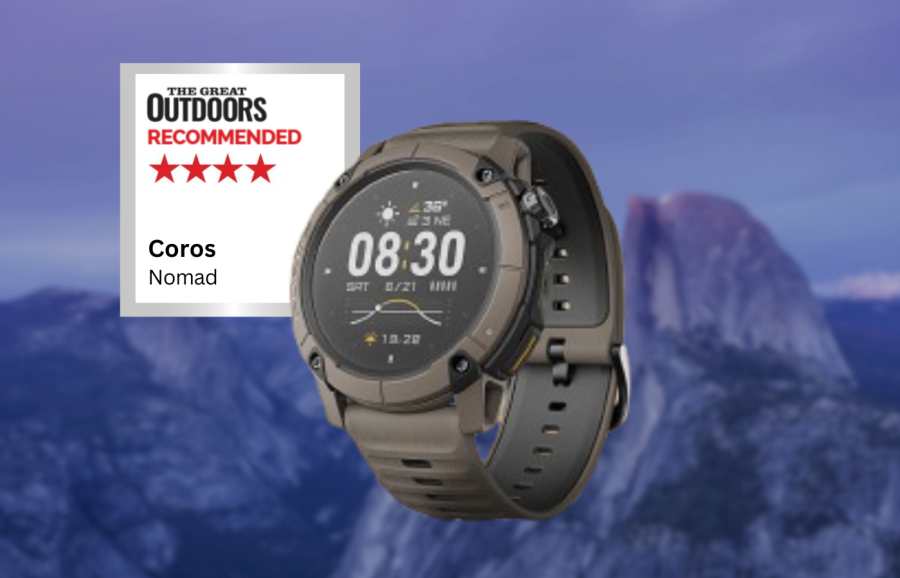
David Lintern recommends
Overall, I think the Nomad is a great tool. It’s a more affordable choice with a more than practical battery life and does most of what units twice the cost do.- easy to use software
- lightweight
- great battery life
- excellent value
- some ‘basic’ functions behind menus
- chunkier case
| Quick specs |
|---|
| Price: $349 | £319 (available from Tredz) Weight (with strap): 61g Case size: 47.8 x 47.8 x 14.8mm Screen: 1.3″ Always-On MIP display, hardened mineral glass Battery life (with GPS on): 50hours + at Dual frequency, single untested OS grid ref: Yes (on compass) Mapping: Yes Operation: Buttons and touchscreen uk.coros.com |
The casing is plastic and aluminium, sits a little proud on the wrist but has bevelled edges rather than sharp lines, which avoids the accidental slicing of fragile sleeping mats and sleeping bags that some competitors are responsible for! For smaller wrists, the new Coros Pace 4 has almost identical specs but a smaller profile. It’s robust and very lightweight, and more than waterproof enough to wear while swimming (but not diving – it’s rated to 5 atmospheres). I’m not keen on the silicone strap which can get sweaty, but it’s easy enough to replace with an aftermarket fabric alternative should one want to. The screen is not AMOLED but I find it perfectly readable so far. There are 3 easy to use buttons on the side of the face, as well as a swipe-able screen, and menu navigation is very intuitive. I love the ability to change watch faces – something digital and info rich for outdoor use, a more trad dial based face for day to day.
GPS is single or ‘dual’ frequency and the Nomad uses the brand’s latest CPU. The dual is quick to lock in the open, less so in closed spaces. Mapping is not as good as some competitors, but excellent as a backup to other sources – it displays the usual street view info, and/or topo – landforms, contours, position and a breadcrumb track. OS grid reference does not display on the map page but can display on compass, which itself is surprisingly responsive. Altitude readings are barometer controlled so there’s no need to be WiFi or app linked. Weather needs an update via the app every few days. Both give a decent sense, but don’t expect laser levels of accuracy.
Read more: David’s full Coros Nomad review
Lightest in test
Garmin Instinct 3

Francesca Donovan recommends
As a cheaper option in the Garmin family, the Instinct 3 feels like a worthwhile investment for hikers, backpackers, swimmers and trail runners wanting to simplify their time outdoors at a glance.- wearable comfort
- customisation
- bright display
- torch
- steep learning curve
- no topo mapping
| Quick specs |
|---|
| Price: £389.99 (available from Cotswold Outdoor) Weight (with strap): 53g Case size (mm): 45 x 45 x 14.9 Screen: AMOLED Battery life (with GPS on): up to 32 hours extending up to 68 hours with Max Battery GPS (not recommended for GPS accuracy) OS grid ref: Yes Mapping: Yes Operation: 5 buttons www.garmin.com |
I have been loyal to the Garmin Instinct Solar – my big, yellow beast – for a few years so was reluctant to swap it out for the updated Instinct 3. However, straight out of the box, I could see and feel the benefits of the Garmin Instinct 3 AMOLED smartwatch, the latest addition to the Instinct family. It’s lightweight enough to give a barely-there feeling on the wrist. Despite this, mine has taken some big knocks and scrapes on unforgiving gritstone and remains unscathed. The silicone strap flexes less than previous models but isn’t so tacky against the skin, slipping less when I get sweaty. With better purchase on the tang buckle, this watch feels a more secure fit.
Basic set up with the Garmin Connect app – including adding my Assistance Contact in the safety features – took under 60 seconds thanks to a QR code prompt when first plugged in. The watch is highly customisable and I was impressed with the screen and brightness. The new multi-band frequency gives incredibly accurate GPS positioning even in heavily wooded areas. While I still prefer a map or smartphone for a ‘zoomed out’ approach to navigation, the auto re-router was a nifty tool to stay on target on simple routes and the turn prompts not too intrusive. The Instinct 3 has quickly become a reassuring outdoor companion. If it’s in-depth mapping you’re after rather than a backup to traditional mapping methods, you might want to look at other models.
Read more: Francesca’s full Garmin Instinct 3 review
Coros APEX 2
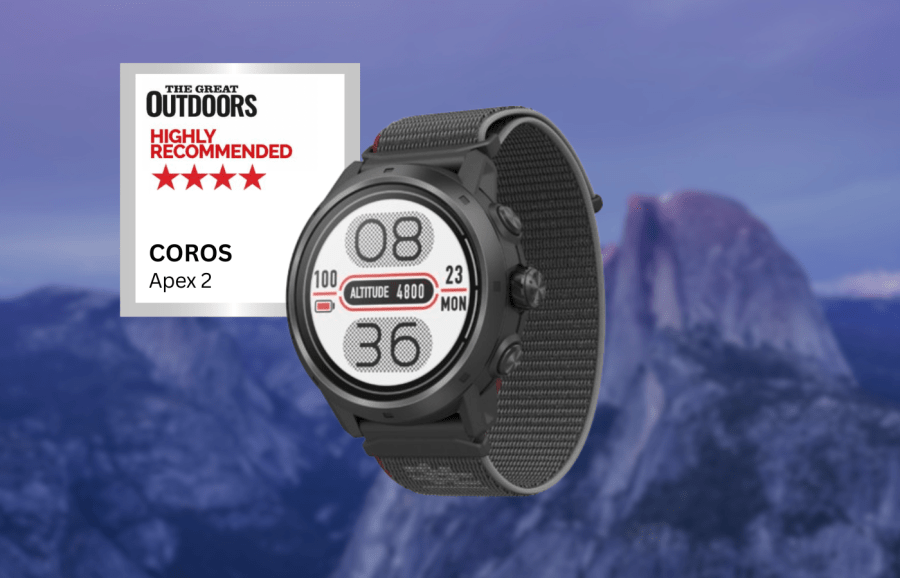
Alex Roddie highly recommends
The Coros APEX 2 model has so many improvements that it has risen to the top of the pile and is now, in my view, the most versatile GPS watch for UK hikers.- Superb battery life
- Mapping and OS grid refs at a low price
- High quality materials and strap
- Screen dim indoors
- Mapping more basic than garmin
| Quick specs | |
|---|---|
| RRP: $399 | £419 (available from Amazon & Sportsshoes) Weight: 1.5oz | 43g Rating: 4.5/5 Case size: 43×42.8×12.8mm Screen: 1.2in transflective colour, always-on Battery life (GPS on): 45-50 hours OS grid ref? yes Mapping: yes (optional free download); has terrain features but some paths missing Operation: buttons, rotating crown, touchscreen |
The Coros APEX 2, which received a Best Buy award in our print issue, is an impressive GPS watch for the price, with a scratch-resistant sapphire crystal screen and a part-titanium body with 50m water resistance. The included strap is comfortable in both hot and cold weather, and the intuitive rotating crown is great for scrolling quickly through menus.
The menus are simple, with easy-to-understand data screens and easy access to altimeter, barometer and GPS location. The phone app works well, integrates with many third-party services, and can be used to import and export routes. The battery life is exceptional, exceeding the brand’s claimed 45 hours, and charges rapidly from a power bank. It is the most versatile GPS watch for hikers, and the cost is still very reasonable.
Read more: Alex’s full Coros APEX 2 watch review
Suunto Vertical Solar
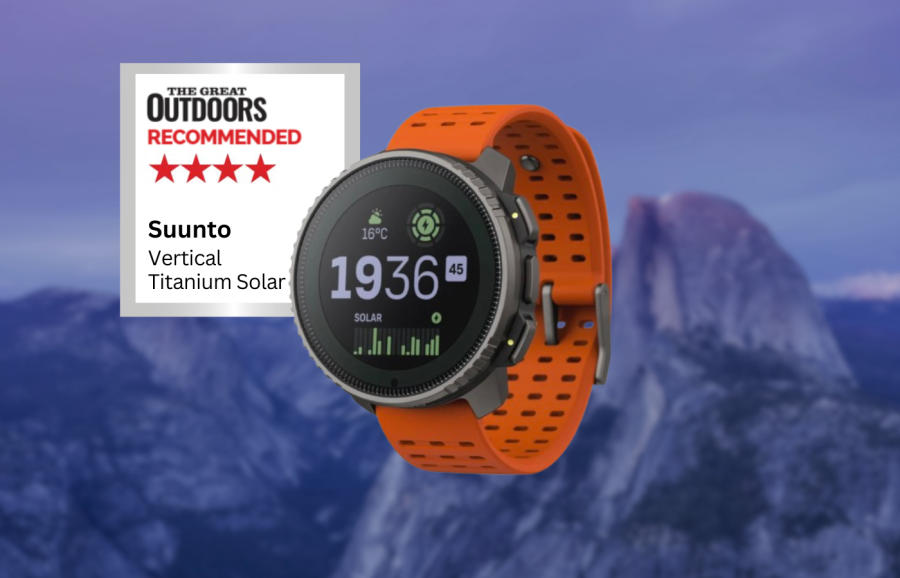
Alex Roddie recommends
Overall, this is one of the most impressive GPS watches I’ve tested, and a good choice for anyone needing a mountain navigation companion that can take serious abuse.- Class leading battery life
- Solar charging
- Relatively easy to use
- Big and bulky
- Mapping lacks text labels
- Flimsy magnetic charger
- Laggy operation
| Quick specs |
|---|
| RRP: $839 | £725 (available from suunto.com) Weight: 74g Rating: 4.5/5 Case size: 49 x 49 x 13.6mm Screen: 1.4” transflective colour, always-on Battery life (GPS on): 85–280 hours depending on features and solar intensity; weeks or months in power-save mode OS grid ref? Yes Mapping: Yes; contours and footpaths but no labels Operation: Buttons and touchscreen. |
The Vertical is Suunto’s latest GPS watch aimed at mountain sports enthusiasts and athletes. Until recently the Finnish brand had been eclipsed by competitors, whose devices were often years ahead in terms of features and battery life. However, the Vertical represents a leap back to the head of the pack in many respects, making a compelling overall package – although a few niggles remain.
The Vertical comes in two models: a base model made from stainless steel and a titanium one with solar charging. You can choose from a variety of colourful quick-release silicone straps and is compatible with standard 22mm watch straps. Build quality is excellent and the design attractive, but it’s physically gigantic on my 6.2in wrist. I’d prefer to see a version no more than 42mm wide and 10mm thick.
Overall, this is one of the most impressive GPS watches I’ve tested, and a good choice for anyone needing a mountain navigation companion that can take serious abuse. It’s a lot more suitable for hardcore winter conditions than your phone – and the battery will last much longer. The price, while expensive, is reasonable compared to competitors.
Read more: Alex’s Suunto Vertical Titanium Solar review
Garmin Instinct 2 Solar
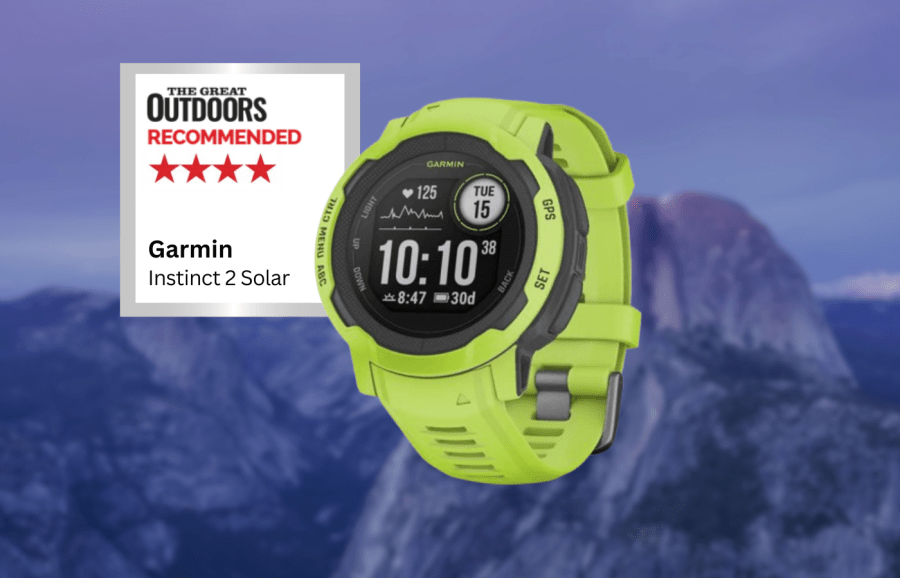
Alex Roddie Recommends
The Instinct 2 Solar is a great GPS watch for hill use, and the price is still attractive despite an increase; but you are paying for extra features that most walkers will never want.- Available in two sizes
- Exceptional battery life
- Rugged
- Solar charging
- Good for navigation
- Customisation
- Steep learning curve
- Vast number of irrelevant features for walkers
| Quick specs | |
|---|---|
| RRP: $349.99 | £350 Available from: Amazon & Sports Shoes Weight: 1.8oz | 53g Rating: 4/5 Case size: 45x45x14.5mm Screen: 0.9in transflective monochrome, always-on Battery life (GPS on): 30-370 hours depending on features used and solar intensity; unlimited in power-save mode OS grid ref? yes Mapping: no, but usable breadcrumb navigation Operation: buttons |
The Instinct 2 Solar is a rugged-looking GPS watch with a silicone strap, a clear monochrome display, and solar charging. It has become more complicated to set up, but is still a great GPS watch for hill use. It does all the basics well, including offline sync with your phone and OS grid reference. Battery life is substantially better than its predecessor’s, and the more efficient solar panel can extend usable tracking time dramatically. The non-solar model is worth a look for a £100 price saving.
Read more: Alex’s full Garmin Instinct 2 Solar review
Best touchscreen
Garmin fenix 7X Pro
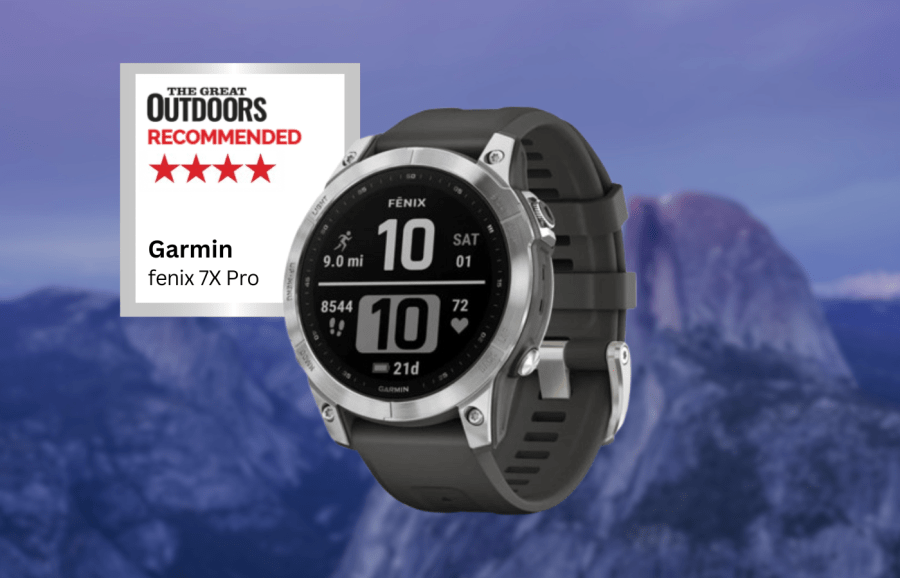
Alex Roddie Recommends
There’s almost nothing this watch can’t do. It even has a powerful torch – perhaps its best feature! But the price is very high, and its capabilities are overkill for most users.- Exceptional battery life
- Solar charging
- Fluid touchscreen
- Built in torch
- Very expensive
- Big and bulky
- Learning curve
| Quick specs | |
|---|---|
| RRP: $999 | £860 (available from Amazon) Weight: 3.1oz | 89g Case size: 51x51x14.9mm Screen: 1.4in transflective colour, always-on Battery life (GPS on): 38-578 hours depending on features used and solar intensity; 1 year + in power-save mode OS grid ref? yes Mapping: yes, with option to install additional maps Operation: buttons and touchscreen |
The Garmin Fenix 7X is a GPS watch that offers a wide range of features, including a touchscreen, improved battery life, solar charging, a torch, and some software tweaks. Available in three sizes, the 7X is the largest, making it more comfortable for smaller wrists. The watch comes with a quick-release silicone strap and a titanium construction, making it lightweight but heavier than other devices tested. The large screen is protected by sapphire crystal.
The Fenix 7X Pro adds a touchscreen, improved battery life, better solar charging, a torch, and some software tweaks. The touchscreen is fluid and makes the interface feel like a phone for navigation, making it a game-changer for scrolling and zooming in maps. The watch can be operated entirely by buttons and has decent mapping with terrain features and most paths marked.
Battery life is exceptional, with Garmin claiming 38-578 hours with GPS on, but this is typically 100-200 hours with the heart sensor switched off. The screen now has a more obvious solar border, adding multiple hours to a full charge.
Despite its capabilities, the Fenix 7X is expensive and overkill for most users. For comparisons, check out Garmin’s GPS watch guide.
Read more: Alex’s full Garmin Fenix 7x Pro review
Suunto 5 Peak
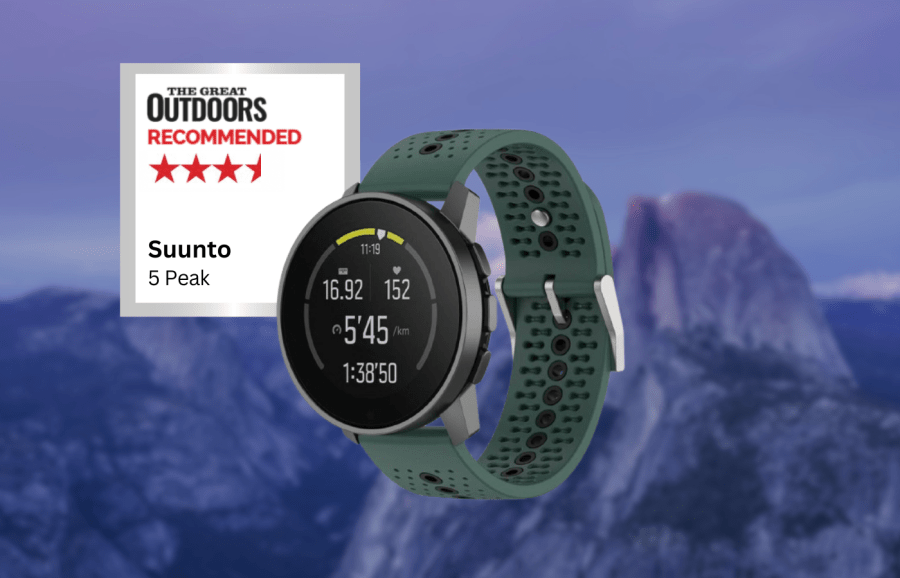
Alex Roddie Recommends
If you are looking for an affordable watch to cover the basics, and don’t need mapping, compass, barometric altimeter or best-in-class battery life, this watch is a good choice.- Great value
- Does the basics well
- Slow user interface
- Uncompetitive battery life
- No barometric altimeter or compass
| Quick specs | |
|---|---|
| RRP: $240 | £169 (available from Amazon & Alpine Trek) Weight: 1.3oz | 39g Rating: 4/5 Case size: 43x43x12.9mm Screen: 1.1in transflective colour, always-on Battery life (GPS on): 20–40 hours OS grid ref? yes Mapping: no, but usable breadcrumb navigation Operation: buttons |
The Suunto 5 Peak is a compact, lightweight watch at an attractive price. It offers five buttons for easy use, no touchscreen, and a quick-release silicone strap. It focuses on tracking, fitness, and basic navigation tasks, but there is no compass or barometric altimeter. The screen is in colour, but small and dim compared to other watches tested. The phone app connects to komoot, FATMAP, Strava and other services, but offers less flexibility than the Garmin or COROS apps.
The watch claims 20-100 hours of GPS training time, but 100 hours is for the ‘Tour’ mode, which has greatly reduced track recording and is less useful if you want to analyse your route afterwards. It is made with 100% renewable energy and is a good choice for those looking for an affordable watch to cover the basics.
Read more: Alex’s full Suunto 5 Peak review
Apple Ultra 2
Kirsty’s verdict
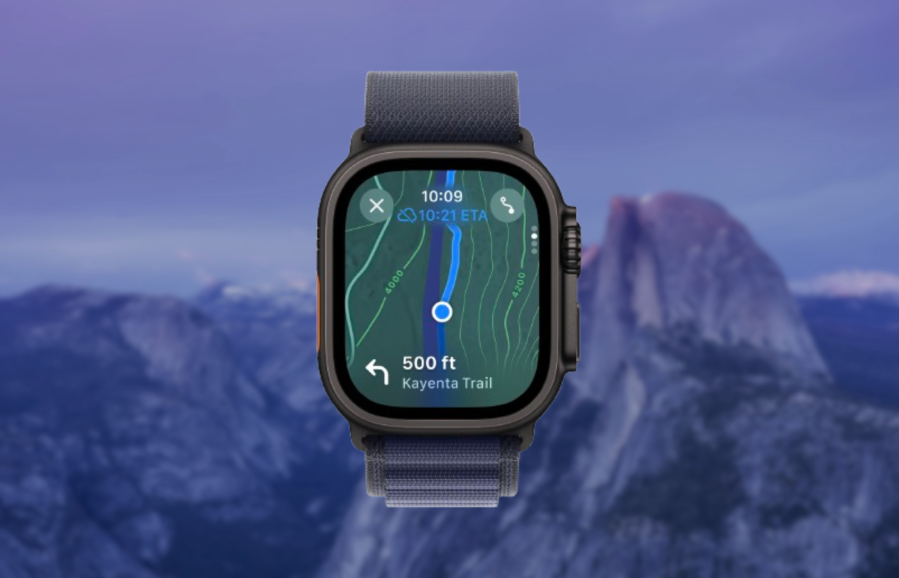
Overall the Apple Ultra 2 wouldn’t be my top choice for a GPS watch for hillwalking and mountaineering.- Fairly slim fit on the wrist
- connectivity to phone apps
- Battery life
- price
- limited navigation info
| Quick specs |
|---|
| RRP: $799 | £799 Weight: 71g with nylon strap Case size: 49mmx49mm Screen: LTPO2 OLED Always on Retina Battery life (GPS on): 17 hours OS grid ref? Yes, through OS Locate Mapping: no Operation: touchscreen and buttons |
Although most mapping apps don’t show the maps on the watch, and you need to use your phone to view them, Wikiloc does show maps and can be used to follow a pre planned route and see path options. OS Locate works well to give your grid reference and elevation too, which can then be put onto your map to continue navigating. The compass app also has a backtrack option, which allows you to retrace your steps if you set it to record them.
The Ultra 2 from Apple is the biggest and toughest watch they have, with several features that work well for navigational support. The precision dual frequency GPS gives accurate location information, but for hill walkers and mountaineers the best way to get this data is through third party apps. Overall the Apple Ultra 2 wouldn’t be my top choice for a GPS watch, but if you’re looking for something that has phone notifications, measures a variety of metrics, tracks lots of different activities plus has a GPS and a few navigational features then it’s not a bad option.
Read more: Kirsty’s full Apple Ultra 2 review
How we test
Fiona tested the Garmin Enduro 3 extensively over six months for hiking, running, kayaking and open water swimming, mainly in the Scottish hills and mountains and during a four-day ultra running race in Switzerland and Italy.
Chris tested the watch in the Cairngorms and Monadh Liath in the Scottish Highlands in the summer and autumn of 2025 on day walks, overnights, and multi-day trips. Temperatures ranged from 15 to -2C and the weather from warm and sunny to cold and wet.
David tested the Nomad from beta stage into release, from late summer into winter on his regular 5K trail runs, fire track bike rides and several day and overnight hikes, mostly in the Cairngorms.
Francesca tested this watch over the spring, summer and autumn of 2025 hillwalking and camping in the Peak District, Eryri, Pennines and Yorkshire Dales. She also used it for outdoor swimming, some (gentle!) trail runs and gravel biking. She has a small wrist and runs hot.
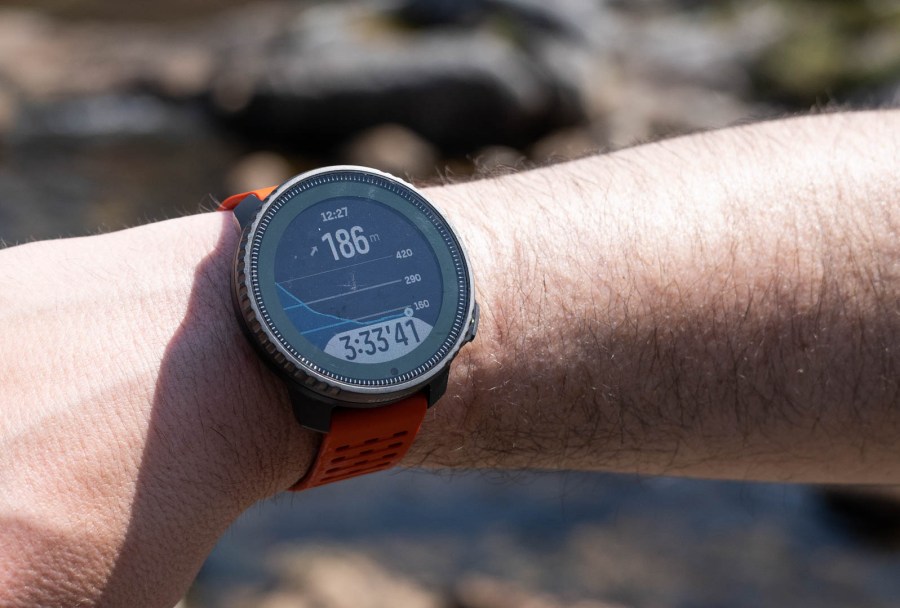
Alex Roddie tested these watches on a variety of day hikes and short backpacking trips in the Lincolnshire Wolds, Lake District, Scottish Highlands and Suffolk Sandlings over the course of 2023.
In 2024, Kirsty took her models out hillwalking, mountaineering, rock climbing, biking, and swimming all across Scotland, both within her job as Mountain Leader and on personal days out. She has a small wrist diameter, so a bigger case size is more noticeable.
Weights stated include the standard strap, weighed on the tester’s digital scale.
Features to look out for in GPS watches
Comfort and fit
If you have a small wrist, a smaller case size may be better. Look for a comfortable strap too. Touchscreen-only devices are less suitable for use with gloves or in bad weather. Watch out for sharp edges that can shred sleeves or sleeping mats!
Durability
Most watches tested are waterproof. For maximum durability, look for sapphire crystal and a case made from titanium or rugged plastic.
GPS
Cheaper fitness trackers don’t always have their own GPS, and instead piggyback off your phone for position. This is less accurate and will drain your phone more quickly but it can work well enough for basic use on day hikes. We’ve got a handy article on how to use GPS for hiking navigation.
Battery life
Look for at least 24 hours with GPS active, or more for multi-day walking. Some devices have battery-saving modes that will extend battery life at the cost of accuracy.

Screen
AMOLED displays tend to be less readable in bright sunlight and can use more battery. An always-on, transflective, sunlight-readable display can be used without the backlight.
Track recording
Every device can track your walk or run and save it to a smartphone app. Look for the ability to share the route as a GPX file for viewing in your mapping app of choice.
Fitness tracking
Every device tested has a heart-rate sensor and can be used to track basic fitness metrics such as steps, distance, and calories.
Altimeter/barometer/compass
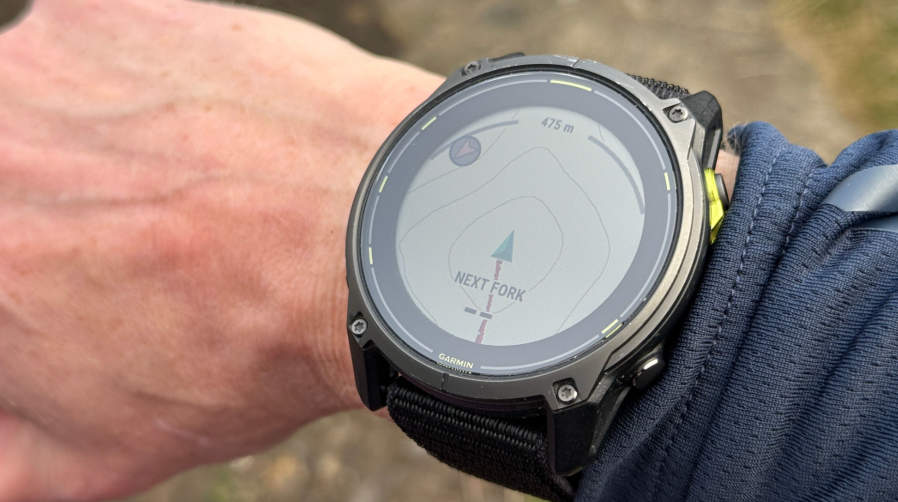
These can help pinpoint your location, predict bad weather, and keep you on track. Elevation and pressure can be surprisingly accurate if frequently calibrated; compass is best used for general guidance only.
OS grid reference
The best GPS watches can give an OS grid reference of your location.
Navigation
Some GPS watches can navigate a saved route, either on a graphical breadcrumb screen or a map.
Mapping
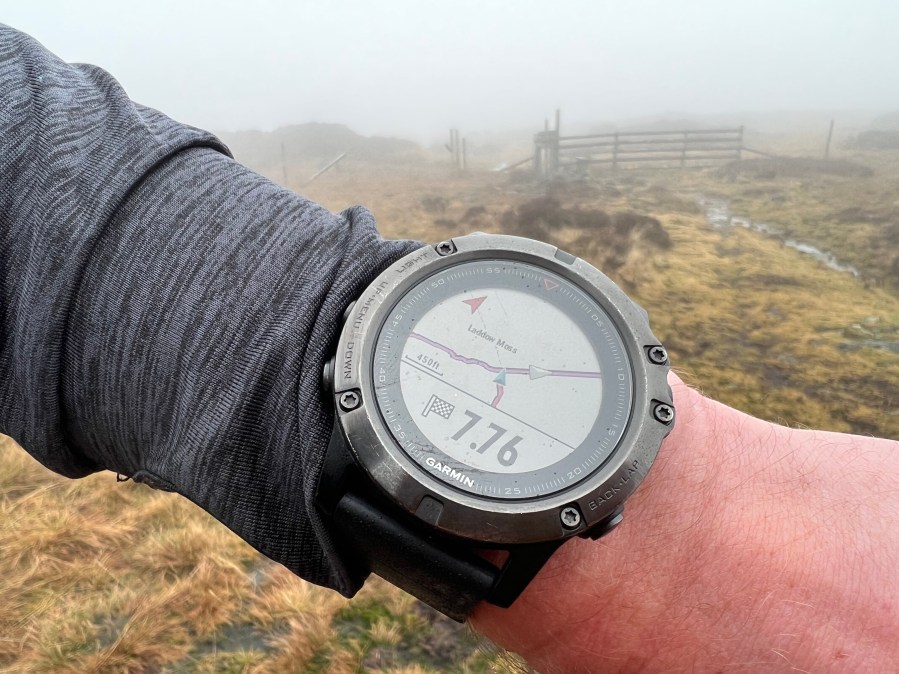
Only a few models offer maps. Included mapping may be basic, but there are often alternatives with more detail. Ask yourself if you really need it; devices with usable outdoor maps are very expensive.
Connectivity
Some watches can connect to services such as Strava, Komoot, Apple Health, MyFitnessPal and more. Every watch tested offers smartphone notifications.
Do GPS watches need the internet to work?
In short, no. No GPS watches need the internet. GPS watches instead receive data to triangulate your position from a series of satellite networks that circulate above the earth. Your device calculates the time taken for radio signals from at least four different satellites to reach it and this is how it locates your position. This system does not require an internet connection or cellular service to function.
However, some smartwatches – think the Apple Watch, Samsung Galaxy Watch and Google Pixel Watch – offer a cellular connection for additional features such as making calls and sending texts.
Read on: Do GPS watches need the internet?
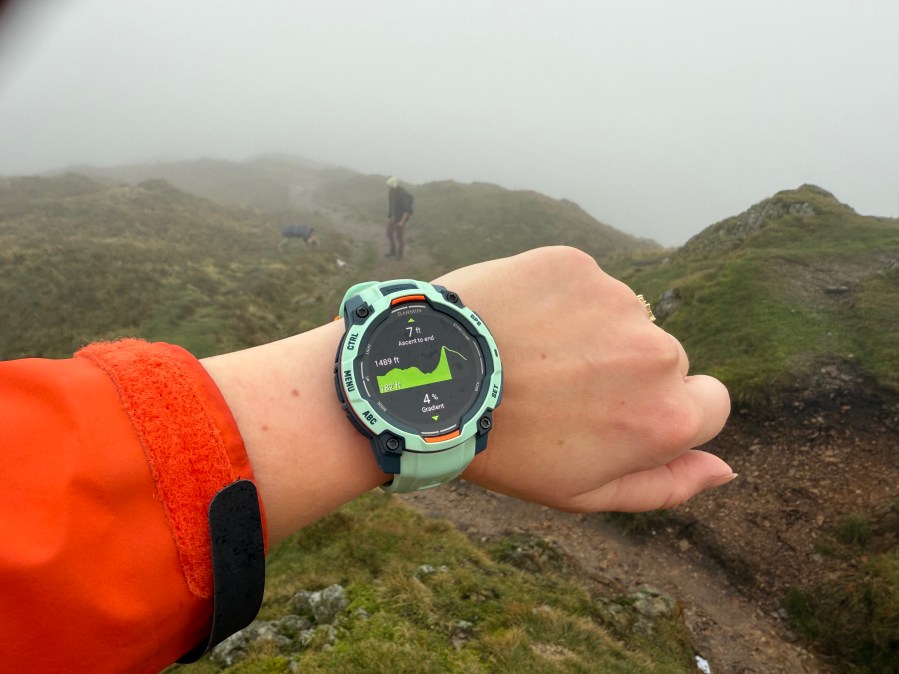
Are GPS watches worth the price tag?
With their location accuracy, you can certainly see why GPS watches have been welcomed into the outdoor adventure toolbox of many hillwalkers and outdoor enthusiasts – especially as many now have multi-sport capabilities.
In the hills, a GPS watch can act as a confidence boost should navigation get tough or a backup plan should other navigational tools fail. Not to mention, they’ve now become a statement of style as well as function.
However, they are expensive in comparison to the more traditional – if cumbersome – GPS handheld devices. And nothing can quite replace the reliability of a map and compass which, incidentally, remains the cheapest navigational tool out there.
If you’re on a budget, you could look to improve your own navigation skills before investing in expensive tech or look into more affordable GPS options.