
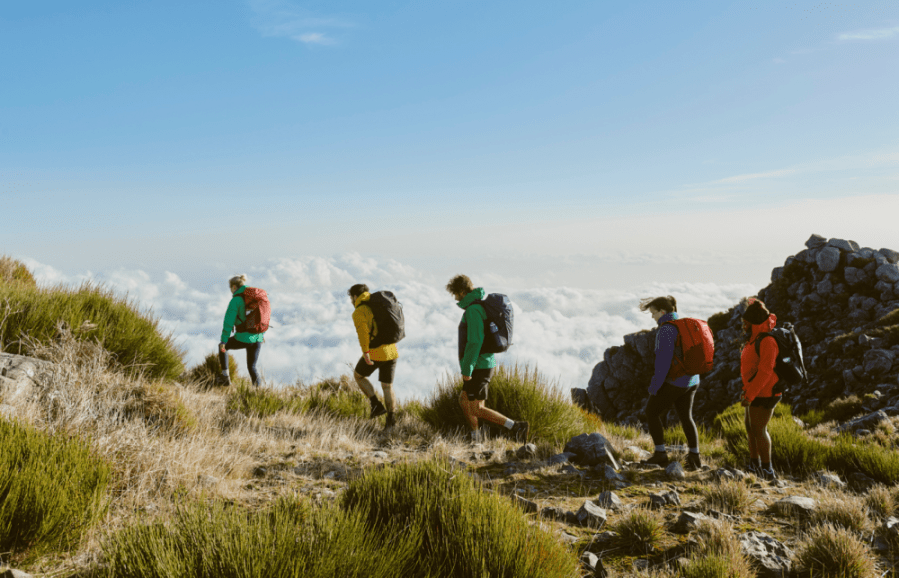
After footwear and a decent waterproof, a genuinely comfortable and reliable daypack – or hiking backpack – is one of the most important things any hill-lover can invest in. Be it for a day pottering about in the hills or for something longer or more strenuous, the right daypack is crucial. A daypack should be a useful size for the purpose it is intended for. For the time being, we’ll concentrate on daypacks that can fit all you need for a day in the hills without sacrificing support or durability – generally under 35l capacity.
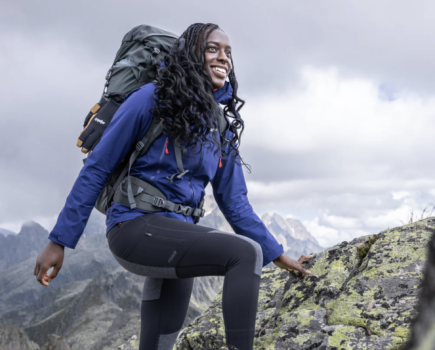
Main image: The Remote Hike spotted in the wild | Credit: Berghaus
To get the best possible value for money, think about the various uses it may be put to, from shopping and commuting to lightweight summer overnighters, winter day trips or European via ferratas. The pack should offer a stable and comfortable wear for long periods of time. A range of pockets is useful but details are a matter of personal preference. Raincovers might seem handy for hiking in Britain’s weather but are rarely fully waterproof and do tend to blow away unless attached. The dream is a pack you can wear but stop noticing, no matter how challenging the trail or load.
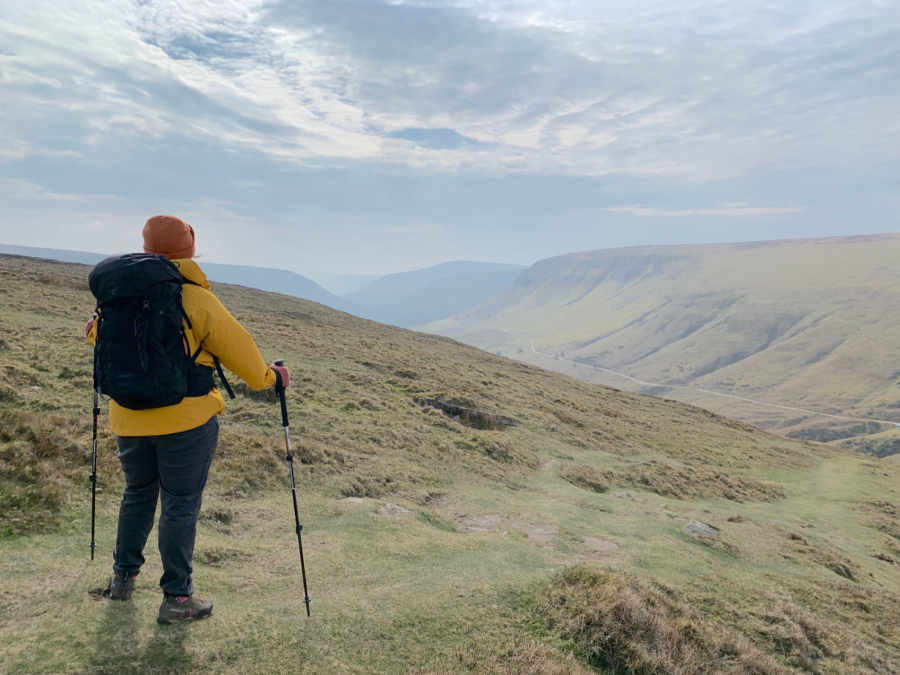
Stability is vital when it comes to uneven and more technical trails and scrambles, making harness shape, adjustment and configuration a key factor in getting the right outcome for any given wearer’s frame and shape. Straps, both shoulder and hip, should have the correct amount of padding and the optimal shape for the individual wearer.
Gender specific, or unisex? Some brands have shrunk ranges in recent years, but many ‘average build’ women – and more slightly built men – find that a female specific pack may offer more comfort. Female-focussed packs usually offer a tuned shape and chassis, to accommodate different back lengths and widths, as well as allowing for the fit and comfort requirements of hips and busts.
Why you can trust The Great Outdoors
The Great Outdoors is here to help you make the most of your time outside. We have been helping people to explore from sea to summit, valley to mountain top for over 40 years. Our gear tests remain completely impartial. If you are wary of websites that only review brands that advertise with them, or sceptical of social media accounts always singing the praises of their latest freebie, you’ve come to the right place! Our reviews rank #1 for rigour, trustworthiness, and independence, and our gear testing team is the most experienced in Britain. With over 200 years’ experience between us, we are professional mountain leaders and instructors, wildlife photographers and rangers, outdoor authors, guidebook writers and trail addicts.
Our picks of the best hiking backpacks
Peter Macfarlane and Lara Dunn have compared the latest round of packs. We’ve also got a handy guide that answers the question: can you use a regular backpack for hiking? Gear shouldn’t be a barrier when it comes to enjoying the outdoors but it’s always good to know the limitations. This explainer on the different types of pack may also help you.
| Quick List |
|---|
| Best for men: Gregory Miko 30 (available from SportsShoes.com) |
| Best for women: Gregory Jade LT 28 (available from Ellis Brigham) |
| Lightest in test: Sierra Designs Flex Hike 20-30L (available from Decathlon) |
| Greener choice: Osprey Tempest 33 (Cotswold Outdoor) / Patagonia Terravia Pack 36L (Ellis Brigham) |
| Best value: Highlander Vulkan Mountain Rucksack 35L (available from Highlander) |
Best for men
Gregory Miko 30
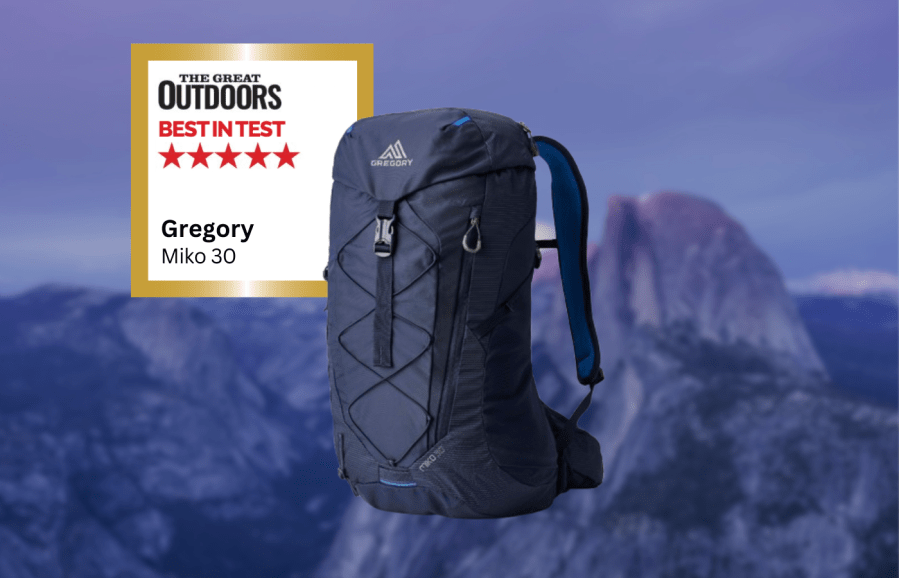
Peter Macfarlane’s Best in Test
The layout, features, carry and little details like the huge faff free zip-pulls make the Miko an easy Best in Test for me and my current go-to day pack.- fit
- comfort
- usability
- features
- hip fin pockets could be a little bigger
| Quick specs |
|---|
| RRP: $169.95 / £145 (available from SportsShoes.com) Weight: 994g Capacity: 30 litres Materials: Body: 100D High Density 30% Recycled Nylon & 210D High Density 45% Recycled Nylon. Base: 210D High Density 45% Recycled Nylon. Lining: 40% Post-consumer Recycled 135d Polyester. All with PFAS-free DWR. Bluesign approved buckles. Back system: adjustable length air mesh back Pockets: lid with pocket, internal and external zipped pockets, accessible side pockets, attachment points, padded hipbelt with pockets Features: single top access compartment, hydration compatible Sizes: regular and plus size Men’s version? Maya 30 eu.gregorypacks.com |
Storage options are a strong feature, with a zipped mesh pocket just inside the closure incliding a keyclip. Outside on the front panel there is a bungee web which I used often for wet waterproofs, but it will take a lightweight tent. Under this is a large pocket with vertical zipped access on the right side. There’s a webbing loop at the bass which takes a bike light and by adding a bungee can expand carrying options still further. There are axe/pole attachments on the left side which were easy to use with gloves through last winter.
The back system is adjustable for length via a Velcro panel which forms part of the shoulder strap assembly. It’s easy to adjust and very secure. I have it set at its maximum length and it’s a perfect fit on my frame. The back system feels quite stiff in the hand but the whole pack can be rolled up so there is a lot of flexibility in there.
The rear panel includes a meshed ridge design – so there is a some attempt at moisture management – but the closer fit adds comfort and stability. I haven’t felt any downside to the simpler back. The lid buckle could do with allowing better adjustment when the pack is only part loaded, the hip fin pockets could be a little bigger volume but otherwise, the layout, features, carry and little details like the huge faff free zip-pulls make the Miko an easy Best in Test for me and my current go-to day pack.
Read more: Peter Macfarlane’s full Gregory Miko 30 review
Best for women
Gregory Jade LT 28
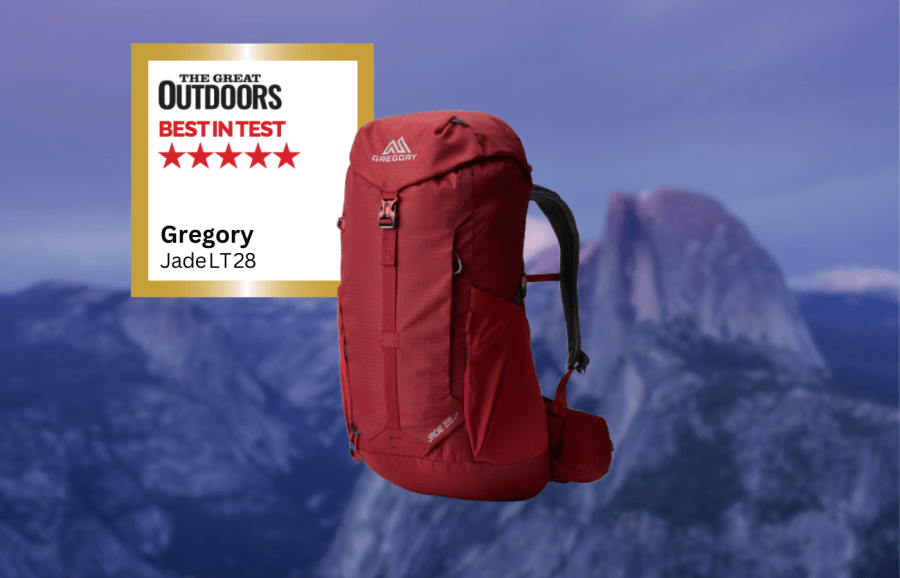
Lara Dunn’s Best in Test
This is a genuinely well-designed and good value for money pack.- super comfortable
- lightweight
- forgettable while wearing
- none
| Quick specs |
|---|
| RRP: $179.95 / £145 (available from Ellis Brigham) Weight: 1160g Capacity: 28 litres Materials: 40% recycled 400D polyester ripstop with C0 DWR, designed without PFAS, 420D nylon with PFAS-free C0 DWR, alloy steel chassis Back system: VaporSpan ventilated back with mesh panels Pockets: stretch mesh side pockets, zipped hipbelt pockets, trekking pole attachment, internal hydration sleeve, top opening with single-hand pull Features: Women’s specific fit, adjustable sternum strap with whistle, light attachment loop, optional raincover Sizes: regular and plus size Men’s version? Zulu LT 28 eu.gregorypacks.com |
The Gregory Jade LT 28 female-specific pack is the lighter-weight version of the manufacturer’s Jade 28. It’s not quite as full of features as its heftier sibling, but it does have all the elements even a demanding hiker could ask for, offered up in a superb package that’s also £20 cheaper than the original. On first try, it’s easy to see that fit and comfort were high priority. The combination of the lightweight build with the well-shaped and padded hip belt and shoulder harness creates a winning combo, giving comfortable support and padding where it’s needed but with no compromise on bulk and weight. With a light load, it felt barely there; and with a heavier winter load, it still felt comfortable.
While the back system is not adjustable (it is on the Jade 28), the back length suited my frame perfectly and there was plenty of easy-to-use adjustment on the chest strap. I tested the regular fit, but one of the positive things about the Jade LT 28 is that it is also available in a plus size fit. The latter has longer straps at shoulder and hip belt, but it also boasts overall fit revisions to offer superior comfort for larger body shapes.
The stretch side pockets are good and deep, accommodating larger bottles. The zipped pockets on the comfortable and supportive hip belt fins are a decent size and should take all but the largest of modern smartphones. The 28-litre volume gave enough space for a good assortment of layers, flask, snacks, binoculars and even a seat. Handy little loops and tabs are dotted about on the exterior, which could easily be used to string a bungee cord across or just to hang bits and pieces from. This is a genuinely well-designed and good value for money pack.
Read more: Lara’s full Gregory Jade LT28 review
Greener choice
Osprey Tempest 33
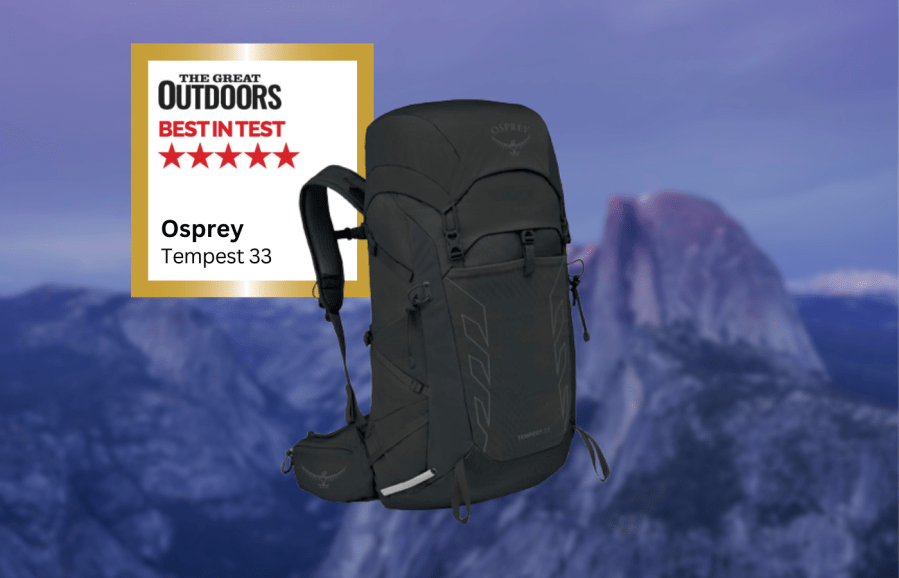
Lara Dunn’s Best in Test
This pack demonstrates great value for money for an extremely technical and competent, versatile daypack.- lightweight
- fully featured
- comfortable
- stable
- sustainability credentials
- no raincover
| Quick specs | |
|---|---|
| RRP: $190 / £155 (available from Cotswold Outdoor) Weight: 1192g Capacity: 33 litres Materials: 100% recycled 100D high-tenacity nylon with dobby check ripstop, 100% recycled 420D nylon base Back system: adjustable Airscape back system Pockets: Stretch mesh side and front pockets, zipped hipbelt pockets, ice axe and trekking pole attachments, Features: dual compression straps, , internal hydration sleeve, sternum strap with whistle Sizes: one Men’s version? Talon 33 osprey.com |
One area in which this pack truly excels is fit. Finding a genuine female-specific pack at this size is unusual, with most packs using a unisex chassis in the smaller volumes, reserving gender specific tweaks for larger trekking packs. Even more unusual though, is finding one where the fit can be fine-tuned further still. The harness has a sliding adjustment to accommodate different torso proportions and straps are arranged to tweak the fit to suit at shoulders and hips. The result is comfortable for long days and extremely stable.
Size wise, this 33 litre pack is large enough to accommodate kit for a long winter mountain day, a lightweight overnighter (or two) or even a trip to the shops. It can be cinched in easily when not full, making it flexible for a variety of load carrying, not just the big days.
Given the sheer number of features it offers, it’s surprisingly lightweight, yet still tough enough to cope with a good battering in the hills. The pack has ice axe/trekking pole attachment loops, which are straightforward to use. The rugged fabric is made from 100D 100% recycled nylon with a PFAS-free water repellent treatment, and a tougher and more durable 420D base, again made from recycled nylon. The whole pack is bluesign approved. Not only is this a pack that’s built with an eye to the environment, but it should also last for a good number of years, making for less waste and landfill. It’s quite surprising that such a well-designed and well-made pack comes in at a pretty reasonable price.
Read more: Lara Dunn’s full Osprey Tempest 33 review
Best value (unisex)
Highlander Vulkan Mountain Rucksack 35L
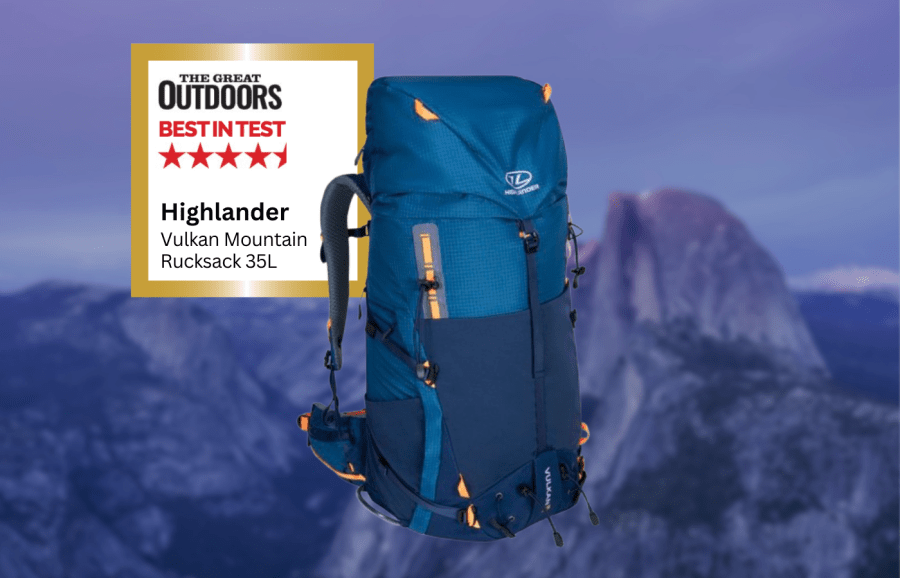
Peter Macfarlane’s Best in Test and Best Value
It’s a winter-ready daypack with some features for climbers as well as winter walkers.- comfortable
- fully-featured
- price
- heavy
| Quick specs |
|---|
| RRP: $£99.99 (available from Highlander) Weight: 1505g Capacity: 35 litres Materials: 100% nylon ripstop and XTP Reinforce material Pockets: lid with pocket, internal and external zipped pockets, accessible side pockets, attachment points, padded hipbelt with pockets Features: floating detachable lid, multiple attachment points for gear, ice axes and poles, volume and stability adjustment straps, stretch side and front pockets, lid pockets, main compartment access zips, rain cover, hydration bladder compatible, padded harness with hip fin pockets, rope strap Sizes: fixed size, 46cm Unisex highlander-outdoor.com |
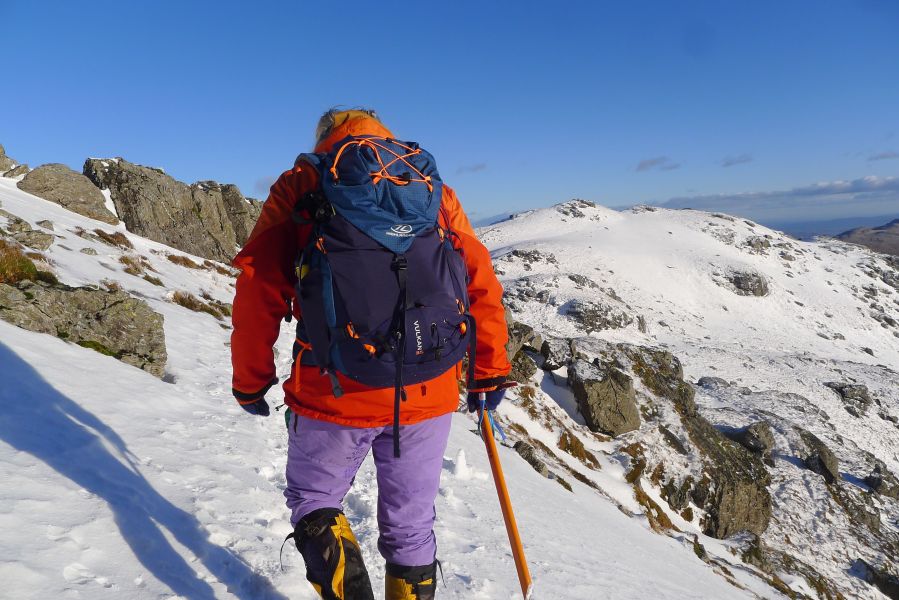
It’s a winter-ready daypack with some features for climbers as well as winter walkers. The main compartment has a roll-top closure and a removable lid, allowing you to shed some weight by stripping down the pack. The well-padded and shaped hip belt is also removable for climbing; but it’s well secured, so load bearing isn’t affected. There are climbing gear loops too, which you could remove for a cleaner pack. The shoulder straps are well padded, and the back system of mesh-covered foam pads is also comfortable. Pack shape and stability are provided by an internal stiffener. The outside has three large mesh pockets, and the side pockets are wearer-accessible large bottle carriers. On the wearer’s left are two vertical zips, which allow access to the inside of the pack without opening it fully. Overtrousers or flask can be pulled out without rain or snow getting inside the pack.
Ice axe carrying capability is excellent, with loops and fastenings placed to hold them secure and safe. The hip belt has two zipped pockets, as does the lid. The lid pockets are big and bright orange inside to help locate items inside, and the lid also has top attachment points. I attached bungee cord to stow wet and dirty crampons, which works very well.
Read more: Peter’s full Highlander Vulkan review
Best value (women)
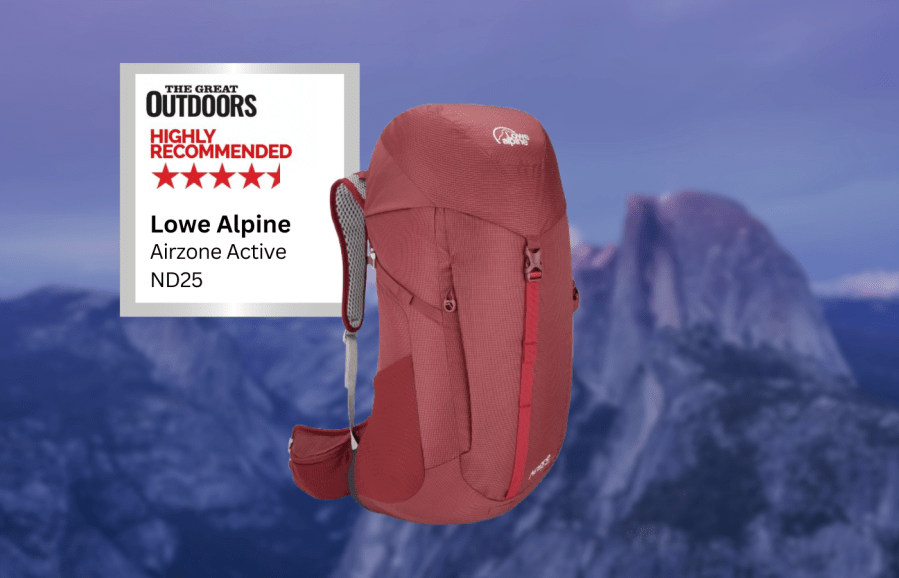
Lowe Alpine Airzone Active ND25
Lara Dunn recommends
The AirZone Active ND25 is designed to be a fully featured but lightweight pack, well suited to warmer conditions thanks to its ventilated back system, hydration bladder compatibility and its twin mes- streamlined shape
- comfortable fit
- well-featured
- narrower shape tends towards top heavy
| Quick specs |
|---|
| RRP: $124.95 / £100 (available from Cotswold Outdoor) Weight: 925g (including raincover) Capacity: 25 litres Materials: Woven mini Ripstop (50% recycled) nylon with PFC-free DWR Back system: AirZone LT back system Pockets: interior and exterior zipped lid pocket, hip belt pockets, front zipped pocket, stretch mesh side pouch pockets Features: Trekking pole loops, hydration system compatible, removable rain cover, LED light loop, sternum strap with whistle Sizes: one (non-narrow dimensions available) Men’s version? unisex www.lowealpine.com |
The AirZone Active ND25 is designed to be a fully featured but lightweight pack, well suited to warmer conditions thanks to its ventilated back system, hydration bladder compatibility and its twin mesh water bottle holders. The lightweight but well-padded harness system is easy to adjust and gives a highly comfortable fit.
Thanks to broad but pliable hip pads – with handy hip belt pockets – the fit is secure, stable and poses no risk of discomfort for women. The shoulder straps are shaped such that they curve around the bust nicely, too. At 25 litres, this isn’t an overly generous pack and it’s very easy to fill up for a day hike, particularly one where variable weather is expected.
Thankfully, there are plenty of pockets inside and out, in which to keep extras tidied away so they’re easy to access. With its narrow shape, some care to weight distribution is needed when packing, as it is easy to make the pack feel somewhat top heavy if fully laden. That said, it’s a stable pack and there’s no swinging about even when fully loaded.
Read more: Lara’s full Lowe Alpine AirZone Active ND25 review
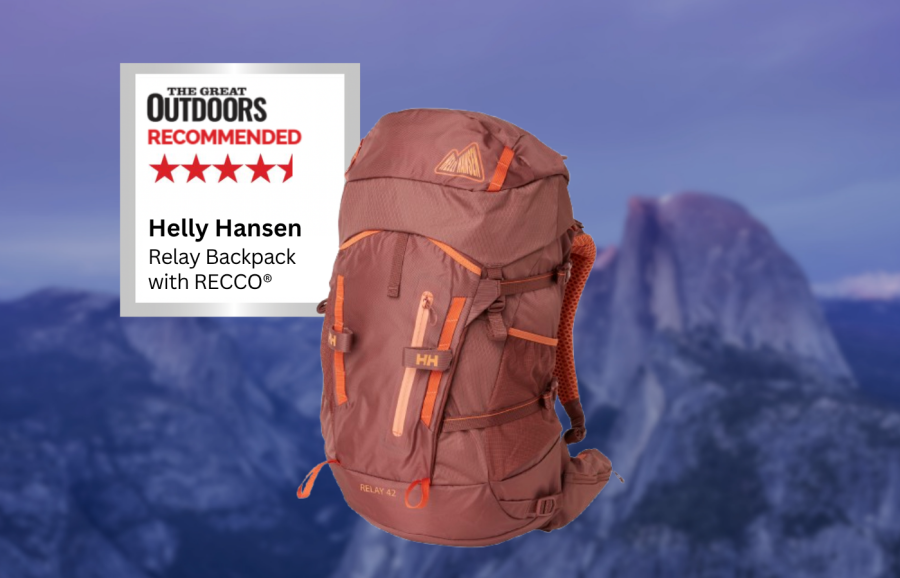
Helly Hansen Relay RECCO®
Lara Dunn recommends
This is a seriously well-built, nicely featured and confidence-inspiring pack, offering oodles of comfort out on the hill.- rugged
- comfortable
- well-featured
- versatile
- expensive
- quite heavy
| Quick specs |
|---|
| RRP: $245 / £210 (available from Helly Hansen) Weight: 1503g Materials: 420D nylon oxford (100% polyamide) with PU coating Back system: comfort back system Pockets: trekking pole/ice axe loops, side mesh pockets, zipped hipbelt pockets, interior and exterior zipped lid pockets (with RECCO® reflector), expandable front stuff pocket, internal hydration sleeve Features: women’s specific fit, dual compression straps, under-lid compression strap, spindrift collar, accessory daisy chain, sternum strap with integral whistle Sizes: one Men’s version? Nearest equivalent Resistor Backpack RECCO® 45l hellyhansen.com |
One of the most noticeable things about the Helly Hansen Women’s Relay Backpack RECCO® at first look is its size. This is most definitely not a simple daypack for a short summer trundle. It excels as a roomy and extraordinarily well-featured pack for winter mountain adventures or year-round backpacking trips. There is plenty of space both internally and externally in the form of loops and pockets, meaning everything can stay organised and in its place for easy access. The build quality is impressive, with plush cushioning in both the shoulder straps and in the generous hip fins that cup the hips securely but comfortably, giving good support and stability. The EVA foam back system is cushioned, too, but perforated to allow for airflow. All-day wear is no issue at all, with all that cushioning and contouring managing even the heaviest load, and it remained beautifully stable too.
It’s far from being a barely-there pack – but the levels of comfort and fit make light work of heavier loads, and more than make up for a bit of extra weight in their own right. With its RECCO® reflector attached to the lid – and its various external pockets and loops – this pack is spot on for those heading into the mountains with ice and snow in mind. The pole/axe loops are sturdy, and go beyond the usual elasticated loops that sometimes feature on summer orientated packs. Zip pulls are glove-friendly loops rather than fiddly tabs. The spindrift collar at the top is a nice touch, protecting the contents a little more by preventing snow from blowing in. This is a seriously well-built, nicely featured and confidence-inspiring pack, offering oodles of comfort out on the hill.
Read more: Lara’s full Helly Hansen Women’s Relay Backpack RECCO® review
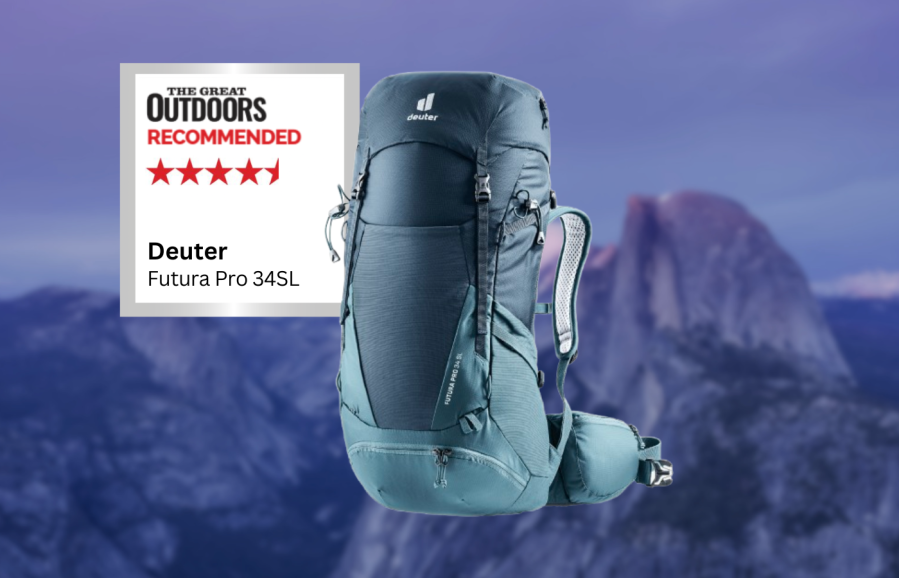
Deuter Futura Pro 34SL
Lara Dunn recommends
The clue is in the name ‘pro’ – this is a reliable and durable investment pack for even the most demanding users.- super rugged and durable
- fully featured
- very comfortable
- expensive
- quite heavy
| Quick specs |
|---|
| RRP: $190 / £180 (available from Millets) Weight: 1572g Capacity: 34 litres Materials: 600D polyester with PU coating and 210D 50% recycled polyamide Back system: Deuter Air Comfort back system Pockets: front and side mesh pockets, zipped hipbelt pockets, interior and exterior zipped lid pockets (with emergency guidelines) Features: trekking pole/ice axe loops, dual compression straps, internal hydration sleeve, sunglasses loop, detachable raincover Sizes: regular and plus size Men’s version? One; Unisex, non-SL: Futura Pro 34 www.deuter.com |
Costing a fair bit more than most packs of this size, it’s safe to say that expectations of the Futura Pro 34SL were high. It didn’t disappoint. This is a superbly made daypack with a wealth of features and rugged no-compromise design and construction. From its female-friendly fit to its tough fabric, this is a top-spec daypack designed for whatever is thrown at it, from summer day walks right up to winter climbs.
The pack is supremely comfortable thanks to its super-padded supportive hipbelt, designed to contour around the hips and move with the wearer. The padded fins are much larger than is common on a daysack, providing excellent stability to go with that sumptuous comfort. The highly ventilated back system and well-shaped harness straps work well with that hip belt to maximise wear comfort for long days on the hill. The quality of construction is matched with all the bells and whistles – the only thing actually missing IS a whistle – in terms of features.
There are plenty of internal and external pockets, including zipped lid pockets and a large mesh front stash pocket. The trekking pole and axe attachments are easy to use even with gloves on and the side mesh drinks bottle pouches are roomy and deep. A hydration bladder is catered for as well. The interior of the lid even has guidance on what to do in an emergency. It’s well-suited to lightweight overnighters too, with excellent useable volume for its relative size, and zipped access at the bottom as well as the main access at the top. The clue is in the name ‘pro’ – this is a reliable and durable investment pack for even the most demanding users.
Read more: Lara’s full Deuter Futura 43SL review
Mammut Ducan 32 Women

Lara Dunn recommends
Its low weight and bulk make it a decent value for money choice for fast paced hikes and scrambles or simply for those who like to keep their load weight to a minimum.- very lightweight
- stable
- good price
- stretch cord chest harness won’t please everyone
| Quick specs |
|---|
| RRP: $182 / £135 (available from Millets) Weight: 1003g Capacity: 32 litres Materials: 90% polyamide/10% polyester Back system: Contact Stream back system Pockets: front stash pocket, side mesh pouch pockets, hydration system compatible, exterior zipped top pocket, hip belt pockets – one mesh, one zipped with phone pocket Features: Women’s specific fit, trekking pole loops, adjustable stretch chest harness, detachable raincover Sizes: one Men’s version? Ducan 32 www.mammut.com |
The lightweight fabric (which incorporates recycled materials) is still tough and the base is made of sturdier material to ensure good wear. Despite its low weight, there’s no skimping on features here, with zipped internal and external lid pockets, large stretchy front mesh stash pocket and spacious side mesh bottle pockets with handy drawstrings to secure bottles. It’s also hydration system compatible.
Wear comfort is good, with broad low-profile, flexible hip fins giving a supportive fit that contours around the hips nicely, moving subtly with a natural gait. The single zipped hip pocket – the other side is a stretch mesh pocket – is relatively small but it also contains a pouch designed to hold a phone which helps make up for it.
Shoulder straps are low bulk like the hip belt and equally well-shaped. Storage space feels less generous than some of a similar quoted volume, but it’s far from cramped and certainly plenty for a good long day out. The low weight and bulk make it a decent value for money choice for fast paced hikes and scrambles or simply for those who like to keep their load weight to a minimum.
Read more: Lara’s full Mammut Ducan 32 Women review
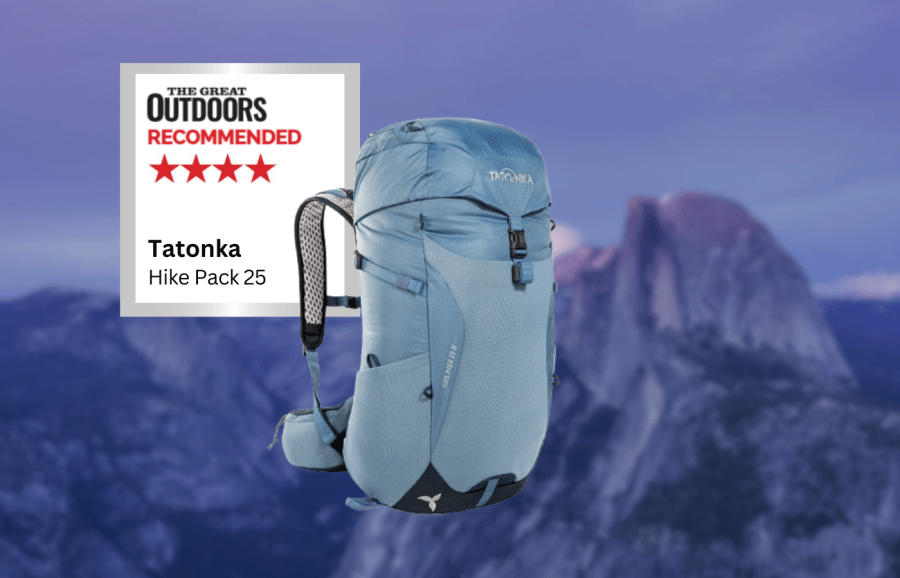
Tatonka Hike Pack 25
Lara Dunn recommends
The build quality of the pack is excellent, with durable-feeling fabrics and the pack doesn’t disappoint in use either.- very lightweight
- nicely featured
- good price
- back length won’t suit shorter torsos
| Quick specs |
|---|
| RRP: £125 Weight: 1010g Materials: 100D Mini Honeycomb Eco, 210 HD Nylon FD Eco, 210 HD Nylon FD Eco (base) Back system: Frame Vent mesh back system, Pockets: zipped lid pockets, trekking pole loop, front stretch stash pocket, side mesh pouch pockets, hydration system compatible, exterior zipped top pocket, hip belt pocket Features: women’s-specific fit, adjustable chest strap, detachable raincover Sizes: one Men’s version? nearest equivalent Hike Pack 22 or Hike Pack 27 tatonka.com |
With a low weight and an impressive array of features, this female-specific pack – the Tatonka Hike Pack 25 – looks impressive at first glance. It doesn’t disappoint in use either, despite a few minor niggles. The build quality of the pack is excellent, with durable-feeling fabrics. The shoulder straps with adjustable chest strap are a good shape for the female form. They are low profile with only a little cushioning, but it’s enough. Likewise, the hip pads are quite modestly cushioned, but it is stable and comfortable to wear. That said, focus has been placed on making the fit narrow – this is commonly the case with female-specific packs, but the result is that the pack is quite long for its size.
The top pocket finishes up quite close to the back of my head, which I’d normally only expect with a much bigger pack than 25 litres. It’s a niggle that wouldn’t be a problem for someone with an average to longer torso, but it didn’t work for my shorter body. The storage space is ideal for summer hikes, with a good number of pockets in which to keep things organised. The roomy front stretch mesh pocket is a nice addition, ideal for stuffing a coat into, but it also contains one end of the compression strap for the body of the bag – tidy and out of the way, but just a bit fiddly to fasten. The detachable rain cover suits British (and German!) weather nicely, while the internal hydration bladder sleeve caters to other water needs.
Read more: Lara’s full Tatonka Hike Pack 25 review
Sierra Designs Flex Hike 20-30L
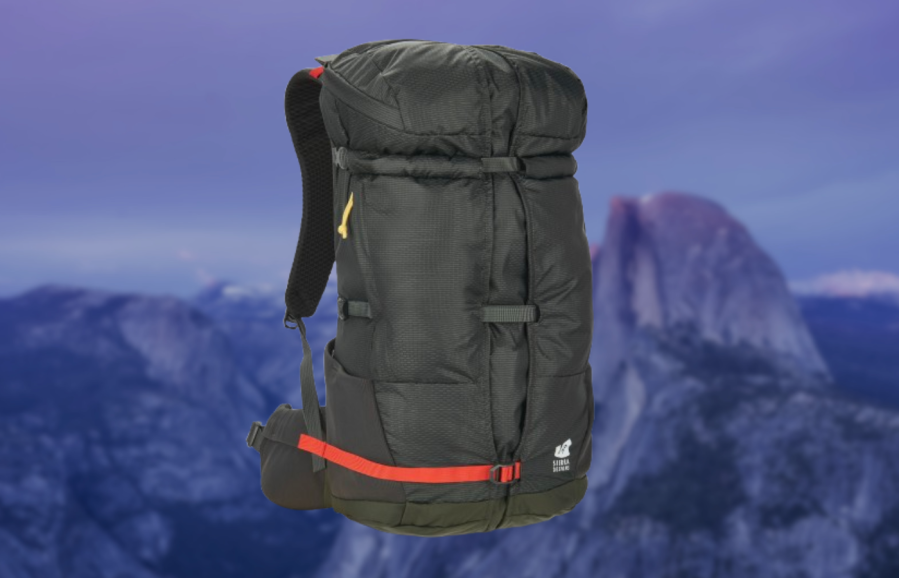
Peter Macfarlane’s verdict
This is an interesting and unusual pack that I’ve got on well with but do check the fixed back length works for you.- comfortable
- good pockets and features
- capacity adjustment / compression system
- limited external carrying options
- adjustable back length on the absolute limit for my height
| Quick specs |
|---|
| RRP: $149.95 / £150 (available from Decathlon) Weight: 932g Capacity: 32 litres Materials: 100D Nylon Honeycomb/420D Oxford Back system: Contact Stream back system Pockets: accessible side pockets, zipped access lid with pocket, padded hipfins with pockets Features: expandable main compartment, shoulder straps adjustable for height, hydration compatible Sizes: 20-30L capacity, one back size – adjustable Men’s version? Unisex sierradesigns.com |
The clue is in the name here with the Sierra Designs Flex Hike 20-30L – a system that allows you to change the capacity from 20 litres to 30 litres. It’s an unusual system with a bellowed gusset that runs the full length of the pack, adding extra width when it’s fully opened. The adjustment is via three webbing straps at base, middle and top. The base strap is a simple cinch with a ladder lock buckle while the higher two run right round the pack in channels through the fabric and have clip lock buckles which makes adjustment quite easy. This capacity change does put the load further out from your body rather than evenly spreading the weight when it’s at its maximum but at these volumes it doesn’t really affect stability much.
The back length is adjustable via the shoulder straps which have buckled attachments to shorten and lengthen them. It’s simple and works well with the padding on the back system lining up well enough on both myself at the maximum and my partner at minimum length. The back system is quite stiff which resists deformation when the pack is cinched, and it’s a comfortable carry. The back padding is thick with large gaps so has a good amount of free air space to help with sweat management. This is an interesting and unusual pack that I’ve got on well with but do check the fixed back length works for you.
Read more: Peter Macfarlane’s full Sierra Designs Flex Hike review
Patagonia Terravia 36L
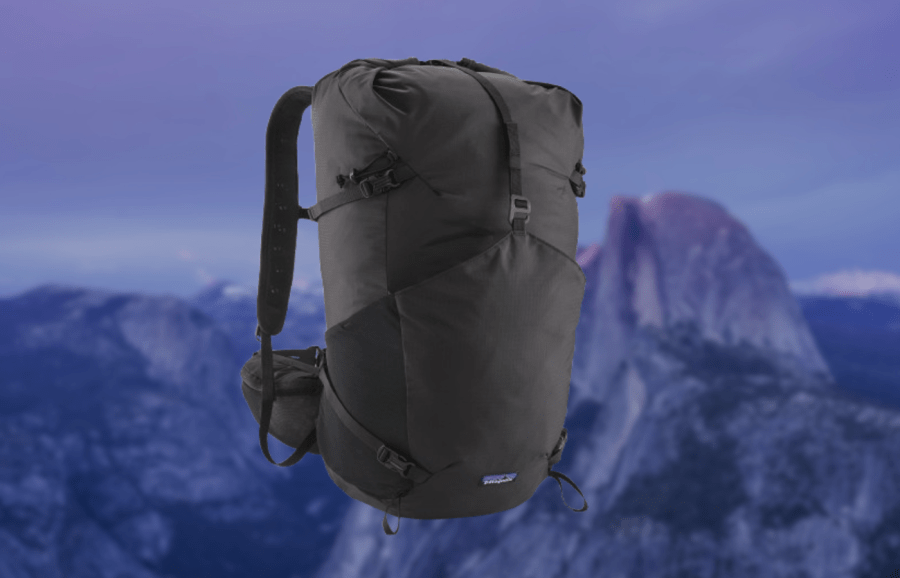
Peter Macfarlane’s Greener Choice
Even with a full winter Munro load the Terravia has been a very comfortable carry.- very comfortable to carry
- clean and simple design
- some odd design choices on the features
| Quick specs |
|---|
| RRP: £150 (available from Ellis Brigham) Weight: 1205g Capacity: 36 litres Materials: body: 100% recycled nylon ripstop with a PU coating, lining: 100% recycled polyester plain weave with a PU coating, 100% recycled polyester airmesh and 72% recycled nylon / 28% elastane power mesh on the pockets and harness Pockets: roll top closure, external zipped pocket, large stretch side and pockets, hydration bladder compatible, attachment points for axes and poles, padded hip fins with pockets Features: Bluesign®-approved material, compression straps, rain cover Sizes: S/M/L Unisex eu.patagonia.com |
The Patagonia Terravia Pack 36L is a roll top, which is a closure design I’ve always liked. Instead of a drawcord to pull tight under a lid, the top of the pack rolls down and is then secured by buckles. It’s simple, quick, weatherproof and allows for some extra capacity. There are excellent pockets on the front and side panels; and they’re divided by internal stretch gussets, which allows you to cram a little extra gear should you need to. The side pockets easily take a large bottle, which is accessible when the pack is worn. However, the compression straps run over the outside pockets, which interferes with bottle use. There are double ice axe and pole loops; but their upper bungee attachments sit next to the top compression strap buckles, making them hard to access if you have an ice axe on the pack. The harness is low profile with light padding and fits me well. Even with a full winter Munro load the Terravia has been a very comfortable carry.
The back system is a simple padded panel with an internal stiffening sheet, which gives the pack flex and holds it in shape if you pack it well. Inside is the bladder sleeve with two hose exits and the bag for the external zipped pocket. The Terravia has proved very water resistant – it sheds rain, and water ingress at the seams is very limited. However, the pocket zip is not a water-resistant type. It sits on the very top of the pack, so rain gets in and fills the pocket bag; this then filters into the main body. There is a rain cover at the bottom, but in use it’s only really the pocket zip that needs protecting. It’s something of an oversight that lets a otherwise excellent pack down.
Read more: Peter’s full Patagonia Terravia Pack 36L review
Vango Mitra Air 30L
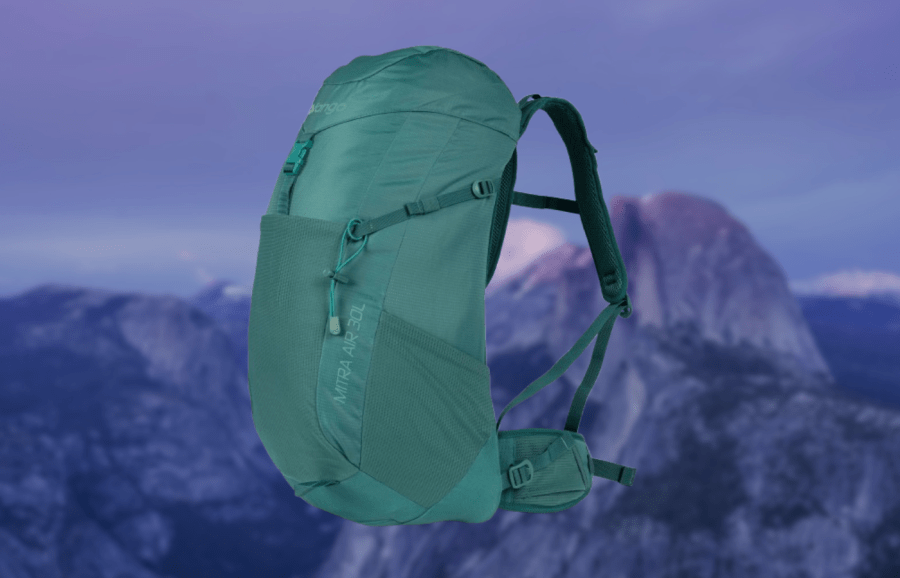
Peter Macfarlane’s verdict
A comfortable and well-featured pack that is streamlined with a clen silhouette.- comfort
- features
- price
- lid pockets
| Quick specs |
|---|
| RRP: £72.50 (available from Cotswold Outdoor) Weight: 1165g Capacity: 30 litres Materials: 250D Shadow Ripstop fabric, recycled blend, steel-framed mesh back Pockets: mesh side and front pockets, inner and outer lid pockets, hip fin stash pockets, Features: axe and poles attachment, compression straps, mesh back with air gap, hydration bladder compatible, rain cover Sizes: one Unisex vango.co.uk |
The Vango Mitra Air 30L is a neat-looking pack and hides its 30-litre capacity in a very clean silhouette. The main compartment has a single drawcord closure and is curved in shape because of the air gap back system. This means packing takes slightly more thought. Also inside is a bladder sleeve with a hanging loop and hose exit. On the front is a large stretch mesh stuff pocket with big stretch mesh pockets on each side. These will take a 750ml bottle securely, and I can easily get the bottle in and out while wearing the pack. There are side compression straps placed high up, which are effective when the pack is part loaded and useful for securing poles. There’s a single, simple ice axe loop and clip which works fine.
The back system is a mesh pane, which sat neatly on my back. A steel wire frame holds the pack off the mesh to allow air to circulate and help keep your back cooler and dry which functions as designed. The harness is low profile but well padded, and it’s shaped for comfort. The hip belt also has Lycra bound mesh stuff pockets. The hip belt and shoulder straps both have cinch adjustments.
Read more: Peter’s full Vango Mitra 30l review
Rab Protium 27
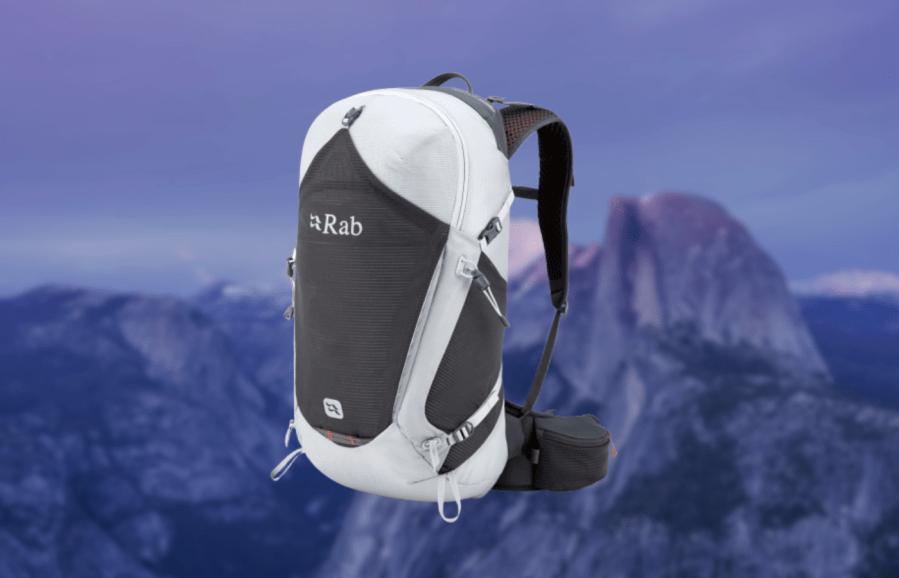
Peter Macfarlane’s verdict
There are some frustrating and compromising details on an otherwise excellent load carrier.- stable
- comfortable
- good back system and harness
- side pockets are inaccessible in use
- heavy
| Quick specs |
|---|
| RRP: $175 / £130 (available from Rab) Weight: 1065g Capacity: 27 litres Materials: 100D Robic Nylon Ripstop, 140D Nylon Back system: adjustable air contour back system, semi rigid ABS plastic back system Pockets: hip fins with zipped pockets, large external front and side mesh pockets, zipped access with external and internal pockets Features: rain cover, hydration compatible Sizes: regular and L/XL Women’s version? Protium ND25L rab.equipment |
The Rab Protium 27 is styled for more technical adventures, with a tapered bottom end for clearance when scrambling and a wider top which spreads the load across the shoulders. This shape works for running and mountain biking, although at over a kilo the Protium is a little heavy to be used for either. The excellent harness is height adjustable, and the padded and well-contoured shoulder straps easily slide up and down behind the stiffened back to Velcro into place at your chosen length. The stiff back helps to support a full load with stability and it has air gaps and mesh to promote moisture management.
The hip fins are the same mesh over foam design as the shoulder straps. They sit well on my frame and have good sized zipped pockets. The zipped main access is easy to use and there are pockets inside and outside at the zip which replicate handy lid pockets. On the front panel is a huge mesh stuff pocket with a securing buckle which I can even fit a small tent into.
The pack is hydration compatible with a sleeve and hanging loop behind the back system but if you use bottles you have to take the pack off every time I want a drink. The pockets are also restricted by the compression straps, which can push bottles upwards on the move.
Read more: Peter Macfarlane’s full Rab Protium 27 review
How we test the best hiking backpacks
Lara used the packs through winter and spring on a variety of walks and hikes in the Malvern Hills, Black Mountains and Brecon Beacons. She is 5’5” tall with a relatively short back length in relation to her height.
Reserve Ranger Peter rotated the packs on his regular 11km deer fence inspection walks in the Kilpatrick Hills and took them into the Munros through the winter. Peter is 1.8m in height and wears between regular and tall back lengths depending on design and brand.
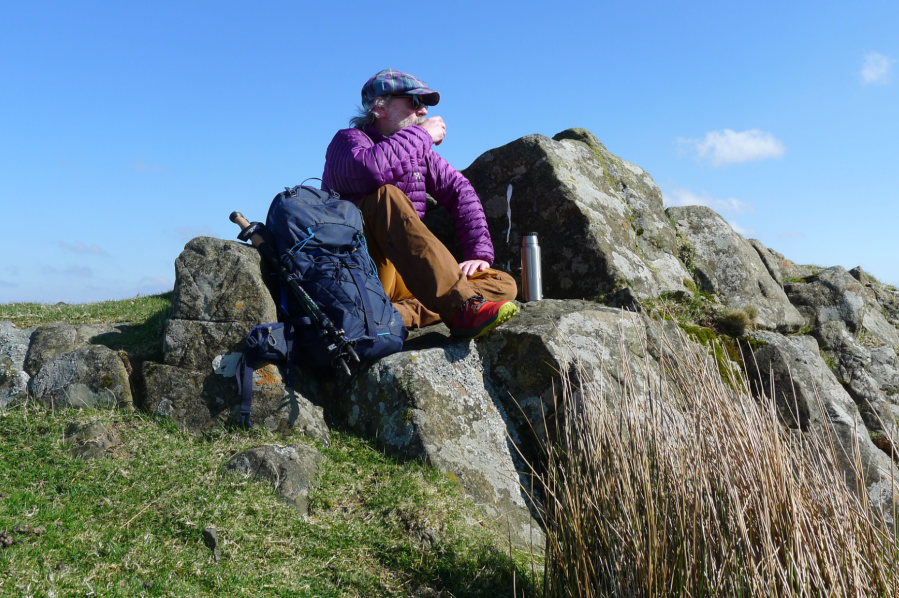
What to look for in the best hiking backpacks
Capacity
Hiking packs for hillwalking run from 20 to 35 litres in volume. Regardless of the claimed capacity will a pack hold all the gear you want to carry? Litres are not a fixed amount when it comes to packs! It’s always worth thinking how your gear will fit inside. If you think you might want to carry extra gear at times, look for straps and shockcord for attaching it.
Back length
Back length isn’t as important with small packs as it is for big ones designed for heavy loads. As long as the top of the pack isn’t far below your shoulders when the hipbelt is round your hips, the pack should carry okay.
Back system
For heavier loads an internal frame or stiff framesheet that transfers the weight to the hipbelt is useful. In small packs this isn’t essential, though one does make packing easier and stops hard items poking you in the back.
Hipbelt/waist strap
Padded hipbelts should fit snugly round the hips.
Pockets
Pockets are useful for organising gear, especially small items that might be needed during the day. Mesh pockets are useful for wet items, allowing them to drain and dry out. Check that pockets are the right size for your gear.
Straps
External straps can be used for attaching items such as foam pads or trekking poles and for compressing the size of the pack when a small load is carried. They should be easy to adjust and not interfere with access to pockets.
Daypack features to avoid
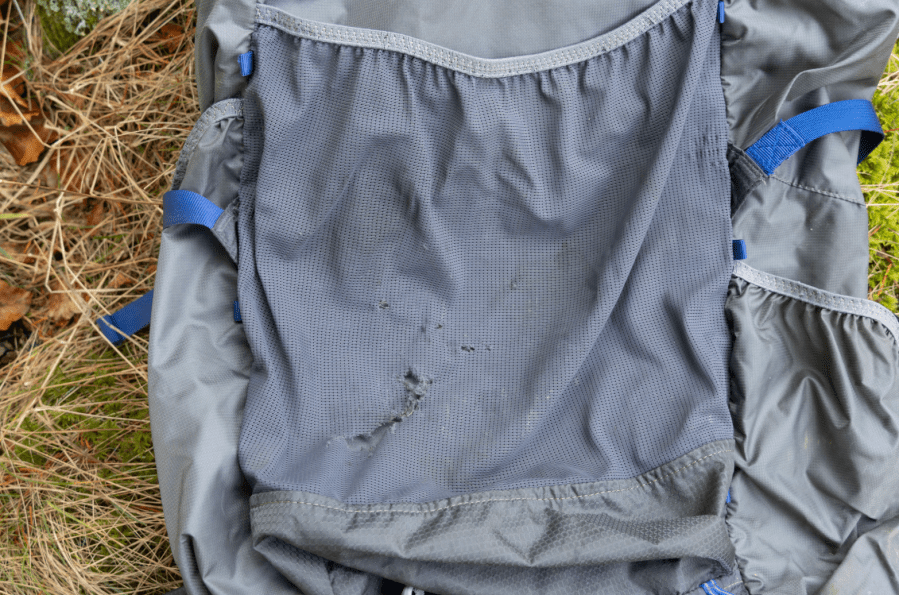
Chris Townsend has been testing backpacking packs since long before many of us were born! Here are some features he now avoids.
- Overcomplicated or bulky back systems
- Back systems with an air gap which can act as a wind tunnel and upset stability
- Mesh pockets prone to ripping
- Too many straps and buckles that add faff and extra weight
Read more: “I’ve tested big packs for decades – I wouldn’t buy one with this feature”
How to fit a backpack
To find the right fit packs should be tried on fully loaded. It’s worth taking time to do this. A comfortable pack makes a huge difference to the enjoyment of a backpacking trip. Most packs come with specific fitting instructions and it’s always worth following these.
The key for the correct fit is the length of your back, measured from the base of the neck to the upper hipbone (technically from the seventh cervical vertebra to the top of the iliac crest). Having someone measure your back length with a flexible tape measure is the best way to find this. Your actual height is not important – some people have long legs and short backs, other have short legs and long backs.
Learn more about how to fit a backpack.
How to pack a daypack
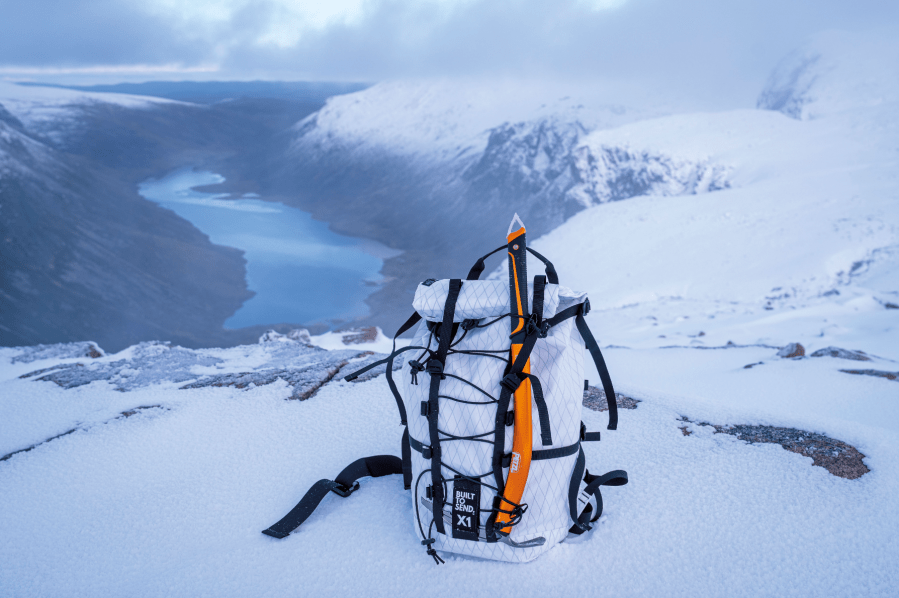
The most important principle is to ensure that the loaded pack is comfortable to carry by distributing the weight evenly. This may not matter so much for shorter walks. But for longer trips, when both your mileage and the weight on your back increase significantly, it starts to become a major factor in overall trail happiness.
The second thing to bear in mind is that you’ll want easy access to items you’ll need regularly, or in an emergency situation. In the first instance, this means being able to scoff a snack or swig from your water bottle without needing to empty out half your pack’s contents. Similarly, if the wind picks up or the heavens open, you’ll want to be able to grab extra layers (like your waterproofs) quickly and easily. The same applies in an emergency scenario. Hopefully, this won’t be anything too dramatic. But if you need a blister plaster, it helps if your first aid kit is within easy reach.
As long as you follow those main principles, you won’t go too far wrong. So, despite what many outdoor websites will tell you, there isn’t really one definitive ‘right way’ to learn how to pack a backpack. At the end of the day, it’s your pack and your back, and you’ll invariably find a system that works for you. Exactly where everything should be placed becomes largely a matter of personal preference.
Learn more about how to pack a daypack.

Can I make my backpack waterproof?
Most hiking backpacks are not waterproof. Although the fabric usually is, the seams, stitching and zips are not. Sealing these is complex and expensive. There are waterproof backpacks available from companies like OverBoard made from tougher, more puncture-resistant fabrics than ordinary backpacks. These have basic designs and are really drybags with shoulder straps and a few external features. For activities where getting your backpack soaked or even immersed is a real risk – canyoning, kayaking, pack rafting – such packs may be worthwhile. However, for most uses they’re overkill.
However, there are several ways to keep the contents of a standard backpack dry. All of them have advantages and disadvantages. For water-sensitive items like electronics and down sleeping bags and clothing it’s worth using more than one.
Many backpacks come supplied with pack covers, usually stored in a zipped compartment in the base. These are made from waterproof fabric and are shaped to fit over the pack. Pack covers can be bought separately in different sizes for packs that don’t come with them. They should have elasticated edges or adjustable drawcords so they can be closed tightly around the pack.
Rather than put a cover over your pack you can line the inside with a large waterproof bag – or a pack liner. This can be as simple as a heavy-duty bin bag. These are cheap and effective until they tear, which they do quite quickly. Purpose-made pack liners and ones designed for rubble or garden waste are much tougher.
Perhaps the best but most costly solution is to pack your bag with lightweight drybags. They have taped seams and roll tops come in a large range of sizes. With a selection of these, you can pack items separately. So nothing is exposed to the rain that doesn’t need to be when you open the pack to get something. A large drybag can also be used to line the whole pack. The only disadvantages of drybags are the need to remember what’s in each bag (different colours help and some are available with clear sections) and the cost.
Learn more about how to keep your belongings dry on the trail.