
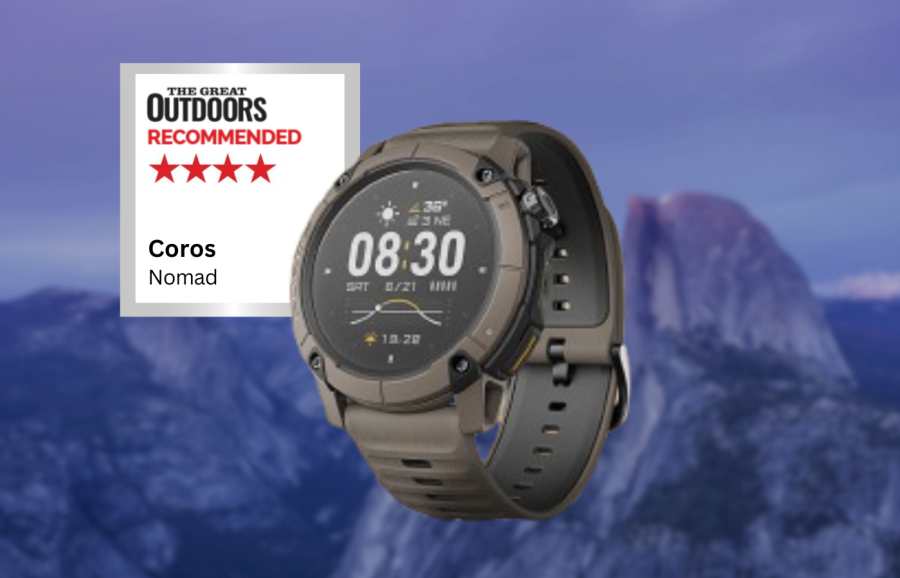
After extensive testing, David Lintern finds the Coros Nomad a great tool at an excellent price point.
First, a confession to make – despite (or maybe because of) working as a sound engineer in a previous life, I’m quite tech averse when outdoors, and this is my first GPS enabled watch. My previous unit was the basic, now classic Suunto Core. As such, the Nomad feels like a step up, but probably about right for my use-case.
David Lintern recommends
Overall, I think the Nomad is a great tool. It’s a more affordable choice with a more than practical battery life and does most of what units twice the cost do.- easy to use software
- lightweight
- great battery life
- excellent value
- some ‘basic’ functions behind menus
- chunkier case
| Quick specs |
|---|
| Price: $349 | £319 (available from Tredz) Weight (with strap): 61g Case size: 47.8 x 47.8 x 14.8mm Screen: 1.3″ Always-On MIP display, hardened mineral glass Battery life (with GPS on): 50hours + at Dual frequency, single untested OS grid ref: Yes (on compass) Mapping: Yes Operation: Buttons and touchscreen uk.coros.com |
The casing is plastic and aluminium, sits a little proud on the wrist but has bevelled edges rather than sharp lines, which avoids the accidental slicing of fragile sleeping mats and sleeping bags that some competitors are responsible for! For smaller wrists, the new Coros Pace 4 has almost identical specs but a smaller profile. It’s robust and very lightweight, and more than waterproof enough to wear while swimming (but not diving – it’s rated to 5 atmospheres). I’m not keen on the silicone strap which can get sweaty, but it’s easy enough to replace with an aftermarket fabric alternative should one want to.
The screen is not AMOLED but I find it perfectly readable so far. There are 3 easy to use buttons on the side of the face, as well as a swipe-able screen, and menu navigation is very intuitive. I love the ability to change watch faces – something digital and info rich for outdoor use, a more trad dial based face for day to day. Battery life may not be best in class but I was impressed – tracking continuously on a 3-day backpack, I still had over 60% charge at the end. If you like to record routes but are concerned about preserving battery life on your phone, this is clearly the way to go. Recharging happens via a rear port and USBC adapter, and so power can be drawn from any portable powerbank. It recharges from 10-100% in about an hour, and with tracking and other bells and whistles switched off, it will last the best part of a month.
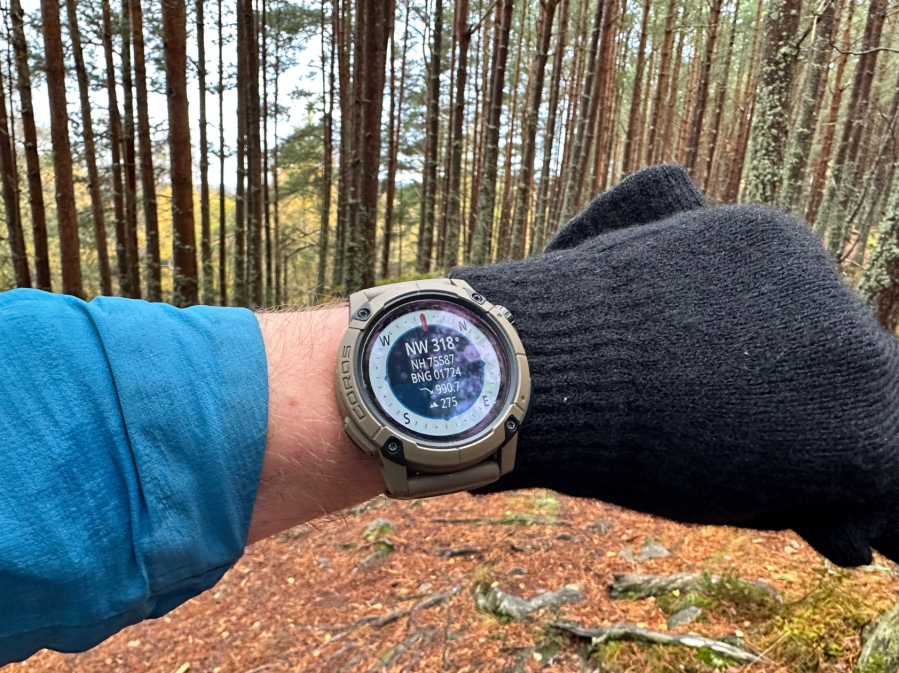
GPS is single or ‘dual’ frequency and the Nomad uses the brand’s latest CPU. The dual is quick to lock in the open, less so in closed spaces. Mapping is not as good as some competitors, but excellent as a backup to other sources – it displays the usual street view info, and/or topo – landforms, contours, position and a breadcrumb track. OS grid reference does not display on the map page but can display on compass, which itself is surprisingly responsive. Altitude readings are barometer controlled so there’s no need to be WiFi or app linked. Weather needs an update via the app every few days. Both give a decent sense, but don’t expect laser levels of accuracy.
The app is simple to use and links to the watch via Bluetooth. It allows you to upload and download GPX, Strava and other route file types, plus weather and fitness information. The watch will voice record, and this information can be back integrated via the app with photos taken on route for information rich route flyovers. Should you wish, it will pair with your phone to deliver text and WhatsApp messages. There are dozens of activity and fitness profiles, mostly unused for me. However, as a newbie to this level of feedback, I found metrics like sleep, steps, heart rate, HRV, and distance really useful to tweak my performance on daily local walks, runs and rides. I look at this from an overall health and fitness point of view, rather than as any kind of ‘athlete’.
Overall, I think the Nomad is a great tool. It’s a more affordable choice with a more than practical battery life and does most of what units twice the cost do.
How David tested
David tested the Nomad from beta stage into release, from late summer into winter on his regular 5K trail runs, fire track bike rides and several day and overnight hikes, mostly in the Cairngorms. David also compared to the new Coros Pace 4.
This review was first published in the February 2026 issue of The Great Outdoors. Head to our GPS watches guide to compare this with other rugged, outdoor smartwatches on the market.