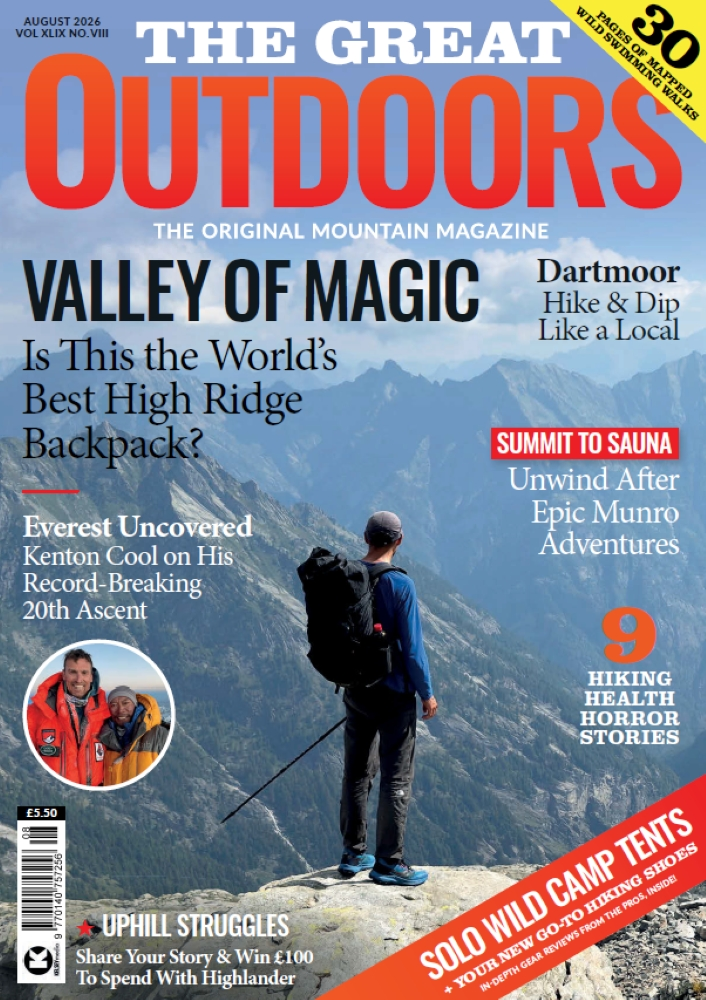

Sometimes, a simple walk can feel like moving mountains, especially when you live far away from places in which you feel free – and particularly when England and Wales still have a right to roam on only 8% of our land, much of it in hard-to-reach areas. Uprooting your existence to live and work outdoors might not be a path for all – and just as with hillwalking, there are peaks and pitfalls that come with change. But relocating to the mountains can make the logistics of simply going for a walk a bit simpler; one less barrier to nature, one step towards living your outdoor dreams in 2026.
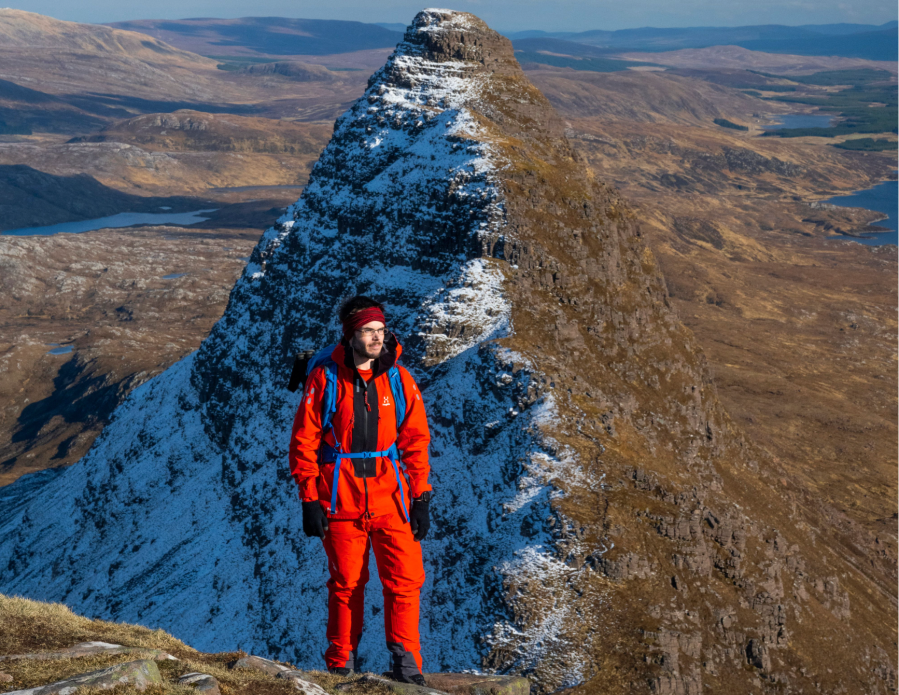
Cover image: Suilven | Credit: James Roddie
This issue is dedicated to ways in which we can all bring the outdoors into our life more often. Learn from those who’ve achieved a rural relocation from city to cabin, from being unable to pay bills to living in a bell tent. Elsewhere, Anna Richards discovers there’s always a way to feel at home outdoors on an igloo-building Swiss sub-zero survival course. Or elevate your winter bothy stays with home comforts in the form of the gastronomic pairing choices of MBA Trustee Juls Stodel.
Long work hours holding you back? Maybe 2026 is the year to retrain for the outdoor job of your dreams. Learn how from the pros. Too busy or too tired to spend your free time indoors, poring over maps and apps and with military precision and logistical laser focus to plan your next best hill day? Don’t fret. We’ve done the hard work for you with 32 pages of mapped walking routes. We hope they inspire an adventurous year – wherever you may lay your hat.
Highlights of this issue:
- Britain’s best hikes: we map the way to must-see summits in 2026
- Folks who’ve found freedom by moving to the mountains explain how they did it
- Want to thrive in Scottish winter? Photographer Feargus Cooney shares his tips
- Louis D. Hall and his horse Sasha trek the Alps to ‘the end of the land’ at Cape Finisterre
- Igloo-building, pine needle soup and high-stakes fire building with Anna Richards in Swiss Jura
- Rosee Woodland straps into an AI Exoskeleton designed to give hikers a boost
PLUS: Jim Perrin paints a portrait of Mount Canigou; we escape on a snow-clad Loch Katrine; our gear team tests the best GPS watches and hiking trousers; Nadia Shaikh finds joy in frogspawn; Juls Stodel helps another reader with their Uphill Struggle; we share the latest news from the mountains; check the calendar of walking events we rate; and get inspired with our reviews of the latest outdoor books and films.
Your outdoor dreams await:
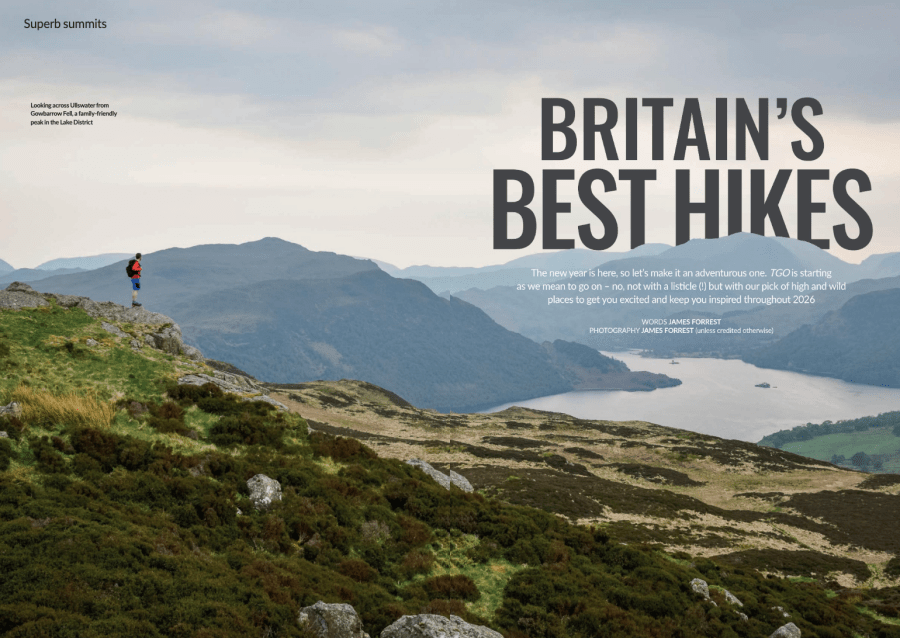
Britain’s Best Hikes: The new year is here, so let’s make it an adventurous one. TGO is starting as we mean to go on – no, not with a listicle! – but with our pick of high and wild places to keep you inspired throughout 2026.
“If you’re hoping to inject the year ahead with some real mountain fever, here’s an intrepid tick-list to get you started. Our hope is that this selection box of some of the finest British mountain routes will rescue your inner peak-bagger from Christmas stupor or seasonal SAD. From sinuous, sun-drenched ridgelines and iconic craggy leviathans to family-friendly hills and overlooked summits, there is something here for every hillwalking enthusiast. There’s a caveat, of course. Compiling any list of ‘best mountains’ is a fool’s errand. You can’t do right for wrong. Some will lament the peaks we have included; others will howl about those omitted. Even the great list-makers have come unstuck. The late Alfred Wainwright will be ridiculed in perpetuity for his perplexing inclusion of Mungrisdale Common – that much-maligned bogfest – in his otherwise lauded 214 Lakeland opus while the godfather of Scottish peak-bagging, Sir Hugh Munro, is equally criticised for his peculiar choices. If those two aren’t immune from pillory, what hope do we have? The positive news is that any mountain list is simply a gateway to inspiration, rather than a definitive guarantee of good times…”
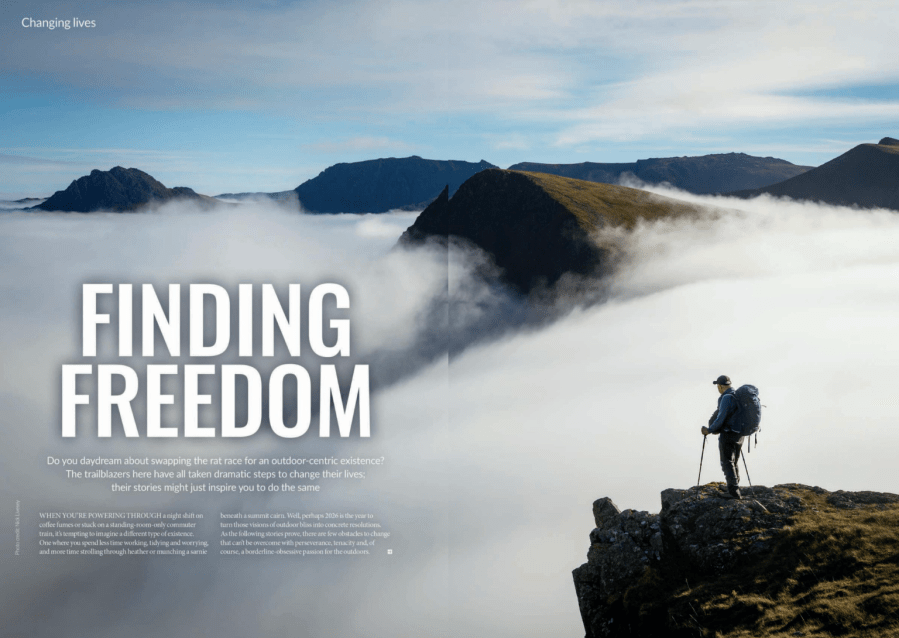
Finding Freedom: Have you daydreamed about swapping the rat race for an outdoor-centric existence? The trailblazers here have all taken dramatic steps to change their lives: their stories might just inspire you to do the same.
“When you’re powering through a night shift on coffee fumes or stuck on a standing-room-only commuter train, it’s tempting to imagine a different type of existence. One where you spend less time working, tidying and worrying, and more time strolling through heather or munching a sarnie beneath a summit cairn. Well, perhaps 2026 is the year to turn those visions of outdoor bliss into concrete resolutions. As the stories here prove, there are few obstacles to change that can’t be overcome with perseverance, tenacity and, of course, a borderline-obsessive passion for the outdoors…”
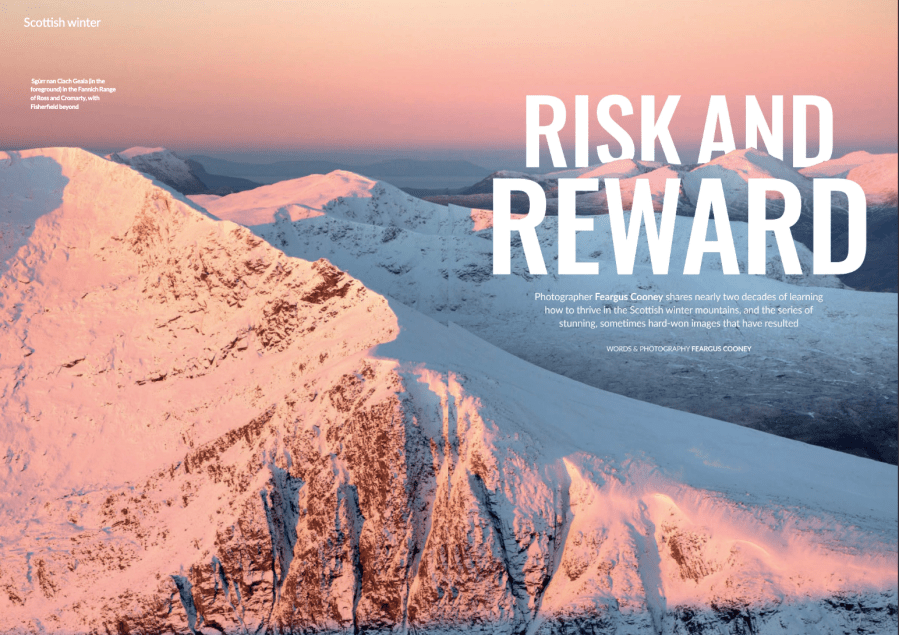
Risk and Reward: Photographer Feargus Cooney shares nearly 2 decades of learning how to thrive in the Scottish winter mountains, and a series of stunning, sometimes hard-won images that have resulted.
“Incredible beauty. If I had to choose two words to describe why I am drawn to the mountains in winter, those would be the ones I would pick. There’s something addictive about the crunch of ice shattering beneath my feet as I walk across thin films of it on boggy ground, or the cushioning sensation of stepping into deep, powdery snow accompanied by a muffled squeak as the flakes compress under my weight. But really, it’s about the scenery – the flowing lines, changing colours and textures that has drawn me into the winter hills in what can be fierce conditions. Apart from the occasional sledging session, I used to shun the discomfort of winter, despite growing up in the hills. This changed as I grew older and more serious about my photography. With even a thin coating of snow or frost the mountains gain a sense of wildness that tends to be absent without it. Footpaths and other human made marks are wiped clean by a dazzling carpet of white, which is with any luck illuminated by a soft glow from the low lying sun. There are of course slushy, damp days, often more challenging technically in terms of staying physically comfortable, but still great for capturing images…”
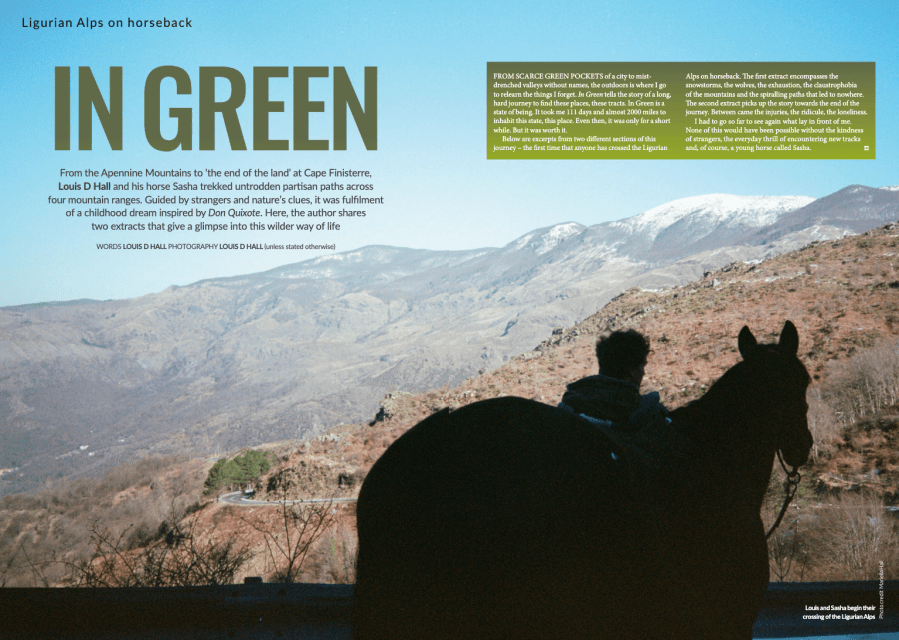
In Green: From the Apennine Mountains to ‘the end of the land’ at Cape Finisterre, Louis D. Hall and his horse Sasha trekked untrodden partisan paths across four mountain ranges. Guided by strangers and nature’s clues, it was fulfilment of a childhood dream inspired by Don Quixote. Here, the author shares two extracts that give a glimpse into this wilder way of life.
“From scarce green pockets of a city to mist-drenched valleys without names, the outdoors is where I go to relearn the things I forget. In Green tells the story of a long, hard journey to find these places, these tracts. In Green is a state of being. It took me 111 days and almost 2000 miles to inhabit this state, this place. Even then, it was only for a short while. But it was worth it. Below are excerpts from two different sections of this journey – the first time that anyone has crossed the Ligurian Alps on horseback. The first extract encompasses the snowstorms, the wolves, the exhaustion, the claustrophobia of the mountains and the spiralling paths that led to nowhere. The second extract picks up the story at the end of the journey. Between, came the injuries, the ridicule, the loneliness. I had to go so far to see again what lay in front of me. None of this would have been possible without the kindness of strangers, the everyday thrill of encountering new tracks and, of course, a young horse called Sasha…”
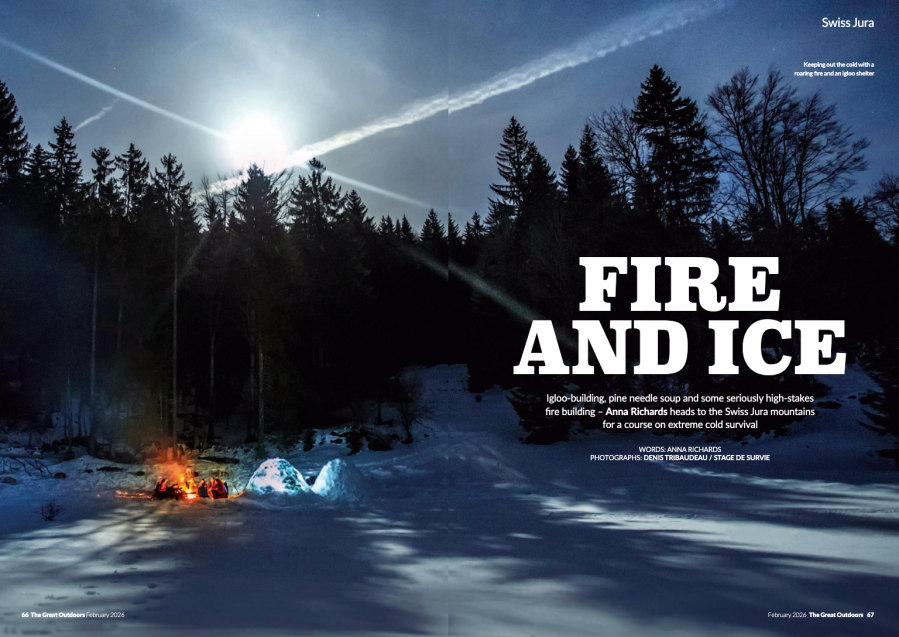
Fire and ice: Igloo-building, pine needle soup and some seriously high-stakes fire building – Anna Richards heads to the Swiss Jura mountains for a course on extreme cold survival
“It was almost dark when we finished the igloo. I’d spent over an hour hollowing out the inside of the snow dome we’d built and hadn’t noticed the light fading. Underground, thick piles of snow between me and the sky, I felt like an Arctic ground squirrel. We’d prepared like bears going into hibernation: a mountain of risotto the night before to rival the peaks of Swiss Jura around us, a stack of viennoiseries (pastries) that morning. For the next two days we were to be survivors, living solely off what we managed to forage or hunt, and our only protection from the elements would be whatever we built ourselves. The frozen tundra around us hardly looked like it was going to be a cornucopia of edible plants and trappable animals, so I was glad of our hibernation preparation. There were nine of us including the guide. My partner Val, who’d generally prefer a king-sized bed to a night spent in the dirt, had nobly given me an ‘extreme cold survival course’ for Christmas, and signed himself up too. The six other men, all as yet strangers to each other, ranged in age from early 20s to mid 50s. Our guide Xavier could have fallen anywhere in this age range. His skin was weathered from constant exposure to the elements, and his clothes peppered with what looked like cigarette burns, although we’d find out their real origins later…”