
Type ‘running shoes’ into a search engine and the choice is bewildering. First things first, though – there’s no pressure to run in them! Many of us are happy using lighter footwear in the hills, especially in the warmer months, for walking and backpacking as well as anything more fleet of foot. We’re concentrating on the best trail running shoes for for trail, not road use.
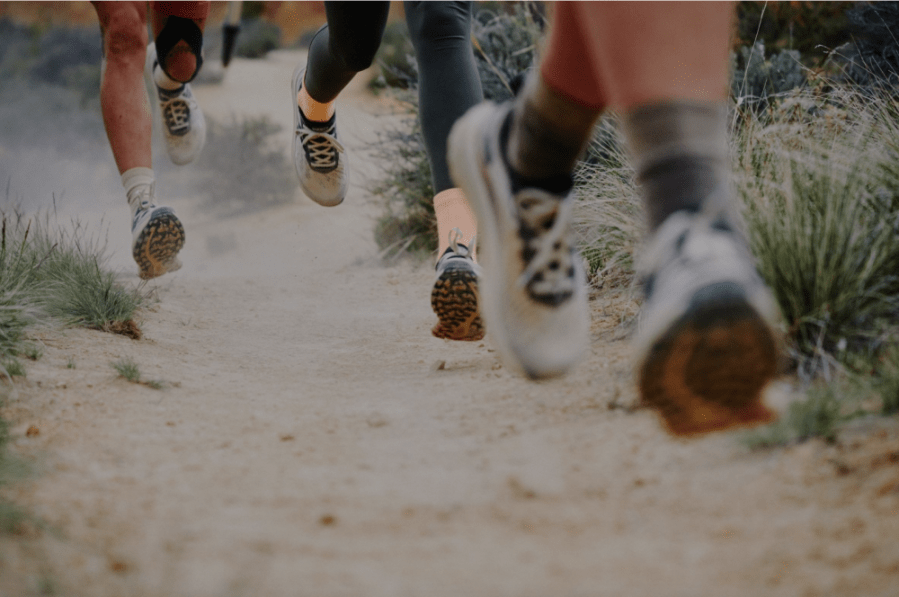
Main image: These runners ‘Seek’ trails | Credit: KEEN Footwear
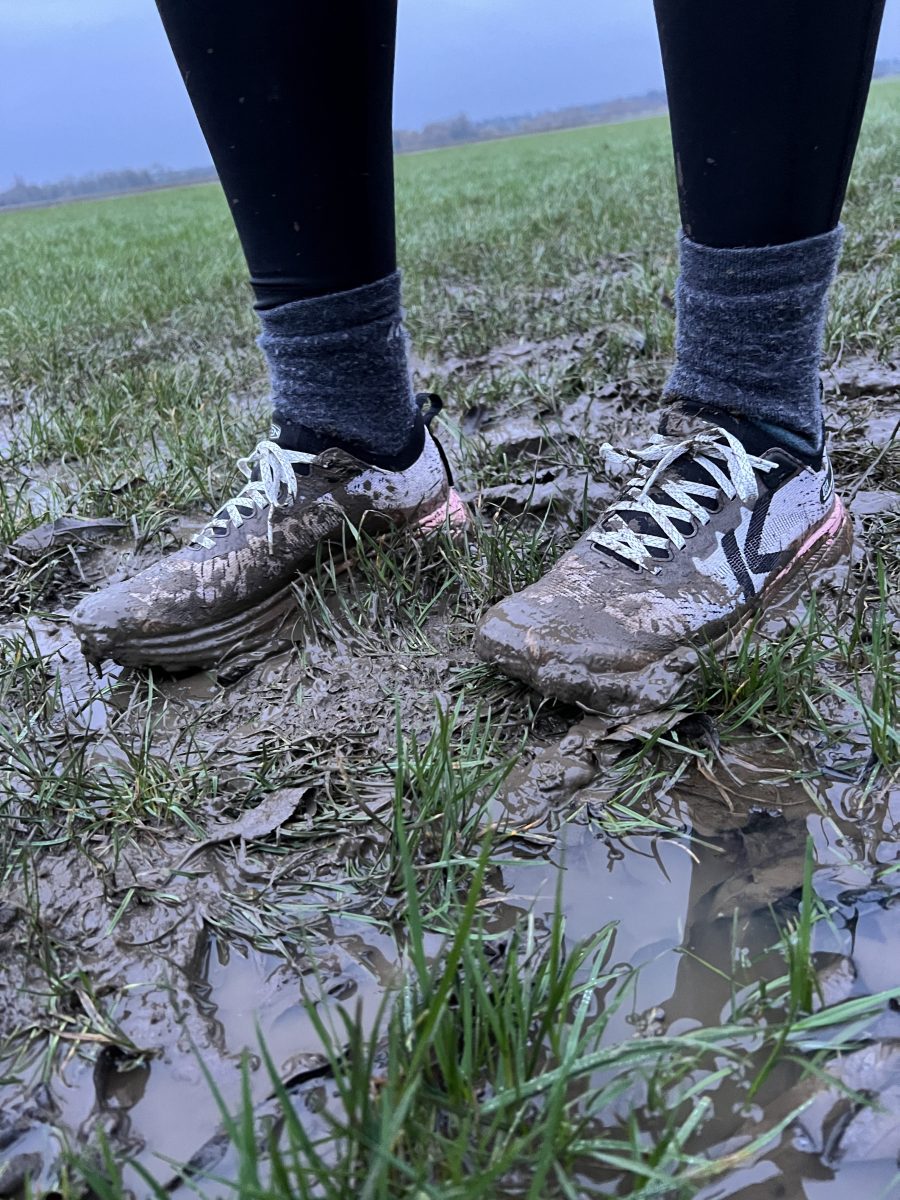
What’s the difference? Tarmac is hard and flat, whereas a natural surface (on or off trail) is softer and more undulating, so as a rule, a trail shoe comes with less midsole cushioning and more tread. It can help with balance for the foot to be closer to the ground, and a grippier outsole helps us stay upright on a mix of soft, wet or bumpy surfaces. Similarly, trail shoe tend to feature less of a difference in the thickness of midsole between the heel and toe (i.e a lower ‘drop’), because there’s less of a need to protect the Achilles and legs from the repetitive impact of running on a hard, uniform surface. Lastly, trail shoes tend are less likely to feature midsole inserts (sometimes called a medial post) designed to correct for over or under pronation (the rolling of the foot inward or outward).
Trail shoes are made ‘neutral’ to allow the foot to adapt to varied terrain. Note that some trail shoes do come with a ‘rock plate’ to protect the foot against sharp stones or roots, however! Finally, many runners are synthetic and/or petrochemical based, but recycled materials are increasingly common. All the above are generalisations. Some trail shoes are designed with big, ‘sticky’ lugs for bog trotting, others with lots of cushion, or more stability for use on mixed terrain, including rock. Choose your weapon… and run if you like, or walk if not.
Why you can trust The Great Outdoors
The Great Outdoors is here to help you make the most of your time outside. We have been helping people to explore from sea to summit, valley to mountain top for over 40 years. Our gear tests remain completely impartial. If you are wary of websites that only review brands that advertise with them, or sceptical of social media accounts always singing the praises of their latest freebie, you’ve come to the right place! Our reviews rank #1 for rigour, trustworthiness, and independence, and our gear testing team is the most experienced in Britain. With over 200 years’ experience between us, we are professional mountain leaders and instructors, wildlife photographers and rangers, outdoor authors, guidebook writers and trail addicts.
The best trail running shoes we’ve tested
| Quick List |
|---|
| Best overall: INOV8 TrailTalon Zero (available from INOV8) |
| Best newcomer: Keen Seek (available from KEEN Footwear) |
| Best value: Jack Wolfskin Trail Knit (available from Jack Wolfskin) |
| Best for wide feet: Altra Lone Peak 7 (available from Altra) |
| Best for ankle support: Arc’teryx Norvan LD3 (available from Arc’teryx) |
| Lightest in test: Salomon Aero Blaze 3 Grvl (available from Salomon) |
| Greener Choice: Helly Hansen Skyhawk TR (available from Helly Hansen) |
Best overall
INOV8 TrailTalon Zero
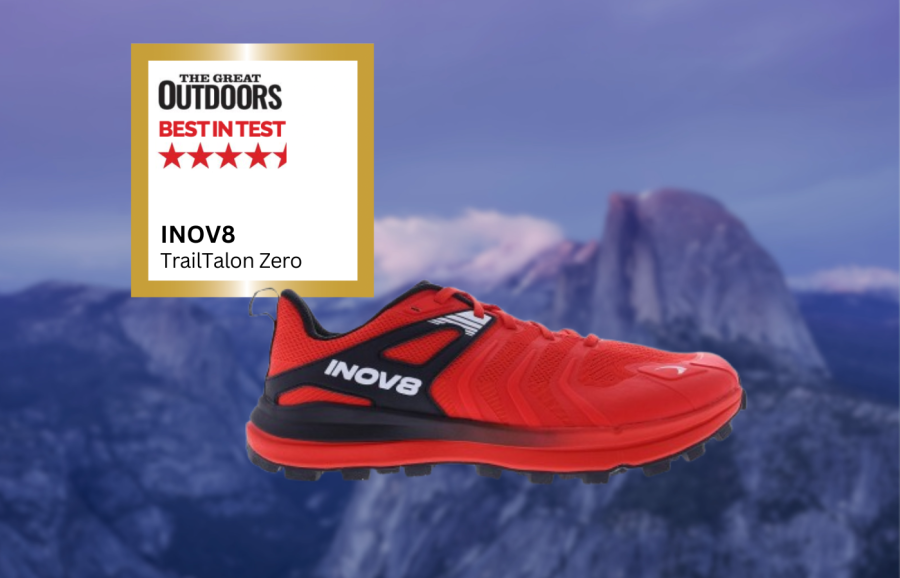
Peter Macfarlane’s Best in Test
The TrailTalons proved dexterous and nimble, grippy and comfortable across any terrain outside of tarmac where the soles will wear more quickly.- light and nimble
- grippy on soft ground
- price
- acclimatisation needed for some
| Quick specs | |
|---|---|
| Price | £150 (available from INOV8) |
| Weight | 568g (UK9, pair) |
| Heel-to-toe drop | 0mm |
| Lug depth | 6mm |
| Materials | graphene rubber outsole, foam insole, synthetic knit upper, plastic molded overlays |
| Features | zero-drop sole construction, rock plate underfoot protection, Boomerang footbed, standard and wide fit available, aggressive lug pattern |
| Waterproof | no |
| Sizes | 7-12UK inc half sizes, 40.5-47EU |
| Men’s version | Yes |
| inov8.com |
The INOV8 TrailTalon Zero is the lightest shoe I tested and is also the only shoe with a zero-drop, which means that your heel is at the same height as your forefoot. This changes your gait slightly, promoting a more natural cycle of movement and footfall. It’s only a few millimetres difference and although subtle, I find it feels more direct – my feet feel like they’re more tangibly on the ground, not above it. The Trail Talons are still well padded and a rock plate in the midsole adds protection, so zero-drop shouldn’t be seen as an uncomfortable option.
The outsole is a grippy rubber, molded with aggressive 6mm lugs which bite into softer and wet terrain very well. This traction brings confidence which you need when running on rough ground. The upper is a mix of mesh and plastic overlays which holds the shoe’s shape and protects several of the usual wear points at flex areas. A thicker overlay runs from the heel to the second-top lace slots to minimise stretch on the upper when laced and helps keep the shoe snug. Despite so much overlay, the TrailTalon still drains well when wet. The insole is shaped and padded with a pebbled upper surface which is very comfortable. The tongue is light mesh with a plastic centre which is positioned under the lace knot to reduce pressure.
Read more: Peter’s full INOV8 TrailTalon Zero review
Best newcomer
Keen Seek
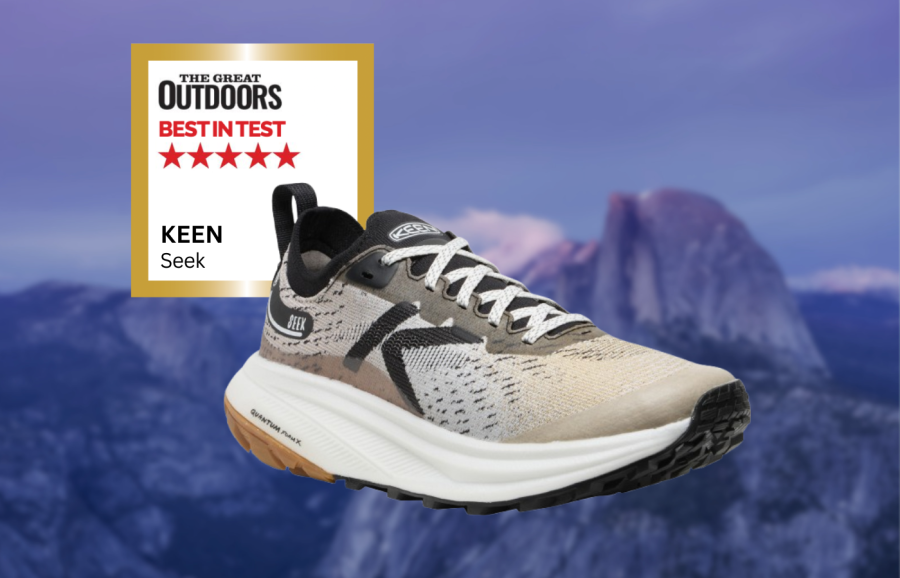
Gemma Palmer’s Best in Test
Underfoot, these runners felt ‘eager’, offering a pillow-enough-soft strike that doesn’t sacrifice the energy needed to push off.- debris protection
- midsole
- versatile
- not waterproof
| Quick specs | |
|---|---|
| Price | $185 | £160 (available from KEEN Footwear) |
| Weight | 636g (UK 8.5, pair) |
| Heel-to-toe drop | 6mm |
| Lug depth | 4mm |
| Materials | Ultra-abrasion-resistant polyester knit, Thermoplastic polyurethane (TPU) overlay, Breathable textile lining in 80-90% polyester, QuantumFoamX, EVA foam, Eco Anti-Odour, PFAS-Free: All materials are treated without “forever chemicals” for water repellency, high-abrasion non-marking rubber compound |
| Features | Integrated ‘sock-like’ collar, Wide toe box, lace garage, butterfly heel pads , gaiter-attachment points, Neutral support, directional lugs |
| Waterproof | No |
| Sizes | 2.5 – 9.5 UK / 35 – 44 EU |
| Men’s version | Yes |
| keenfootwear.co.uk |
I particularly liked the stretchy collar, which acts as an integrated ankle sock to keep debris out. The Seek is gaiter-ready with hook eyelets, though the sock knit means you’re less likely to need them. The internal soles have a frictionless finish, and the shoe has been “consciously created” using water-based adhesives and a PFAS-free materials. The rear Velcro loop is also perfect for hanging the trainers from a backpack or suspending them from a hanger for a post-run hose down. Underfoot, the QuantumFoamX midsole provides a responsive, stable ride. It felt ‘eager’, offering a pillow-enough-soft strike that doesn’t sacrifice the energy needed to push off. The foam is split from the middle toes to the outer rear heel, allowing the foot to react naturally through the footbed on more technical ground. With my heels held in place by the TPU counter, I stayed stable even through flood waters and critically, no grit got in.
The lockdown-knit fit ensures they don’t feel like “clown shoes” and remain nimble on uneven terrain. The tread is a high-abrasion formulation which is rated to last 925 miles (1,500 km) before wearing smooth. They wash up nicely for the supermarket or gym and feature Eco Anti-Odour tech to keep things fresh. I can’t wait to run the summer beach Cani-X in these. They are worth every penny.
Read more: Gemma’s full KEEN Seek review
Best for wide feet
Altra Lone Peak 7
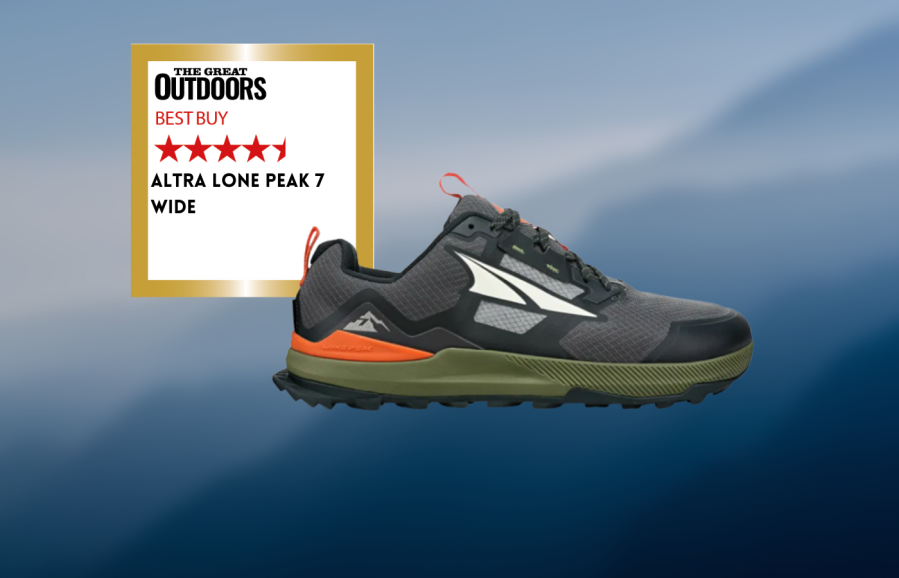
Chris Townsend’s Best in Test
I’ve used several versions of the Altra on long walks and they’ve been superb.- Wide toe box accommodates foot splaying
- Aggressive outsole
- Wide toe box might not suit those with narrow feet
| Quick specs | |
|---|---|
| Price | $150 | £135 (available from Altra) |
| Weight | 1.38 lb. | 628g |
| Heel-to-toe drop | 0mm |
| Lug depth | 4mm |
| Materials and features | 25mm stack height, Quick-Dry Air Mesh upper, Maxtrac outsole, Altra EGO midsole, footshaped toe box |
| Sizes | 6-13 |
| Women’s version | Yes |
The first ever iteration of the Lone Peak was released in 2011 and it became an instant hit due to its unique features, including a zero-drop platform, foot-shaped toe box and aggressive outsole. Whilst primarily made for trail running, many multi-day hikers began adopting these trail shoes mainly due to the fact that they cater for the kind of foot swelling and splaying that can occur over high mileage.
The new, seventh version of the LonePeak possesses all the usual traits of past models, but with deeper lugs (4mm) and a new seamless upper material that brings a touch more durability, longevity and comfort, but with only 30g extra in weight overall. I’ve used several versions of the Altra on long walks and they’ve been superb. It’s the best footwear for long-distance multi-week walks that I’ve worn.
See more: Altra Lone Peak 7 Wide First Look
Best for ankle support
Arc’teryx Norvan LD3
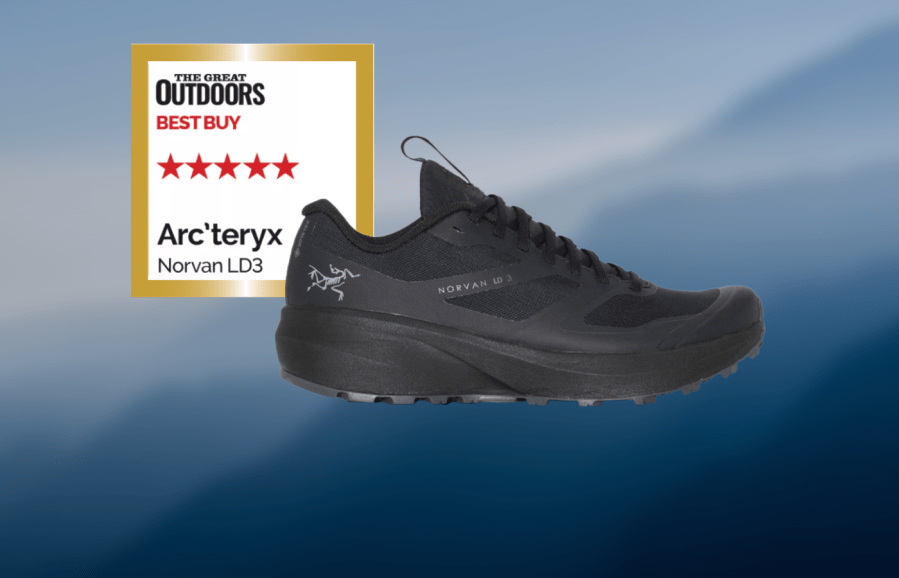
David Lintern’s Best in Test
I favour the Norvan LD3 for its balance between cushioning and lateral stiffness and the volume around the toes that allows for swelling after heavy mileage.- Grip
- Support
- High Ankle Support
| Quick specs | |
|---|---|
| Price | $163 | £150 (available from Arc’teryx) |
| Weight | 1.34 lb. | 612g |
| Heel-to-toe drop | 6mm |
| Lug depth | 4mm |
| Materials and features | EVA/polyolefin blend midsole, single-layer mesh upper, toe cap, Ariaprene foam tongue, InFuse midsole (42 Shore C), anti-fatigue insert – 85%, internal foot wrap, Vibram MegaGrip outsole |
| Sizes | 6.5-12.5 |
| Women’s version | Yes |
The Norvan LD 3 is a quietly competent generalist. The fit is true to size, with a wide forefoot that allows for swelling in the toes, and a high, narrow heel cup that keeps the foot secure and supported. There’s less stiffness at the ankle in this version, too, which is easier on bony ankles in a deeply cupped shoe.
This was in fact chosen as Highly Commended in The Great Outdoors Awards 2023. Our judges favoured the Norvan LD3 for its balance between cushioning and lateral stiffness, the volume around the toes that allows for swelling after heavy mileage and the ‘sticky’ Vibram sole that gives traction on a variety of surfaces.
Read more: David’s full Arc’teryx Norvan LD3 review
Scarpa Spin ST

Fiona Russell’s best in test
The Spin STs are now a firm favourite trail footwear, especially when heading into the summer hills and mountains.- Lightweight
- Great traction
- Durable
- Lace Lock
- Lace lock might irritate
- Overlong laces
- Narrow so not ideal for wider feet
| Quick specs | |
|---|---|
| Price | $179 | £150 (available from Ellis Brigham) |
| Materials | stack height, 22mm to 18mm, Fixion ST sole in Vibram Megagrip, Traction Lug technology, Ortholite insole, breathable upper, high ankle collar, lace lock, lace pocket, vegan friendly |
| Heel-to-toe drop | 4mm |
| Lug depth | 7mm |
| Sizes | EU 37 to 43 |
| Men’s version | Yes |
| Brand site | www.scarpa.co.uk |
The Scarpa Spin ST trail shoes are lightweight, snug, and grippy, making them a top choice for those with narrow feet. The higher ankle collar provides low-level support for rough trails, while the medium cushioning provides comfort for off-road routes. The shoe’s ideal depth for trails is not too thick nor too thin, and the traction on wet, mud, scree, and snow is good due to deeper lugs. However, they are not suitable for long tarmac or hard-packed forest trails due to their unforgiving feel.
The uppers are durable with abrasive-resistant mesh at the mid foot, but not as breathable as other shoes. The lace-lock system is not as breathable as other shoes, but once locked, the laces stay taut. The shoe’s lace-lock system is a bit tricky, but once in place, they stay put. The Scarpa Spin ST’s are a firm favorite for trail footwear, especially for summer hills and mountains.
Read Fiona’s full Scarpa Spin ST Review
La Sportiva Prodigo Max
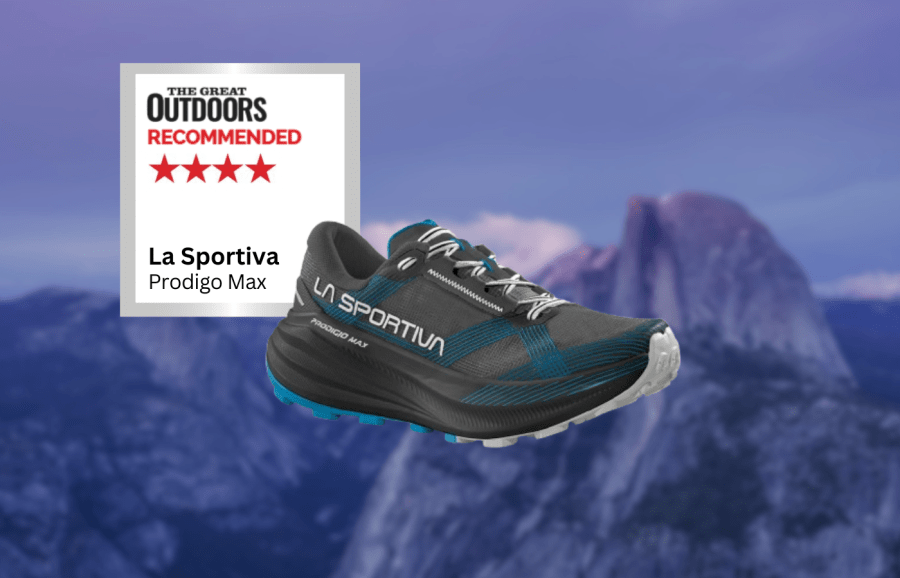
Gemma Palmer recommends
Overall, the Prodigio is deserving of high marks for comfort and the TPU-reinforced mesh that feels bomb-proof on rugged terrain.- cushioning
- durability
- comfort for wider feet
- wide bridge incompatibility
| Quick specs | |
|---|---|
| Price | £123 (available from Ellis Brigham) |
| Weight | 649g (9 UK, pair) |
| Heel-to-toe drop | 6mm |
| Lug depth | 4mm |
| Materials | Supercritical Expanded Thermoplastic Polyurethane (ETPU) Core, Nitrogen-Infused EVA Cage, Recycled supercritical TPU foam, TPEE (Thermoplastic Polyester Elastomer) Mesh, Thermoplastic Polyurethane (TPU) Embroidered Yarns, High-Durability Compound (Heel), High-Grip Compound (Forefoot) |
| Features | XFlow Endurance foam, FriXion® Red Dual Compound, Medium Rocker, TPU Inserts, 3D Mesh Lining |
| Waterproof | No |
| Sizes | 3.5 – 9 UK / 36 – 43 EU |
| Men’s version | Yes |
| www.lasportiva.com |
The sole flexes naturally, mirroring the foot’s movement while remaining incredibly responsive. Built for ultras, the XFlow Endurance foam provides a plush 37mm stack height that stays springy and has yet to decompress. These aren’t winter swamp-munchers but hey absolutely sing on gravel, grass, and rocky mountain paths where the rocker helps with a smooth toe-off. What really impressed me was the reduction of “stone bruising” via the pressure-dispersing sole, and the ‘splash-zone’ performance.
Overall, the Prodigio is deserving of high marks for comfort and the TPU-reinforced mesh that feels bomb-proof on rugged terrain. Better yet, the fabric sheds mud easily when rinsed, so they’re clean and dry for your next outing.
Read more: Gemma’s full La Sportiva Prodigo Max review
Best value
Jack Wolfskin Trail Knit
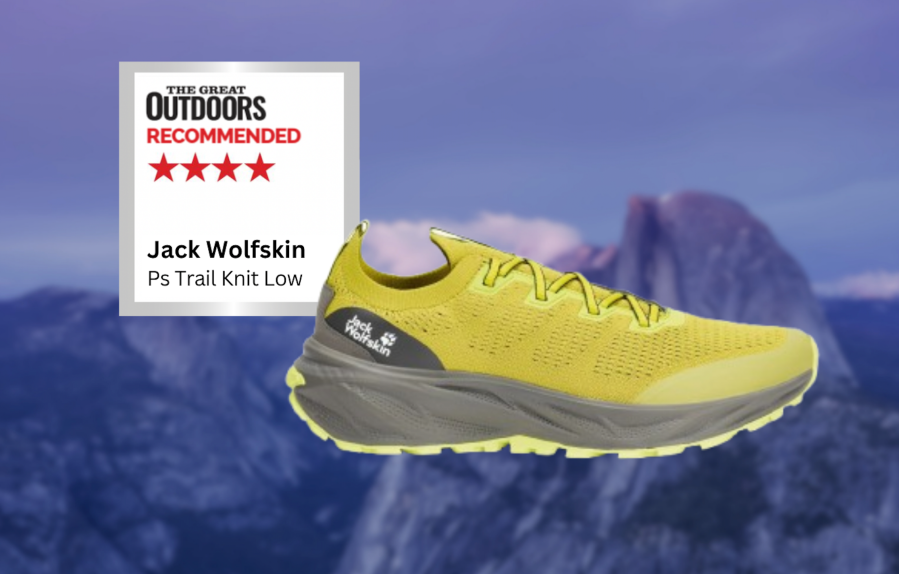
Peter Macfarlane’s Best Value
The Trail Knits have been a good half way point between a runner and walker for me, although better grip in the wet would see them worn on the hills more.- price
- comfort
- grip in wet conditions
- question over outsole durability
| Quick specs | |
|---|---|
| Price | £100 (available from Jack Wolfskin) |
| Weight | 658g UK9 pair |
| Heel-to-toe drop | 10mm |
| Lug depth | 4mm |
| Materials | rubber outsole, foam insole, synthetic knit upper, plastic molded overlays |
| Features | EVA midsole and footbed, reinforced heel cup, Texaride cushioning |
| Waterproof | no |
| Sizes | 39.5-48EU, 6-13UK |
| Women’s version | Yes |
| jack-wolfskin.co.uk |
The Jack Wolfskin Ps Trail Knit Low is the heaviest shoe I had on test but the extra 90g over my lightest pair isn’t something I noticed on my feet – they’re still a nimble pair of shoes. When the weather stopped me heading to bigger hills I took these straight onto a trouble-free long loop in the Muirshiel hills, always a good test. The 4mm lugs on the outsole aren’t the deepest but are square edged and give good traction over most surfaces, other than very wet ground. The sole is well padded with quite a stiff flex from the heel to the toe where it’s light enough to run comfortably. Flex and cushioning is excellent for walking on rough ground with a load. A simple, lightly foam-backed fibre insole settles the foot into the shoe and the fit was spot on straight away. The upper is mostly mesh with reinforcing overlays at the toe and heel.
The upper breathes well and allows water to be pumped out when you’re moving. The lace slots are reinforced and are doubled along the length of the shoe which gives lacing options. The mesh tongue is lightly padded and has been comfortable under a runner’s knot, the heel cup is padded internally which aids fit and comfort. The Trail Knits have been a good half way point between a runner and walker for me, although better grip in the wet would see them worn on the hills more.
Read more: Peter’s full Jack Wolfskin Ps Trail Knit Low review
Lightest in test
Salomon Aero Blaze 3 Grvl
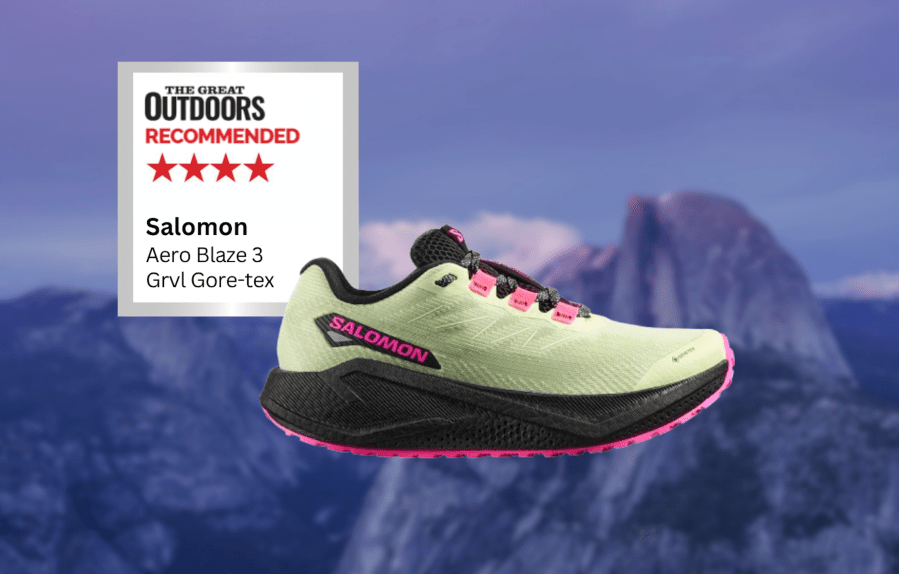
Gemma Palmer recommends
Aero Blaze 3 is the lightest contender in my selection, and is a well-engineered hybrid shoe that is comfortable enough to run at pace on the day to day, and should prove durable for the hills too.- sticky outsole
- precise midfoot
- splashzone protection
- grip on slick surfaces
| Quick specs | |
|---|---|
| Price | $160 | £145 (available from Salomon) |
| Weight | 554g (UK9, pair) |
| Heel-to-toe drop | 8mm |
| Lug depth | 2.5mm |
| Materials | Gore-Tex membrane, Rubber outer sole, Engineered mesh, Textile lining |
| Features | Traditional lacing system with eyelets, optiFOAM², OrthoLite® insole, Gravel contaGRIP®, sensiFIT™ |
| Waterproof | Yes |
| Sizes | 3.5 – 9.5 UK / 36 – 44 EU |
| Men’s version | Yes |
| www.salomon.com |
The outsole really comes alive on firmer surfaces. It offers a tacky, highly connected feel – a ‘soft-tyred’ grip – providing seamless transitions between terrain types. Yet the fit is where things really shine. While the Engineered Mesh upper provides a more natural toe splay while the midfoot is wrapped snugly, so you get vital “duck-foot” freedom without the shoe feeling loose or oversized. The padding is exceptionally plush. The additional toe chevron is a clever touch for driving through rain-soaked grass, as water simply doesn’t penetrate. Combined with the moulded OrthoLite® insole, it feels very durable and makes for a perfect Park Run trainer. And that midfoot lockdown is the secret sauce for higher intensity workouts where you can’t afford any internal slipping.
Underfoot, the optiFOAM² spared my arches and calves from fatigue while providing enough ground feel to power up steep sections with ease. Aero Blaze 3 is the lightest contender in my selection, and is a well-engineered hybrid shoe that is comfortable enough to run at pace on the day to day, and should prove durable for the hills too.
Read more: Gemma’s full Salomon Aero Blaze 3 Grvl Gore-tex review
Dynafit Traverse GTX
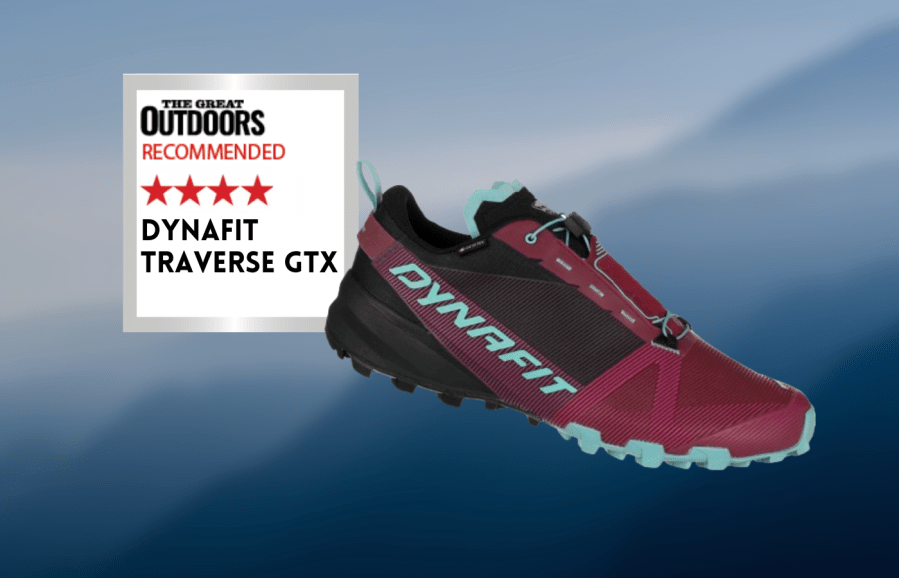
Fiona Russell Recommends
While the shoes have a Gore-Tex membrane, the wet can get in at the ankle, and I did not find the shoes very breathable in warm conditions.- Supportive
- Lacing
- Waterproof
- Size small
- Heavy
- Price
| Quick specs | |
|---|---|
| Price: £175 Materials & features: Gore-Tex membrane, invisible lacing, Pomona outsole, heel preloader Heel-to-toe drop: 8mm Lug depth: 5mm Sizes: Uk 3 to 9 Women/Mens version: Yes URL: https://www.dynafit.com/en-gb |
The Dynafit Traverse trail shoes, akin to Salomon Speedcross, have a wider, more robust upper design and a familiar shape, lacing, and sole design. They offer generous underfoot cushioning, but have less ground feel and stiff soles. The shoes provide excellent support from the uppers and lacing, with the ankle cuff and tongue providing comfort. A heel preloader provides support in the heel area, giving confidence on rough terrain and wet conditions. The soles offer good grip on most terrain, but slip on steep slopes. The uppers are designed to withstand high levels of abrasion, and there is an excellent protective rand around the shoe. However, the shoes are small and heavy, making them suitable for a full size. The Gore-Tex membrane may not be very breathable in warm conditions.
Read Fiona’s full Dynafit Traverse GTX Review
Merrell MTL MQM
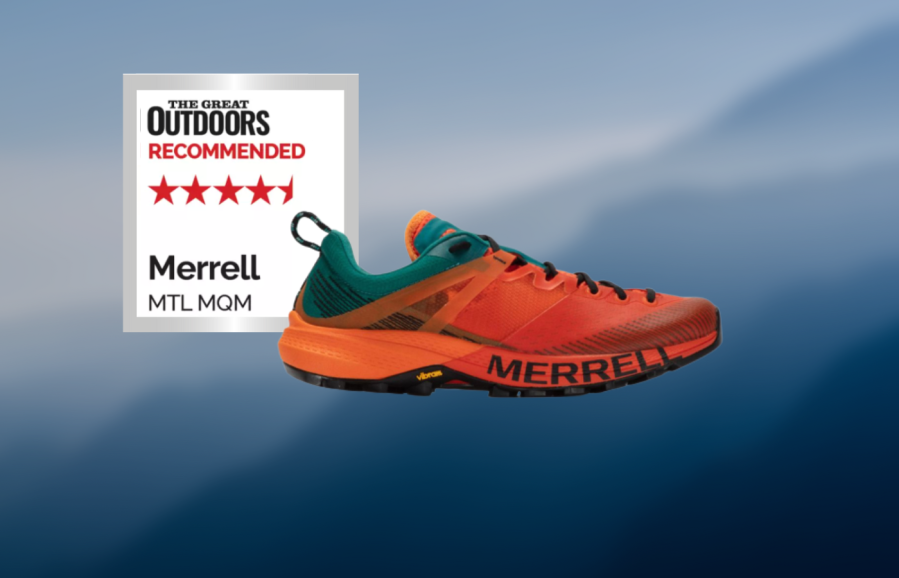
TGO Magazine verdict
These shoes are quite slipper-like; and whilst that means they are easy to wear, they might not feel sturdy enough for some people.- Lightweight
- Comfortable
- Supportive
- Durable Upper
- Cushioning
- Limited upper sizes for women
| Quick specs | |
|---|---|
| Price | $150 | £135 |
| Weight | 1.38 lb. | 628g |
| Heel-to-toe drop | 6mm |
| Lug depth | 5mm |
| Materials and features | Vibram MegaGrip and Vibram Idrogrip combined outsole, mesh and TPU upper, 100% recycled laces and webbing, internal bootie, TPU waterproof shell, microfibre lining, removable PU footbed, 100% recycled mesh footbed cover, rock plate, 50% recycled removable EVA foam footbed, FloatPro Foam midsole, pull-on rear loop |
| Sizes | 2.5-8.5 |
| Men’s version | Yes |
The internal bootie supports the mid part of the foot and under the arch, whilst the lacing system is full and adaptable. There is enough bounce and comfort on hard trails but not so much that it drains energy. They do not have a waterproof membrane, but they managed to keep out a lot of wet until damp slowly seeped in.
Read more: Fiona Russell’s full Merrell MTL MQM Review
Saucony Peregrine 12

David Lintern’s verdict
All in all, it’s an airy, light, super-breathable shoe for the summer, with excellent traction and a wider fit, best for lighter loads, paths and trails- Grip
- Comfort
- Lateral and heel support
| Quick specs | |
|---|---|
| Price | $84.95 | £140 |
| Weight | 1.33 lb. | 604g |
| Heel-to-toe drop | 4mm |
| Lug depth | 5mm |
| Materials and features | Rockplate, PWRRUN midsole, PWRTRACK outsole, recycled mesh upper |
| Sizes | 6-13 |
| Women’s version | Yes |
The Peregrine’s grip is probably best in test. The lugs are 5mm and don’t bat an eyelid on any ground, wet or dry. The forefoot is very wide, and the heel is quite wide, which translates into a very comfortable shoe with loads of room in the toebox. There’s very little lateral support, so the shoe bends side to side when contouring.
Read more: David Lintern’s full Saucony Peregrine 12 review
Columbia Men’s Montrail Trinity FKT

Peter Macfarlane Recommends
In the wet it hasn’t been so good, especially on hard surfaces which makes the Trinity a good dry or changeable weather choice.- Asymetrical lacing
- comfort
- Grip in dry conditions
- Grip not great in wet
- Hard surfaces
| Quick specs | |
|---|---|
| Price: £125 Weight: 676g pair, UK9 Materials & features: stack height: 30mm, seamless mesh upper, asymmetric lacing, Techlite+ foam midsole, OrthoLite Eco insole, Adapt Trax outsole, Flexible ESS rock plate Heel-to-toe drop: 8mm Lug depth: 5mm Sizes: UK 6 to 12 inc half sizes from 6.5 to 10.5 woman’s version: Yes URL: www.columbiasportswear.co.uk |
The Montrail Trinity FKT is a running shoe with a strong heritage in trail running and adventure racing. The upper is a breathable mesh overlayed by a protective plastic matrix, providing breathability and resistance to abrasion. The tongue and ankle are the same mesh fabric, but lightly padded internally. The lacing is asymmetric, following the contour of the foot towards the outer toes, enhancing fit and security. The heel is well-shaped with strong reinforcement, and the thick sole absorbs feedback from rough ground.
The shoe has good flex along the entire sole, including an integral rock plate for additional flex at the forefoot. The outsole has decent overall grip, with a spur at the heel for extra grip in descending. The Trinity is a lively shoe for walking and running, with a good feel, comfort, and durability.
Read Peter’s full Columbia Men’s Montrail Trinity FKT Review
Greener Choice
Helly Hansen Skyhawk TR
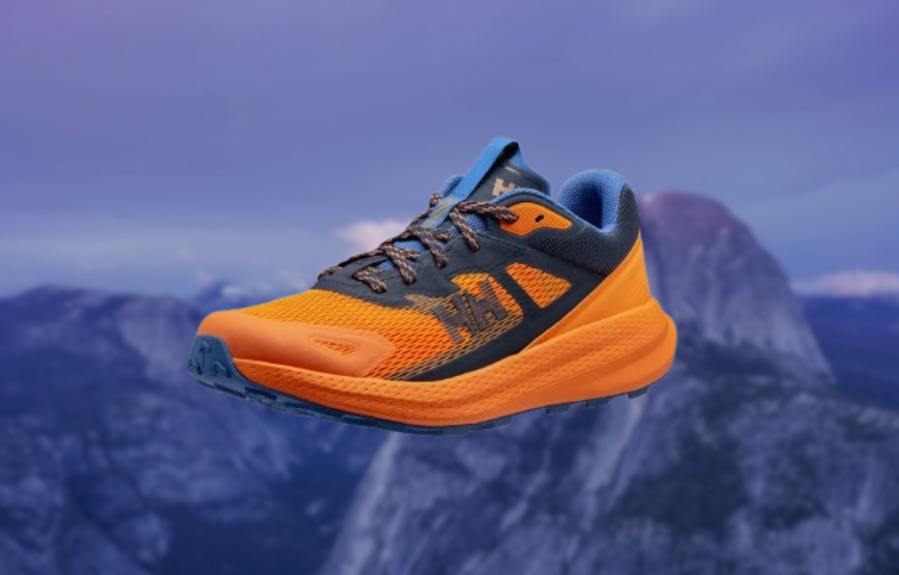
Peter Macfarlane’s Greener Choice
I like the spec, the design and potential performance of the Skyhawks, especially as an all-round trail shoe with an emphasis on trekking.- light
- accessible
- comfortable
- roomy heel cup won’t suit everyone
- wet weather grip
| Quick specs | |
|---|---|
| Price | $160 | £140 (available from Helly Hansen) |
| Weight | 608g (UK9 pair) |
| Heel-to-toe drop | 10mm |
| Lug depth | 4mm |
| Materials | Upper: 100% Recycled Polyester, Lining: 100% Recycled Polyester, Insole: 100% Ethylene Vinyl Acetate – Outsole: 100% Rubber |
| Features | High recycled content, non marking rubber soles, proprietory HH technologies throughout design and construction |
| Waterproof | no |
| Sizes | 6.5-12.5UK inc half sizes, 40-48EU |
| Women’s version | Yes |
| hellyhansen.com |
The Helly Hansen Skyhawk TR sits in the middle ground of trail shoe design. There’s some padding without being overly chunky, and a fit that is contoured around the forefoot but roomier around the ankle and heel. I’ve had to work a little to get the best from this. The forefoot is excellent; it feels snug without being tight and this gives great confidence for foot placements. The roomy heel cup made confident running more difficult – I had to swap around footbeds, inserts and sock thicknesses to stop heel lift. The top lace slots allow for a good tight runner’s knot, but it wasn’t quite enough for me.
Elsewhere, the upper is mostly mesh with some overlays in the midfoot and the lace slots, and some strengthening at the toe and heel. The tongue is thin mesh with overlays to spread the pressure of the laces a little. The mesh allows good breathability and also means that the Skyhawk pumps water out when flexed after any bog hopping. Inside, the removeable footbed is well shaped and has a layer of foam padding. The midsole is well padded and quite stiff which works well for walking on rough or rocky terrain. The toe flex is stiffer than I’d expect on a trail runner, which likely amplified my heel lift when running. Then again, this works really well on rough ground when walking. The outsole doesn’t have the deepest lugs at 4mm but the pattern is aggressive and I found good grip across a variety of terrain until it got too soft or wet.
Read more: Peter’s full Helly Hansen Skyhawk TR review
Trail running shoes or hiking boots?
The Great Outdoors has long promoted the use of lighter-weight hiking footwear in the warmer months, primarily via the reviews and trip reports of Chris Townsend… and many of us have followed in his footsteps. Up until a decade or so ago, I assumed that ‘proper hillwalkers’ had to wear old-fashioned leather boots all year round: that was the uniform. But I tried on lighter boots and then trail shoes, and felt far less tired at the end of the day. My ankles and toes were allowed to flex (just like they were designed to!); and without a so-called waterproof membrane, my feet could breathe and were liberated from sweating and blisters. Apparently, I was not a ‘proper hillwalker’, but that was OK!
In 2011, I hiked for two months across the Pyrenees. At that point, I wasn’t quite brave enough to take the plunge completely, and I began the walk in a pair of traditional three season, lined boots. Early on, conditions alternated between very hot and very wet, and I got a nasty case of trench foot. My feet were in such poor shape by week four I thought I would have to stop. Only the liberal application of iodine (quite an old-fashioned remedy; not sure I’d it recommend now!) dried the skin out and saved the hike. I replaced those manky boots with a pair of very lightweight, no-membrane trail runners – and had zero issues thereafter.
The more I used trail shoes for hiking, the more I understood the benefits. Less weight meant I felt nimbler and less clumsy. I paid more attention to where I put my feet and began to engage more with the terrain. My joints became stronger, my footwork more precise. I rarely get blisters now.
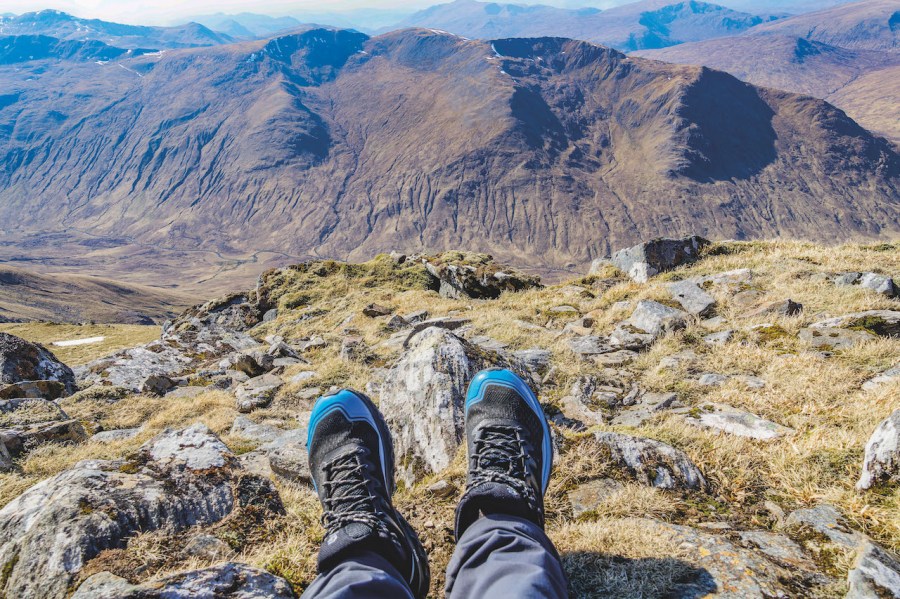
There are tradeoffs, of course. Trail shoes without a ‘waterproof’ membrane mean feet get wet. Conversely, they dry out more quickly when it stops raining. Carrying very heavy loads or moving in very rough terrain can warrant a larger drop in the heel or more protection in the toe than some trail shoes offer – although there are now options to cater for the ultramarathon and skyrace scenes that go a long way to mitigate those concerns, some of which we look at here. And, of course, trail shoes are not built for winter; so we shouldn’t expect them to play well with crampons and axes. But by and large, between April and October, I’m far more fleet of foot in ‘hill pumps’.
How we tested the trail running shoes
Fiona is a size U.S. 10.5 / UK 8.5 and has a narrow foot. She is a keen trail and hill runner, as well as a hillwalker. To test the trail shoes, she walked and ran in each pair on the full range of terrain, from forest tracks to off-path mountain slopes, through peat hags, bog and streams and on ground covered in tussocks, heather, rocks, stones and grass. The product weights are per pair and are taken from Fiona’s digital scales.
David is a size U.S. 11.5 / UK 10.5 and has a wide forefoot and a narrow heel. He’s an occasional trail and hill runner, and an advocate for trail shoes for walking and backpacking during the summer months. These trail shoes were tested last spring, summer and autumn on- and off-trail in the mountains throughout Scotland, from the north-west to the Borders – walking, backpacking and on the odd hill run.
Peter is long time user of trail running shoes in the outdoors for activities ranging from long distance paths to walking the Munros. He has also been a sporadic trail runner over the years and used these test models to retune his running feet around his local trails in the Kilpatrick Hills. Peter has a favourite 22km running loop starting from his door through Kilpatrick Hills where testing miles were accrued over the winter and early spring. He has a narrow heel and wide forefoot. Weights were taken from his own digital scales.
Gemma tested these trainers across East Anglian lowlands and hilly forests, tackling everything from frozen, waterlogged tracks to more technical woodland climbs through winter into spring. She has a wide forefoot and narrower heel. Shoe weights are from her scales.
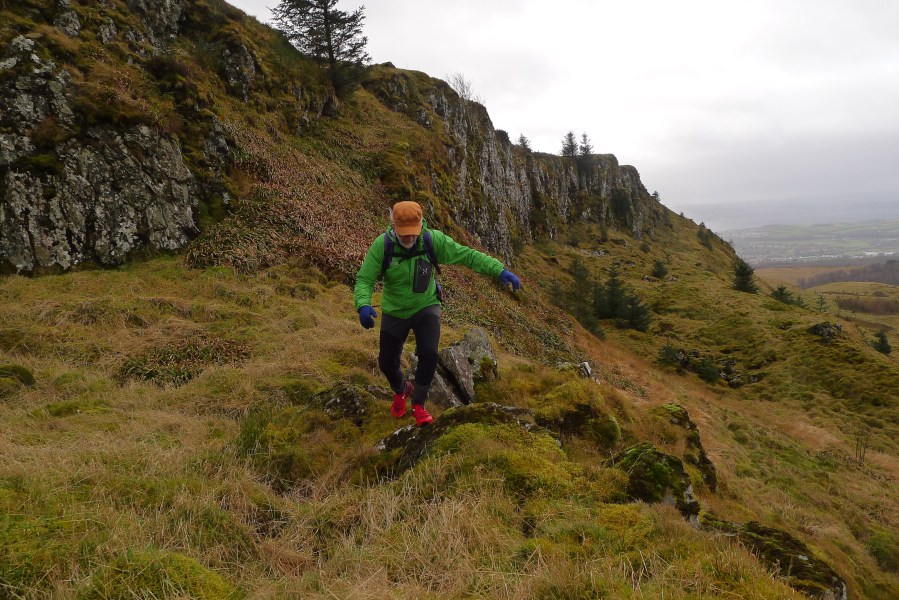
What makes a good trail shoe for hiking?
Outsole
Soles should offer a level of grip to suit your chosen terrain, and you’ll see deeper and more densely packed lugs on shoes that aim to offer more grip on wet, muddy and steep ground.
Stiffness
Traditional trail walking shoes are usually designed with a stiffer sole because the motion of walking, compared to running, requires less flexibility. If you want to use your trail shoes for walking and running, it’s a good idea to ensure they are flexible enough to complement your natural running gait. There is a compromise to be found here, though, because a shoe that is too flexible will not necessarily be as comfortable when walking long-distance when more support is usually required.
Rock plate
Some shoes have a rock plate, which is a material embedded between the outsole and the midsole for underfoot protection. It can add stability and stiffness to the shoe and helps to protect the soles of your feet from sharp rocks and stones.
Midsole
The level of cushioning is a personal choice, but you should think about where you will be walking and running. A shallower sole usually means there is less cushioning and better ‘ground feel’, whilst deeper soles are likely to offer greater levels of cushioning. On rough terrain, a deeper sole may result in instability for some.
Heel-to-toe drop
Regardless of the depth of sole, shoes offer a range of heel-to-toe drop and that is the difference in height – usually in mm – of the stacked heel to the forefoot. Road running shoes will normally have a larger drop, often with the aim of protecting the Achilles tendon from being overly stretched, whilst trail running shoes usually have a much shallower drop.
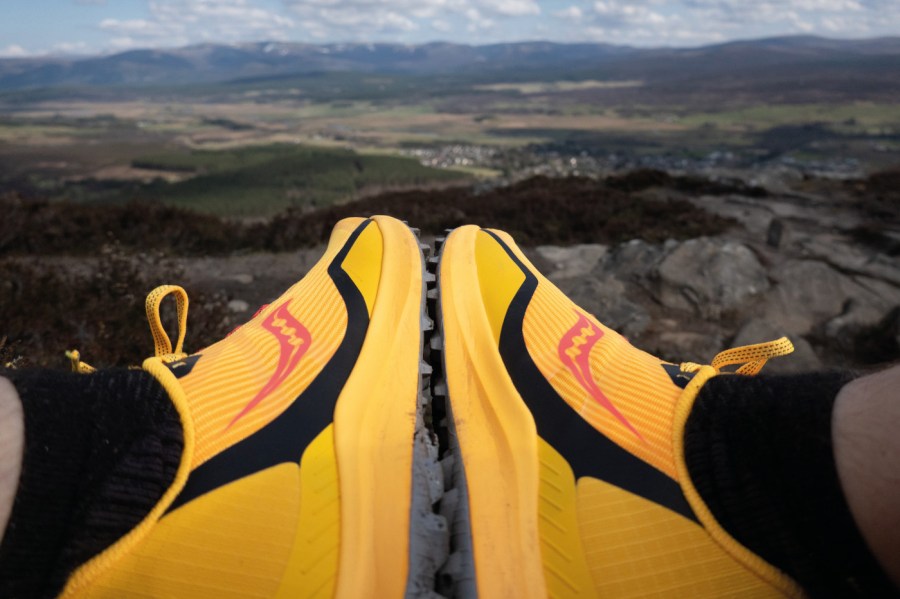
Uppers
Trail shoes need to be durable and offer protection against abrasion caused by vegetation, rocks, stones, scree and mud. Expect to see a protective rand around the base of the upper where it meets the sole, as well as toe bumpers or caps and heel protectors. There should still be a good degree of upper flexibility so foot flex and breathability aren’t inhibited.
Waterproofing
A built-in waterproof liner, such as Gore-Tex, will offer some waterproofing if you are walking or running in the rain, on wet ground or when crossing streams and rivers. Waterproof liners can make the shoe less breathable, so you end up with sweatier feet in warm conditions. To stop the wet getting in at the ankle area, you can wear lightweight running gaiters.
Lacing
Whether traditional lacing or another system, the aim should be for an even tension along the length of the foot.
Weight
Weight should be considered against sturdiness. Generally, very lightweight shoes will not be as long-lasting or durable as a heavier shoe; although this also does depend on the materials and construction quality.
Recycled materials
More now than ever, brands are keen to inform consumers about recycled content in their products. This is good news, but it’s important to consider the potential for ‘greenwashing’ and also more than just the materials. How and where the products are made, end-of-life recycling schemes, sustainability certifications and pledges are all worth considering.