
If you are new to camping or you need to kit out your entire family, the chances are you will be looking for budget backpacking gear. Big ticket bits of kit like tents and sleeping bags, designed to keep you sheltered and warm through the night, can come with a big price tag. But increasingly clever material innovations selected by budget-conscious brands can make camping gear more financially accessible without compromising on the most important thing – your safety.
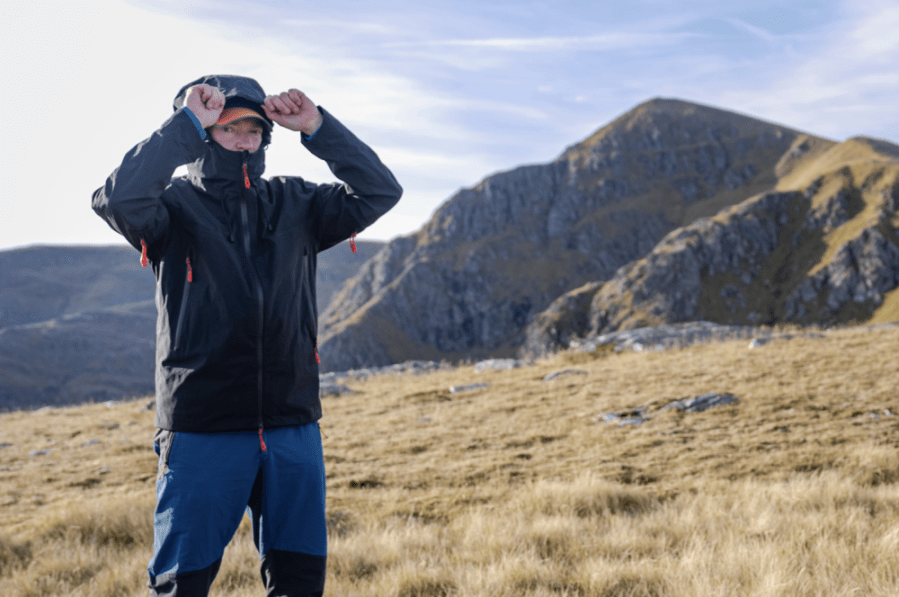
Main image: Scottish alpine ready, but on a budget with Highlander | Credit: David Lintern
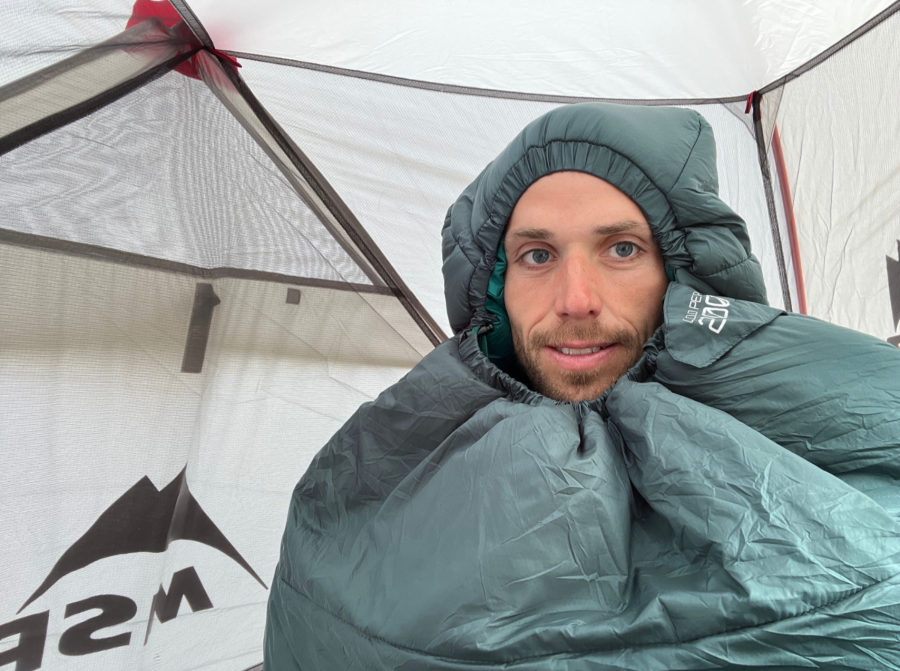
Our gear testing team – the most experienced in Britain – have spent years pushing camping gear to its limits so you don’t have to. Along the way, we’ve come across some genuinely good value kit. Collated here for the first time, as part of our budget adventure special issue, here are our honest and in-depth reviews of everything you’ll need to spend a night under the stars.
For more information on what exactly to look out for when parting with your hard-earned cash, see our full guides to budget backpacking tents, sleeping bags, waterproof jackets, insulated jackets, big packs, hiking shoes, head torches, and stoves.
Why you can trust The Great Outdoors
The Great Outdoors is here to help you make the most of your time outside. We have been helping people to explore from sea to summit, valley to mountain top for over 40 years. Our gear tests remain completely impartial. If you are wary of websites that only review brands that advertise with them, or sceptical of social media accounts always singing the praises of their latest freebie, you’ve come to the right place! Our reviews rank #1 for rigour, trustworthiness, and independence, and our gear testing team is the most experienced in Britain. With over 200 years’ experience between us, we are professional mountain leaders and instructors, wildlife photographers and rangers, outdoor authors, guidebook writers and trail addicts.
The best budget backpacking gear we’ve tested
| Quick List |
|---|
| Best backpacking tent: Robens Starlight EXP 1 (available from Outdoor Action) |
| Best sleeping bag: Alpkit Cloud Peak 200 (available from Alpkit) |
| Best waterproof jacket: Highlander Munro V2 Mountain (available from Highlander) |
| Best insulated jacket: Rab Glaceon Pro Down (available from Rab) |
| Best backpacking pack: Highlander Ben Nevis 52L |
| Best hiking shoes: Altra Lone Peak 9+ (available from Altra) |
| Best headtorch: Silva Discover Hybrid (available from SportsShoes.com) |
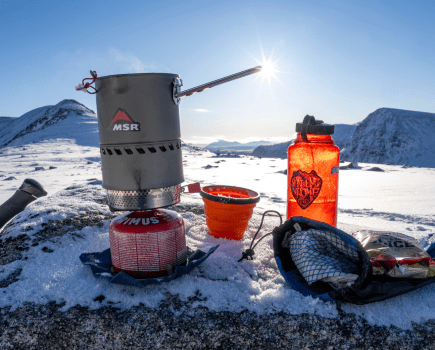
| Best stove: Campingaz Twister Plus Gas Stove (available from Go Outdoors) |
Best backpacking tent
Robens Starlight EXP 1 Tent
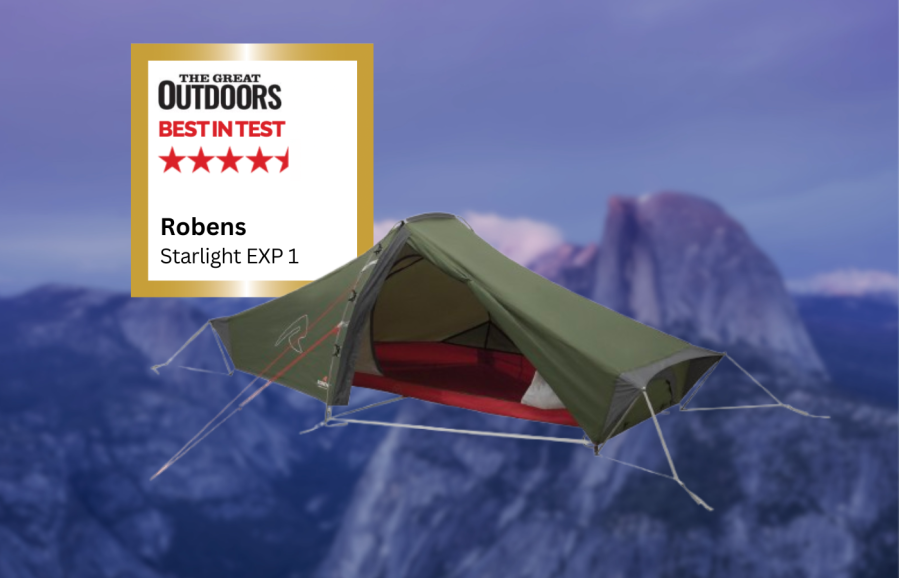
Lara Dunn’s Best in Test
For the money, this is a superbly well-featured – if slightly hefty – three-season backpacking tent.- easy to pitch
- very stable
- spacious
- excellent porch
- weight
| Quick specs | |
|---|---|
| Price: $289.60 / £149.99 (available from Outdoor Action) Weight: 2302g Pitching: as unit or outer first Flysheet: HydroTex HD RS RECYCLED, 75D recycled polyester 190T ripstop, 5000mm HH Inner: 68D 190T polyester Groundsheet: 75D polyester Taffeta 210T PU coated, 10,000mm HH Poles: 8.5mm, 7001 aluminium anodised Pegs: 8 aluminium pegs Porches: 1 Inner dimensions: width 75cm, length 215cm, height 90cm robens.de |
Lara Dunn was so impressed by the performance and features in the Starlight EXP 1 that it scooped a Best in Test in her review and won the tent category in our Gear of the Year. Yes, there’s a weight penalty at 2.3kg; but it’s easy to pitch and does so flysheet-first or as one, making it ideal for grumpy British weather. Straps on the side guylines that wrap around the poles enable better wind resistance, distributing any force more evenly and protecting the poles. The front and rear guylines secure the feet and head sections, giving the whole a solid, well-tensioned pitch.
Alongside the high hydrostatic head on both the fly and groundsheet it’s a protective and reliable 3-season choice, with condensation kept to a minimum by a mesh door panel and vents in the head and foot. Inside, there’s room for kit above the head or below the feet, while the porch is large enough to stow a backpack or cook in bad weather. For taller users sitting upright might be a challenge, but for Lara (5ft 5in) the space was liveable. It’s not light, but it is superbly well-featured and secure.
Read more: Lara’s full review of the Robens Starlight EXP 1
Alpkit Soloist Tent
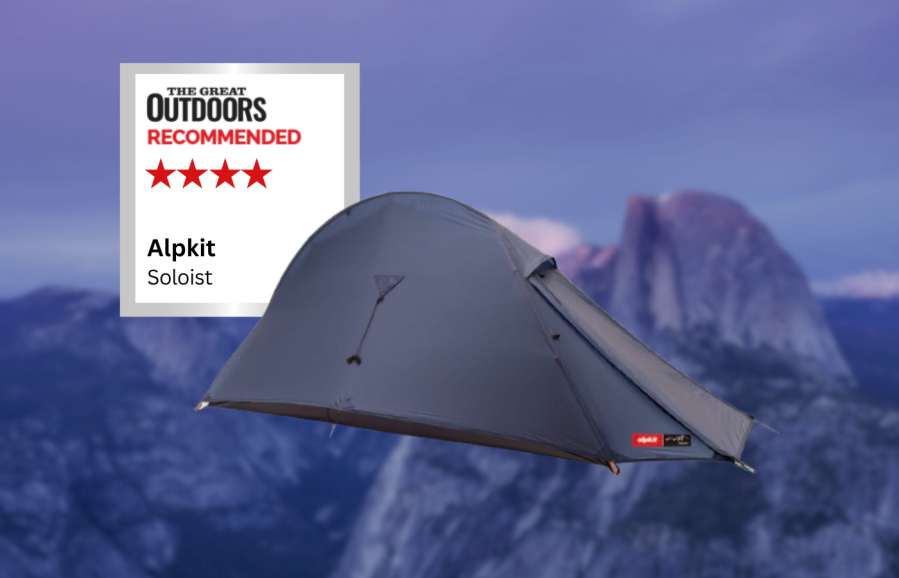
Lara Dunn recommends
This tent stands apart in that a separate groundsheet is available (at extra cost) which makes for increased versatility in pitching, giving an ultra-lightweight option.- very light
- compact size
- versatile pitching
- fairly small porch
- lots of mesh
| Quick specs | |
|---|---|
| Price: $204 / £149.99 Weight: 1328g Pitching: outer first Flysheet: 15D, silicone coated ripstop nylon with PU backer, 3000mm HH Inner: 15D breathable ripstop nylon Groundsheet: 20D ripstop nylon PU, 5000mm Poles: Diameter, 7001-T6 alloy Pegs: 11 ‘v’ shaped alloy pegs Porches: 1 Inner dimensions: width 77cm, length 220cm, height 95cm alpkit.com |
The only non-green tent in the test, the Alpkit Soloist is still a sufficiently subtly coloured tent to be useful for stealth camping missions. It’s extremely lightweight and has a very modest packsize. The semi-geodesic design pitches outer first, with a single, jointed pole that tucks into eyelets in the flysheet and fastens along the pole length with Velcro. Once up, the flysheet sits securely without needing to be pegged out (although it is still advisable) and the inner tent hooks quickly and easily to the outer. With guylines in place, this is a secure tent that gives excellent protection from wind and driving rain.
The poles are very lightweight. The inner tent features large areas of mesh, including a fully mesh door that has a pocket in which it can be stowed away. All this mesh makes for a potentially chilly night’s sleep, albeit one not plagued with condensation. Inside the tent there’s plenty of space, with room for kit and good head clearance, making it a pleasant space in which to relax rather than just sleep. The outer door can be opened fully and guyed out to create an awning under which careful cooking can be done. This tent stands apart in that a separate groundsheet is available (at extra cost) which makes for increased versatility in pitching, giving the ultra-lightweight option of pitching outer only or the warm, dry weather option of inner only.
Read more: Lara’s full review of the Alpkit Soloist
Best sleeping bag
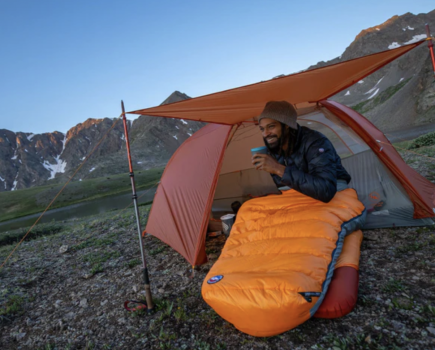
Alpkit Cloud Peak 200 Sleeping Bag
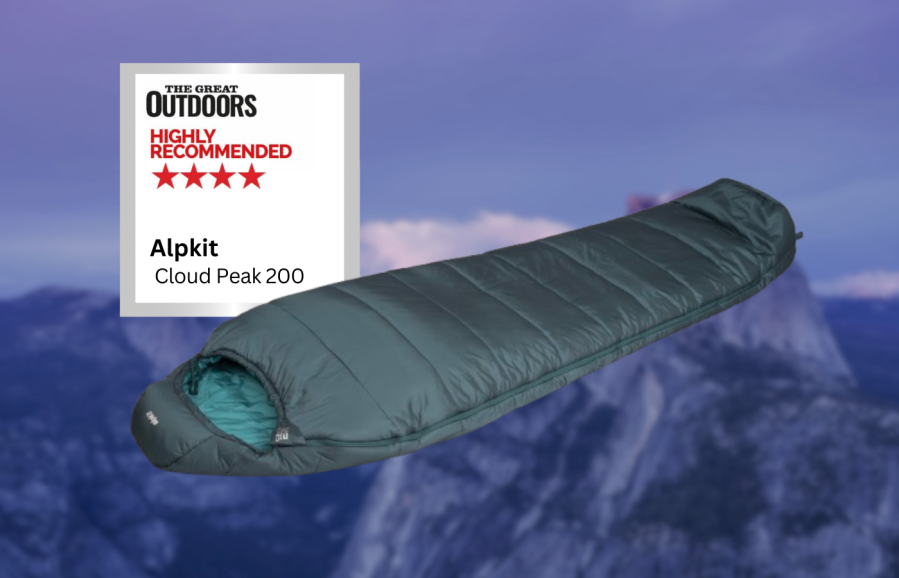
James Roddie highly recommends
Overall, this feels like a sleeping bag which will last, and offers excellent value for money.- recycled fill
- high quality materials
- no internal pocket
- ambitious sleep limit rating
| Quick specs | |
|---|---|
| Price: international shipping available / £99.99 (available from Alpkit) Weight: 1120g + 120g compression sack Fill: 200g 750FP Downtek Hyd Shell: 20d 300T PFC free Nylon Construction: Stitch-through Zip: Full length, 2 way on left or right Length: 200cm Rating: Comfort: 8℃, Limit: 4℃ (Alpkit Sleep Limit 0℃) Sizes: Regular Women’s/men’s version: Unisex alpkit.com |
Alpkit hit the sweet spot on the sleeping bag front for reviewer James Roddie, who rated this highly as a 2-season bag with worthy environmental credentials. The slightly tapered, mummy-shaped design is comfortable and well-proportioned for shorter or younger users, without creating excess space for cold spots to form. At 1240g, the warmth-to-weight ratio is fair for a bag for this price, and a stitch-through construction helps to keep the weight and bulk down. James is a cold sleeper but thought that it was fine to about 4º.C The draught collar can be tightened up close to your body, and there’s is a full-length zip baffle that does a very good job at preventing heat loss through the zip. The zip extends almost to the feet, making ventilation on warmer nights a cinch.
At least 35% of the fill (Thermolite Ecomade) is recycled, and the outer is treated with a PFC-free DWR. The supplied compression sack is sturdy and water-resistant, and the internal fabric is soft to the touch. It’s also available with a right zip for left-handers. James said, “It feels like a sleeping bag which will last and offers excellent value for money.”
Read more: James’ full review of the Alpkit Cloud Peak 200
Vango Mantis 400 Sleeping Bag
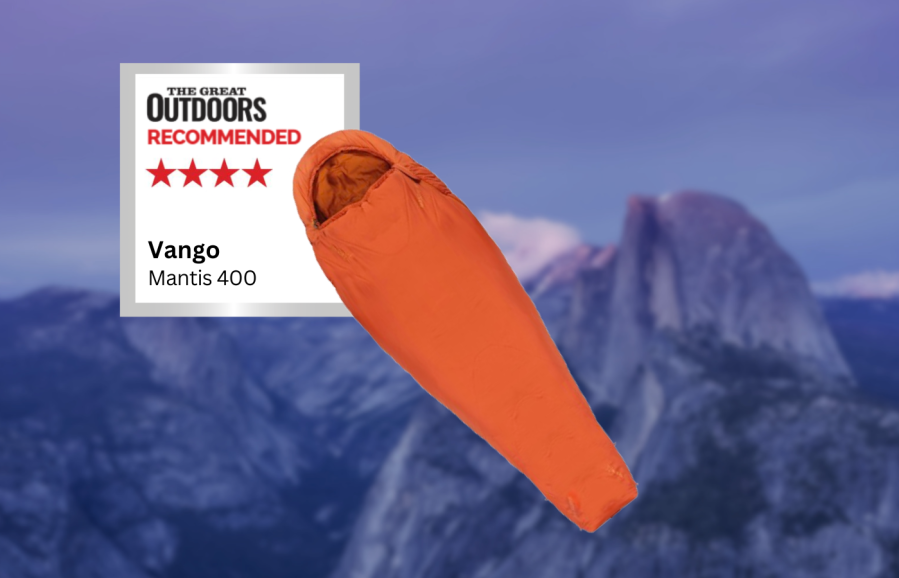
Lucy Wallace recommends
Despite my reservations about the temperature rating, the Mantis is an excellent value 3-4 season bag, particularly suited to taller folk on a budget.- warm for weight
- roomy
- did not feel as warm as advertised
- generous size less suited to smaller sleepers
| Quick specs | |
|---|---|
| Price: international shipping available / £90 (available from Outdoor Action) Weight: 1426g Fill: 4T Eco recycled synthetic filling Shell: 40D recycled Polair Active Eco, with aluminised Thermal Reverb layer Construction: sheets of synthetic filling Length: Max height 190cm Rating: limit -9°C, extreme -15°C Sizes: one Women’s/men’s version: Unisex vango.co.uk |
The Mantis is well featured and includes a generous neck baffle to keep drafts out, insulated zip baffle, and a shiny reflective layer built into the insulation to help reflect heat back to the user. The shell has a soft cotton-like feel with a silkier lining, and there’s an internal pocket for small items such as a head torch. The shape is a traditional mummy cut, with narrow, shaped foot box and wide shoulders. It’s a unisex model, one size fits all, and generously proportioned inside. My husband, who at 188cm often struggles to find sleeping bags to fit, found the sizing perfect. For me, at 172 cm, even with the gently elasticated lining, there were cold spots where my body couldn’t warm the dead air space.
The Mantis is an excellent value 3-4 season bag, particularly suited to taller folk on a budget. It’s bulky, as you would expect for a warm synthetic bag, but does compress sufficiently to pack into a backpacking rucksack for overnight adventures. The Mantis is also a Greener Choice for those looking to reduce their ecological footprint, entirely from recycled materials.
Read more: Lucy’s full Vango Mantis 400 review
Best waterproof
Highlander Munro V2 Mountain Hardshell
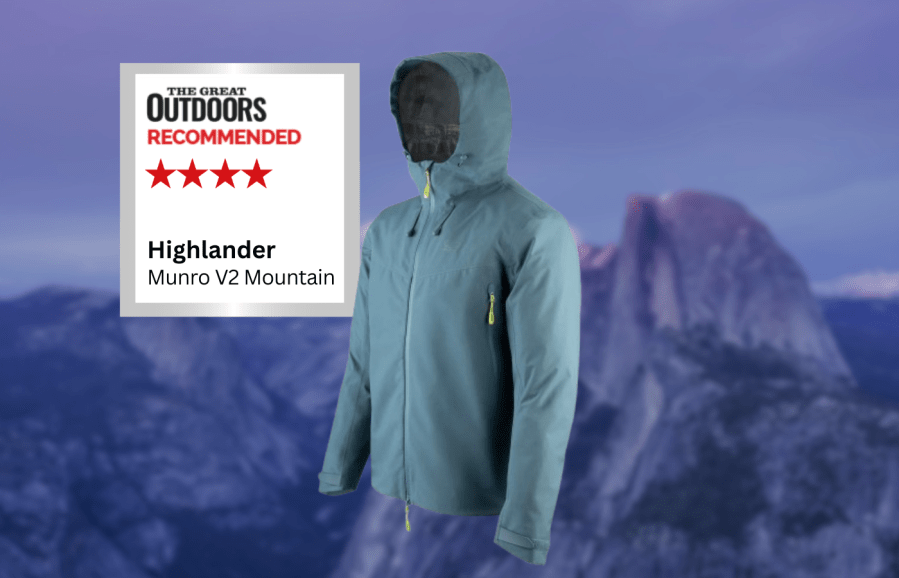
Chris Townsend’s Best Value
The Munro Jacket is comfortable and I’ve been happy wearing it in storms. It may be inexpensive but it doesn’t feel like a budget garment.- hood
- cost
- quite heavy
- no women’s version
| Quick specs |
|---|
| Price: £180 (available from Highlander) |
| Weight: 580g (L) |
| Materials: 3 – layer PROT3X PFC Free polyester |
| Hood: front and rear adjustment, wired stiffened peak |
| Front Closure: YKK waterproof zip, inner flap |
| Underarm/Side Zips: two-way YKK zips |
| Pockets: two harness/hipbelt compatible, 1 inner |
| Hem: Drawcord adjustment |
| Cuffs: cuffs |
| Sizes: S – 2XL |
| Women’s version: no |
| highlander-outdoor.com |
Winning Best Value in the waterproof category in our Gear of the Year Awards, there is lots to love in the Highlander Munro Jacket, with co-editor David Lintern saying, “…for someone’s first 4-season shell, I think the Munro V2 is pretty unbeatable.”
Chris Townsend rated it as a fully specified jacket suitable for year-round use and superb value for money. The hydrostatic head rating of 20,000mm compares well with many far more expensive jackets. In heavy rain it proved fully waterproof, and while the breathability rating is on the low side, the two-way pit zips more than helped compensate. The two external handwarmer pockets are huge, and while the pocket bags might be partly covered by a hip belt, access is not. The internal pocket is smaller but zipped and perfectly fine for most phones. Lastly, the hood is helmet-compatible, soft-wired with a small peak and moves with the head without restricting line of sight. The fabric is thick but is soft to the touch, and while 580g might be overkill for high summer, it’s an impressively protective and well-designed jacket, especially for the money.
Read more: Chris’ full review of the Highlander Munro V2 Mountain
Harrier Exmoor Rain Jacket
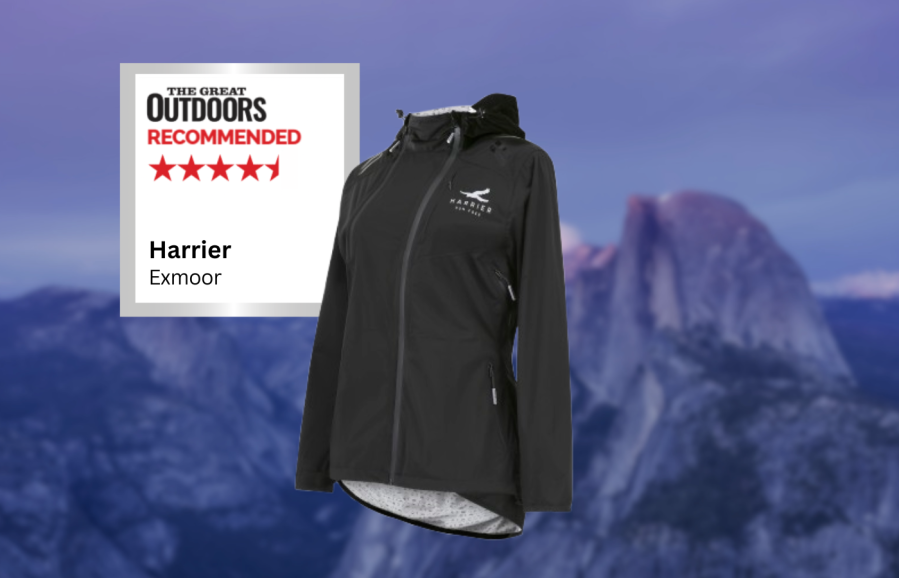
Kirsty Pallas’ Best Value
I’ve enjoyed wearing the Exmoor as it doesn’t feel like a waterproof at all. It’s soft, flexible and quiet.- soft feel
- ventilation options
- waterproofed rated to moderate rain
| Quick specs |
|---|
| Price: £94.99 |
| Weight: 309g (size XS) |
| Materials: 100% polyester |
| Hood: Stiffened peak with volume adjusters at back and sides |
| Front Closure: Offset front zip with internal storm flap and studs |
| Underarm/Side Zips: Yes, small pit zips |
| Pockets: 2 hand pockets, 1 back pocket, 1 chest pocket |
| Hem: Drawcord adjustment with an inner elasticated skirt |
| Cuffs: Elasticated with thumb loops |
| Sizes: XS – XL |
| Men’s version: Yes |
| harrierrunfree.co.uk |
The Harrier Exmoor is a trail running jacket and I’m about as far from a trail runner as it gets, so bear with me! I wasn’t sure whether this would work for me, but the Exmoor almost got the Best in Test. I’ve really enjoyed wearing it as it doesn’t feel like a waterproof at all. It’s soft, flexible and quiet. It’s a good fit, and I can still just about get a duvet jacket on underneath. I think it will become a summer staple for those will-it-won’t-it rain days.
For me this is a jacket for lighter summer rain and drizzle. A lot of the features are designed around runners who need a jacket that meets race criteria and can be used with a running vest, but I didn’t find these an issue. The front zip is off centre with a second half zip to allow you to reach pockets on the straps of a running vest, but it also gives you lots of venting options. There are also short pit zips, but they are really easy to reach and don’t get in the way or a rucksack strap. There are a couple of other nifty features like being able to pack it away into its own back pocket, and it can also be used as a bumbag in itself. The cuffs are completely elasticated with a thumb loop which is handy for keeping them in place while on the move, and keeping your hands warm. There’s enough give to easily get a small to medium glove cuff tucked in as well.
Read more: Kirsty’s full review of the Harrier Exmoor
Best insulated jacket
Rab Men’s Glaceon Pro Down Jacket
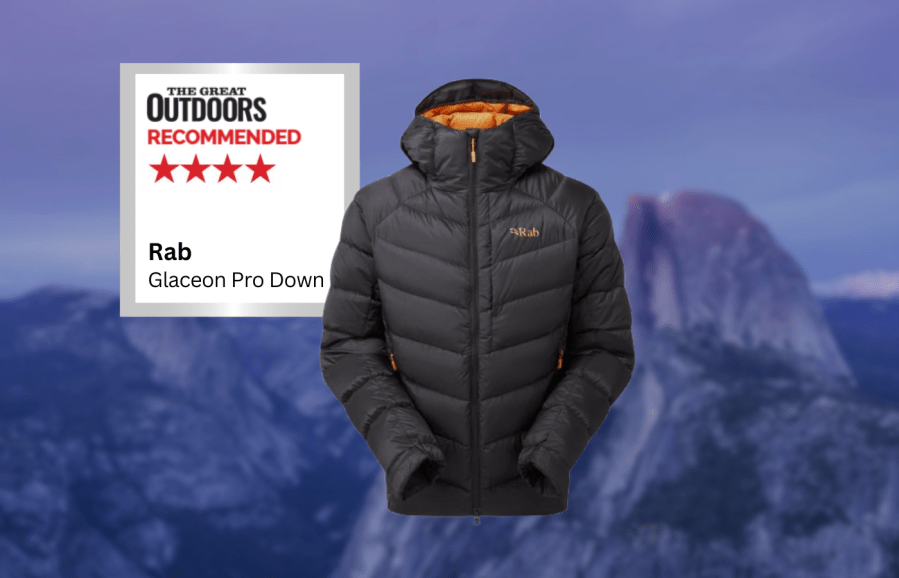
Peter Macfarlane recommends
The outer fabric has an excellent DWR which sheds sleet and snow very well, and has a very high recycled content as do most of the materials on the jacket.- weight
- warmth
- stitch-through baffles
| Quick specs |
|---|
| Price: $340 / £250 (available from Rab) Weight: 604g size large Fill: 700FP Recycled Down with Nikwax Fluorocarbon-Free Hydrophobic Finish, 265g Shell: 20D Recycled Pertex® Quantum Pro outer 40gsm with fluorocarbon free DWR Hood: helmet compatible, adjustable, wired brim Cuffs: velcro Hem: drawcord, two side adjusters Pockets: 3 external zipped Sizes: XS-XXL Women’s version: Yes rab.equipment/uk/ |
Rab ruled the roost in our roundup of big, insulated jackets last time, with Lara Dunn rating its Cirrus and Peter Macfarlane recommending the warmer, heavier (604g, Large) Glaceon. The Glaceon has stitch-through baffles to save weight and bulk, a ‘Goldilocks’ fit that allowed room for layering both under and over without compressing the down, and a longer tail to keep one’s rear end from chilling. It also boasted long arms, cuffs with Velcro tabs and a peaked hood that Peter found very adjustable. The main zip is two-way, baffled and has a microfleece chin guard, there are two deep microfleece-lined handwarmer pockets and a zipped Napoleon chest pocket. The outer fabric has an excellent DWR that sheds sleet and snow well, and a very high recycled content, as do most of the materials on the jacket. It’s debatable whether £250 can be described as ‘budget’, but it is well-made, warm and will last years if cared for, so presents excellent value.
Read more: Peter’s full Rab Glaceon Pro Down review
Rab Cirrus Ultra Insulated Jacket

Lara Dunn recommends
It’s compact, packable, warm, and made from over 75% recycled materials and it’s good value for money.- lightweight
- warm
- durable
- packable
- loose cuffs
| Quick specs |
|---|
| Price: $265 / £230 (available from Rab) Weight: 566g (size 14) Fill: PrimaLoft ThermoPlume + loose fill insulation Shell: 100% recycled polyamide – 20D recycled Pertex Quantum with Flurocarbon-free DWR Hood: Drawstring adjustable, stiffened peak Cuffs: Elasticated Hem: Drawstring adjustable Pockets: 2 side zipped pockets (1 doubles as a stuff sack) Sizes: UK8-16 Men’s version: Yes rab.equipment |
Thanks to its lightweight Primaloft ThermoPlume+ loose fill synthetic insulation designed to mimic down, used together with heat-reflective technology and body-mapped sheet insulation, the Rab Cirrus Ultra Insulated Hooded jacket punches well above its weight in terms of warmth to weight. It provides an excellent compromise in a robust and breathable jacket. The fit is quite roomy, but not loose, while the sleeves are a little on the long side. The drawstring adjustment of the deep insulated hood is easy to operate with gloves on and effective at providing a cosy fit around the head. Thanks to its stiffened peak, visibility is not too badly impaired.
The main zip is smooth and glove friendly and features a soft pad at the top to protect the chin. The two size zipped pockets are huge but could do with a bit of a cosy lining in an ideal world. One of them doubles as a stuff sack for the jacket. There’s a sizeable chest pocket too, but no internal insulated pocket for gadgets.
Read more: Lara’s full Rab Cirrus Ultra review
Best pack
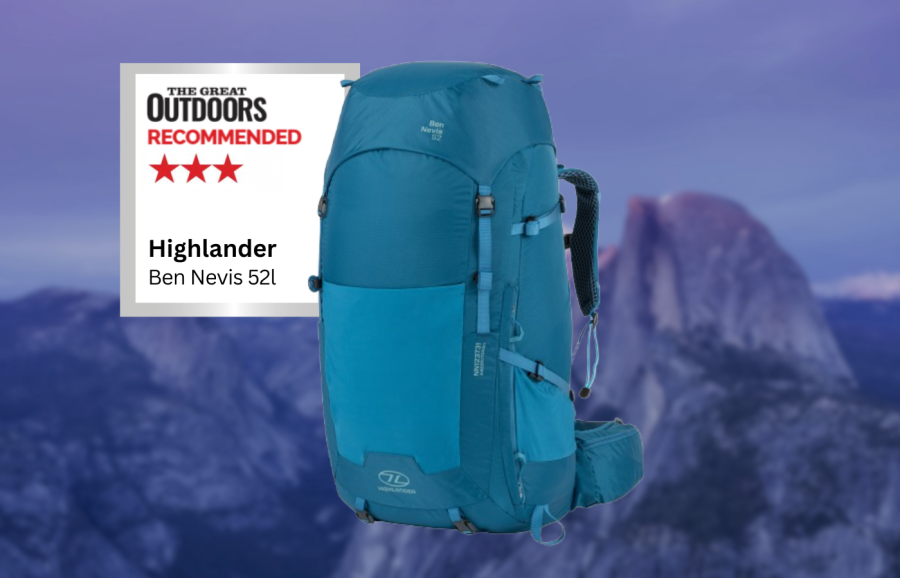
Highlander Ben Nevis 52L Backpack
Lucy Wallace recommends
At the budget end of the market, this is one of the best expedition rucksacks I’ve seen.- lightweight
- excellent value
- easy to pack
- fussy buckles
- not as comfortable as some
| Quick Specs |
|---|
| Price: £124.99 (available from Highlander Outdoor) Weight: 1266g Materials: 200D Nylon with PU coating Features: Adjustable back system, front and side pockets, internal and external lid pocket, hip belt pockets, side zipped opening, side compression straps, Velcro webbing tidies, rain cover Size: 52 litres capacity Men’s version: Yes highlander-outdoor.com |
Mountain Leader Lucy Wallace spends months each year working with young people outdoors, and said, “At the budget end, this is one of the best expedition rucksacks I’ve seen. I think it would make a great Duke of Edinburgh’s Award rucksack… perfect for smaller people of any gender, and tough enough to see a young person from Bronze through to Gold expeditions”. It’s lightweight enough at 1266g, with a simple frame back system, with basic padding and adjustment, which Lucy initially found unforgiving, but with time settled down.
Special mention went to the hip belt, which soon became comfortable enough to forget about. The pack is brimming with useful features that you’d expect from a more expensive pack, with lots of pockets, compression straps, ice axe loops and bungees for poles and hydration tubes. Lucy praised the zipped pockets on the hip belt for their useable size, as well as the lid pocket. The volume and shape are generous enough to manage larger loads for cold weather. Lucy used the pack on DoE expeds and found it stood up well to abuse, “with zero signs of wear”.
Read more: Lucy’s full Highlander Ben Nevis 52L review
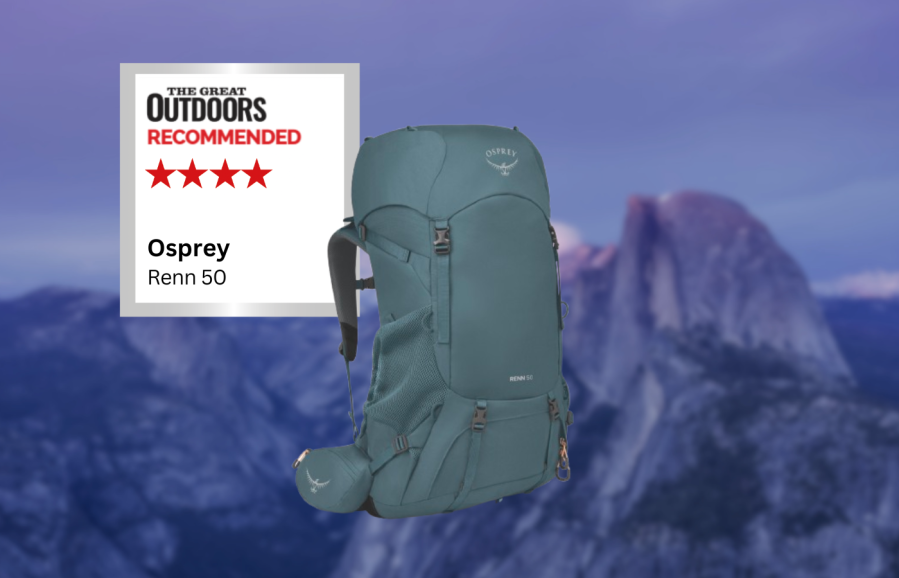
Osprey Renn 50 Backpack
Lucy Wallace recommends
Overall, I found the pack comfortable to carry, with good weight distribution, and easy to pack.- tough
- lightweight
- less expensive than some
- fixed lid
- no internal lid pocket
- no large external stash pocket
| Quick Specs |
|---|
| Price: $180 / £170 (available from Osprey) Weight: 1626g Materials: 100% recycled 600D polyester, and recycled nylon; PFAS-free; DWR treatment Features: tensioned adjustable Airspeed back system, zipped hip and lid pocket, mesh side pockets, rain cover, internal divider, pouch for hydration system, side compression straps, zipped lower entry point and bottom straps Volume: 50l Sizes: one size, adjustable Women/Mens version: Rook 50 osprey.com |
The Osprey Renn 50 impressed me in several ways. At just over 1.6 kg, it’s lightweight compared to many competitors in its class, yet it doesn’t compromise on quality. The 600D polyester fabric is tough, and is made from entirely recycled sources, which makes it a reasonable environmental choice. The pack is significantly less expensive than Osprey’s other models, yet the build quality is exactly what you’d expect from a premium brand. Some of the weight savings come from its stripped-down design. There are very few superfluous features here (although I personally never use an internal divider or rain cover). The back system has a suspension design, allowing for excellent airflow and is easily adjusted via a simple “ladder lock” buckle and slot system.
Overall, I found the pack comfortable to carry, with good weight distribution, and easy to pack. I unfastened the buckles on the internal divider to allow me to fill every corner of the base. There’s a zip for easy access to the bottom of the pack which is ideal if like me you tend to store the tent and other camping gear near the base. With a 50-litre volume, I found the Renn 50 is ideal for an overnight camp or perhaps a couple of days if packing light. The side pockets are roomy, and the hip belt pockets are large enough to accommodate my mobile phone, even with its carry case.
Read more: Lucy’s full Osprey Renn 50 review
Best hiking shoes
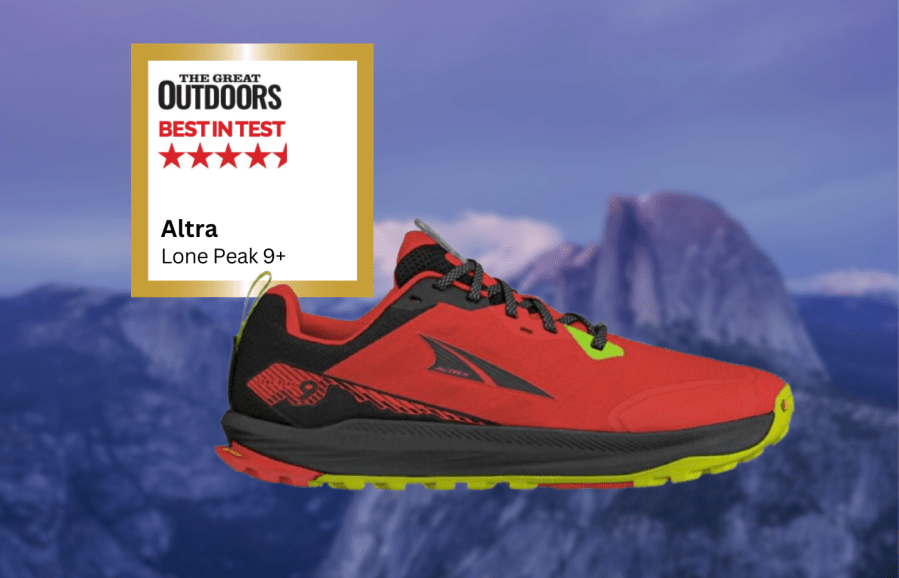
Altra Lone Peak 9+ Shoes
Peter Macfarlane’s Best in Test
The Lone Peaks are an excellent shoe and currently my first choice of footwear.- long term comfort
- fit
- grippy
- roomy toe box
- unusual fit won’t suit everyone
| Quick specs |
|---|
| Price: $155 / £130 (available from Altra) Weight: 670g pair, UK9 Materials: Vibram Mega grip outsole, EGO midsole, No-sew overlays, 100% RPET ripstop mesh upper Features: low heel-to-toe drop, original foot shape fit, gaiter clips Waterproof: No Sizes: UK 6 to 15 (half size 6. To 11.5) Women’s version: yes www.altrarunning.eu |
More people are choosing shoes over boots for the outdoors, but these Altras push things a little further. The Lone Peaks were the cheapest and lightest shoes (670g pair, UK9) in our group test in the last year and won Best in Test for reviewer Peter Macfarlane, who loved the comfort and performance, which makes them suitable not just for running but for walking and trekking too. The Vibram outsole is flat, without a heel breast. The lugs are reasonably aggressive and very grippy “in most situations”.
The upper is mesh: useful on a shoe that isn’t waterproof as it lets water out. The toe bumper is quite soft but strengthened by an overlay, and the outsole curves up to offer more than ample rock protection. The midsole is low-profile and connects the wearer to the terrain well, but with enough cushioning. The heel cup also wraps well to prevent chafing or pressure points. There is room in the forefoot for the toes to spread wide, so the toes move naturally as you walk, and there’s no extra discomfort, even after a long day. Trail runners like these won’t last as long as leather boots, but there are other advantages.
Read more: Peter’s full Altra Lone Peak 9+ review
Best headtorch
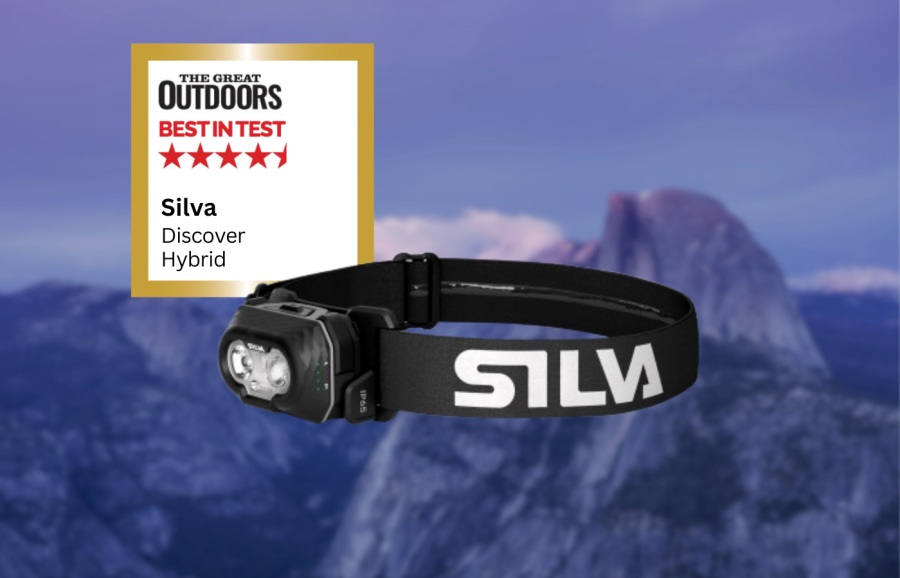
Silva Discover Hybrid Headtorch
James Roddie’s Best in Test
This is a versatile head torch that strikes a great balance between price and functionality.- excellent headband
- ease of operation
- bright and wide beam
- No burst mode
| Quick Specs |
|---|
| Price: $69.99 | £59.99 (available from SportsShoes.com) Weight: 97g Output: Up to 500 Lumens Power source: 1250mAh Li-ion 3.7v rechargeable battery, or 3x AAA battery Features: Helmet mount, sticky silicone headband inlay, orange and red modes silvasweden.uk |
If you’ve just spent an arm and a leg on a big puffy jacket (see overleaf) hoping to extend your 2-season bag into early spring or late autumn, you’ll want to bag some bargains elsewhere. Enter the 97g Silva Discover, which James Roddie awarded Best in Test in his group review, as “a versatile head torch that strikes a great balance between price and functionality”.
Operation is straightforward, with three fixed brightness modes cycled through by pushing the single button. The brightest setting of 500 lumens gives a beam approximately 80 metres long, more than sufficient for most situations. There is also a red and orange mode for maintaining your night vision. James liked the range of tilt and the wide angle beam. You can change out the lithium battery for AAA cells; and it comes with a helmet mount (which can fit both mountaineering and cycling helmets) included. Sticky silicone inlay inside the headband stops the bulb unit slipping forward, and its edges are reinforced. We could have gone cheaper, but this strikes a balance between value, performance and durability.
Read more: James’ full Silva Discover Hybrid review
BioLite Range 300 Headtorch
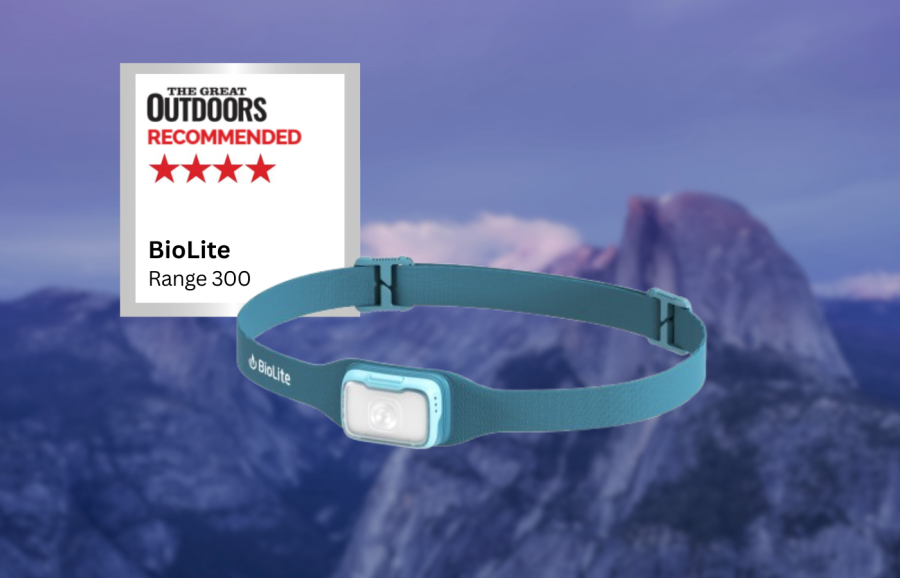
James Roddie recommends
There is a lot to like here, in a very lightweight package.- extremely lightweight
- climate label certificate
- not as bright
| Quick Specs |
|---|
| RRP: $39.95 | £42.99 (available from BioLite and Blacks) Weight: 55g Output: Up to 300 Lumens Power source: 817 mAH 3.17 rechargeable battery. Features: USB-C charging. Strobe mode. Lock mode. bioliteenergy.com |
The BioLite Range 300 is exceptionally lightweight and compact given the functions. It weighs only 55g and has an extremely slim design. BioLite describe it as having a ‘weightless’ fit and it’s hard to disagree, yet the head strap feels as supportive and comfortable as those found on torches weighing twice as much. Maximum output is 300 lumens. This is sufficient, or even more than you’d need for many situations. You get a wide beam on all settings and this provides plenty of light for your peripheral vision. It is easy to adjust the brightness by just holding the button so it dims and brightens to your preferred output. The lowest setting is 3 lumens and you an impressive 150 hours of burn time at this output.
The battery also charges very quickly via a USB-C cable. 15 minutes of charging gives you around an hour of burn time on highest output. These attributes, combined with the ultra-light design, make this torch an attractive option for use on long-distance trails when you aren’t planning on doing too much walking at night. It also has an IP67 waterproofing rating meaning it is submersible. At a price of £49.99, hikers with a higher budget could even consider this as a backup torch if they require brighter beam output for their main light. There is a lot to like here, in a very lightweight package.
Read more: James’ full Biolite Range 300 review
Best stove
Campingaz Twister Plus PZ Gas Stove
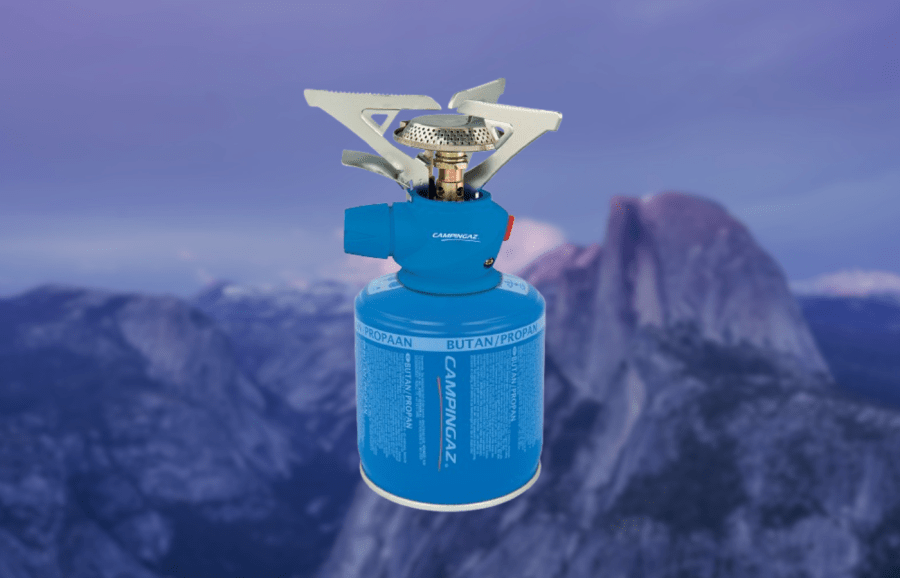
Peter Macfarlane’s Best Value
It might be a little heavy and bulky but is an accessible starter stove that you really can really cook on.- simple and easy to use
- cheap
- heavy
- limited to CG gas without adaptor
| Quick Specs |
|---|
| Price: no US shipping | £24.99 (available from Go Outdoors) Weight: 210g (burner only) Fuels: bespoke gas canister Dimensions assembled 110mm h x 120mm w Burner Diameter: 54mm Power: 2900W Boil time: 2m40s x 500ml Fuel used: butane/propane canister www.campingaz.co.uk |
Campingaz is a brand more associated with the leisure market than with dedicated outdoor enthusiasts, but Peter Macfarlane awarded Best Value to the Twister, reckoning it to be “an accessible starter stove that you can really cook on”. It works with Campingaz’s own widely available gas canisters of various sizes. It ends up quite tall, but still stable enough even without a dedicated pot stand, partly because canister and burner together are weightier. Third-party plastic canister feet can be retrofitted if desired.
The design is chunky, with metal burner parts encased in a plastic surround incorporating both piezo and control dial. Attaching the canister requires a solid, positive push-on and quarter turn with a click, and the reverse action for removal that lets the user know where they stand. Fine-tuning heat control is smooth, and the folding pot stands are textured. The burner is wide so it suits wider pots and pans. Nice touches from Campingaz on the Twister Plus include a metal heat shield between the burner control, a hard plastic case and of course the price.
Read more: Peter’s full Campingaz Twister Plus review
How we tested
Lara used the Robens tent on backpacking adventures in early spring at lower-level locations in mid-Wales. Temperatures were variable but weather was largely favourable. She tested insulated jackets on walks in the Malvern Hills, Brecon Beacons and Black Mountains during a mixed autumn and a spectacularly cold, snowy early winter. Long, static wildlife-spotting evenings proved a good test of insulation properties. She usually takes a size 14, sometimes 16.
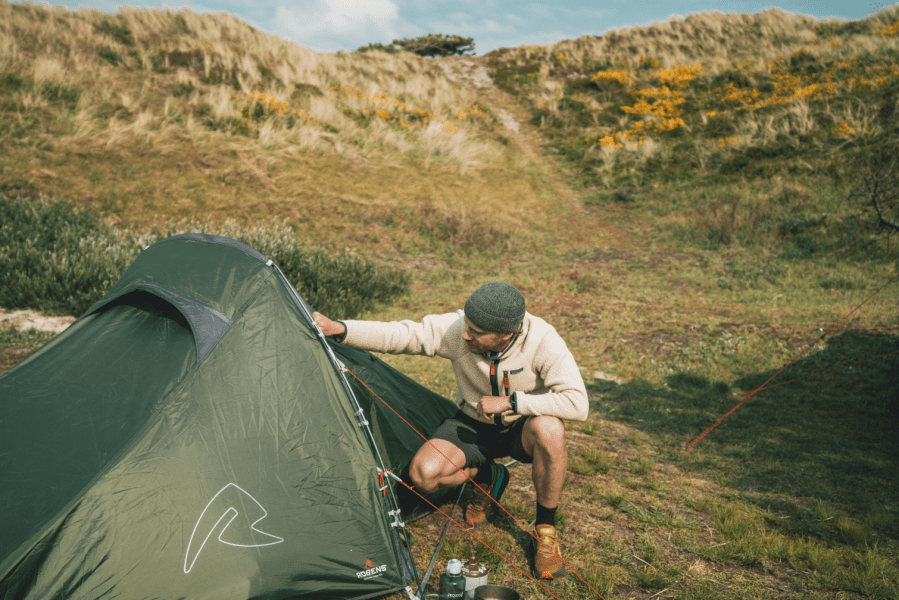
Lucy tested packs in a variety of conditions on overnight camps in Scotland and Wales. She is 5’6” with narrow shoulders and is a cold sleeper and tested the bags on overnight camps in Wales in mixed, rainy and cool conditions.
James is 5’9” tall with average width shoulders. He tends to be a ‘cold sleeper’. He tested the sleeping bags in a variety of weather conditions in the Scottish Highlands during the spring. James tested headtorches in a variety of conditions during winter, spring and summer in the Scottish Highlands, mostly on short backpacking trips and night-time ascents of Munros, with occasional testing whilst running and cycling.
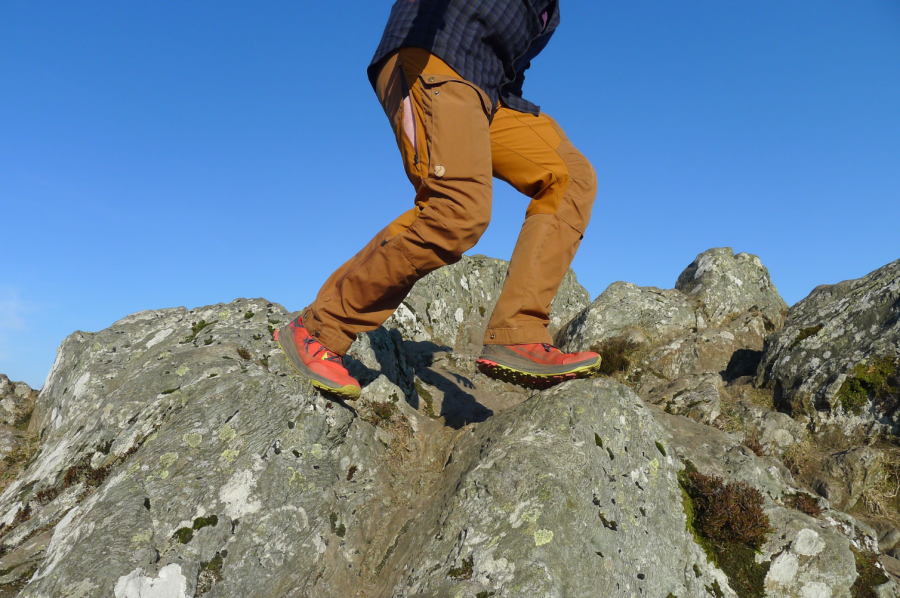
Peter walked Munros and ran his local trails in the Kilpatrick Hills to test the shoes. He is a UK9, has a narrow heel and wide forefoot. For the stove, boiling times were recorded by Peter in various conditions outside and at home to achieve a benchmark time. Peter took it out across all seasons, most often on hill days with a wind shield as well as at camp and on bothy trips. Peter rotated insualted jackets on every outdoor trip this winter so far, from Munros in all conditions to lunch breaks on ranger activities in the Kilpatrick Hills and static photography activities in sub-zero conditions. He wears a size large.
Weights are supplied are from the testers’ own digital scales.