
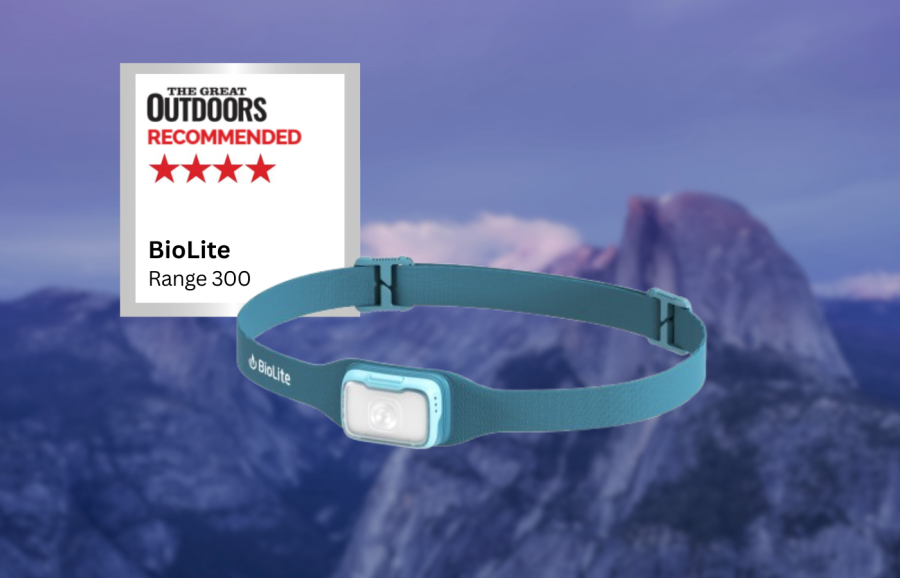
James Roddie recommends the BioLite Range 300, awarding it four stars. Find out what’s to like about this lightweight head torch.
The BioLite Range 300 is exceptionally lightweight and compact given the functions. It weighs only 55g and has an extremely slim design. BioLite describe it as having a ‘weightless’ fit and it’s hard to disagree, yet the head strap feels as supportive and comfortable as those found on torches weighing twice as much.
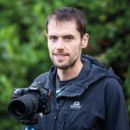
James Roddie recommends
There is a lot to like here, in a very lightweight package.- extremely lightweight
- climate label certificate
- not as bright
| Quick Specs |
|---|
| RRP: $39.95 | £42.99 (available from BioLite and Blacks) Weight: 55g Output: Up to 300 Lumens Power source: 817 mAH 3.17 rechargeable battery. Features: USB-C charging. Strobe mode. Lock mode. bioliteenergy.com |
Maximum output is 300 lumens. This is sufficient, or even more than you’d need for many situations. However, I did find myself missing the ability to briefly brighten things to a higher output. You get a wide beam on all settings and this provides plenty of light for your peripheral vision. It is easy to adjust the brightness by just holding the button so it dims and brightens to your preferred output. On my tests, the dimming speed accelerated as the output got lower, meaning I’d sometimes have to do it twice to avoid getting the lowest setting by mistake. The lowest setting is 3 lumens and you an impressive 150 hours of burn time at this output. This is too dim for hiking outside most of the time, but is perfectly sufficient inside a tent.
The battery also charges very quickly via a USB-C cable. 15 minutes of charging gives you around an hour of burn time on highest output. These attributes, combined with the ultra-light design, make this torch an attractive option for use on long-distance trails when you aren’t planning on doing too much walking at night. It also has an IP67 waterproofing rating meaning it is submersible. At a price of £49.99, hikers with a higher budget could even consider this as a backup torch if they require brighter beam output for their main light. There is a lot to like here, in a very lightweight package.
How we tested
James tested these headtorches in a variety of conditions during winter, spring and summer in the Scottish Highlands, mostly on short backpacking trips and night-time ascents of Munros, with occasional testing whilst running and cycling.
This review was first published in the January 2026 issue of The Great Outdoors. Compare it with other models in our head torches buyer’s guide.