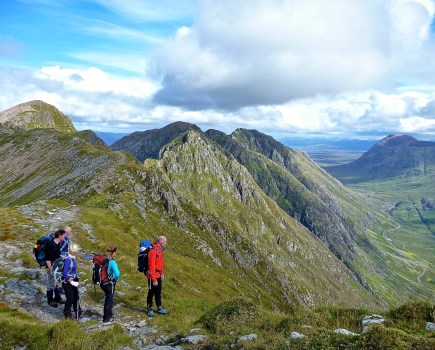

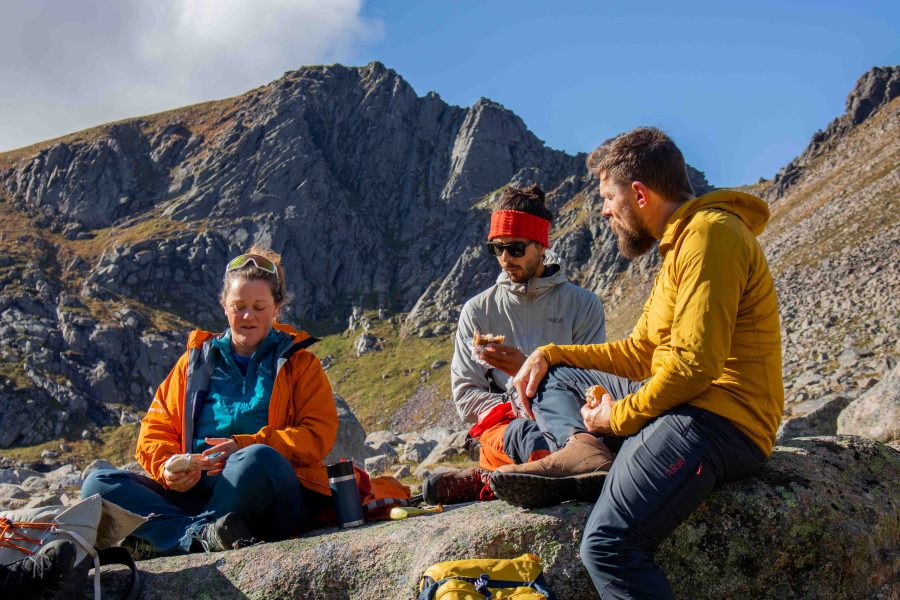
Main image: The ideal spot to chow down on your taste in good hiking snacks | Credit: Richard Taylor Photography
Chocolate-coated waffles sounded like the perfect trail treat — until halfway through a big day on the Cape Wrath Trail, when I discovered they were incredibly dry. My mouth was already parched, and suddenly they were impossible to eat. Then there were the sweaty cheese bars, which turned into an unappetising mess during an unexpectedly warm spell in the Outer Hebrides. And, finally, the new and exciting-looking camping meal I decided to give a go out in the Glen Feshie Munros… which turned out to be inedible.
Everyone who spends time in the hills eventually collects a few food fails, but you can avoid some of them by learning from our experiences!
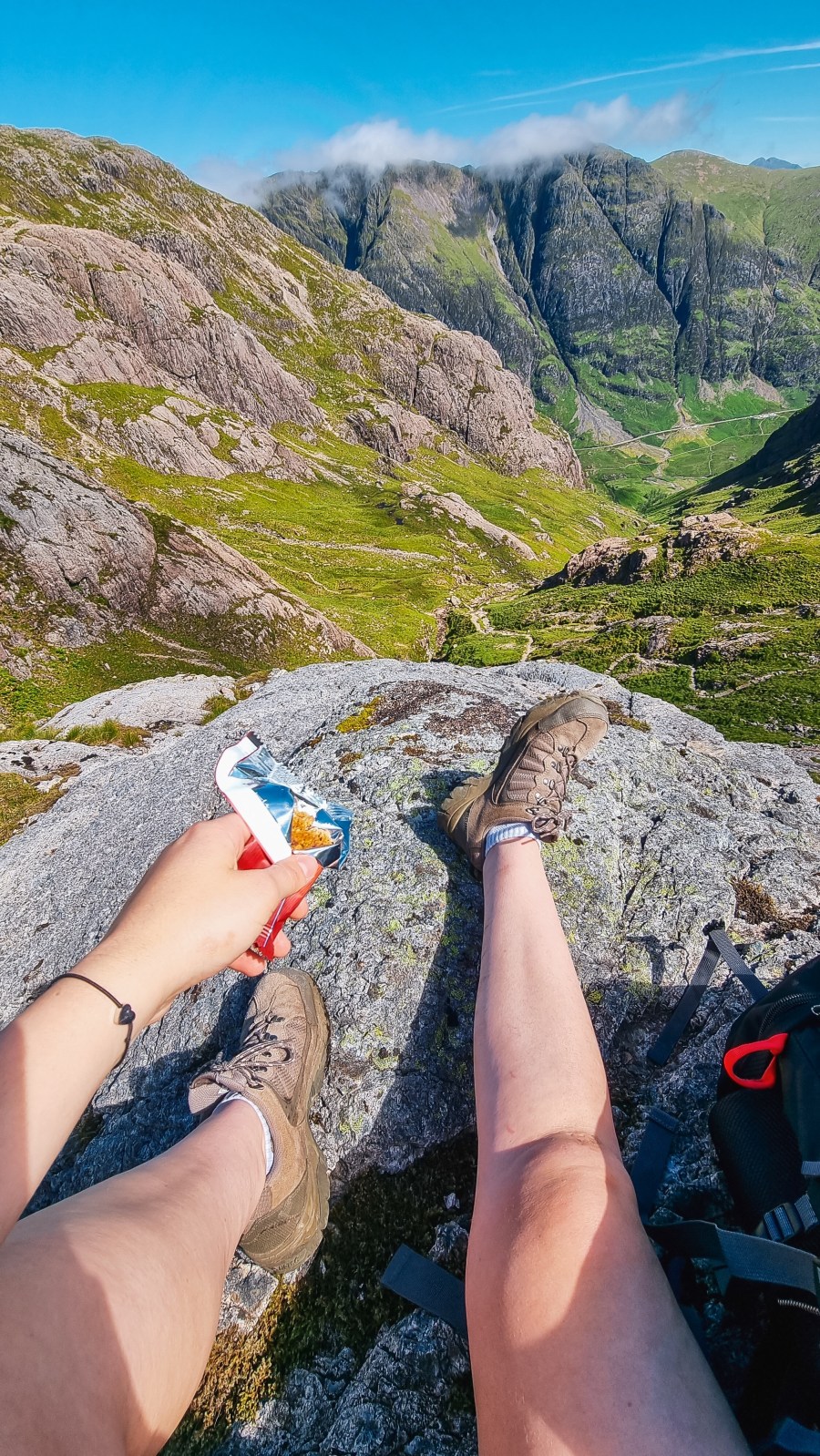
Take what you’ll actually eat
For a single day out, it matters far less what you eat than that you do eat. Hill days are not the times to be attempting to try and make yourself ultralight by avoiding those essential calories either.
Long days walking or scrambling burn a lot of energy, and if you forget to fuel properly you’ll feel it — slower legs, worse decision making, getting cold more quickly. So choose things you actually like, and make sure you have taste-tested them.
Real food beats sports science
Hill walking isn’t the same as marathon running as we’re moving steadily rather than pushing hard. That means we don’t need to fuel like runners with bars and gels (which can also play havoc with the digestive system!). We need real food. Fast carbohydrates can be useful, and it is worth having some with you in case you feel you are flagging. Including a bit of protein and fat alongside your carbs, though, helps keep energy levels steadier and leaves you feeling more satisfied. That might be as simple as cheese, nuts, or a chunk of sausage.
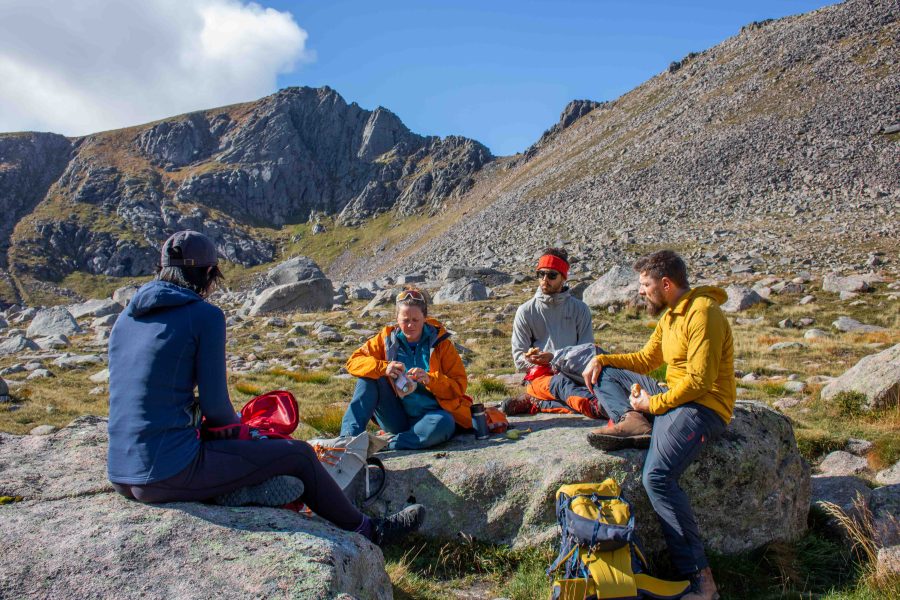
Think ahead on multi-day trips
On longer trips, it’s worth thinking a little more about the nutritional value of what you’re carrying. I learned that lesson the hard way as a young instructor, when I spent a summer living off military ration packs while working as a DofE supervisor. They kept me going, but after a few weeks I was definitely craving fresh food. The tricky things to include are often fresh food and protein.
Take advantage of the first night – if the weather isn’t too hot for them to survive, fresh ingredients like steak or strips of halloumi with a bag of pre-chopped stir-fry vegetables can feel luxurious after a day on the hill. If using lightweight meals, it’s also worth knowing that freeze-dried options tend to retain more nutrients than dehydrated meals.
Practicality matters
It might tick all the boxes in terms of taste, energy and nutrition – but it’s fiddly to open, likely to blow away in the wind or impossible to eat in gloves then you aren’t going to eat it! Thinking carefully about the conditions you are likely to be out in will help you to make good food choices.
In cold weather, anything that requires delicate wrapper surgery might mean taking off big gloves. Pre-opening snacks and storing them in a sandwich bag or box can feel like a stroke of genius. That Snickers bar in your rucksack lid is also going to cost you a fortune in dental reconstruction if you let it! Try a Penguin instead.
Hot weather has its own issues. Chocolate melts, cheese sweats, and anything that relies on staying crisp can become unappealing. Sour sweets are the ultimate dry-mouth remedy in hot weather.
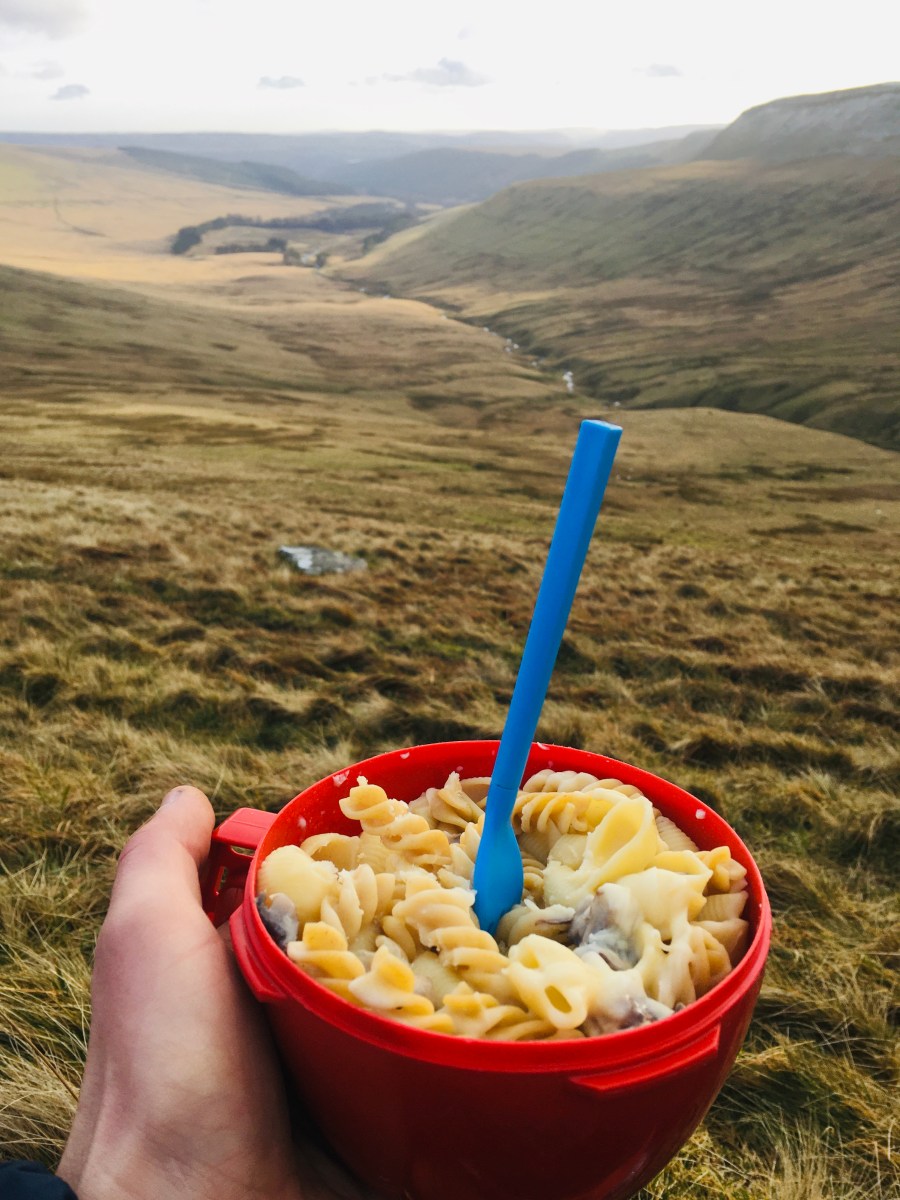
Before and after your trip
A good hill breakfast ideally includes both slow-release and quick-release energy, helping you stay fuelled for longer. A hot breakfast when camping can get the inner stove going for the day and help you keep warm in the chilly dawn too. A personal favourite is porridge with peanut butter.
Including a decent amount of protein and carbohydrate in the evening meal after being out on the hill helps support muscle repair and recovery, and replenish muscle glycogen stores. Ideally, you should eat within an hour or two of getting to camp or finishing the day’s walk. This means if you have a long trip home, travel snacks are an essential. Enjoy choosing them!
Hiking snacks: A few instructor favourites
- Mackerel / tuna pouches
- Babybels (and cheese in all its forms!)
- Cheesy oatcakes
- Nutrigrain soft bars
- Hard boiled eggs
- Lindt chocolate bars
- Venison steak – best eaten in a snowhole
- Trail mix
- Sugarsnap peas
- Haribo