
Mountain streams and small rivers are a normal part of travelling in the UK uplands. Most stream crossings are straightforward, but after rain or snowmelt a normally trivial burn can quickly become hazardous. Understanding the risks and knowing how to choose a good crossing point are essential mountain skills.
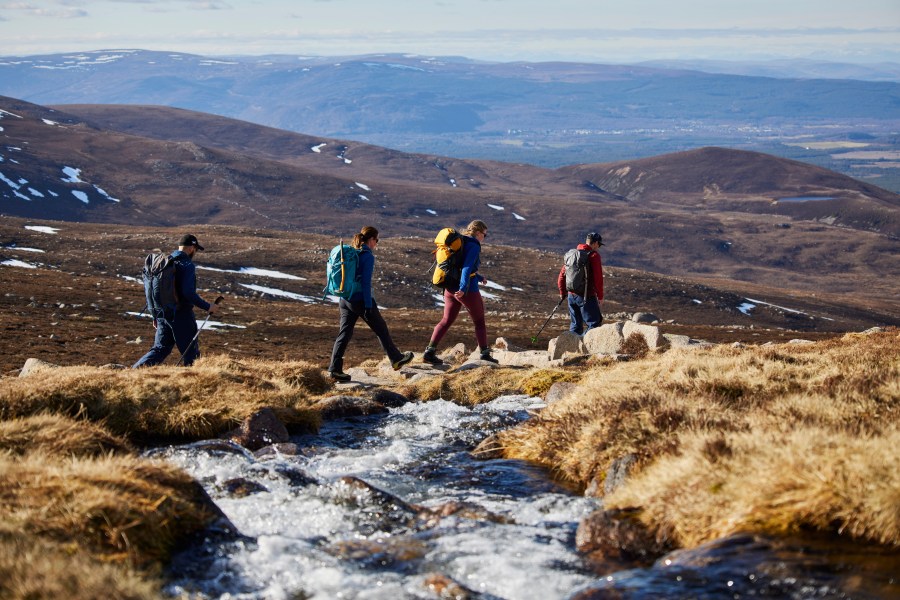
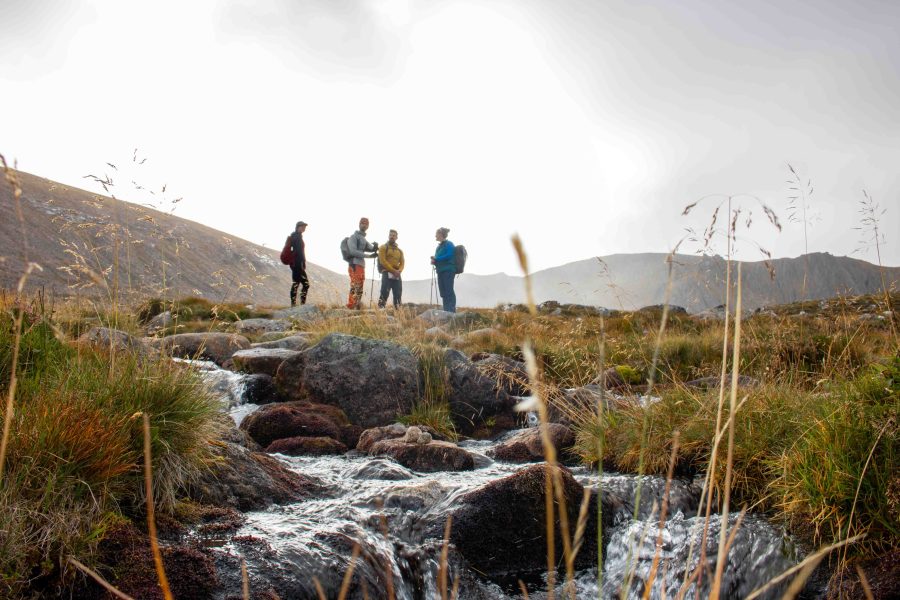
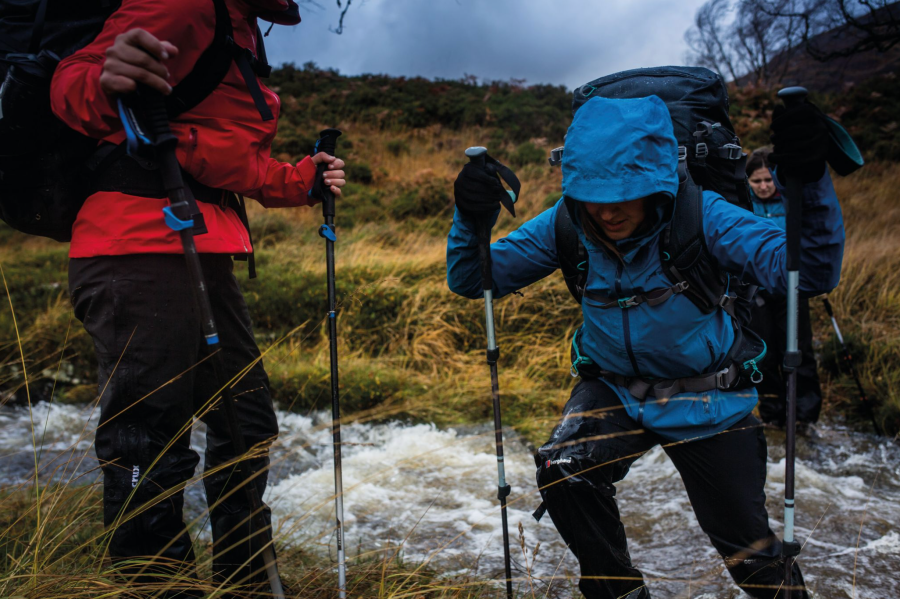
Main image: Established crossing points are often places in safer locations | Credit: Ed Smith
The power of water
Fast-moving water is more powerful than it appears. Even knee-deep water can destabilise you if the current is strong. Cold temperatures also add risk; many upland streams are fed by snowmelt or cold groundwater and can rapidly chill the body. Slips on lichen-covered rocks are common, and a fall in moving water can lead to injury or being swept downstream.
In the UK, conditions can change quickly. A burn that is easy to step across in the morning may become uncrossable after heavy rain in the afternoon. Planning for this possibility is a key part of mountain safety.
Stream crossing hazard spotting
The first rule is to avoid the worst hazards. These include:
- Strong currents: Fast water exerts significant force against your legs. If the current pushes hard against your shins or knees, it may be unsafe to cross.
- Deep water: As water depth increases, stability decreases. Once water rises above your knees, the force on the body increases rapidly.
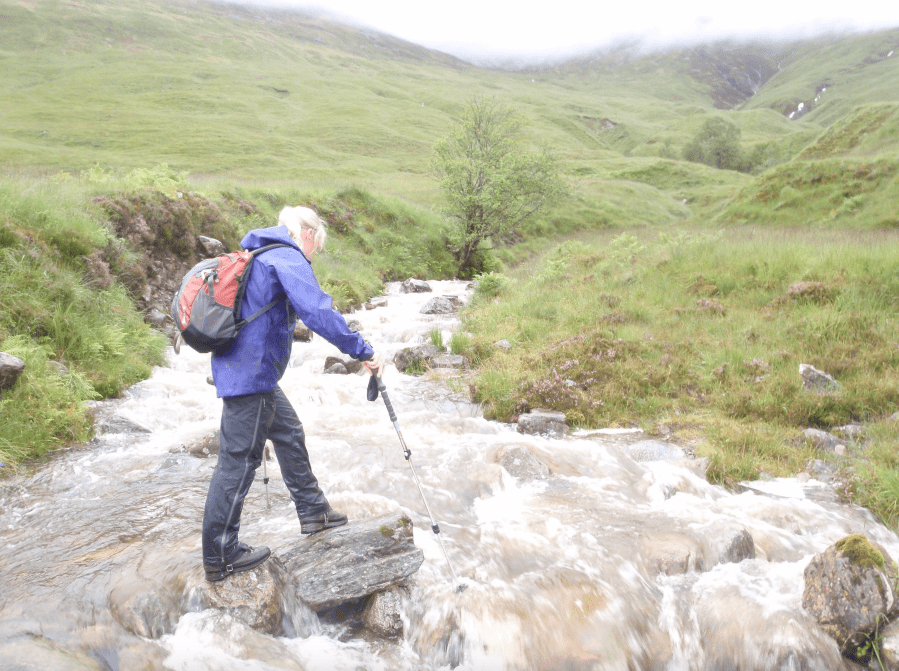
- Slippery rocks: Many upland streams have rocks coated with lichen and mosses, making them extremely slippery. Smooth boulders and bedrock can be particularly treacherous.
- Undercut banks: The edge of a river can conceal deeper holes or steep underwater banks.
- Rapids, rocks or submerged trees downstream: If a fall could result in being swept downstream, the consequences become far more serious.
- Cold water immersion: Even a short immersion in cold mountain water can result in a gasp reflex, or lead to hypothermia.
If any of these hazards are significant, it may be safer to look for another crossing, turn back or wait.
Where to cross?
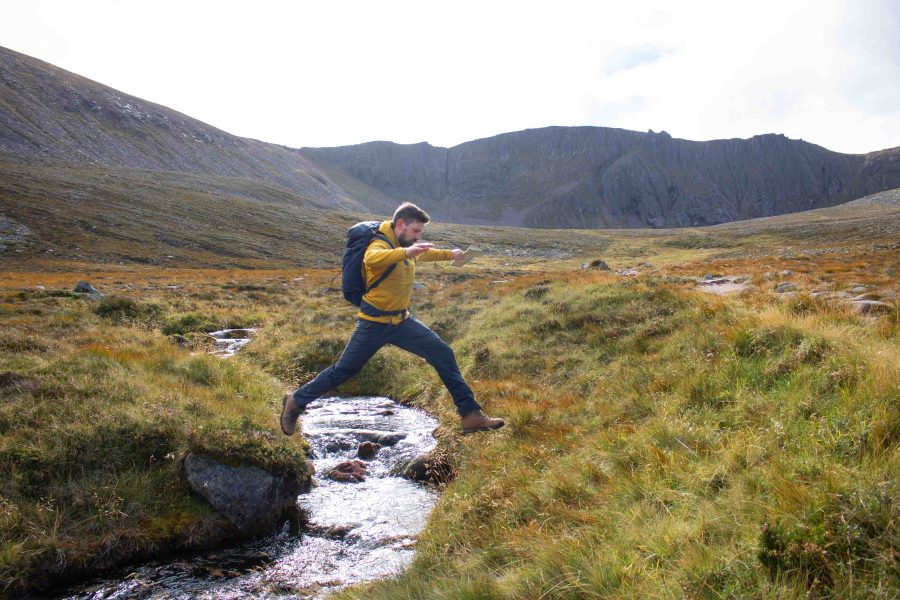
Selecting a good crossing point can make the difference between an easy crossing and a dangerous one. Look for wide, shallow sections where the river spreads out. The current is usually weaker here than in narrow channels. Gravel bars or braided streams can provide ideal crossing points. If the river bends, the inside of the bend is often shallower than the outside.
Established crossing points such as bridges, stepping stones, or fords are often placed in safer locations, although they still require care after rainfall or snowmelt.
Going it alone
When you are alone, your margin for error is small. A fall could lead to injury with no immediate help available. Take time to assess the river before committing. If in doubt, look for a better crossing.
Before stepping into the water:
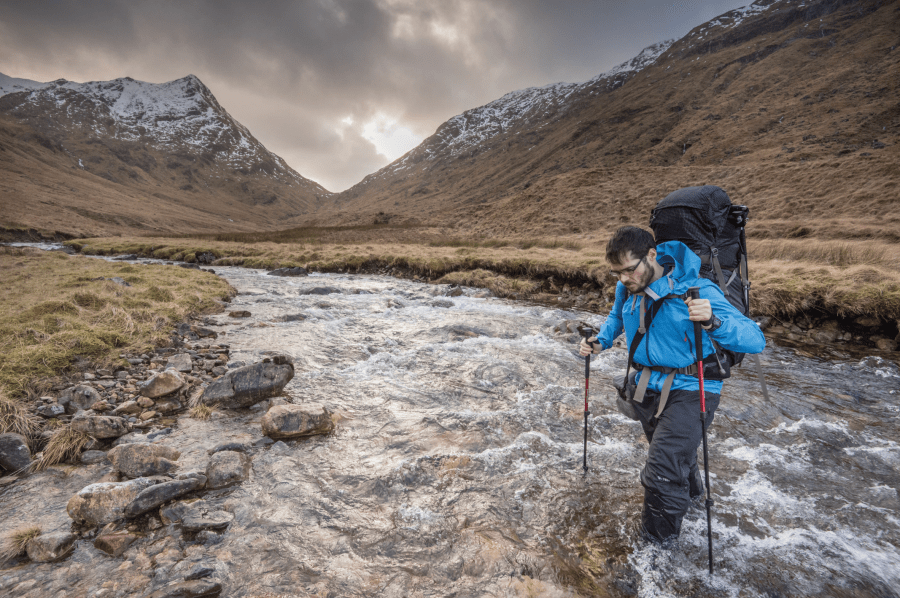
- Loosen your rucksack straps, so you can remove your pack quickly if you fall.
- Use a trekking pole to provide additional stability.
- Face upstream, leaning into the current.
- Move slowly and deliberately. Shuffle your feet rather than stepping high, keeping at least two points of contact with the ground.
- Test each step before committing. If a rock moves or feels slippery, adjust immediately.
- If the force of the water begins to push you off balance, retreat while you still can.
Tactics for stream crossing in groups
Groups have more options for safe crossing, but they must still take care.
There are various ‘formations’ which can be adopted by a group when crossing, some helping with stability on slippy or uneven surfaces, others prioritising breaking the force of the flow for weaker or lighter members of the team. These techniques are nuanced and should be learned from an experienced Mountaineering Instructor. It’s worth noting that you can adjust the number of individuals in the crossing team. It may be significantly easier to make several crossings with smaller teams than to try to coordinate a large team.
Make sure everyone understands the plan before entering the water. Confusion mid-crossing can create unnecessary risk.
When not to cross
Sometimes the safest decision is simply not to cross. If the water is fast, deep or rising rapidly after heavy rain, the risk may be too high.
Mountain rivers can drop significantly within a few hours once rainfall stops. Waiting or choosing an alternative may be wiser.
And finally…
Crossing mountain streams is a part of hillwalking in the UK, but it demands attention and good judgement. By selecting good crossing points, recognising hazards, and using careful techniques (especially when travelling alone or guiding groups) you can greatly reduce the risks.
In the mountains, patience and caution are valuable skills. Slowing down to assess a crossing properly can make the difference between a safe journey and a dangerous situation.