
It’s early 2024, at Rheged Cinema, Penrith, and Ultra-runner and climber James Gibson has just shown the film of his 2021 Winter Wainwright continuous Round. Charting his epic traverse of 214 fells in 8¼ days over 350 miles and 41,000 metres of ascent, breathtaking footage showed the fells in blizzard conditions, revealing an awe-inspiring winter mountain environment. As we watched, a seed was sown. Could two experienced fellwalkers also complete a winter Round of these fabled 214 fells, in a single meteorological winter?
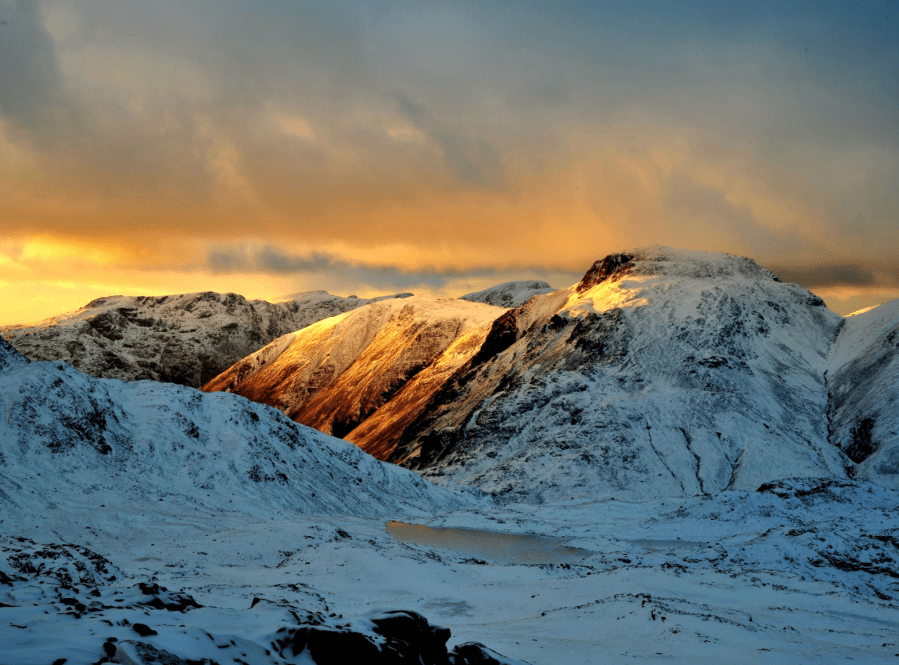
Main image: Winter Sunset light on Kirk Fell and Great Gable above Sprinkling Tarn, Lake District | Credit: Jordan Fadden / Shutterstock
The idea was not a continuous non-stop traverse, not racing the clock or seeking our quickest possible time but fundamentally a fellwalker’s Round savouring the best of a full winter on the Lakeland fells. The appeal was immediate. Success wouldn’t be easy or guaranteed, but that was part of the attraction. On the car journey home, we struck a deal and cleared our diaries for winter 2024/5.
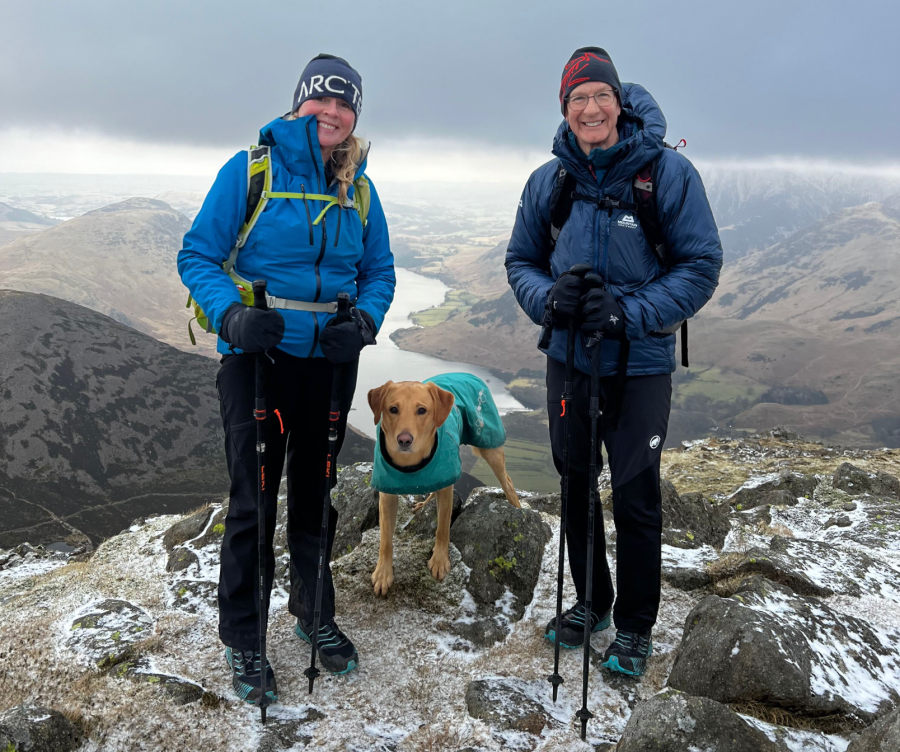
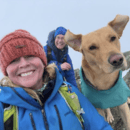
And then the questions arose. How much snowfall and full winter conditions would we experience? How many days would we need on the fells? What order and routes to take? Where to base ourselves? What are the risks? Could Nicky’s labrador Floki complete the Round too and could we support a local charity along the way?
First steps and first snows
Pieces of a large logistical puzzle gradually fell into place. With transport from our Grasmere bases, we could complete most fells on daily excursions. We factored in several nights at Wasdale Head for the challenging Southern and Western fells. We decided on a region-by-region approach, in a general clockwise direction starting in the North. As with the continuous 214 Rounds, we would start and finish at The Moot Hall in Keswick with Latrigg the very first fell and Catbells the very last.
After months of planning, it felt somewhat surreal standing at the foot of The Moot Hall on the first day in December 2024. Nicky’s children had journeyed up to Cumbria for our send-off, so despite predicted rain and high winds we stuck with our intended start date and planned circuit of under Skiddaw Fells. We were all excited and apprehensive about what lay ahead.
We left behind Victorian Christmas stalls setting up in the marketplace, making our way across Fitz Park and up the steep slopes of Latrigg, a red squirrel darting through the woodland. Reaching the summit as the first drops of rain trickled down our waterproofs, we gave each other a hug and Floki a gravy bone. A small first summit and small steps, but we were on our way.
After Latrigg, the winds picked up and rain lashed down incessantly. We omitted Dodd and Carl Side, ascending Skiddaw Little Man and Lonscale Fell through the mists and downpours. Approaching Lonscale, some loose barbed wire flaying in the wind, tore a six-inch gash in Nicky’s overtrousers. Despite us falling immediately behind schedule, joyful encounters with herdwicks on Little Man, grouse on Lonscale and the burnt sequoia of the bracken above Whit Beck filled us with hope for the days ahead.
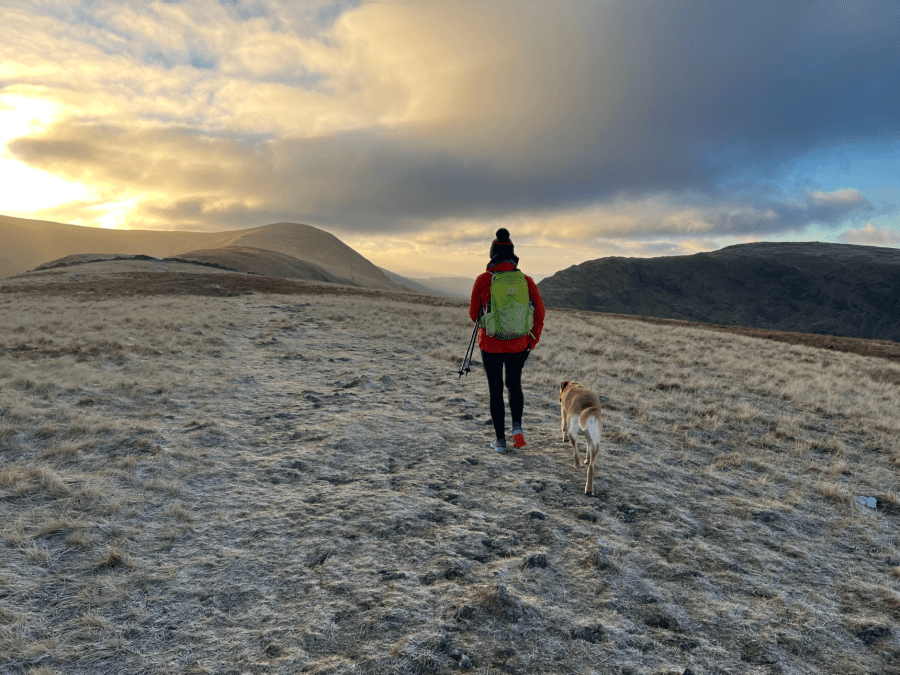
Day two was blustery and overcast but saw us complete an Uldale Fells circuit, finished with an out and back ascent of the volcanic satellite of Binsey. Brighter spells in the afternoon finally gave clear far-ranging views from its summit tumulus lifting our spirits.
Further squally conditions with falling temperatures were forecast and dawn on 3rd December revealed an astonishing monochromatic landscape. Overnight snowfall! Having repeatedly dreamed of this, seeing it so early in our journey was unbelievable. The high fell tops of the Skiddaw massif looked dark and icy, sombre and threatening, but gradually grew more inviting with more morning light. Our winter Round now felt authentic too.
Our traverse of the Skiddaw massif was exhilarating. In minus 9 windchill, gusts of icy winds brought tears to our eyes, made our noses run but gave us our biggest smiles. From Carl Side col, we carefully climbed the steep and loose path, gaining the exposed summit ridge with its ice encrusted wind shelters, summit trig and viewfinder cairn. Incredibly, by dawn the following day virtually all traces of snow and ice had disappeared. We were looking forward to a circuit of Blencathra fells under snowfall but appreciated the dry and clear conditions. Instead, we were treated to a stunning cloud inversion on the summit, with clouds swirling below us across its southern façade and the Helvellyn’s tops peeping up and out across the vale.
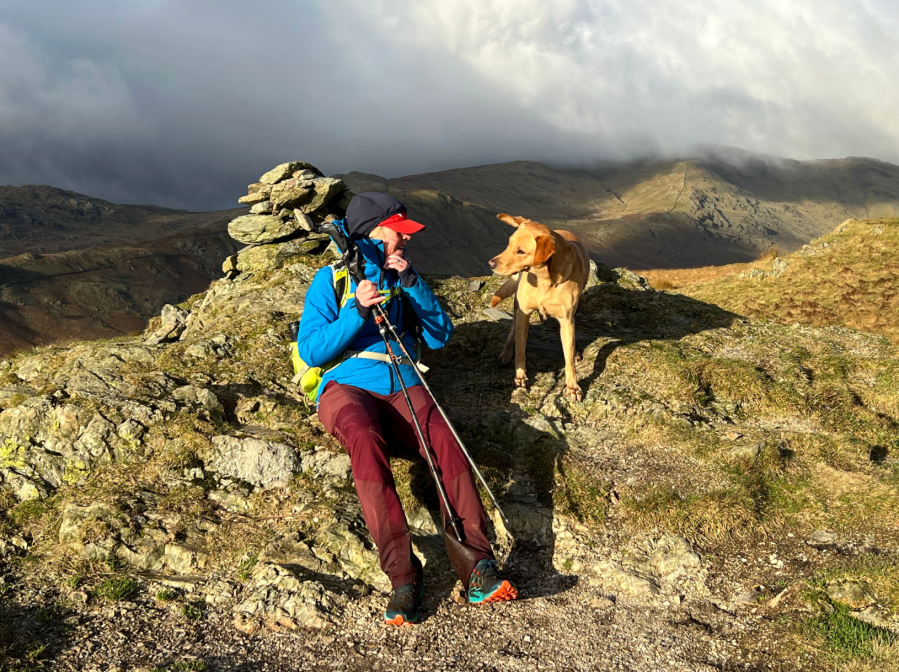
Storm Darragh blew in on the 7th December, bringing winds over 90mph and enforcing a rest day. The remaining Northern Fells were completed without incident and just outside our five-day schedule. The weather remained grey and overcast, winds relentlessly strong. We had hardly seen anyone else up on these northern outposts, the solitude adding to the experience.
50 up and injury
We had a superb day traversing from Sour Howes to Troutbeck Tongue via Yoke, Ill Bell and Froswick. Buffeted by Darragh tailwinds, clouds raced in from the north. A couple of rainbows arced above the fells and wonderfully atmospheric shafts of winter sunlight illuminated pockets of fellside.
Temperatures and winds dropped, clouds cleared, and by sunrise the following day the fells were covered by a silvery white hoar frost. We completed our biggest summit count, 10 fells above Hayeswater, as the ground crackled beneath our feet, high tarns were frozen over and our breath vapourised in the wonderfully cold, crisp air. Over 14 glorious miles with far reaching views we didn’t meet another person.
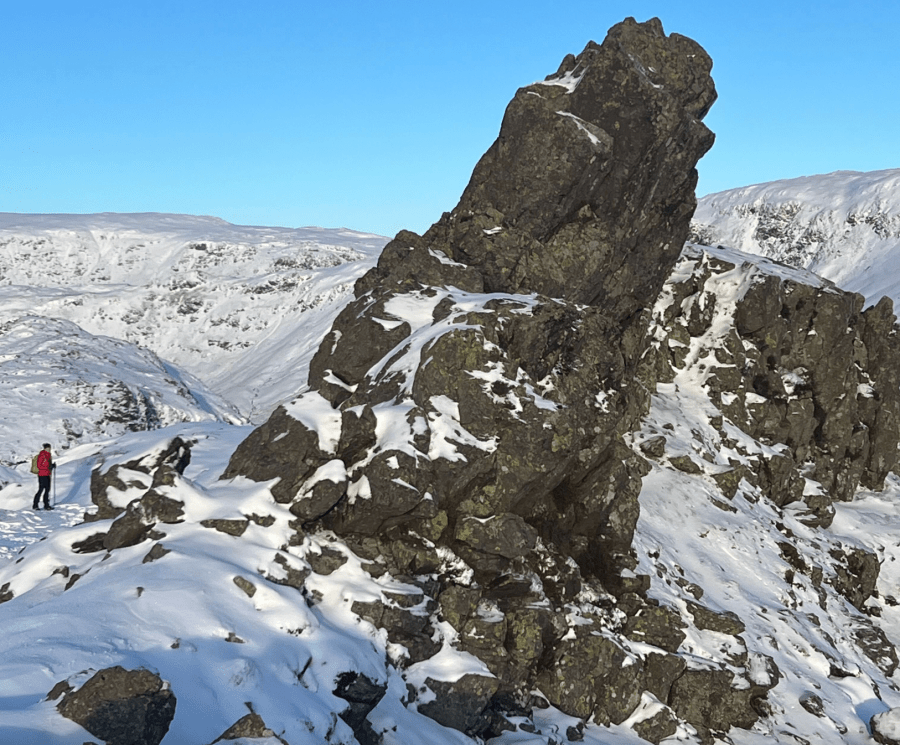
The weather changed again the next day on a circuit of Fusedale fells. The ground remained frozen but an ashen cloudscape reduced all visibility. On the steep descent from Steel Knotts, a quad muscle in David’s right leg suddenly announced its irritation. On the final hill, Hallin Fell, another steep descent saw normal walking replaced by a slow side shuffle and painful hobble.
The injury felt significant, that night David could barely walk downstairs and barely slept. Was this the end of our winter Round, just nine days and 48 fells in? A series of tests with the physio indicated an overloaded quad rather than a tear. Rest was prescribed, our schedule on hold, but for how long?
Thankfully, after four days, the pain subsided, and a more normal walking gait returned. We agreed to test things out with an easy ascent of Wansfell from Troutbeck. With great relief, and tentative steps, all went well. 50 fells completed, our winter Round was back on.
Wind chill and tumbles
Our coldest, windiest day so far was on 19th December completing a circuit of fells above Kirkstone Pass. Gusts of 65mph and a windchill of minus 14 sapped our energy and tested our resolve (and our clothing). Floki looked dapper sporting his new winter jacket. A sprinkling of snow covered the high fells again. The views from Red Screes were tremendous – its summit tarn, fringed by ice, rippled and disturbed by the wind.
We targeted 70 fells by year end and were slightly ahead of schedule. After a week’s Christmas break with our respective families, we welcomed the New Year by completing The Fairfield Horseshoe on a magnificent, cold, cloudless day on 2nd January. Setting off early, we had the snow-covered summit plateau and all the other fell-tops all to ourselves.
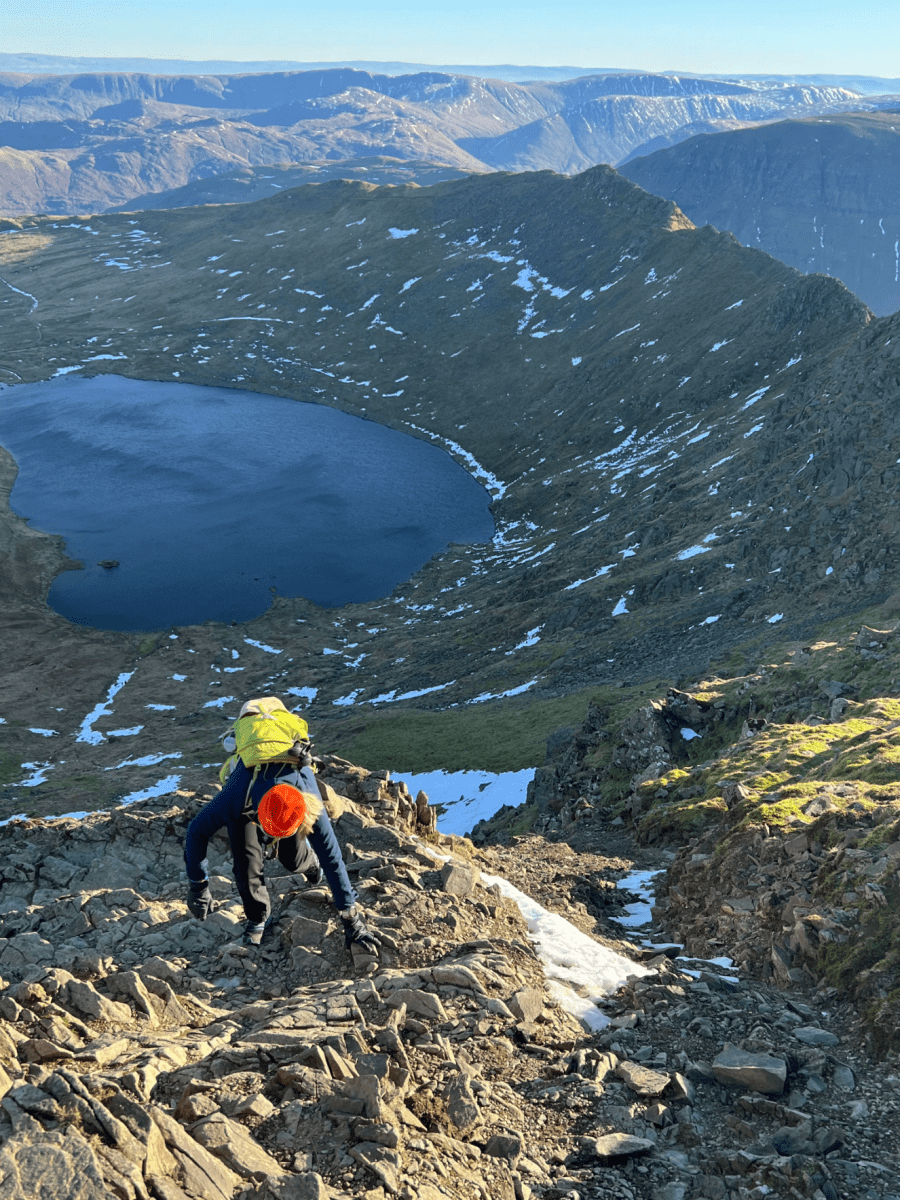
The following day, we made our first foray onto the Helvellyn massif where a minus 13 wind chill was recorded at the ice blasted summit shelter. We were experiencing the most wonderful winter fellwalking. Temperatures dropped again for a further horseshoe excursion onto Fairfield from the eastern Deepdale approach. Minus 4 with windchill minus 12 on a sleety Fairfield summit, we reached Hart Crag and began a steep icy descent to Hartsop Above How. Distracted, David clipped a spike heavily on a rock and took a forward tumble. It was only a few feet, but it seemed to last forever. Thankfully injuries were just a few cuts, grazes and bumps. From that point on, 87 fells in, we both resolved to take the utmost care every step of the way.
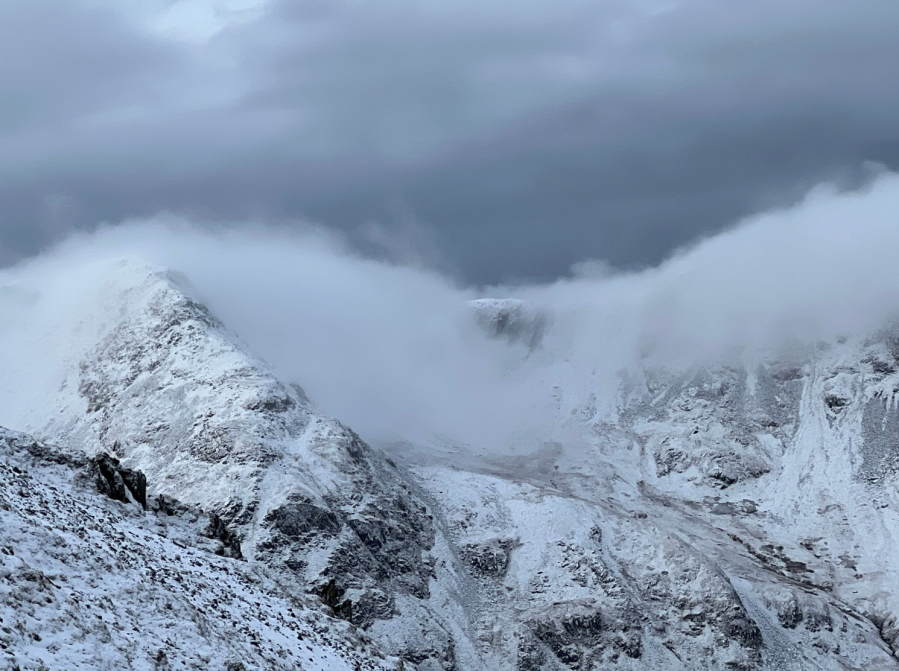
A rest day then coincided with the biggest fall of snow in Lakeland for years, the fells were enveloped and looked totally alpine. We could scarcely believe the complete winter scene before us. Reviewing our plans, unsure of road conditions, we decided to tackle our local fells.
An alpine wonderland
We ascended Loughrigg, then made our way across to Silver How, breaking trail across snow drifts often knee deep and higher. We gained the summit in ferocious winds over 65 mph, with a windchill of minus 16. Gasping for air, drying our eyes, Floki jumping from step to step, we tried to fully absorb the mountain snowscape.
The days that followed were magical winter excursions. Temperatures continued to fall (Grisedale valley recorded minus 12.3 degrees C on 8th January), the winds dropped, and skies were royal blue. Although the snow began to compact, deep drifts remained everywhere obscuring the mountain paths. Often ours were the first footsteps and the miles were slow and exhausting, but each summit attained was a corresponding reward. The fells took on a great mountainous alpine perspective, seemingly doubling in scale, steepness and seriousness.
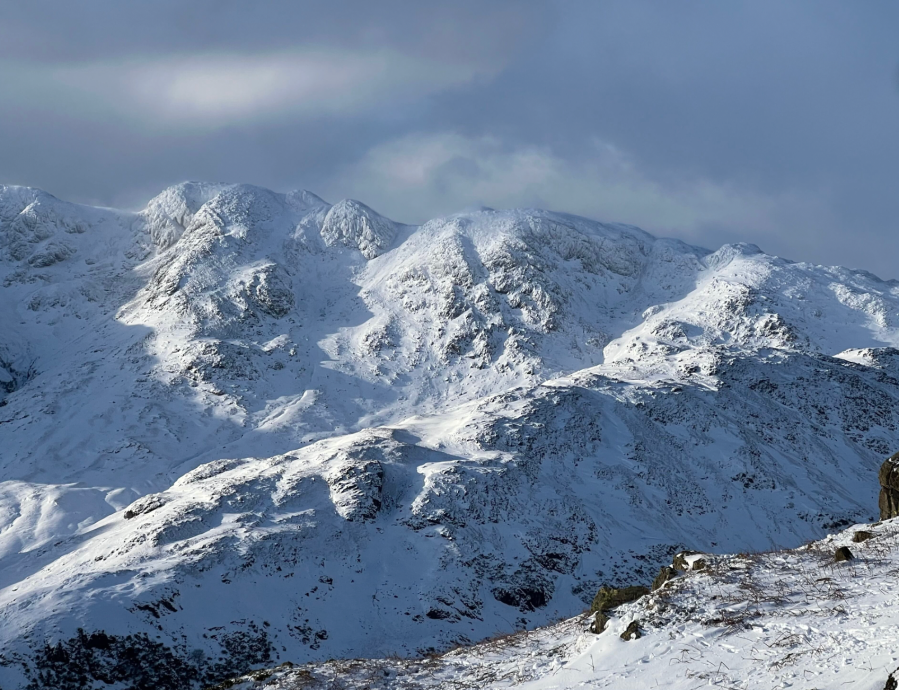
Not everything went to plan. Our first two attempts at a 7 fell circuit of the Langdale Pikes were both curtailed, one succumbing to deep drifts high up Loft Crag, and another aborted after drifts blocked an alternative route up Harrison Stickle. After expending so much effort climbing to high points, we were dismayed at returning without adding to our peaks tally. Both days were still great experiences in a transformed elemental landscape, the photographs taken some of our very best of the whole winter journey.
Weathered at Wasdale
Milder weather pushed north, blue skies and polar air replaced by a persistent anticyclonic ‘Scandi’ gloom. Snow still lay on the ground, but the sun disappeared for days. We approached the 150 landmark, enjoying forays in the west and north west. On 23rd – 24th January, Storm Eowyn disrupted our progress with winds exceeding 100 mph widespread over the mountain tops.
We were desperate to get over to Wasdale. On 29th January, we had the first of two stays at the historic Wasdale Head Inn. With scarcely a soul around, Wasdale was a world away from the chaos of summer. The Inn was wonderfully quirky and charismatic. We had a great round from Yewbarrow to Haycock, and a thrilling ascent of Lingmell and Scafell Pike. Wind chill on the roof of England reached minus 18, the mountain cloaked in deep snow and gripped by ice. Sadly, there were no views to match.
The final 50
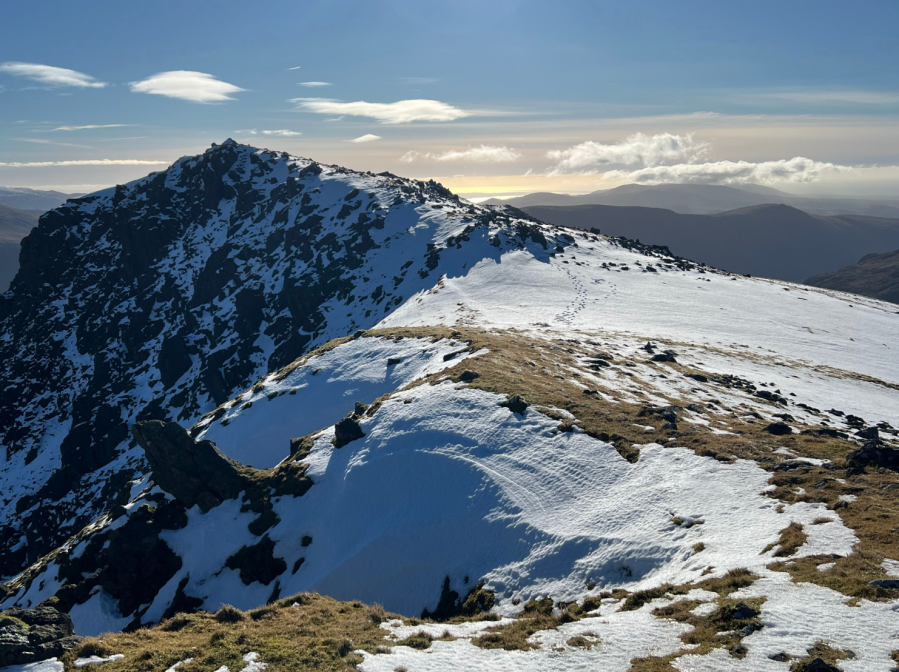
It was now February. Barring some catastrophe or sustained bad weather, we were increasingly confident of success. We trod ever more carefully over the wintry ground during some more magnificent days. The Coniston Round, a long Bow Fell to Glaramara Round (finishing by headtorch), Crinkle Crags, Buttermere and Crummock fells were all gobbled up with us now in our stride.
With a half decent forecast, we returned to Wasdale Head. We climbed Scafell direct, its summit rocks laced in thick ice, followed by Slight Side, Illgill Head and Whin Rigg, then the following day, Kirk Fell and Pillar (our 200th fell). A long traverse in compacted snow between these two fells was particularly memorable, with stupendous views down icy crags to Ennerdale.
Floki romped along all the walks and with our watchful care had no trouble on the icy edges and exposed ground. He humorously resisted the daily ritual of putting his winter coat on, running away and hiding as best he could.
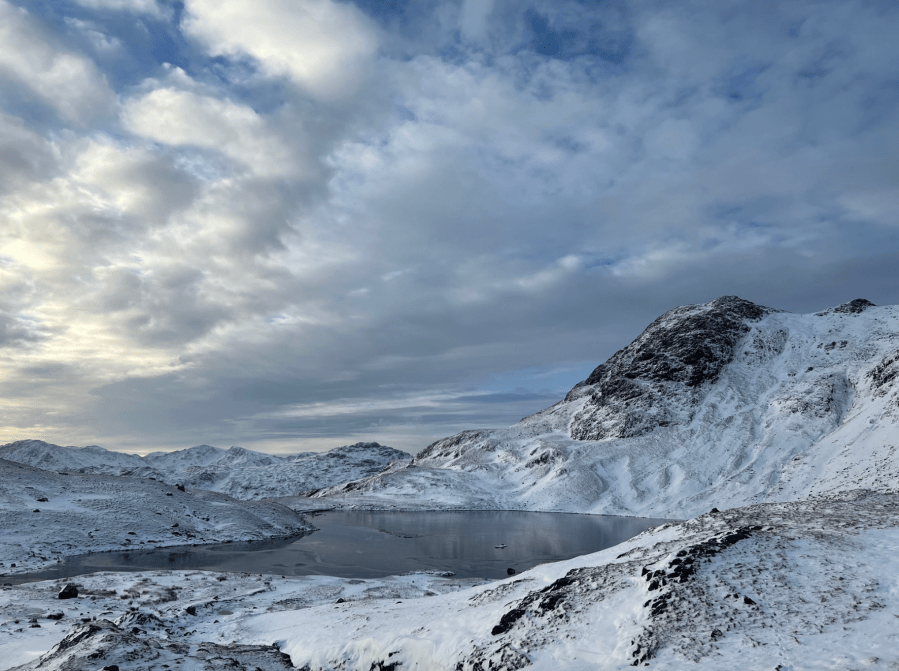
On what felt the coldest, windiest day of our entire winter journey, we ascended an alpine Great Gable under blue skies and sunshine. It encapsulated our wildest hopes and dreams – bathed in wonderful winter light, and surrounded by a pristine mountain environment. Once again, we had the ice rimed summit all to ourselves – measured by our elation alone, it could have been Everest.
Back to the start
19th February and our 53rd winter’s day on the fells. On a wet and windy, stormy morning, we worked our way around a Dale Head horseshoe, reaching the summit of Catbells – our 214th and final summit. Drenched, we hugged each other once more. Wind and driving rain did not facilitate a long exchange of words. Friends joined us at the foot of Catbells for the walk into Keswick where family and more friends had gathered to cheer us back.
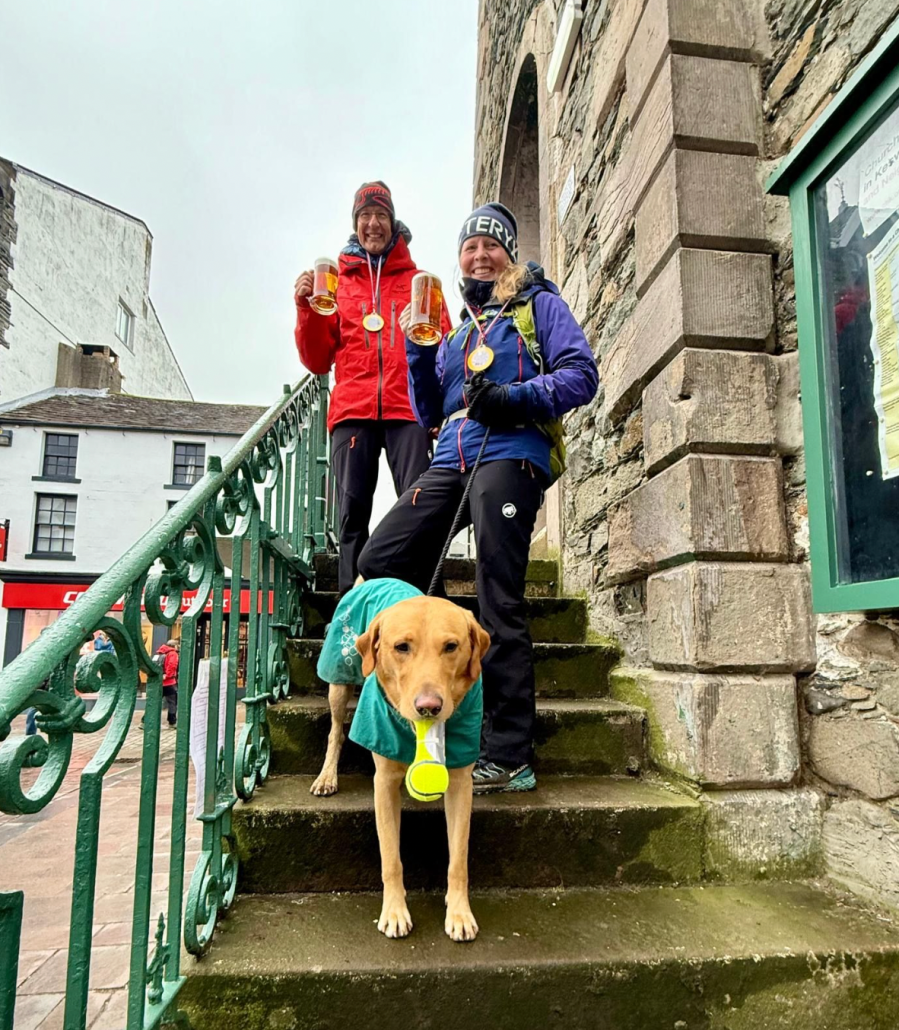
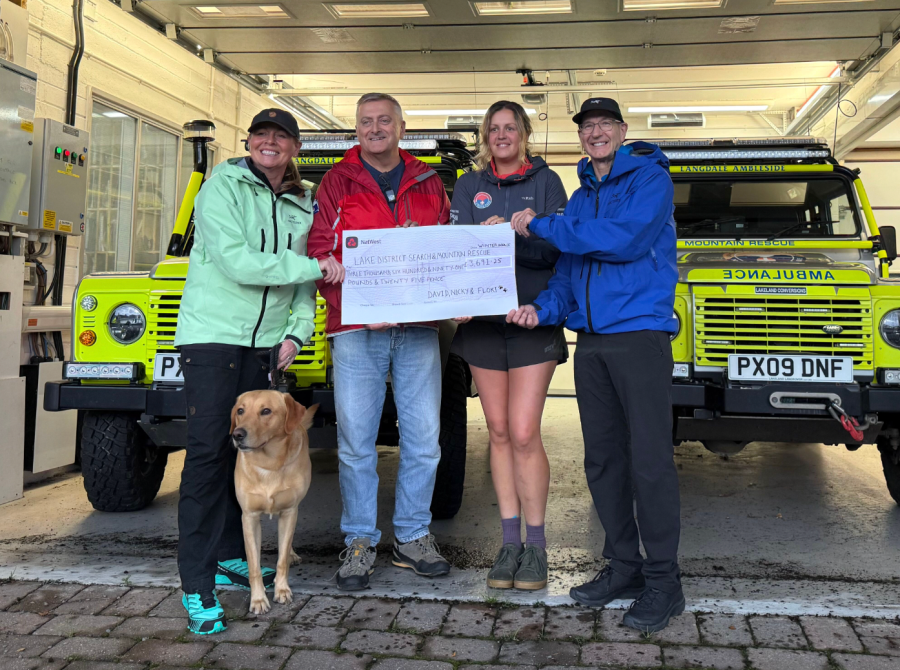
On cue, the rain subsided and the three of us climbed to the balcony of The Moot Hall to raucous cheers, whistles and claps. We raised our celebratory beers kindly provided by The Round (as is their delightful custom to finishers of the Bob Graham and continuous Wainwright Rounds). Floki, with a celebratory doggie toy, peeked through the balcony railings. Keswick Mountain Rescue were there too. Fundraising over our winter journey raised almost £4,000 for Lake District Search and Mountain Rescue Teams.
Our unforgettable winter Round was complete. What remained and still remains a year later is our growth in respect and appreciation for the winter environment, and memories of the sublime beauty of frozen fells, the ferocious winds, the solitude and the silence.
David and Nicky’s Winter Wainwright Round: in numbers
- The pair (and Floki the dog) began on 1st December 2024 and finished on 19th February 2025
- Total distance: 823 km, 511 miles
- Total ascent: 53,000m / 174,000ft
- Total Wainwright fells climbed: 218 (214 plus 4 repeats where routes overlapped on separate days: Helvellyn, Fairfield, Hart Crag and Hopegill Head)
- Total days on the fells: 53
- Most fells in one day: 10 (a Far Eastern round)
- Least fells in one day: 1 x 4 times (Bessyboot, Holme Fell, Lingmoor Fell, Black Fell)
- Snow / ice on summits: 92 fell tops
- Aborted routes: 2 (both on Langdale Pikes)
- Coldest temperature: minus 14 degrees celsius
- Strongest wind: 106 mph during Eowyn, gusts over 65mph on several fell days
- Lowest wind chill: minus 20 degrees celsius
- Named storms: 3 (Darragh, Eowyn and Hermina)
- Days lost to injury: 4 days
- Lost items: 2 (1 glove, 1 hat)
- Parking Ticket: 11 (thanks LDNP Wythburn!)
- Mini Bags of Haribos: Hundreds