
In case of emergency when you’re out in the hills, dial 999, ask for the police and then request Mountain Rescue
Unlike most summer hiking adventure stories, this one begins in a bed. My soon-to-be husband lay silently and stoically under dripping wet, cold towels alongside packs of ice, shivering violently. To him, his body felt aflame. Surrounded by paramedics, Stew’s temperature was taken: 39.4 degrees. Even I, with only a basic understanding of human biology, knew that was too hot.
Dining with the devil
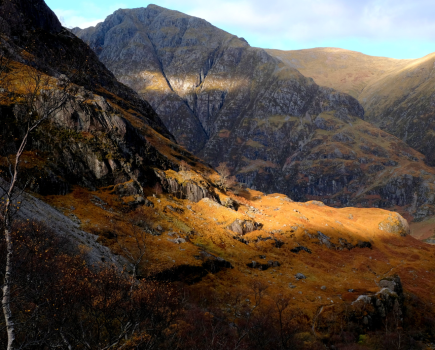
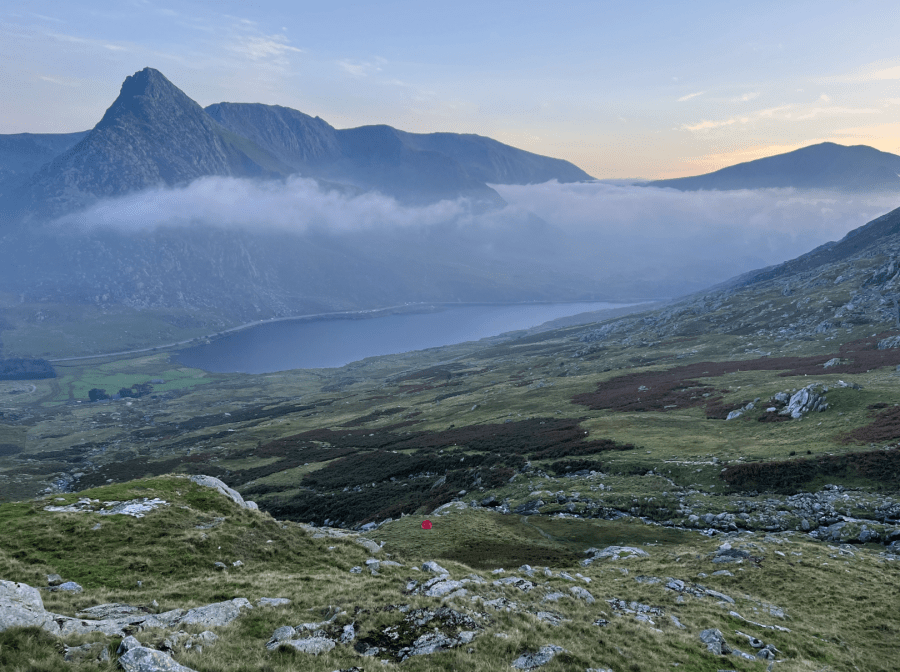
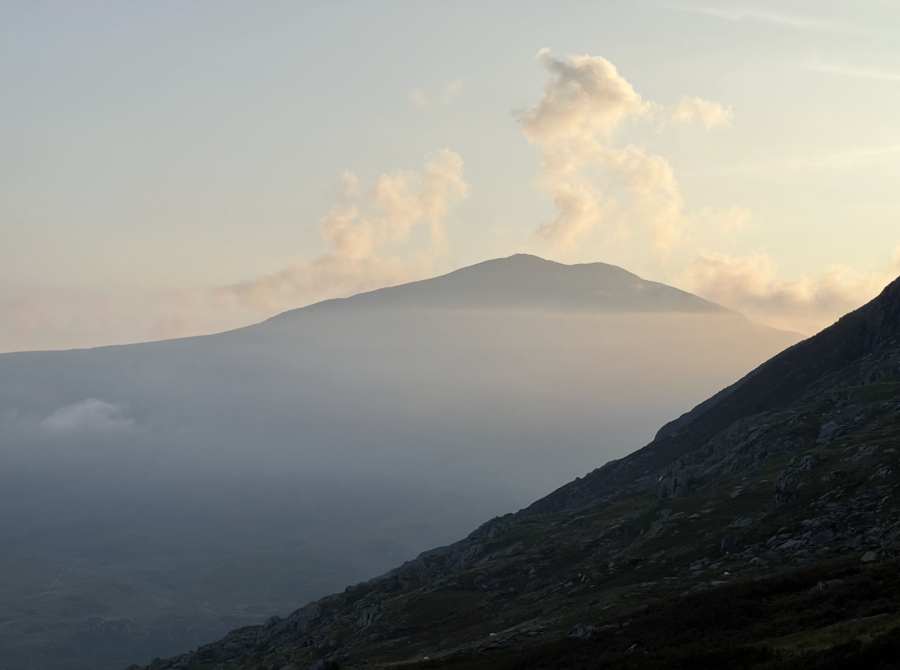
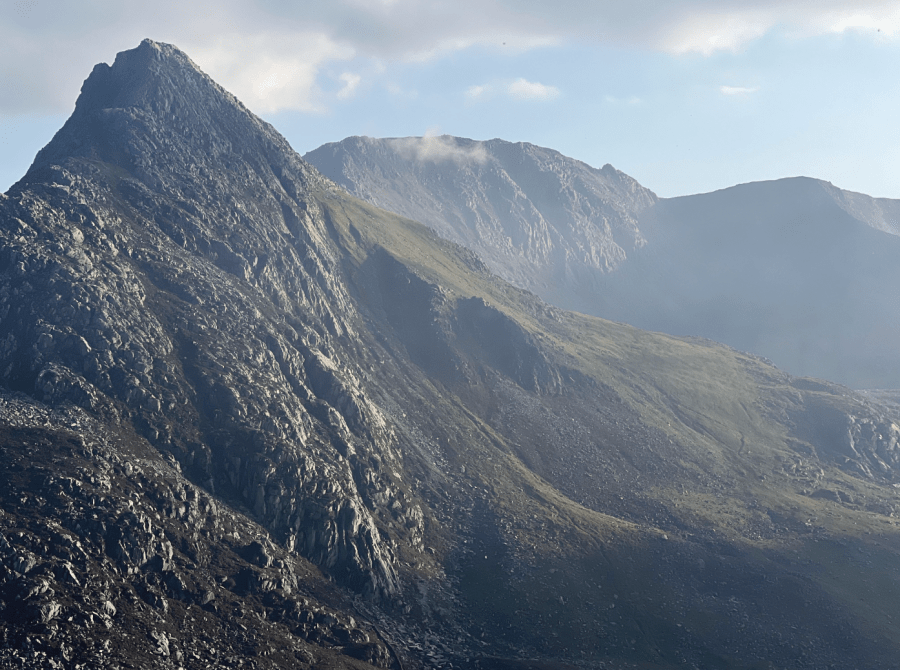
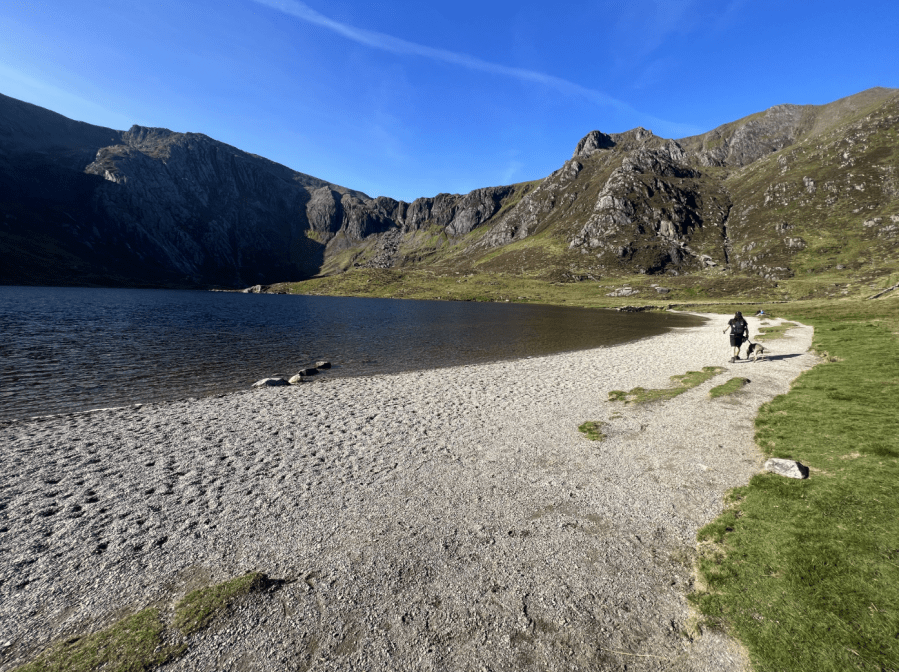
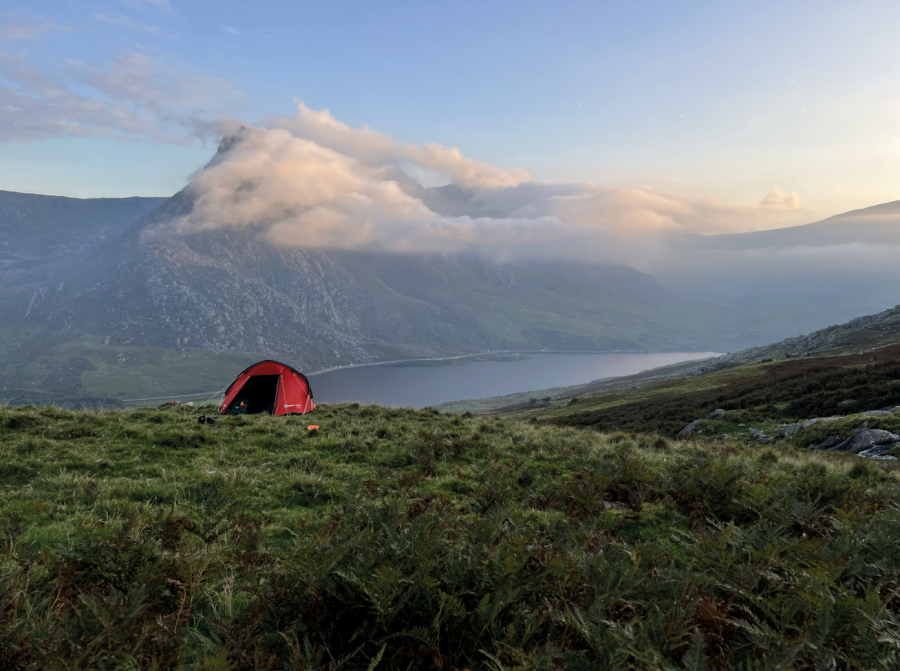
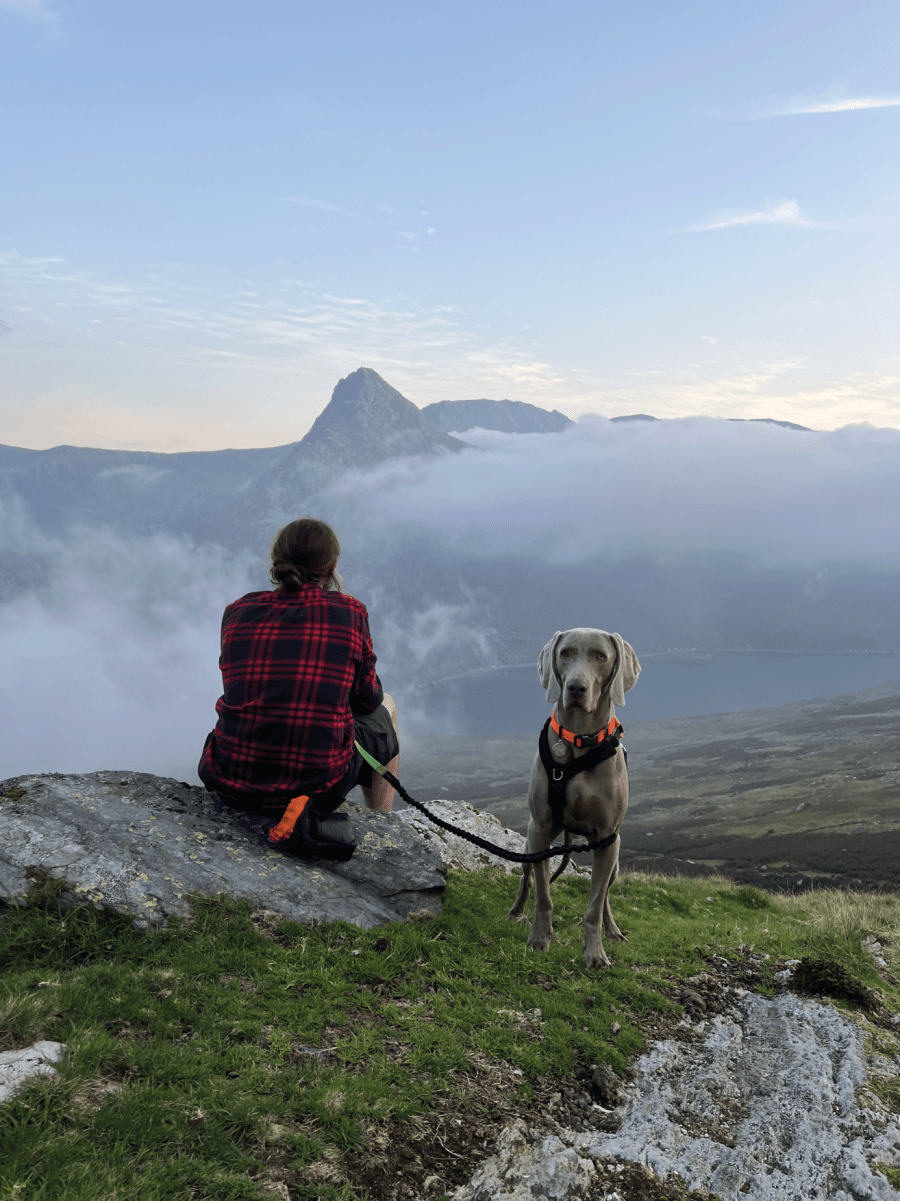
Just 24 hours earlier we’d been in heaven. Pitching our tent on the slopes of Pen yr Ole Wen, we’d sipped cans of sugary supermarket cocktails as an end-of-summer haar pulsed through the Ogwen valley, convening on the summit of Tryfan like whipped ice cream. Adam and Eve peeked in and out of view and the moisture in the air bubbled up through Twll Du – otherwise known as the Devil’s Kitchen. When mists rise from Llyn Idwal through the craggy chimney, as they did on this September evening back in 2023, it is said the Devil is cooking.
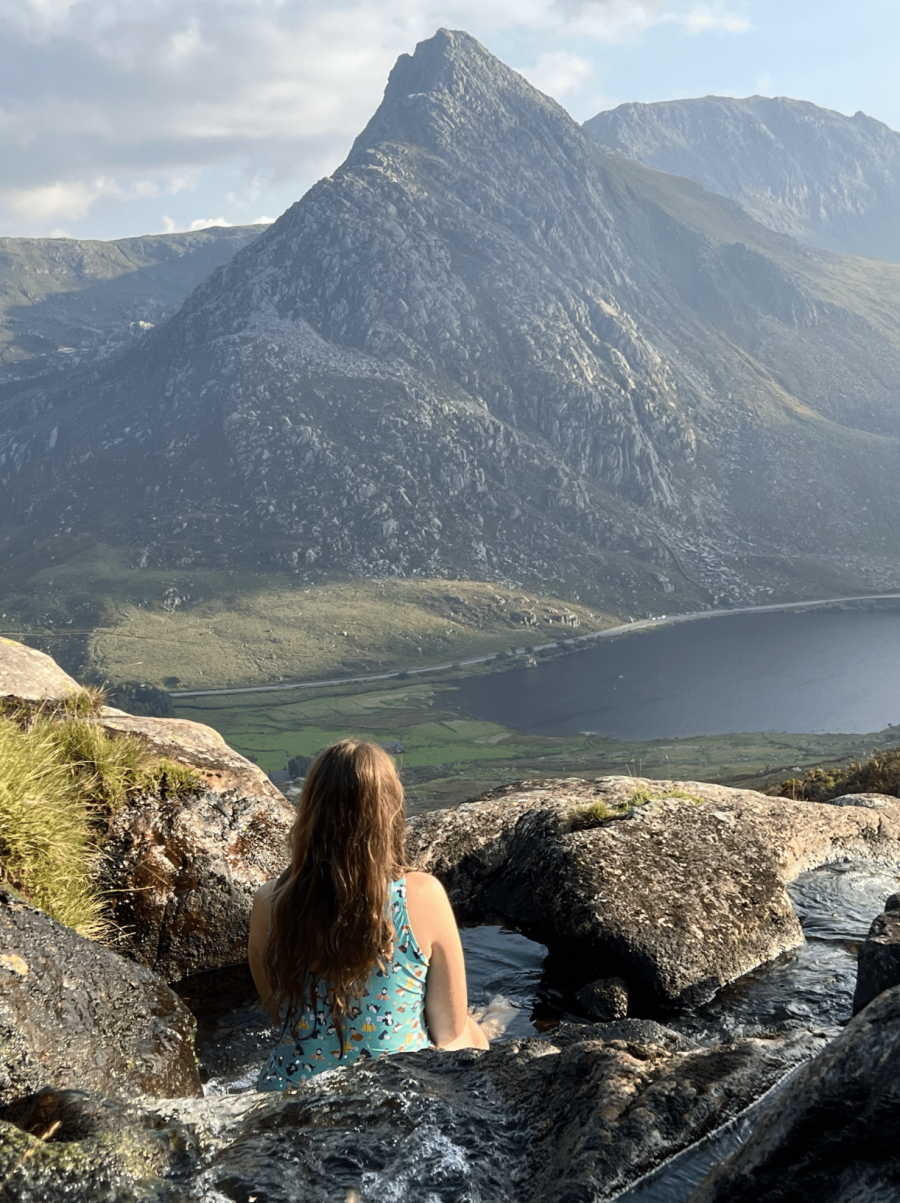
In the warm dusk, we dined on packet cous cous and slices of chorizo. We’d settled at a lower elevation than planned, our sweat-dampened t-shirts airing on guylines. I washed off the last of the salt in the tumbling turquoise falls while reflecting on an intensely busy time both at work and at home.
This was the last opportunity for a mountain escape before we were to be married. The annual Indian Summer was forecast so we’d spontaneously hotfooted it to one of our favourite haunts in Eryri to sleep under the stars. As we drove along the A6 admiring Llyn Ogwen, Stew had mentioned feeling the early signs of a cold. He shrugged it off and strapped on his backpack.
Tomorrow’s plan was to rise early, dodging the Ogwen crowds and heat of the day. Our night slipped by in gentle slumber as the galaxies spun above us. But disaster was already unfolding, unbeknown to us both…
House of the Rising Sun
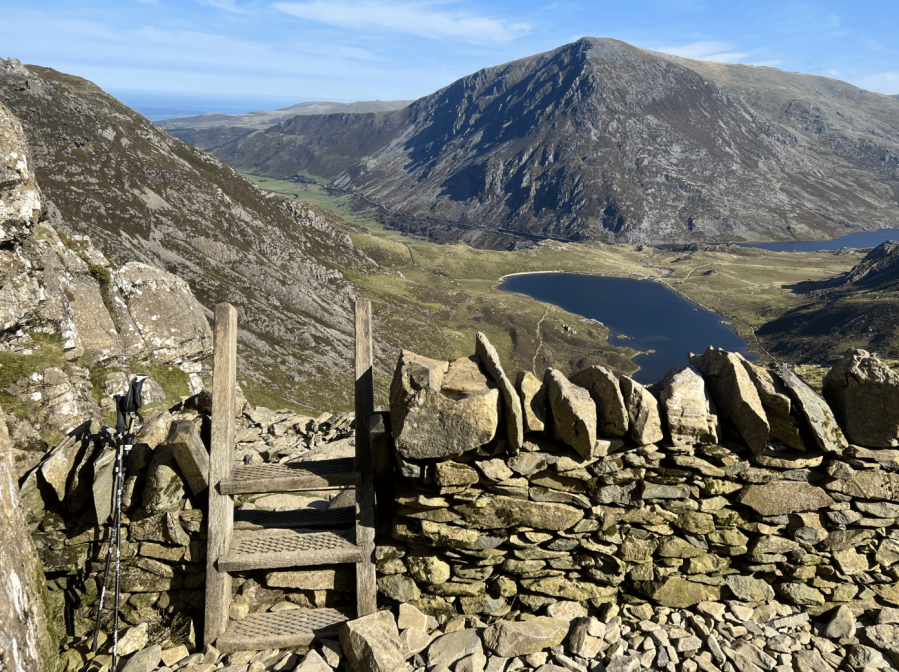
We were giddy as we climbed the Devil’s staircase at 7am, enjoying the lone but arduous ascent after passing a glassy, silent Llyn Idwal. The morning was calm, a warm breeze the precursor to the afternoon blaze we were hoping to avoid. It was forecast to get up to the mid-twenties on the tops. Manageable, and we had plenty of time, or so we thought. We stopped regularly to sip from the shared, ample water supply. I was so caught up in the beauty of this blue-sky day, and keeping the dog hydrated, it was only in hindsight that I realised Stew was leaving the contents of our bladder and extra bottles mostly to us.
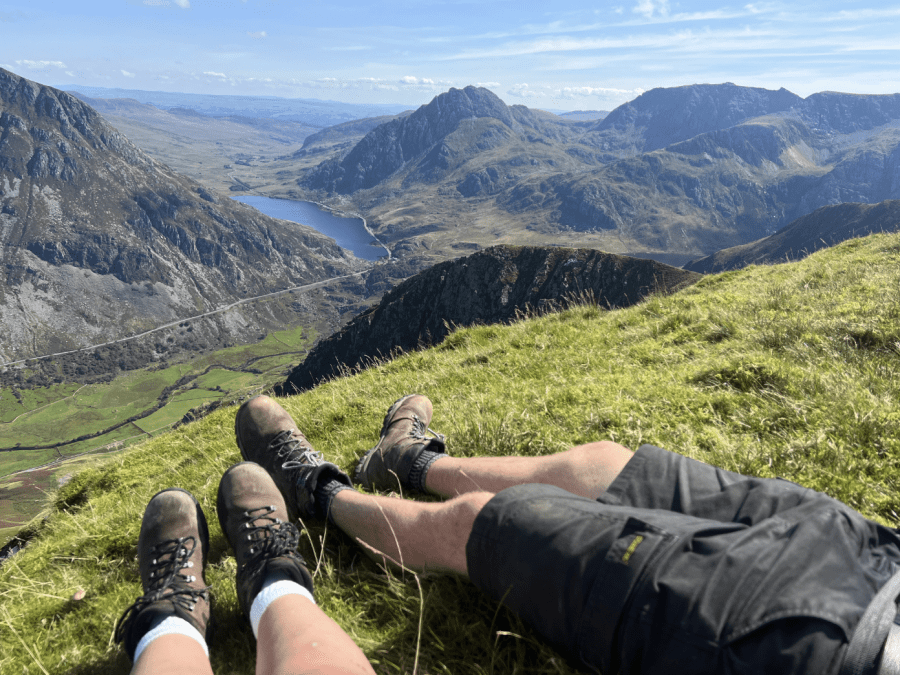
Stew’s demeanour shifted a little before LLyn y Cwm. By the time we reached the high lake tucked under Glyder Fawr, he announced a headache. We took a break in a sliver of shade, lying down in the mountain grasses, while he supped at water and gulped down a gel packed for emergencies. He’d been feeling a bit rough for a few days, he reminded me, convincing us both this was simply the onset of a late-summer flu.
Stew Hume is the strongest man I know – a competitive swimmer in his teens he has agility and endurance which allows him to carry 40kg of wriggly dog up scree, across stiles and over boulder fields. On his bike, he barely bats an eye at an audax. After 50-mile ultras, he always clicks his heels as he jumps over finish lines. Admittedly, this is a ritual sometimes accompanied by loud cursing but he’s only human. His Achilles heel are the 24-hour colds to which he is uncommonly prone. Over the course of our decade together I have come to understand how these manifest – a red, runny nose and vampiric complexion – which Stew always claims look way worse than they feel. Perhaps this was just another of those?
The day we deserved
The gel kicked in at the summit of Y Garn and Stew assured me that he felt better, if not altogether fine, as we chatted casually about the planned there-and-back to Eildir Fawr. I had been excited to encounter the Welsh semi-wild ponies. Stew later told me he was determined to “power through” partly so I wouldn’t miss out. This day – sun-drenched airy views and the space to be ourselves – was the mountain moment we deserved, he’d said. He didn’t want to bring it to an end prematurely.
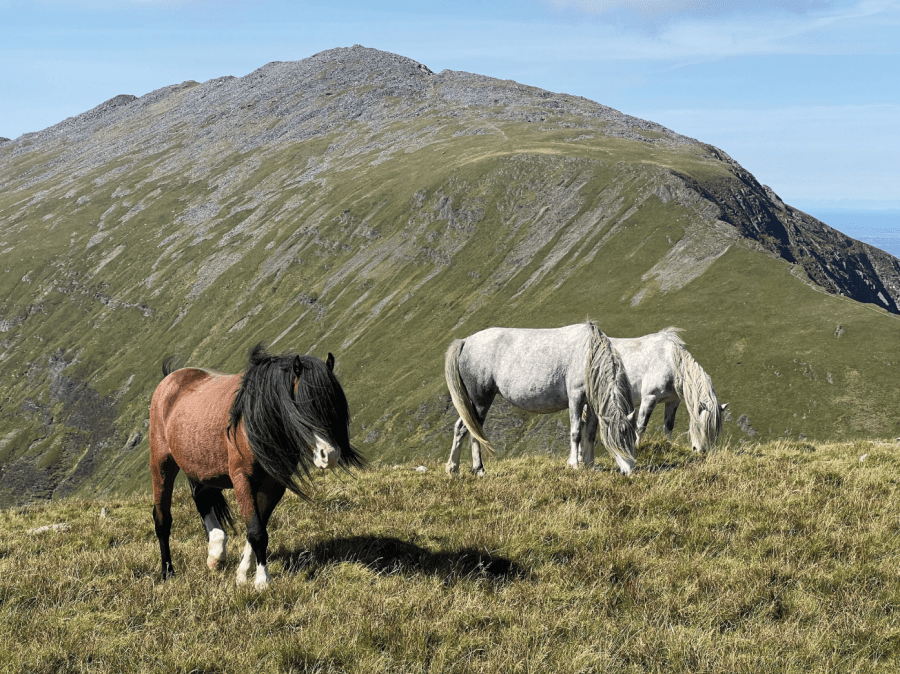
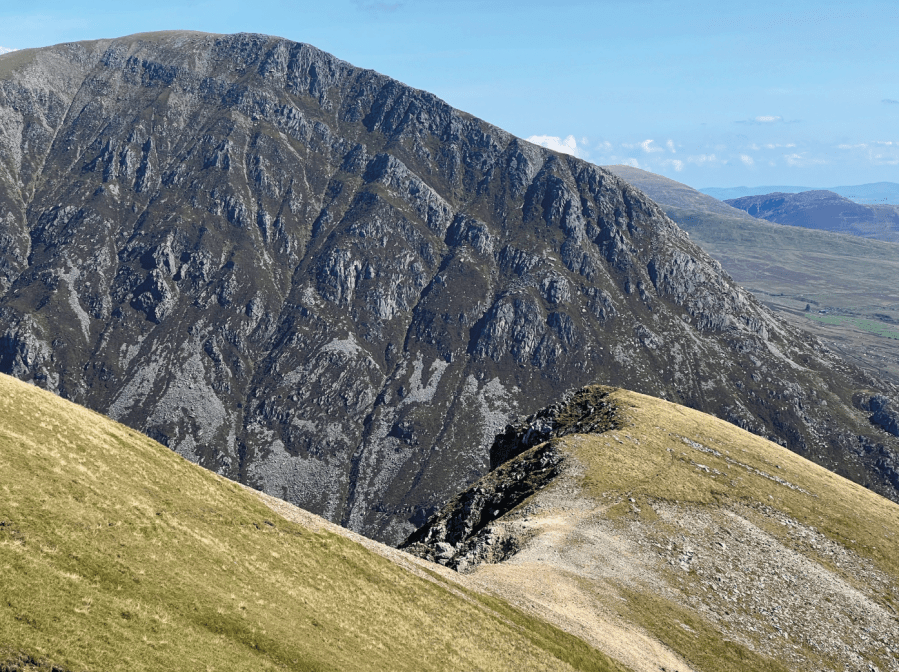
We only made it as far as Foel Goch before I became so concerned about his wellbeing that I demanded we head back, knowing we were a couple of miles of tricky descent above Pinnacle Crag away from the facilities and conveniences of Ogwen Valley. A bit unsteady on his feet, I forced my hiking poles upon Stew who, by now, was adamant he was coming down with a nasty head cold. With stops for water and shade, we made it down to Llyn Idwal.
Here, we watched a heron glide peacefully across the water’s surface as the late-morning dippers gathered on the shore. Stew grew up on the comparatively tropical island of Guernsey and is such, unaccustomed to and uncomfortable in cold water. As he gingerly walked into the llyn to cool off, I hoped the crisis had been averted. I’d never seen my not-quite-husband look so frail. My gut told me it was too late. Just the month before, I’d spoken to International Mountain Leader Mike Raine about the differences between heat exhaustion and heat stroke and how the former can develop into the latter with life threatening consequences. His advice warrants repeating (see here).
Heat of the moment
Despite what I knew about the disorientation that accompanies heat stroke, I took Stew’s word. When I suggested calling for help to assist him down to the valley, he said he’d rather sleep off this ‘oncoming illness’ in peace. I agreed, settling instead for forcing him to finish more water and an ice lolly back at Ogwen Cottage. As I drove home, I caved and allowed Stew to fall into a sort of sleep for a few seconds before he began muttering and murmuring. He sounded pained and unsettled as he slipped in and out of consciousness. Too worried to pull over, I talked him into wakefulness all the way home whereupon he took himself to bed.
I touched his forehead. It felt like a poorly insulated pan handle. Yet, Stew craved the warmth of our bed covers. He felt freezing, he told me, and kept tucking himself under layers and layers of warm, soft cotton. Finally, after missing so many red flags, I accepted what I’d known for a while. This disparity between what I knew to be true – that Stew was boiling and burning up – and what he claimed – that he was freezing – shocked me into action. Stew was suffering from heat stroke and I needed help. Wracked with uncertainty, I filled out an excruciatingly long online form and made a call to 111 during which I confirmed the appearance of small red pin-prick dots on the skin of Stew’s back. The paramedics arrived within 20 minutes. These kind folks calmly told me to douse all of our towels in cold water and lay them on top of Stew’s body as he grimaced with discomfort. I removed each towel after a few minutes. They peeled off Stew’s skin, hot. His heat radiated through the cold and wet, an elemental battle.
After an hour of gnawing fear, the paramedics confirmed Stew would avoid a visit to hospital if his temperature came down. Over three more hours that evening, we watched the decimals drop little by little, as I made apologetic small talk and endless tea. One of the paramedics said, “he’s had a rough time of it, this one” which I took to mean he could’ve died if left unchecked much longer. A solemn nod confirmed my suspicions.
Summer school
Within a few days, Stew started to feel well again. We’ve since talked a lot about lessons we both learned that day on the mountain. We’re now more comfortable with the idea of restful rambles when we’re feeling the stress and strain – we are not resigned to small adventures but rather, we revel in the relative safety and security of them. Moreover, when the mountains do call and we feel physically and mentally prepared, water talks are welcomed. We’ve adopted an airline approach: look after yourself first and trust in your buddy to do the same. The gentle reminders to “stay hydrated out there, kids!” are now made and met with small, knowing smiles.
For me, there’s hardly a day goes by when I don’t despair over my decision-making. I missed warning signs and doubted my own understanding of the condition to the point of putting my husband at risk. I could tell you that I didn’t want to scare Stew by saying the words ‘heat stroke’ aloud or that I trusted his understanding of his own body. I could say I did my best to support his health while respecting his boundaries and his overridingly polite instincts to ‘not make a fuss’. I could even say I assumed his endurance and strength would surely save him from the symptoms of heat exhaustion developing into something more serious. I could say I thought he was drinking enough, and all of these things would be true.
But all there really is to say is Stew could have died as a consequence of heat stroke, and I so wish I had raised the alarm and rerouted us to safety much earlier than I did. These are not my proudest mountain moments. I hope that in sharing our mistakes, you are inspired to assert safe practice yourself this summer out in the hills.
Owning my mistakes: summer hiking do’s and don’ts
Stew Hume recalls the circumstances which led to his heat stroke – and outlines the mistakes he made in order that you may avoid them.
Escaping the everyday
As Francesca has written, we embarked on this camp and hill walk at a time of elevated stress – in fact, we went to the mountains precisely because of it. I was emotionally – and, if I’m honest, physically – exhausted even before we set off. I am someone for whom being active outdoors is a great stress relief. The NHS lists stomach problems, stress headaches, muscle pain and skin reactions, feeling dizzy, sick or faint all as possible physical manifestations of stress. I got a reminder that the mountains are not the safest places to combat these ailments. Despite accumulating hundreds of miles either hiking or running, this dramatic episode brought me up short. Experience doesn’t mean we can neglect core principles of survival.
Setting phasers to sun
We felt well-prepared for our camp and the following day’s walk. We had checked the forecasts, packed our gear and had plenty of food and fluid. Despite being self-critical of not factoring in shade on exposed tops, Francesca had actually mapped a good route with a few escape options to exit down of the hills early.
But there was one thing I wasn’t prepared for: to turn back. There’s no point mapping out routes A, B and C if we doggedly stick to the Grand Plan on the day despite our bodies telling us to take it easy. Sometimes, gritting our teeth and pushing through doesn’t work. Francesca suggested a number of times that we didn’t need to bag the next summit, but it was Mr. Dehydration over here that nonchalantly refused, claiming to be fine.
Word to the not-so-wise: If you’re having to say ‘I’m fine’ this many times to your hiking partner, you’re probably not fine!
Soaking it up
Despite having a constant supply of water and filtration tablets for emergencies, I was not hydrating enough. Adding even a moderate amount of alcohol to the mix only served to put my body under more stress and dehydrate it further. Despite having an ample supply of water, I was more concerned with ensuring there was enough for Francesca than myself. It was a stark reminder that if you don’t give your body what it needs, it will tell you in no uncertain terms.
Dressing the part
I also underestimated the route itself. It’s an area with which we are both familiar, so we let our guard down, especially when it came to packing sun-suitable clothing. We’d remembered the doggie suncream, but looking back at photographs, I flinch at my exposed neck and all-black heavy cotton attire.
This feature was first published in the July 2024 issue of The Great Outdoors magazine.