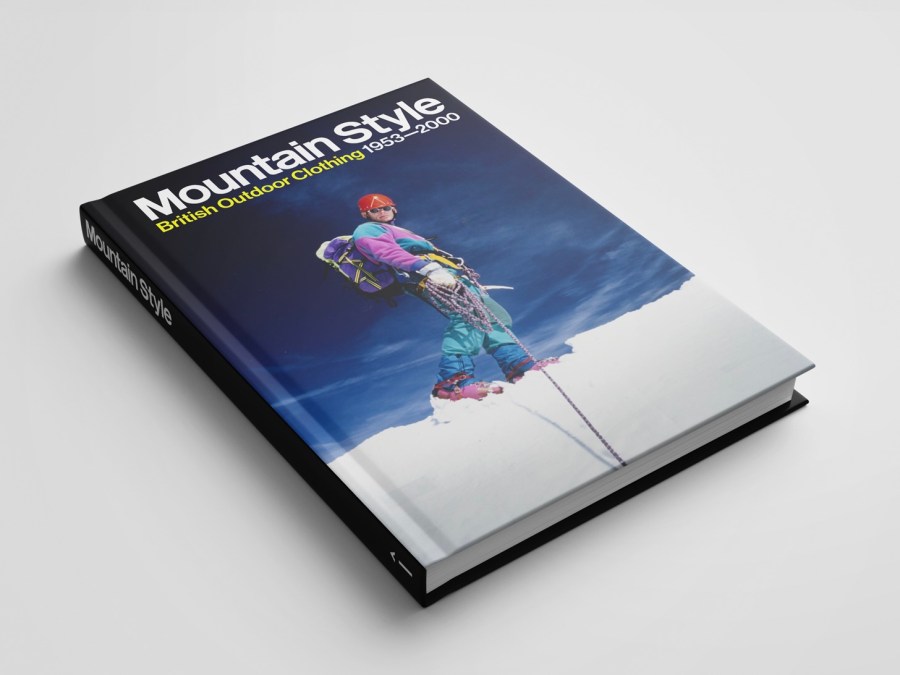

Look around and, these days, outdoor clothing is not just seen on hills and crags. It’s everywhere. Down jackets built for K2 on the school run, premium waterproofs in pubs and brightly patterned fleeces on every high street. How did we get here? That’s one of the questions at the heart of our book, Mountain Style, which traces the history of British outdoor clothing. In trying to answer this question, we found a story that started with a deep national love of the outdoors and took in textile innovations, original thinkers and brave mountaineers pioneering at the edge of what is possible, pushing clothing to its limits and demanding more.
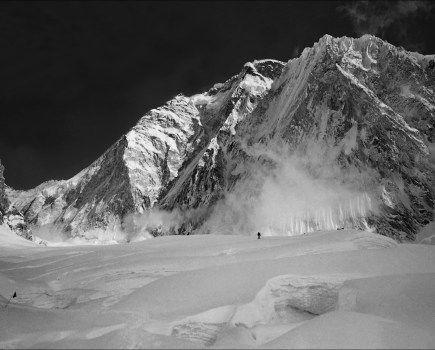
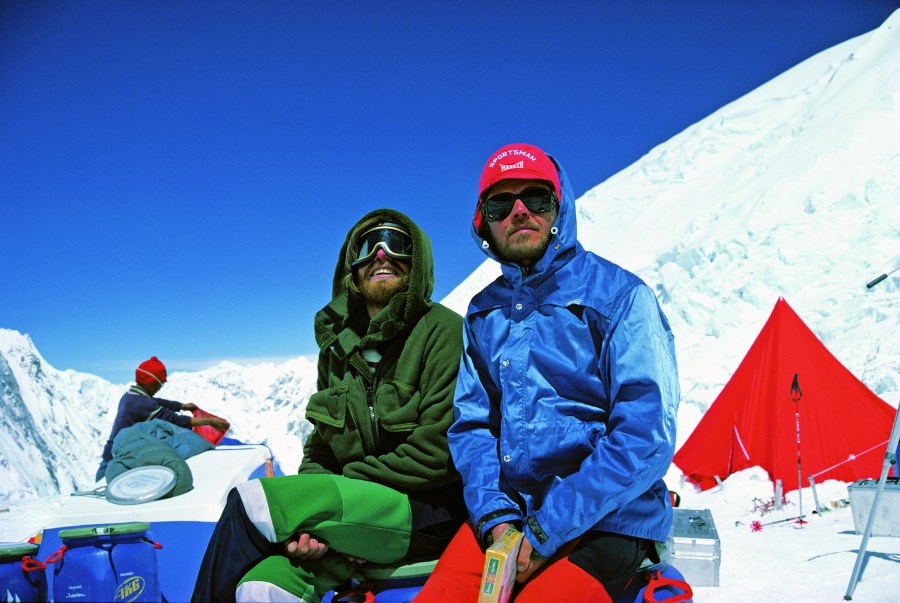
Main image: Reinhold Messner (left) and Peter Habeler at Camp II, having just become the first people to climb Everest without supplementary oxygen, in 1978. Habeler is wearing a Rohan Windlord jacket, which he later signed, and is holding a box of chocolates.


Our search for this history took us from Wadhurst in Sussex to the Lake District, and from urban Manchester, where memories of textile-industry heritage still linger, north of Inverness, tracking down stories from the hard-as-nails but unheralded mountaineers of the past.
We were inspired by Invisible on Everest, a book by Mike Parsons, formerly of Karrimor, and Mary B. Rose, a textile historian, that delved into the history of outdoor clothing, rucksacks and gear, examining practices dating back to the ancient innovations of Inuit peoples onwards. However, we chose to focus on the period from 1953 onwards.
The conquest of Everest was a watershed. Part of that was the advanced clothing it introduced: down jackets from France and one of the first synthetic-cotton fabrics in the windsuits that Edmund Hillary and Tenzing Norgay wore. It also kickstarted an explosion in the popular love of the outdoors.
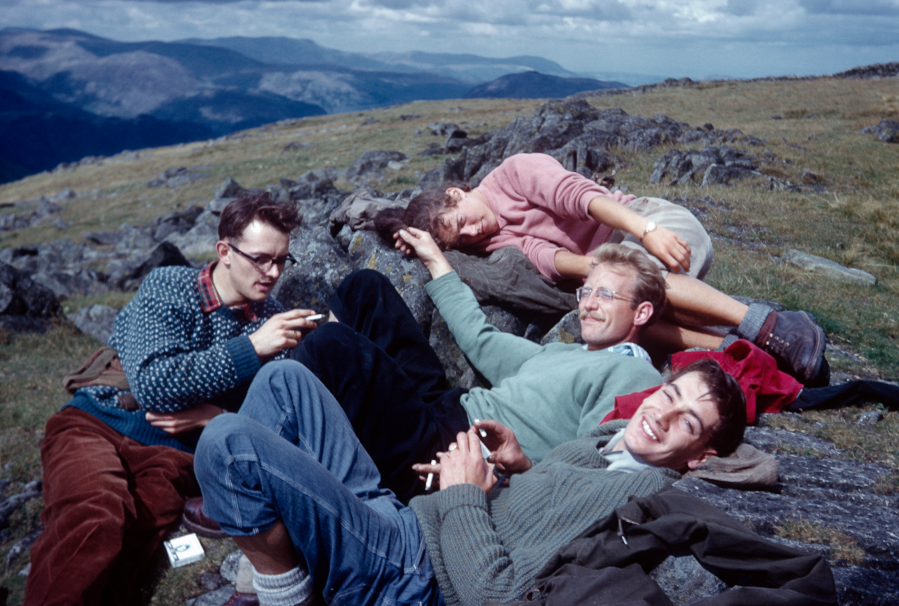
Around this time, the first national parks, Outward Bound and the Duke of Edinburgh’s Award were created, helping many more people enjoy the outdoors. Everest’s innovations didn’t trickle down quickly. In that immediate post-war period, austerity still reigned, and most people wore woolly jumpers and breeches or old work clothes when they headed out to the hills. But change, driven by new materials, was not far away.


We spoke to Paul Bibby, the son of Noel Bibby, who told us how his father came back from the Second World War with a love of the oceans. He worked in the rag trade before starting Peter Storm. It was one of the first brands to introduce PU-coated nylon, a waterproof wonder material, in its classic 101 cagoule.
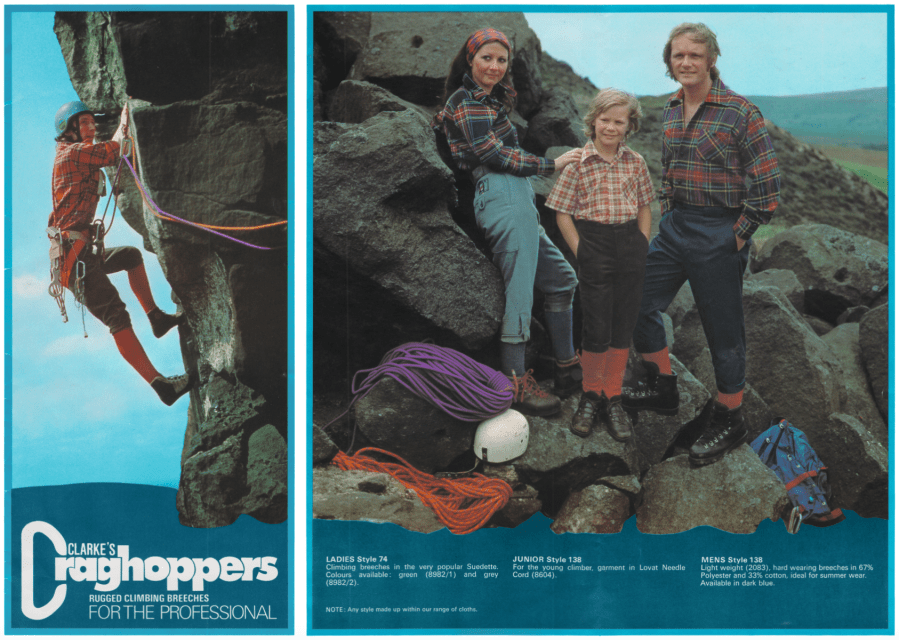
Gordon Conyers, of G&H Products (which became Craghoppers) told us how he came up with the idea of putting a full zip into a nylon cagoule, creating the CagJac and helping to ventilate the notoriously sweat-trapping coated nylon.
Ian ‘Spike’ Sykes, original owner of the Nevisport shop, meanwhile, recalled selling first-generation Gore-Tex in the late 1970s – and then having to provide replacements when all the membranes delaminated.
On to Rube Fernando, a behind-the-scenes genius who moved from Sri Lanka to Scotland to work at Singer, and ended up inventing a tape seam-sealing machine that made waterproof clothing truly waterproof.
On the insulation side, down became more widespread, pushed by Peter Hutchinson of Mountain Equipment who supported successful British expeditions to Annapurna and Everest in the 1970s – and later by Rab Carrington, who was sold his first batch of feathers by Hutchinson.
Then there was pile, as seen in Javlin and North Cape jackets, which would be used by maverick inventor Hamish Hamilton, as he worked with Perseverance Mills to create Pertex windproof fabric for Buffalo’s Pertex & pile system, still being made in Sheffield to this day.
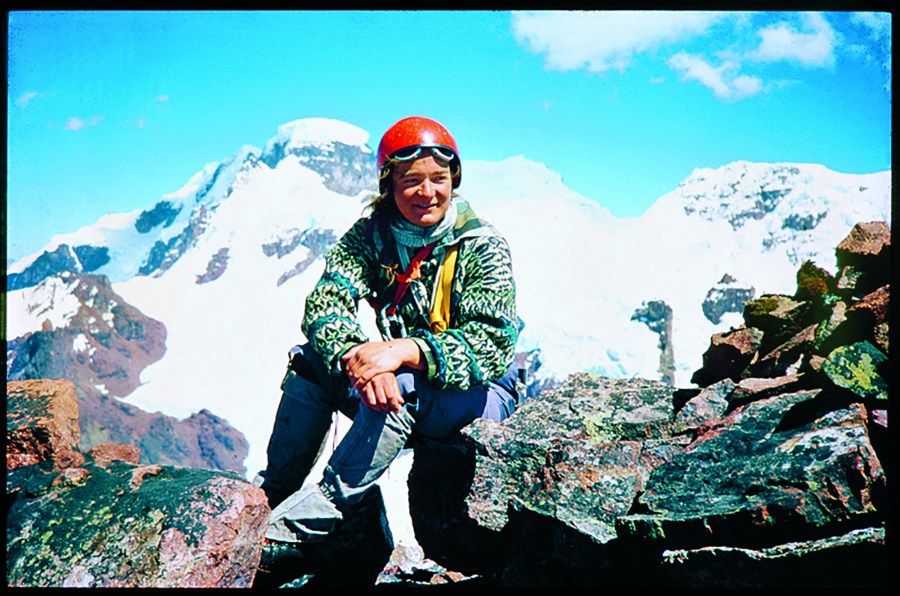
These were individuals, working closely with mountaineers and with mills and fabric producers across the north, who were pushing the boundaries and creating clothing that helped people to go further, faster and higher.
A big decision we took was to make a full-colour, large-format photo book, to showcase the visual archives we were convinced must be out there somewhere. We were lucky enough to be helped by many of the brands, who opened up their back rooms and filing cabinets to us.
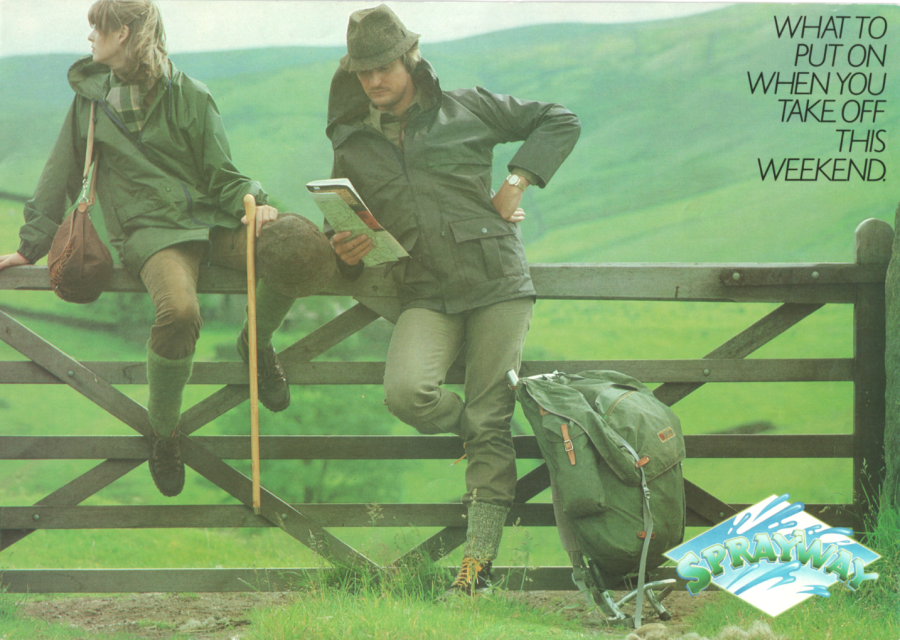
Some had a treasure-trove of slides and brochures, and full racks of famous jackets and styles going back 50 years; others much less, but still with vital history that needed recording. These days, the company founders are getting on, and many are no longer with us, so we wanted to capture the stories before they were lost to the mists of time.
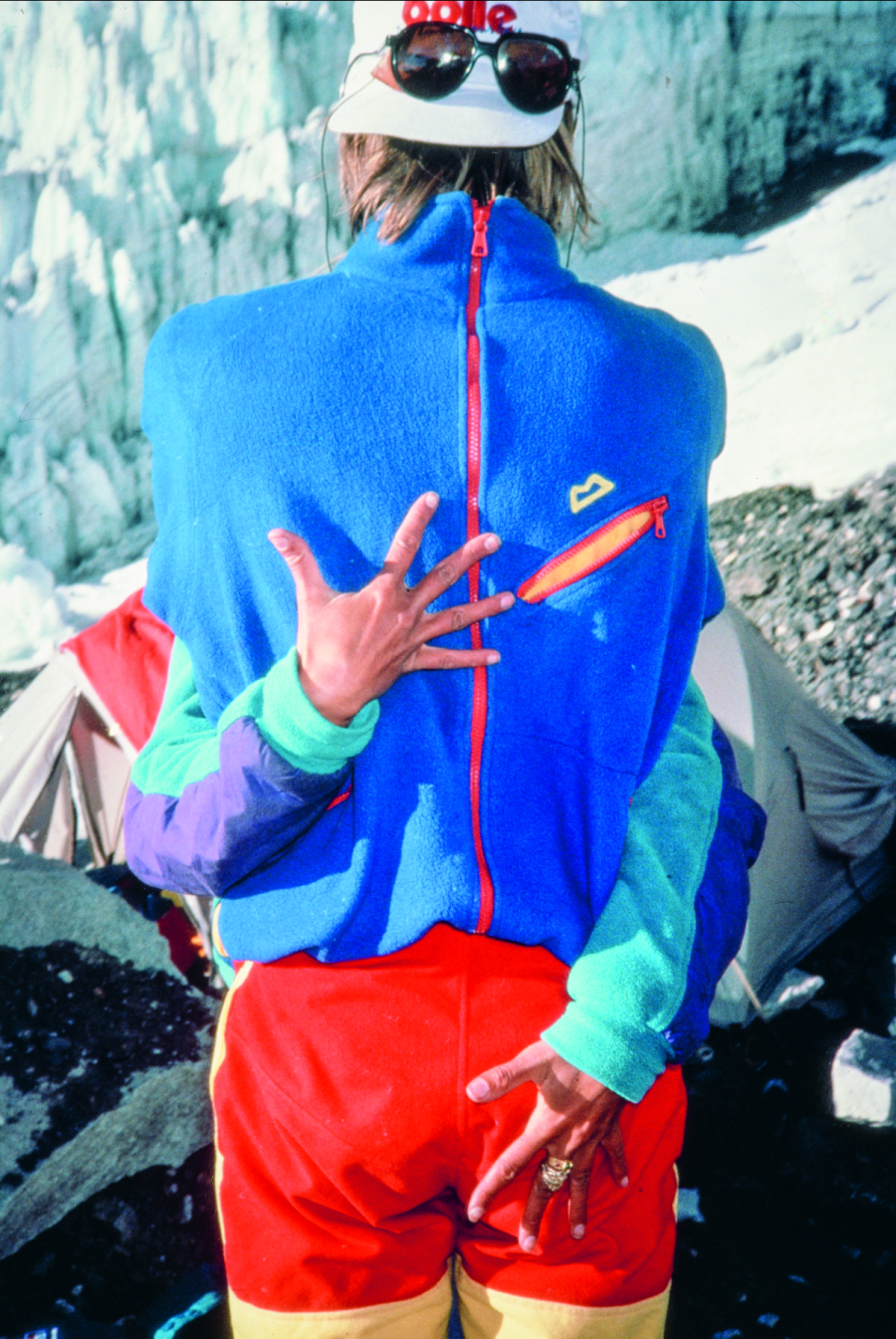
It was the 1980s that really saw outdoor clothing become mainstream. Waterproofs were no longer shapeless and sweaty; fleece (an innovation from Patagonia in the US) was bright, lightweight and soft.
Now, the average bloke who didn’t like browsing for clothes, had something modern, comfortable and smart enough to wear – a uniform by any other name. The technical elements also appealed; in fact, they provided a good excuse to take an interest in what you wore.
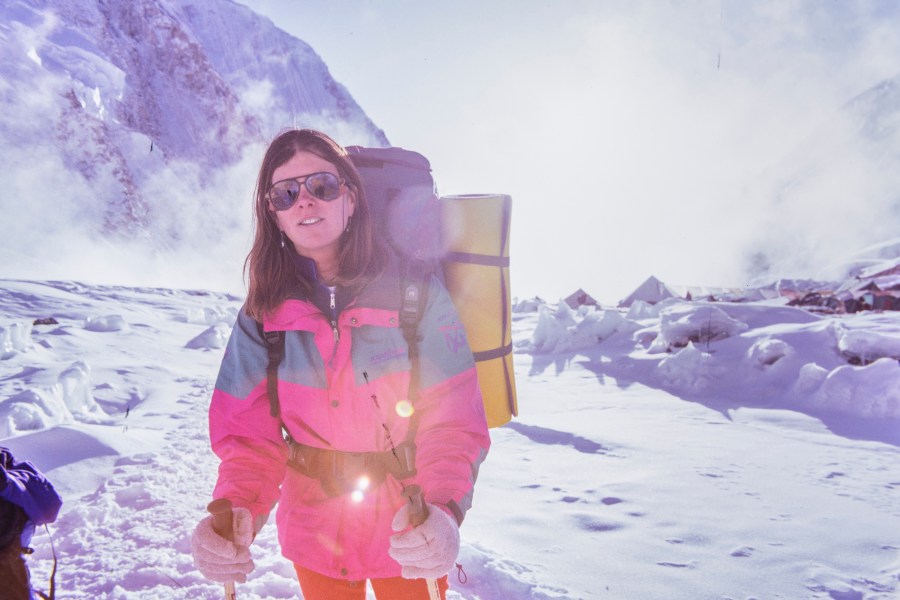
It was also a time when more women were coming into the industry who brought textile expertise and training in fashion, and who fought to help expand women’s clothing ranges. Travel clothing and lifestyle wear (not to mention the zany fluoro tights worn by climbers) all appealed to the spirit of the decade.
And then, of course, there was the crossover into terrace culture and the underground music scene, providing another enduring legacy of the outdoor trade. The Berhaus Trango, among others, attained cult status across the urban north and last year was relaunched on the shoulders of Liam Gallagher. Behind all the noise, it was in fact born as a serious mountaineering jacket.
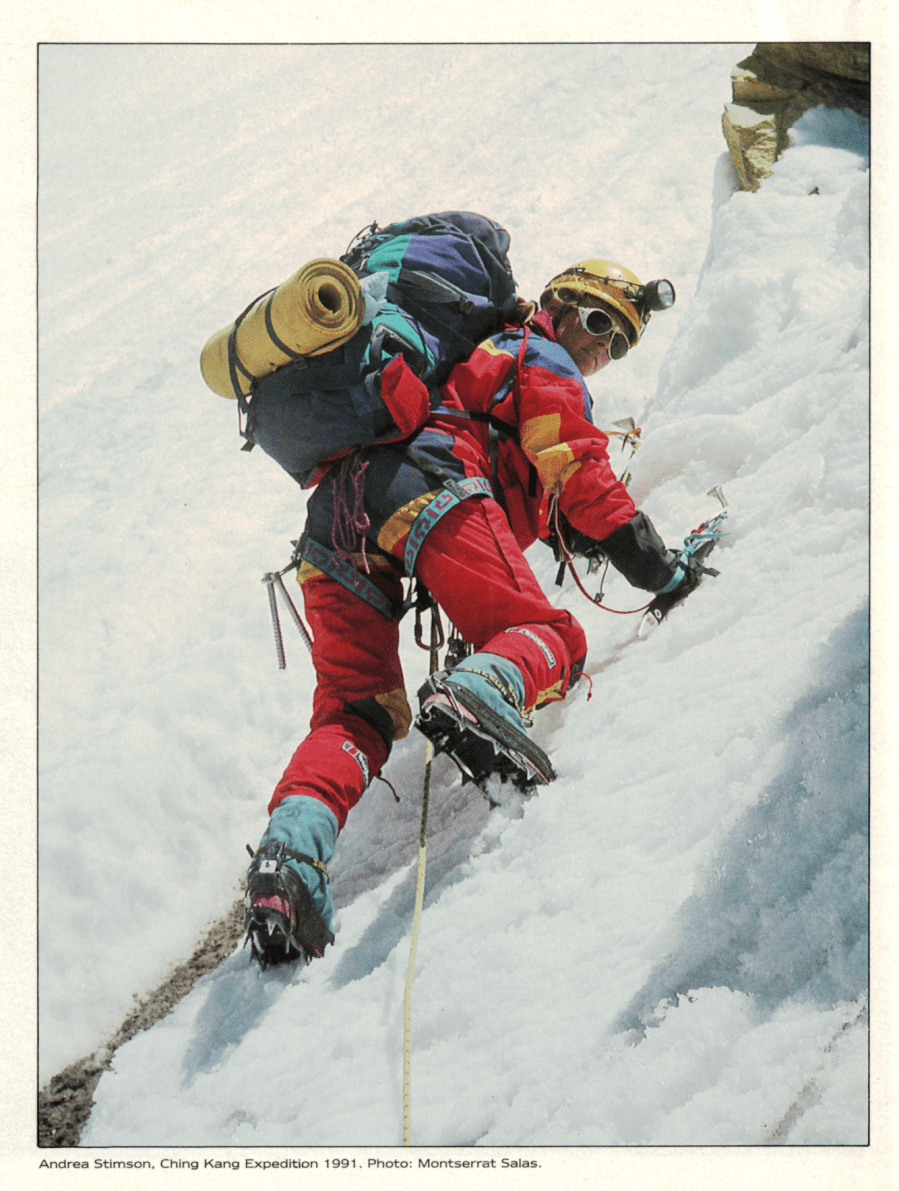
In the 1990s, the trade changed, as manufacturing was outsourced and companies were bought or collapsed, victims of the deindustrialisation of the UK and the growing effects of globalisation.
Across all of this, whether people were wearing their gear on Tryfan, in a rave, or just walking the dog in the park, what stood out was the strong feelings evoked by clothing: the powerful nostalgia for that favourite windbreaker, cagoule or jumper. These are items that have accompanied us on memorable excursions, shown us remarkable places and helped us enjoy the countryside around us safely and in style.
Mountain Style: British Outdoor Clothing 1953–2000 is published by Isola Press, £45. It’s available from the publisher direct at isolapress.com and at the usual online shops. It can also be ordered from all good bookshops and a selection of outdoor shops, too.