
Even if you haven’t heard of John Cleare, if you have a love of mountain literature, you’ll likely have seen some of his iconic photographs chronicling what is often dubbed the ‘golden age’ of British climbing history. John was at the forefront of adventure photography and cinematography in the latter half of the 20th century, and his intimate portraits of leading figures such as Hamish MacInnes, Tom Patey, Don Whillans and Chris Bonington helped define a generation. It’s serendipitous that we had someone of John’s calibre to document this era for future generations, and today’s professionals stand on his shoulders. It was a great privilege to work closely with John on his memoir, Cleare Perspectives, before his passing last year.
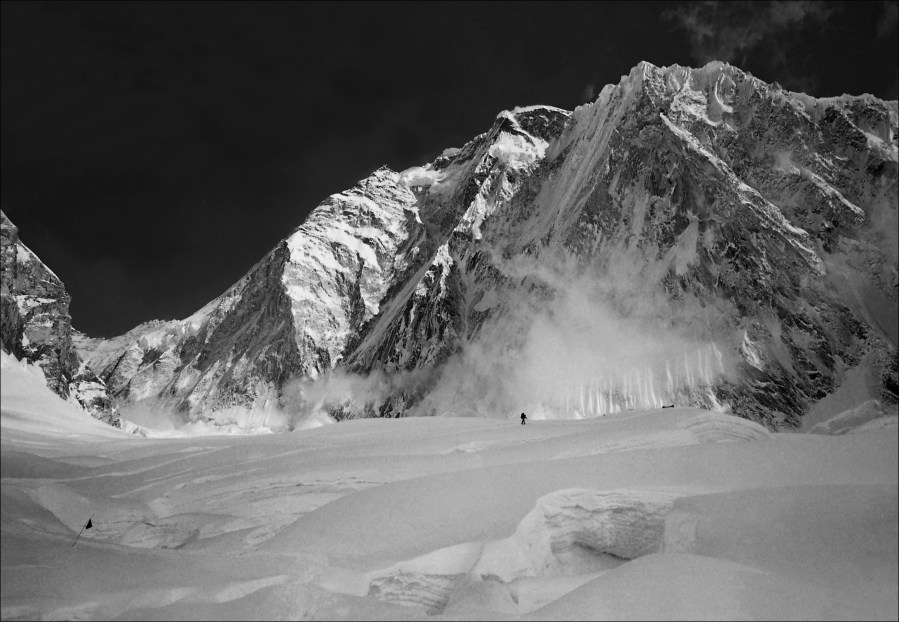
Main image: Nuptse’s North Face is seen from just below Camp 1at the entrance to the Western Cwm of Mount Everest (International Everest Expedition 1971) | Credit: John Cleare
As we crafted the stories he wanted to narrate, he granted us access to his extensive personal archive of photographs, representing the many facets of his long, eventful life. Curating these for the book was a formidable task, since any of John’s images distinguishes him as an exceptionally skilled photographer. In an era when everyone carries a high-quality camera in their pocket, it’s easy to underestimate the craftsmanship, expertise, planning and logistics required to capture climbers and mountaineers in action in often inhospitable terrain and conditions.
As John says, ‘the camera is still only a tool, and while the most visually unaware “snapper” can take a viable photograph in a difficult situation, it still requires skill, a discerning eye and a strong sense of composition to shoot consistently good images’.
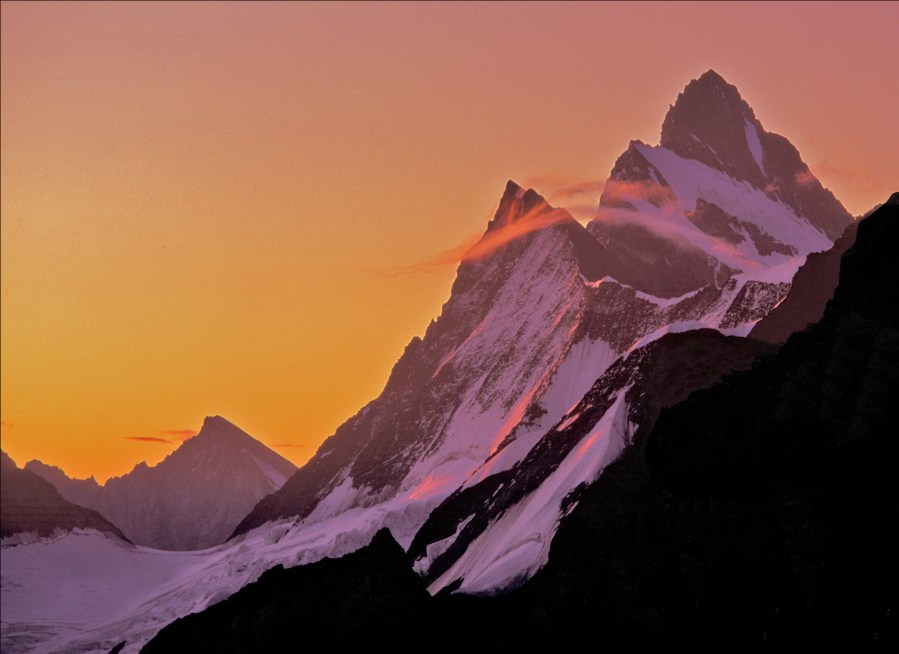
Natural alignment
Adventure photography was a natural alignment of John’s favourite activities. He had drawn and painted from an early age, and climbed his first rock route on Little Tryfan in North Wales when he was 14, in nailed boots, a hemp rope tied round his waist. The following day, ‘we forced our way up North Gully on Tryfan’s East Face, in those conditions a straightforward snow climb. And thus I climbed my first mountain’.
After leaving school and a stint of National Service, he casually dropped into the ancient Guildhall Gallery in Guildford to view a photography exhibition. ‘I was captivated,’ he says. ‘It struck me that there must be a living to be earned making pictures while mere painters starved in their garrets.’
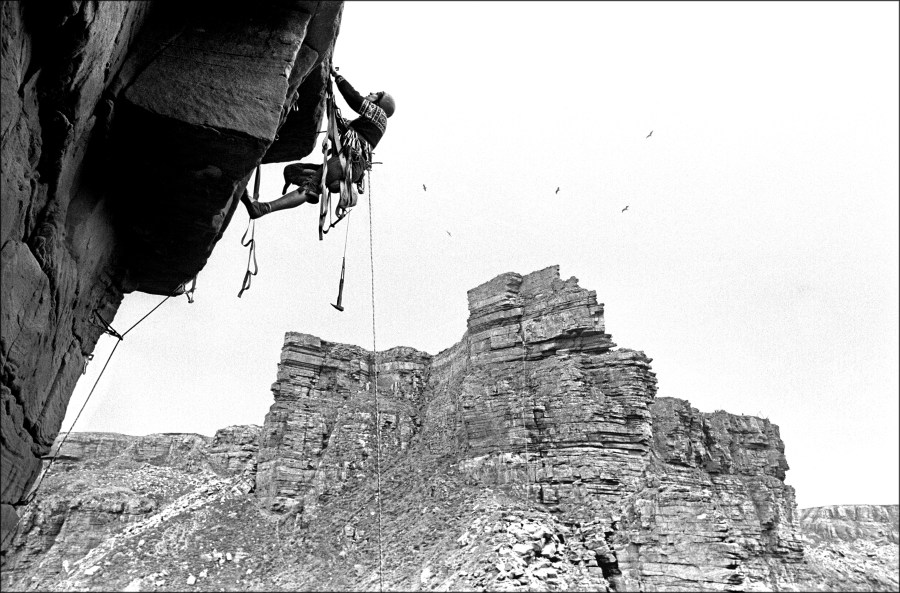
After this ‘eureka moment,’ John applied to and was accepted into the prestigious Guildford School of Photography, where he learned composition, colour, form and texture, as well as the intricacies of using a camera.
Although a lucrative career in London beckoned, John had by now come to love climbing and realised that what he really wanted to do was photograph and film mountains and those who frequent them. But with no existing protocols for setting up a shoot on the cliffs and crags of North Wales or Scotland, the North Face of the Eiger, the Matterhorn or Everest, he had to create and adapt systems that drew on his own deep knowledge of the mountain environment.
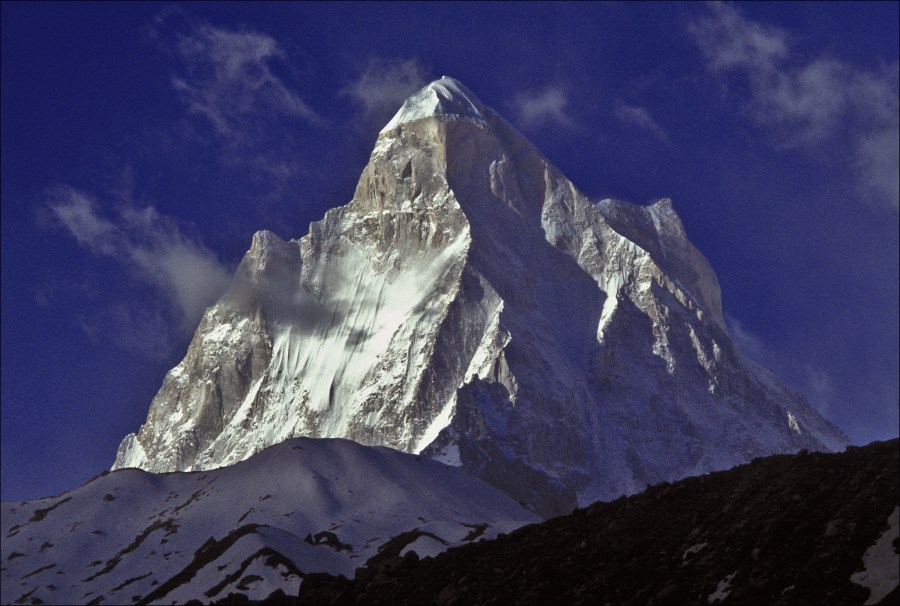
Into position
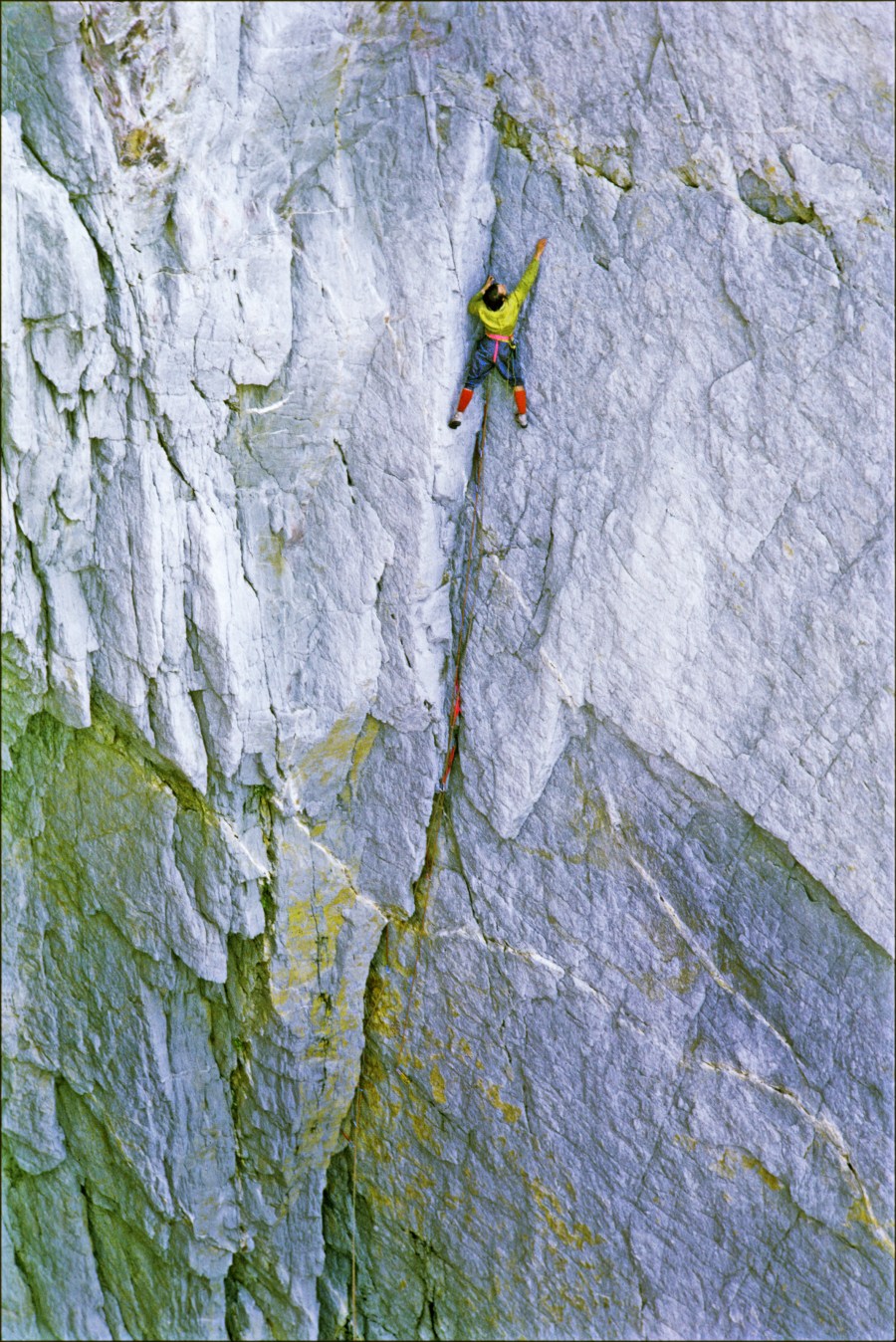
Having decided on a climb worthy of attention, John would select a series of moves on a particular pitch and then approach either by climbing, traversing and ‘penduling’, or by abseiling from a higher point. This would land him in a position from which the climbers were ‘at the mercy of the camera’. Once satisfied, he would tie himself ‘in a comfortable tangle of nylon webbing and hang from a spike, a jammed nut or peg, or often the abseil line itself’. Often the best pictures were taken from several feet out in space, and he might have to arrange the stance so that he ‘could lean out horizontally, feet braced against the wall, and remain comfortable and steady. Or it may be necessary to allow for a pendule a few feet either way to vary the field of view or the foreground during shooting’.
John often photographed climbers in extremis, where he had to achieve a sense of intimacy and immediacy without being obtrusive and interrupting the climber’s flow: ‘I would go in close to capture the climber, his expression and the context of his situation … After all, among other things, we climb for thrills. For that tingle in the instep, for that hot, damp fear on the fingertips.’
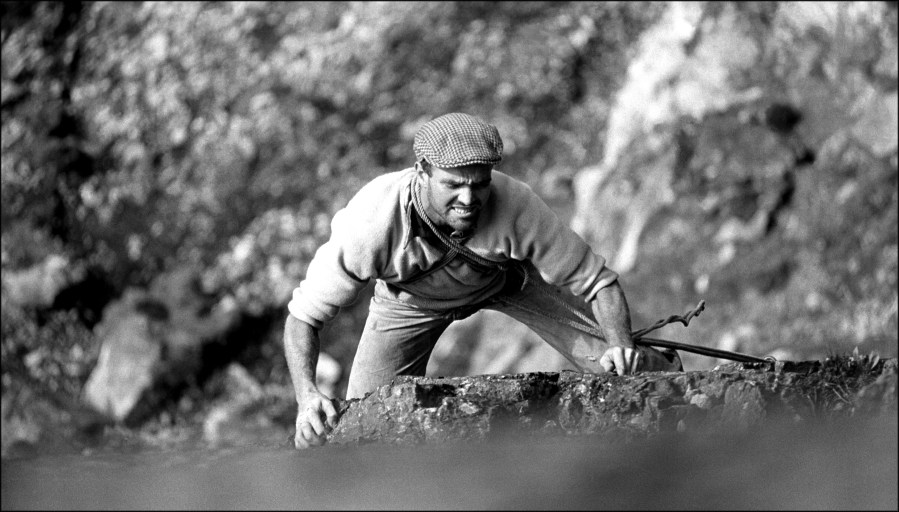
The Nikon wide-angle 28mm lens, with its 74° coverage, suited his style of working, and with it he could take pictures from what would otherwise be impossible positions, where crux moves were adjacent to the only possible camera position.
The novelty and challenge of this work appealed to him, and it was why he didn’t submit to an easier life photographing urban and rural settings, which he nevertheless also excelled at.
While sifting through John’s vast library of images, trying to whittle down contenders for the book, it occurred to me that anyone could tell at a glance that it had been taken by one of the world’s best adventure photographers.
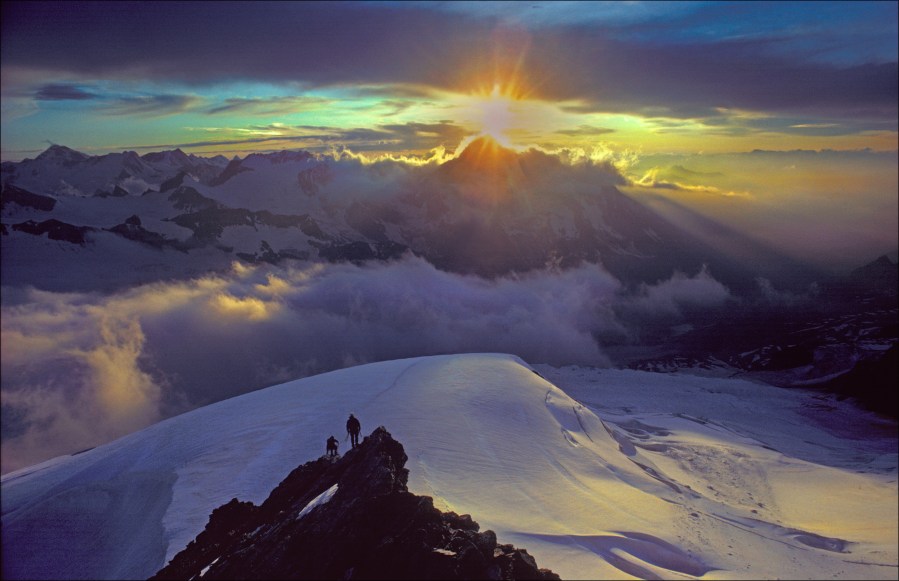
Many of us, whether we have an artistic bent or not, instinctively recognise a great image when we see it, without really knowing why. As John says:
Certainly, many people possess what is known as ‘an eye’. They can recognise a subject – a scene, a play of shadows perhaps, or a combination of shapes – as photogenic, as worthy of recording, but are then at a loss as to what exactly is special about it. The recognition of this and how to treat it is the foundation of what we call composition – surely the most important factor in all two-dimensional art.
Curiosity and Economy
But John’s best work goes far beyond technical expertise and draws on much subtler skills. His natural curiosity and ability to engage with people from all walks of life are evident in some of his most memorable portraits. He could capture the essence of a moment or someone’s character in a way that makes you feel as though you are there with them, laughing along at whatever quip has just been made. It was a trait that, when combined with his professional training, meant he was the go-to for climbing and mountain-related photography and filming projects.
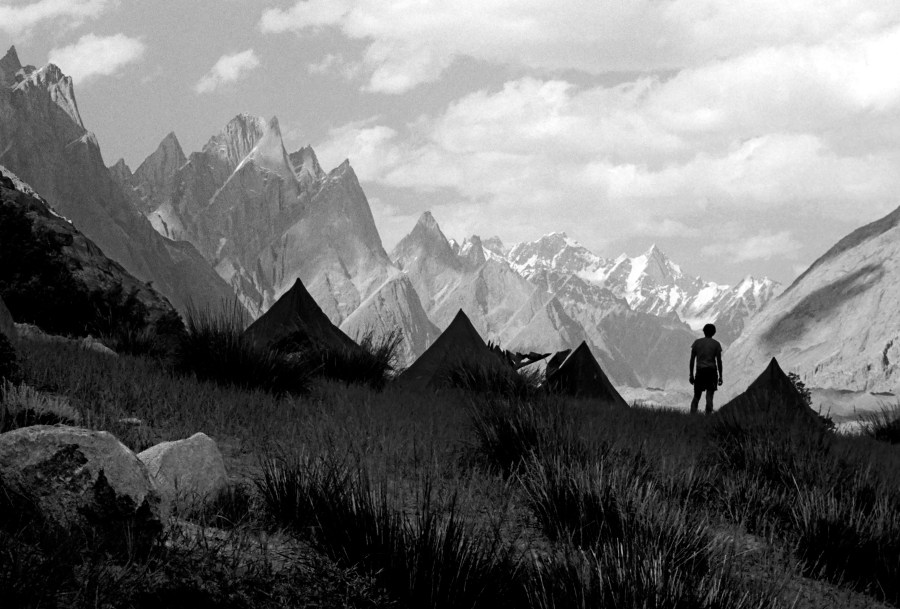
John’s elegant photographic style extended to his writing, and he had published several successful books before he approached us with his memoir. We immediately knew we had something – and someone – special to work with. John was a natural at narrating an idea or theme concisely, and despite his innate generosity, he prided himself on using as few words as possible to tell a story – economy was the name of the game. He understood the power of subtext more clearly than most, both in his writing and in his photography. ‘I don’t need to tell you how to think about this,’ he seems to say. Ideas, emotions and imagery are given space to breathe, and the reader or viewer is invited to form their own interpretation of what’s in front of them.
And so, in his urbane, understated way, John takes us on a journey through his life, from five-year-old war evacuee to latter years exploring landscapes by bicycle and boat, via summits, canyons, deserts and jungles, with myriad adventures along the way.