
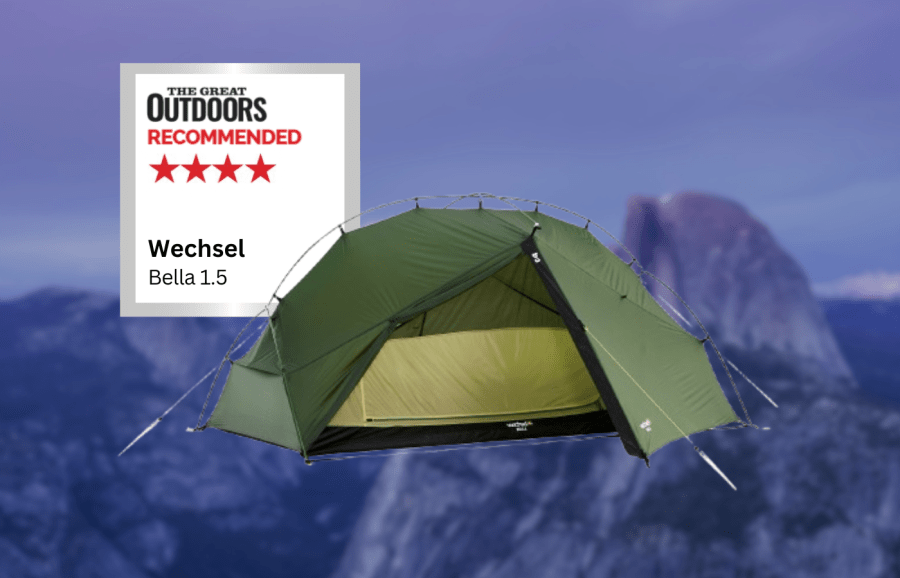
Wechsel Bella 1.5 person tent comes recommended by veteran backpacker Chris Townsend. Find out why.
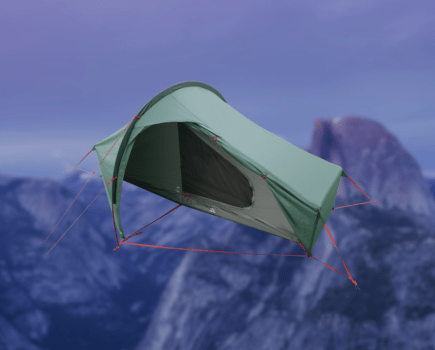
The Wechsel Bella 1.5 person tent is designed to be pitched as a unit or flysheet first, which is unusual for a tent with a pole that splits into a Y shape at each end. This makes it easy to pitch with no risk of the inner getting wet in rain.
Chris Townsend recommends
The weight and pack size are reasonable and I like the roomy inner and ease of pitching.- unit pitching
- roomy
- tough fabrics
- big porch
- weak pegs
| Quick specs |
|---|
| Price: £550 (available from Ultralight Outdoor Gear) Weight: 1.55kg Pitching: unit Flysheet: 15D silicone/PU ripstop nylon, 3000mm hydrostatic head, taped seams Inner: breathable ripstop nylon Groundsheet: 30D PU coated ripstop nylon, 5000mm hydrostatic head Poles: aluminium DAC Featherlite NFL Pegs: 10 x 16cm V Porches: 1 Inner Dimensions: 210cm L x 100/115/85 cm W x 95cm H www.weschel-tents.de |
As the pole gives structure, the tent is free-standing and easily moved (at least before you peg out the door). The shape isn’t symmetrical, one end being wider than the other. The poles are colour coded for this. The 1.5 size inner is roomy with reasonable headroom, and the porch is big too. The inner door opens up most of the side of the tent. The flysheet door can be opened the length of the tent though you have to unpeg the guyline attached to it to do this, as you do if opening one of the sides. This is the side I prefer to have open so I can use the stove and look out while lying on my left side but you can’t do this if the guyline is needed.
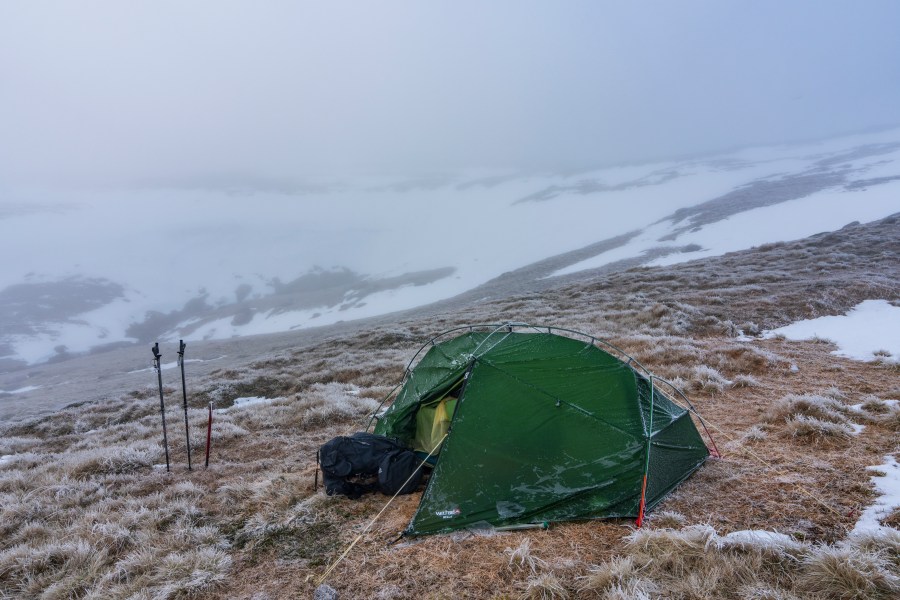
The fabrics are tough with high hydrostatic heads and the tent is well-made. It’s let down by pegs, which are not strong enough for stony ground. The second time I pitched it I bent the heads on four. Ventilation is good with closable covered vents at each end of the flysheet plus a cover over the door zip, so the top of this can be left open even in rain. The inner door has mesh on the top half and there are mesh panels at each end. I’ve used the Bella in wet, windy, and snowy weather and aside from the pegs, it’s performed well. The weight and pack size are reasonable and I like the roomy inner and ease of pitching.
How Chris tested
TGO is exceptionally thorough when testing tents in particular and these were used in the Scottish Highlands in all weather conditions – heavy rain, strong winds, frosty nights, snow, humid nights, sunshine – on sites ranging from exposed high mountain to deep forest. All tents were weighed on Chris’ digital scales and the weights are for all components including stuffsacks. This review was first published in the August 2026 issue of The Great Outdoors. You can compare it with other in our guide to the best solo backpacking tents.