
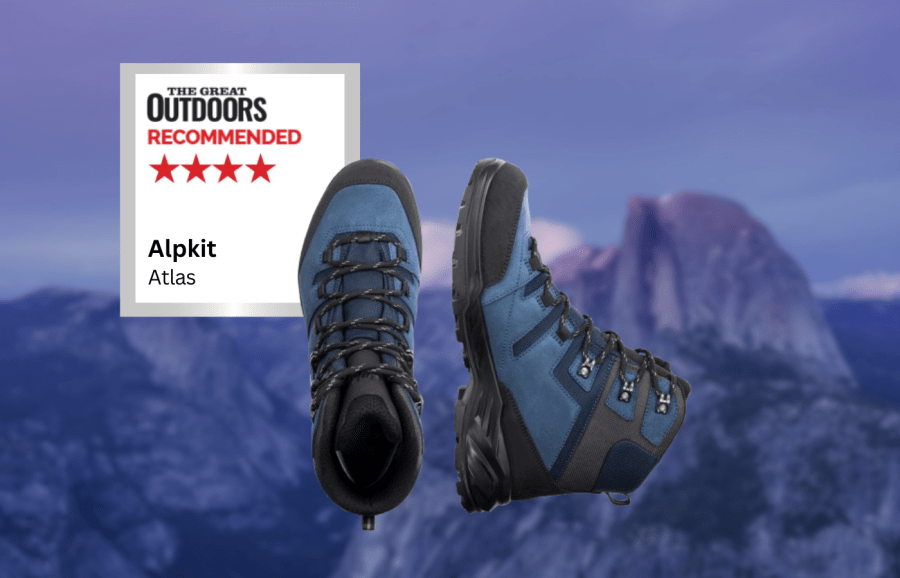
Support and stability are where the Alpkit Atlas hiking boots perform, says James Forrest.
In my eyes, Alpkit has built its reputation on delivering solid, dependable performance without charging top-end prices. It’s rarely the cheapest kit on the market, nor the most premium, but often lands in that appealing middle ground where performance belies the price-tag. That ethos is neatly embodied in the new Alpkit Atlas hiking boots.
James Forrest’s First Look
As a reasonably priced, competent 3-season boot for general UK hillwalking use, it makes a convincing first impression.- affordable
- genuine 3-season all-rounder
- mid-range rather than premium
- slightly heavy
| Quick specs |
|---|
| Price: £139.99 (available from Alpkit) Weight: 1,030g/pair Materials: 1.6mm split leather upper; Tepor waterproof lining; React Grip outsole Heel-to-toe drop: 12mm Lug depth: 4mm Waterproof? Yes Sizes: men’s 7-12, women’s 4-8 Women’s version? Yes alpkit.com |
This is not a modern, trainer-inspired, ultralight design, nor a bombproof, all-season heavyweight built for winter epics. Instead, it aims squarely for that Goldilocks sweet spot – balancing price, weight, comfort, support and durability. On paper, the Atlas is a straightforward, no-nonsense 3-season hiking boot. It features a 1.6mm split leather upper, a Tepor waterproof membrane, injected PU midsole and Alpkit’s own React Grip outsole. There’s also a wraparound toe rand for added protection.
At £139.99, it undercuts many established rivals. In use, the Atlas proves itself a capable all-rounder. Comfort is generally good: not plush or particularly memorable, but solid and dependable. On the long haul over Glaramara, where fatigue could have exposed weak spots, the boots held up well, with no major pressure points or discomfort in the closing miles. That said, the midsole lacks the springy, energetic feel found in more trail shoe focused designs, so don’t expect a particularly lively ride.
Support and stability are where the Atlas performs best. On steep, rocky ground, it felt reassuringly secure underfoot, striking a pleasing balance between rigidity and flex. Grip from the React outsole was also respectable, offering decent bite on mixed terrain, though not quite matching the confidence of more premium compounds. The relatively shallow 4mm lugs were perhaps the reason for this.
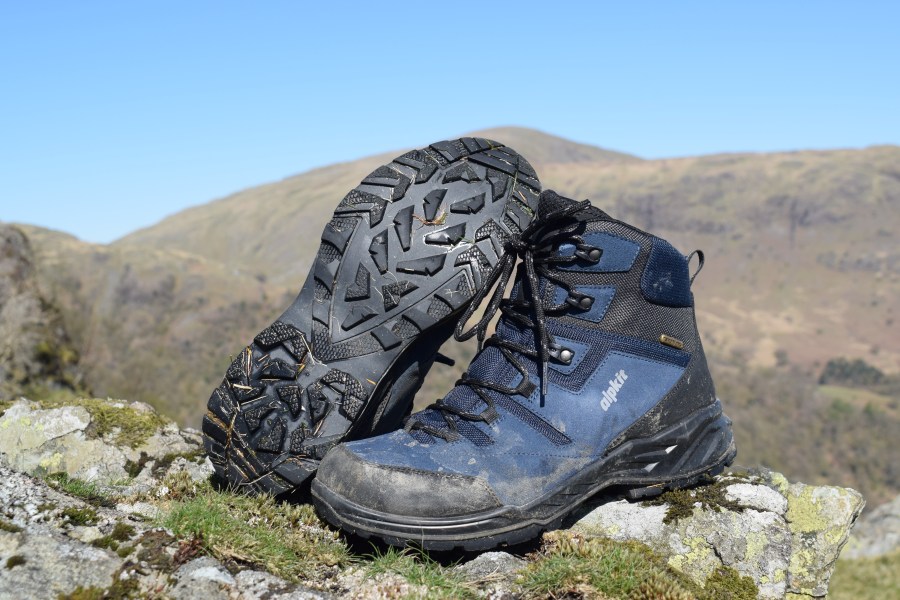
Waterproofing, courtesy of the Tepor lining, coped well with saturated ground in Borrowdale and persistent rain on Dow Crag. My feet stayed dry throughout, though longer-term testing will be needed to truly assess durability. The toe rand is a welcome addition too, shrugging off rocky lumps’n’bumps and adding a sense of ruggedness.
There are compromises. The Atlas is not especially light and some walkers – particularly those used to soft, trainer-like footwear – may find it a little stiff and unforgiving. The materials are functional rather than premium too: there’s no Gore-Tex lining or Vibram outsole here, and while performance is perfectly adequate, the in-house material alternatives lack a little of the refinement of higher-end (and higher priced) boots. That perhaps highlights the central trade-off.
In aiming for the middle ground, the Atlas risks becoming a jack of all trades, master of none. Yet for many hillwalkers, that balance will be exactly the appeal. As a reasonably priced, competent 3-season boot for general UK hillwalking use, it makes a convincing first impression.
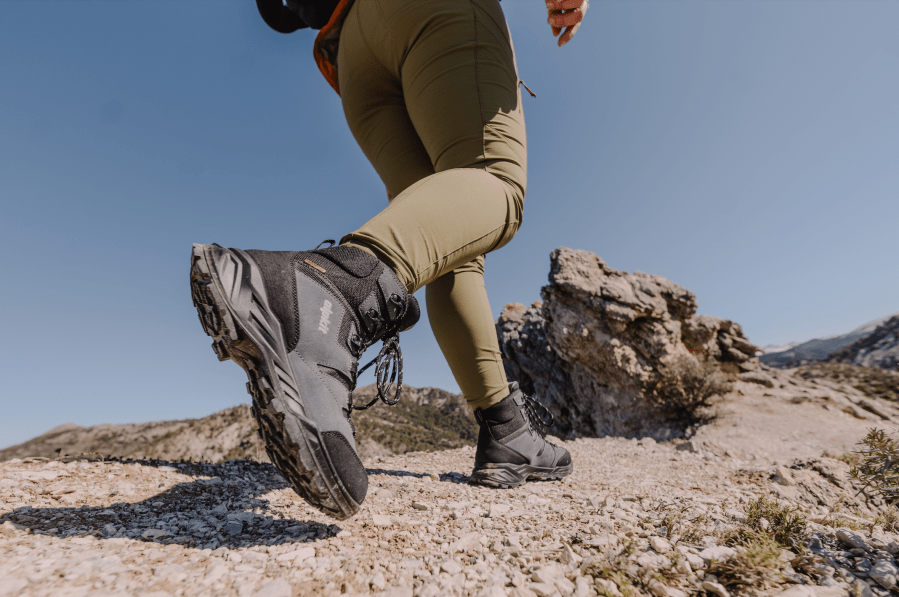
How James tested
I’ve tested the Atlas on three Lake District outings totalling just under 50km: a 19.4km circuit over Glaramara and Allen Crags from Stonethwaite; a 15km slog up Dow Crag from Coniston village in boggy, wet and very windy conditions; and an 8km sunny bimble up Latrigg. This review is therefore very much a first look, but enough to form some decent early impressions. This review was first published in the July 2026 issue of The Great Outdoors. Compare it to others in our guide to the best hiking boots.