
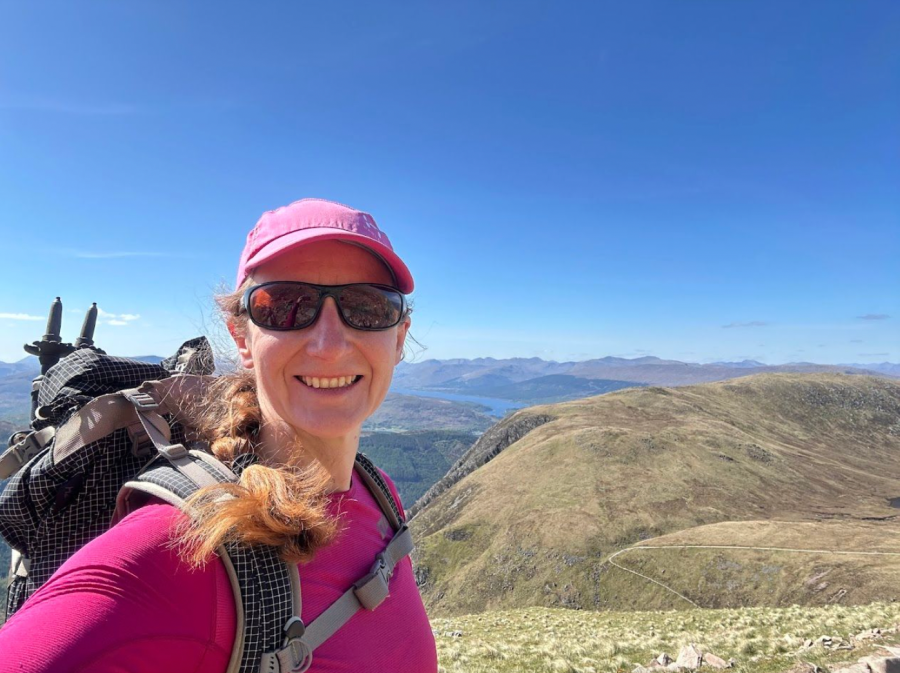
Main image: A glorious day spent on Ben Nevis, but Kate was still taking psychiatric medication | Credit: Kate Armstrong
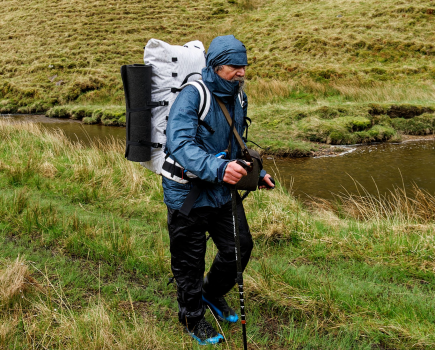
August 2020, between the lockdowns, and I was coming off the summit of Scafell Pike, partway through an attempt at a solo self-supported three-day backpack of the Bob Graham round route. Day one had gone well. I’d covered the wide arc of the north-eastern section of the route from Keswick, via Skiddaw and Blencathra, crossed the A66, climbed the front of Clough Head, and followed the long grassy ridge over the Dodds until I made it over Helvellyn and down to Grisedale Tarn.
The weather had been ideal: warm, clear and dry. After twenty miles I’d shrugged off my pack, unrolled my bivvy bag and a lightweight sleeping bag, and lain down to sleep at the water’s edge. Insta-perfect. Next morning I’d been up shortly after dawn. Fairfield. Seat Sandal. Then over the road at Dunmail Raise for the steep haul up Steel Fell. I’d crossed the bogs above Easedale, traversed the Langdale Pikes and Bowfell, and made it over the boulder fields to Scafell Pike.
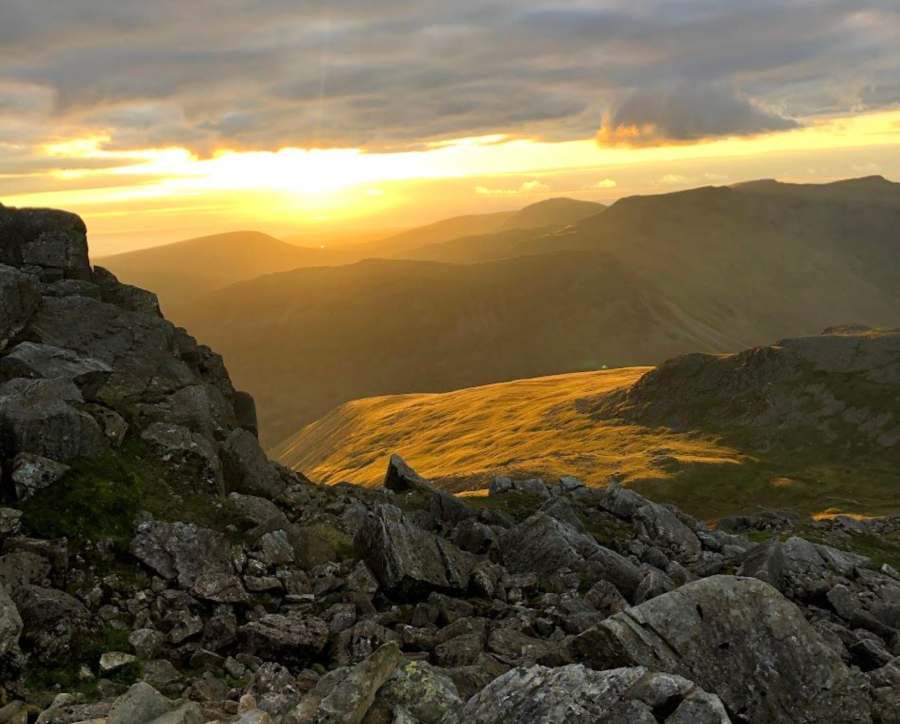
Taking myself to the hills had been instinctive. Since my early 20s, I’ve prized my time in the mountains – first in the UK and then from the Alps to the Himalaya. On this trip, I was also desperate to get the benefits that mountains can provide for mental health. But it wasn’t working. On the summit of Scafell Pike, I was sobbing.
It’s widely accepted that being outdoors is good for mental health. Many of us know it from our own experiences. An epic hill-walk with friends can cement those relationships with the joy of connection; seeing dawn from the summit of a Scottish peak can be so uplifting we remember it for a lifetime.
Research shows that feeling connected to nature is a predictor of happiness. Organisations like Mind Over Mountains and Blackdog Outdoors centre their work in nature to help support people’s mental health.
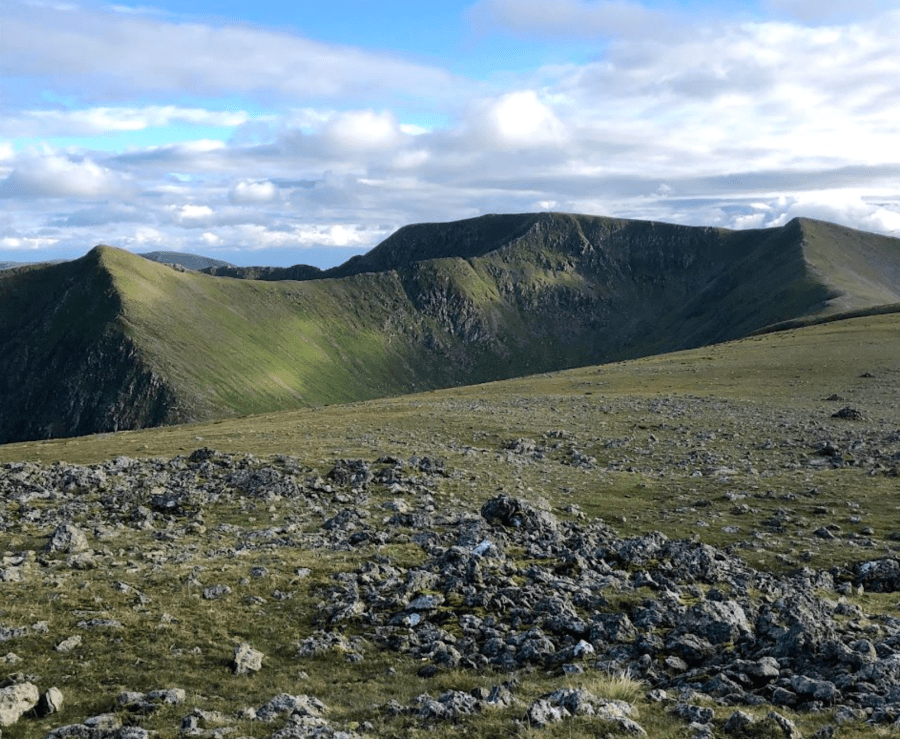
Yet nature wasn’t working for me that day on Scafell Pike. I didn’t feel better for being out there; I felt mentally terrible. Because of that, I felt like I’d somehow failed.
I’ve dealt with severe depression for the whole of my adult life – including needing multiple hospitalisations and a lot of medication. At one point, I got addicted to alcohol. I’m twelve years sober now. My husband died suddenly in August 2019. On that day on Scafell Pike in 2020, coming up to the anniversary, I was deep in grief.
Like everyone, I’d been forced inside through months of lockdown. I’d wanted to believe that a big hill-walking achievement in gorgeous weather in a landscape I love would be a cure-all. I’d received so many messages from the outdoor industry that ‘hiking is my therapy’. But my hope was unrealistic.
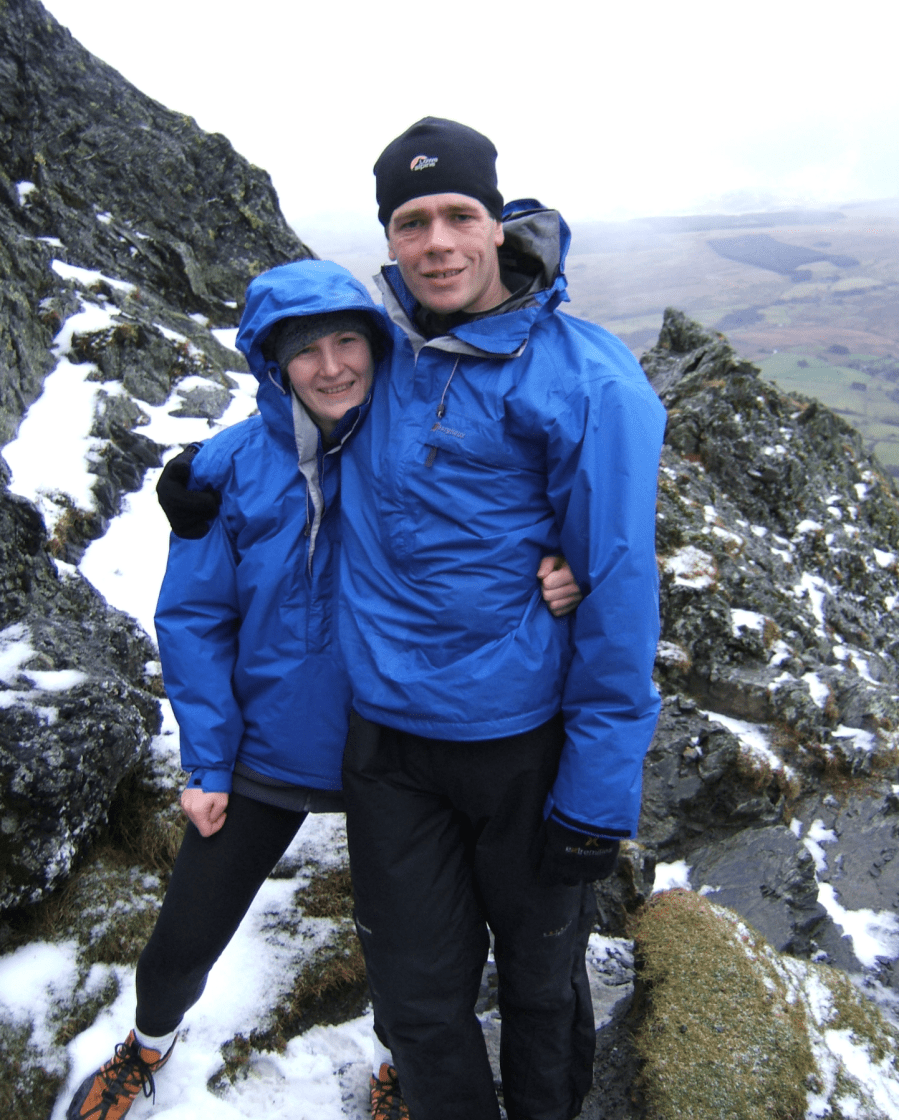
Allie Bailey, ultrarunner, coach, and author of two books on mental health and mindset in the outdoors, including the recent 31 Days, concurs. “You need to manage your expectations around how much being outdoors can help you,” she told me. “I think people need to really look at what’s going on underneath before they expect going up Yr Wyddfa / Snowdon to save them, because it’s not going to work like that.”
And that’s not all. Mountains can also contribute to our mental health worsening. Over-exertion can fuel eating disorders. Pushing through injury can reinforce a lack of self-care. Running away on long solo trips can be a way of avoiding dealing with issues in relationships at home. Mountains, even UK ones, can be dangerous: my husband’s death followed a climbing accident, and one of the consequences for me, as well as deep grief, was that I developed PTSD.
At the very simplest level, given that the mental and physical are so interrelated, exhausting ourselves physically can lead to an increase in symptoms for those of us who deal with mental ill-health. It’s not a simple, feel-good message.
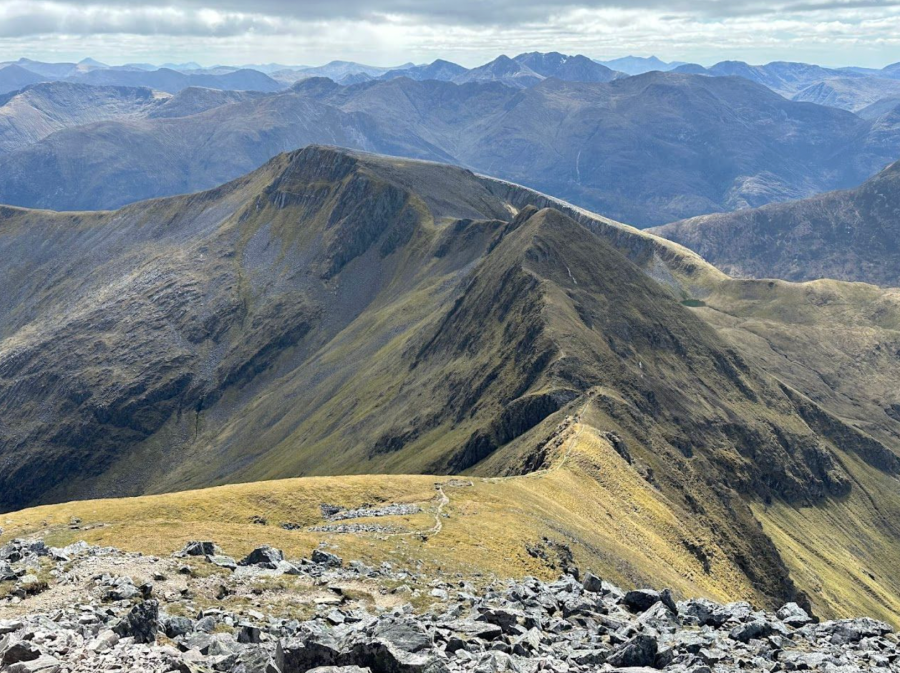
How, then, can we approach the mountains, if what we’re specifically aiming to do is to help with mental health?
Allie Bailey’s advice is simple, and it’s in line with mental health guidance on the importance of mindfulness. “Slow down,” she said. “I sit and touch the stones. You can run and hike through it, but to sit on the top of Crib Goch and just look around and hold onto the stones is where my battery fills up.”
With twenty years of managing severe mental health conditions and also spending lots of time in mountains, I’d agree. And for me, it’s also about listening to how I feel on any given day. If I’m energetic, then pushing myself in the hills can lead to a sense of achievement and that boosts my self-esteem. But pushing hard is the last thing that will help on a day that I’m feeling fragile or tired. Then, I stick in my comfort zone. I walk slowly, look closely, don’t put myself under stress by attempting complex navigation. I mix up whether I go out with others or on my own.
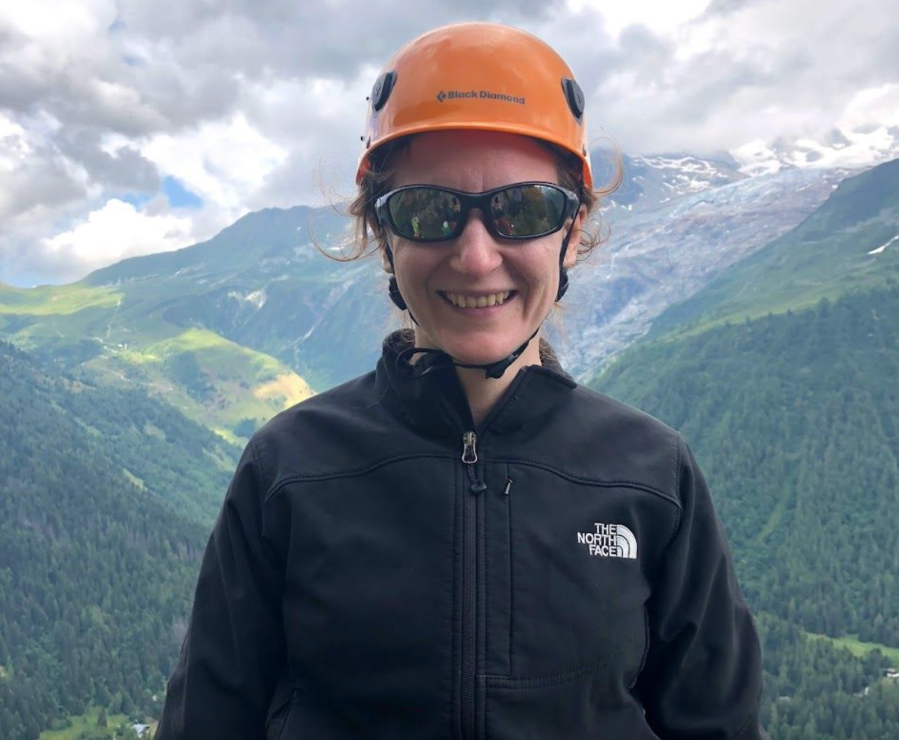
Most of all, I don’t put pressure on the mountains to solve my problems. I also take medication, attend support groups, and see a psychiatrist and a therapist.
Mountains can be therapeutic, but they are not therapy. Wild camping may soothe our minds, but it won’t cure severe mental health disorders. Hiking will not fully heal the long-term trauma many live with, and it certainly won’t dissolve the structural societal issues which contribute to many people’s experience of difficult mental health.
So if you find yourself tempted to suggest to someone with a mental health issue that they should spend more time outdoors, or take up fellwalking, or that wildcamping will solve everything, maybe just pause. These activities can help a lot of people. They’ve probably helped you. They’ve certainly helped me. But they are not a cure for deeper issues, and none of us wants to insult or dishearten those of us who need therapy or medication by inadvertently suggesting it’s our own fault when outdoor exercise and the mountains turn out not to be a cure.