
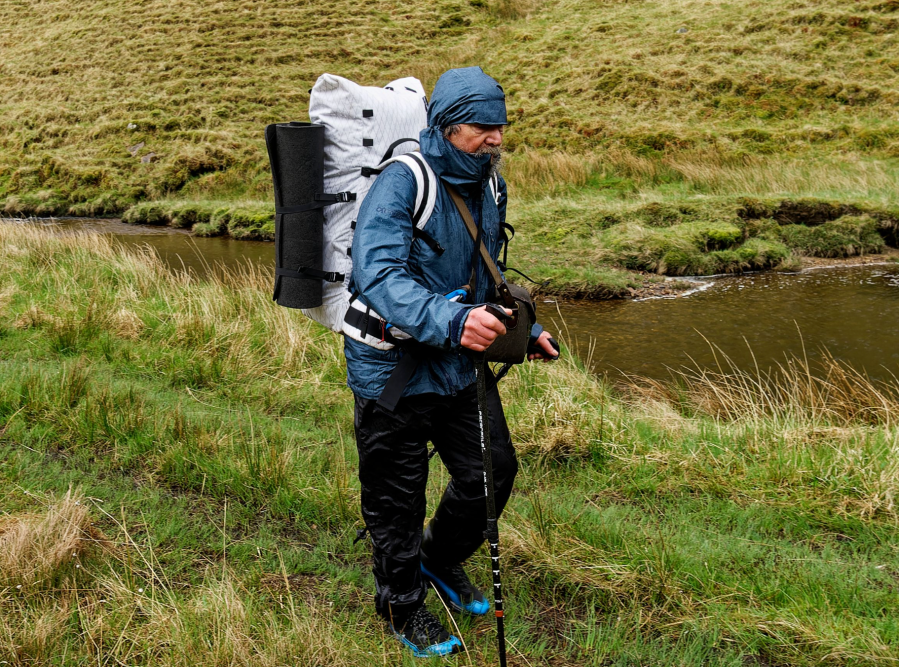
Having tried and tested many, many backpacking packs over the years I’ve come to love some features but intensely dislike others – enough to sometimes shout at the pack in frustration. While I have preferences in design, my criticism is usually based on features that work badly and are a hassle to use. A big pack shouldn’t be a challenge!

All systems (come and) go
Of course, the key to any pack is comfort and that means a back system that fits your shoulders and hips and doesn’t rub. Achieving this isn’t difficult. Comfortable packs have existed for decades. New systems appear regularly, though they’re not needed and rarely offer any improvements. Too often it means designers adding extra padding that doesn’t even touch your body or even a second or third frame that doesn’t actually do anything for comfort but just increases weight and complexity. The end result is that too many back systems are unnecessarily bulky and complicated.
Sure, if you’re going to be carrying massive loads of 20kg + they might be useful, but even for these weights simpler designs are often adequate. They’re particularly unnecessary on packs with a capacity under 60 litres, which aren’t intended for huge loads anyway.
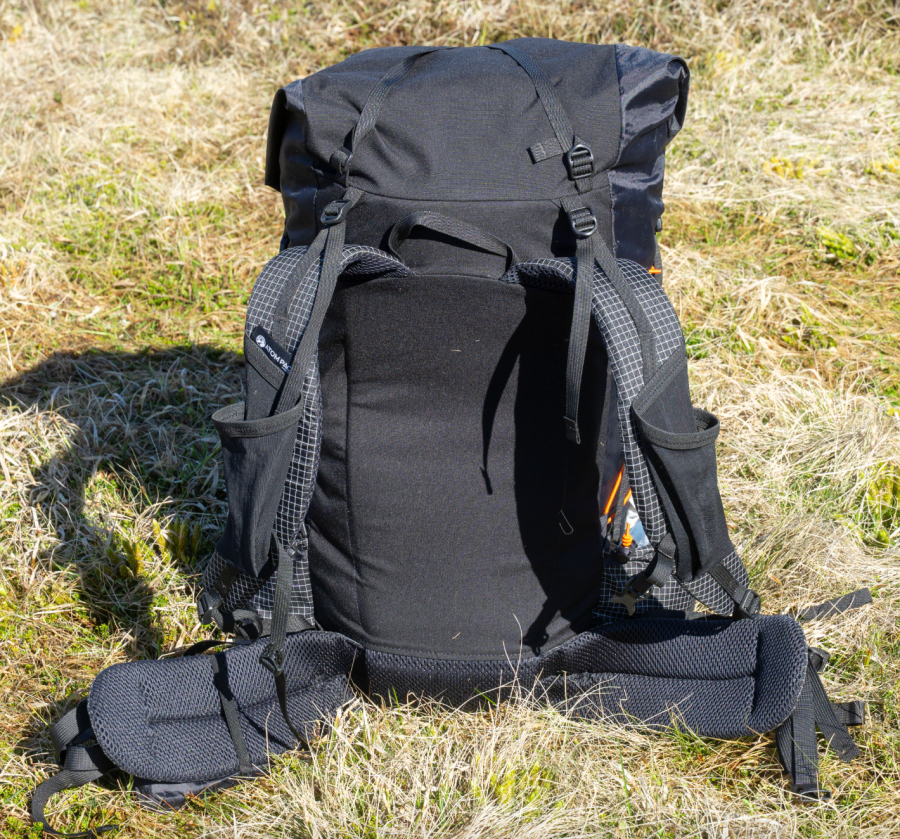
Many of the heaviest back systems are adjustable and have some means of moving the shoulder harness up and down. These are often called ‘easy to adjust’. Sometimes they are. Often, they are anything but. Ones that use huge Velcro pads are the worst. I’ve wrestled to tear these apart and then keep them from touching each other and sticking while trying to slide the harness up and down. This can be more exhausting than actually carrying the pack itself! Non-adjustable back systems with a sheet of foam padding and at most a simple wire frame work the best, in my opinion.
I know many people like them, but I reserve most of my disdain for systems with an air gap between the shoulder straps and the hipbelt. Designed to stop your back getting sweaty, these can act as a wind tunnel and can lead to your back freezing plus the wind trying to tear the pack off you. They also upset stability.
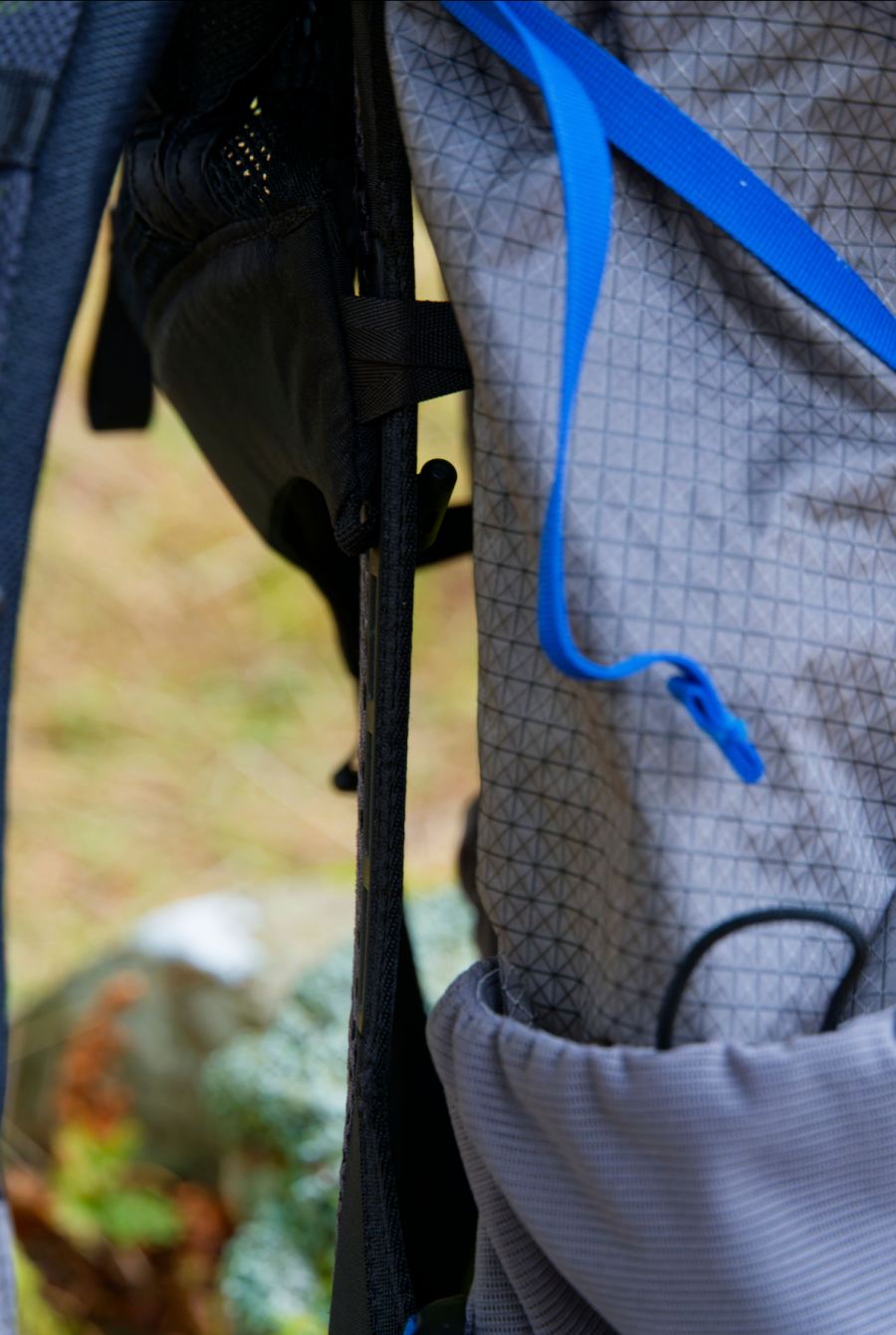
You never see them on mountaineering and climbing packs. I can tolerate them on day packs, but for backpacking? No thank you!
Faffing with strapping
When it comes to the bag itself too many of these are unnecessarily complicated as well, so much so that sometimes features get in the way of each other. Access, which should be quick and easy, can be hindered by too many straps and buckles. Straps that run across or under pockets make using both awkward. Some packs have two drawcords, a strap over the top and a lid with two buckles. That’s five operations just to get in the pack! I often ignore the drawcords and just use the buckles. Three actions are quite enough. I prefer roll-top or zip lids that can be opened quickly.
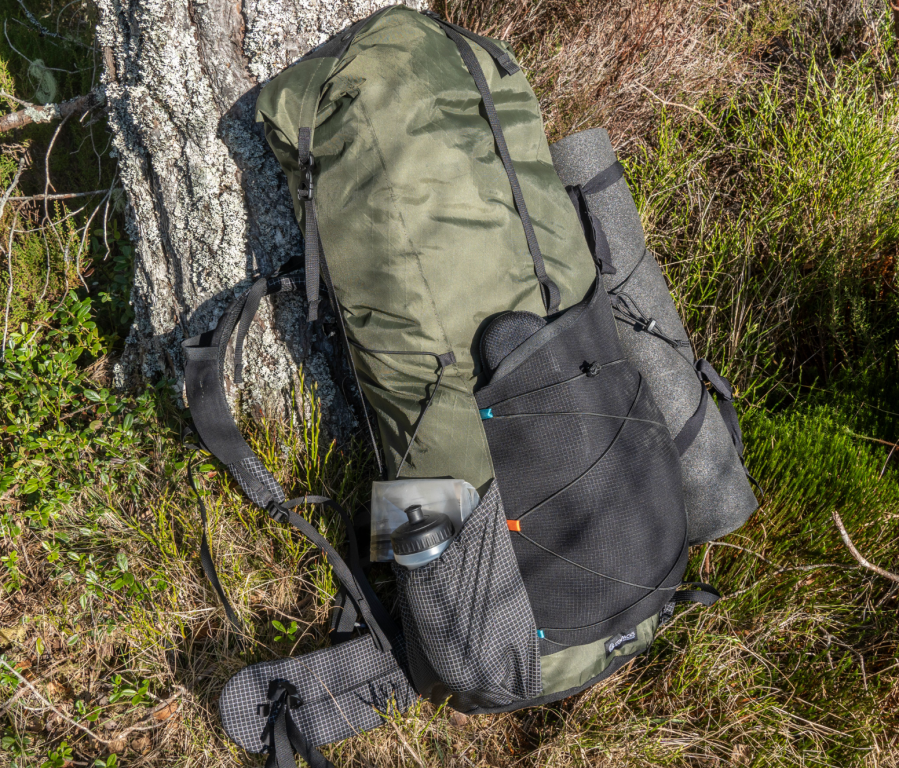
External straps are useful for attaching closed cell foam mats, wet tents and other items. If they’re long enough. Sometimes they’re not, which is very frustrating. You shouldn’t have to tie shockcord onto a strap so it will fit round your mat.
Lower ‘sleeping bag’ compartments are something I can also do without. They just make packing more difficult. Thankfully the separator for most can be removed and so that’s what I always do. Lower zip access can be useful on very big packs as can zip access to the upper compartment, but I can live without them on anything smaller than 60 litres.
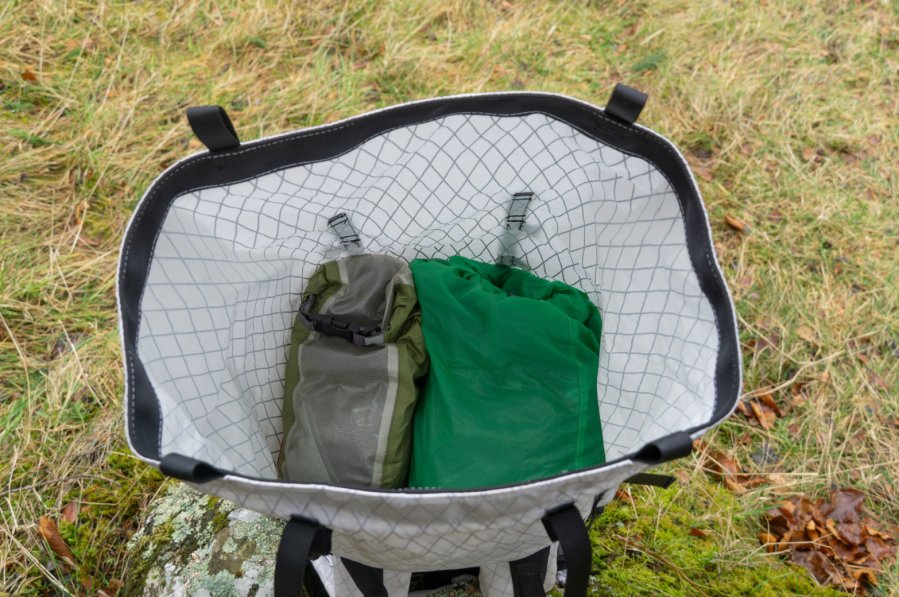
The worst thing about all this stuff – complex adjustable backs, extra padding, straps, buckles, zips, compartments – is that it adds unnecessary weight. A rule of thumb I learnt long ago is that the empty pack shouldn’t weigh more than 10% of the total load. So 25kg for 2.5kg pack, 10kg for a 1 kg pack. These days there are plenty of 1kg packs that will comfortable carry far more than 10kg and also too many 2+kg packs that are too small for 20+kg loads.
Keep it simple
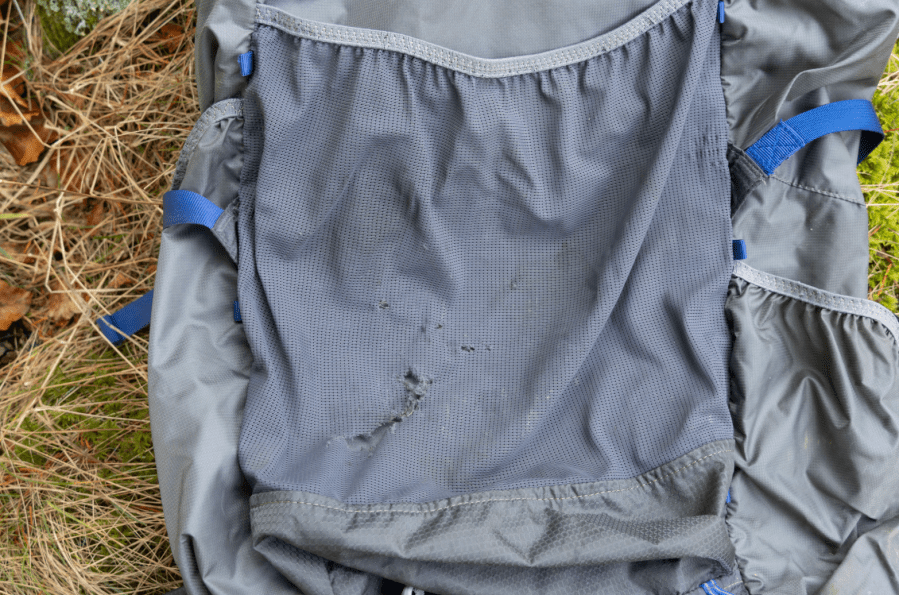
Durability is generally good with packs. Except for one feature. Mesh pockets. By definition, mesh has many holes, which easily catch on vegetation and snag on rocks. Some mesh is durable enough for the back of the pack, but not the sides. Why stretch thin, fragile mesh over tough fabric? To save weight? Cost? Happily, some makers have started using tougher mesh or adding reinforcement panels. I wouldn’t buy a pack with mesh side pockets now.
So, what do I look for in my big packs?
A flat foam back, padded shoulder straps and hipbelt, a roll or zipped top, a single compartment, solid fabric side pockets, long side straps, a tough mesh front pocket. A weight of around 1kg and a capacity of 50-60 litres. That’ll do me.