
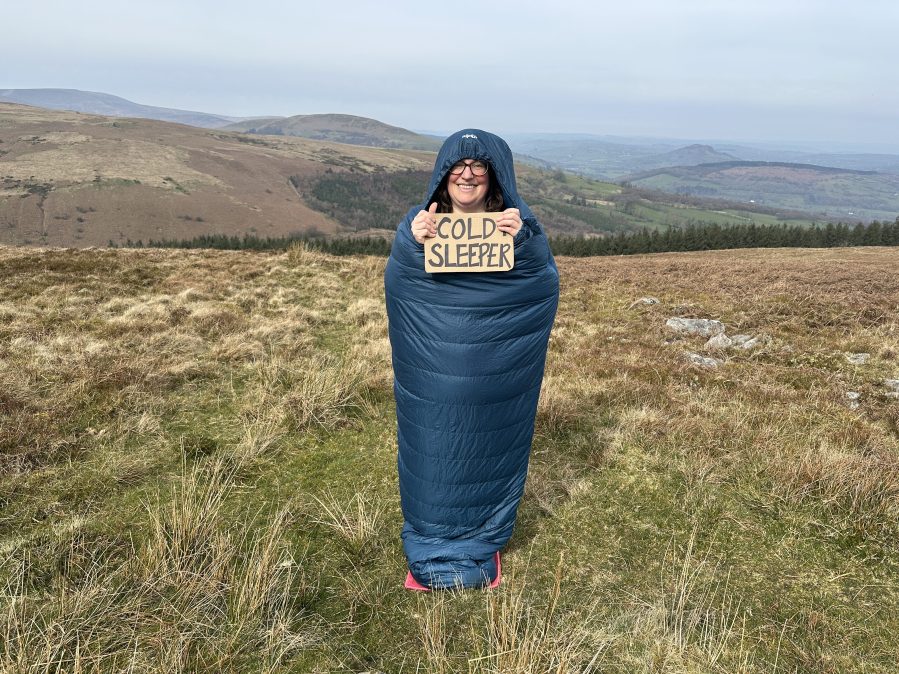
Don’t judge me – I’m a cold sleeper. Like, a really cold sleeper. For a long time, I thought it was because I didn’t have the right kit. I struggled to find gear to fit my plus size body. Now I know different. With more extended sizing becoming available and a LOT of research, I now have camping kit that fits me, and is appropriately technical for the activity I’m doing.
However, I still struggled with the cold when camping. And the more I talked to others, the more I realised I’m not alone. Predominately (though not exclusively), it seems to be women.
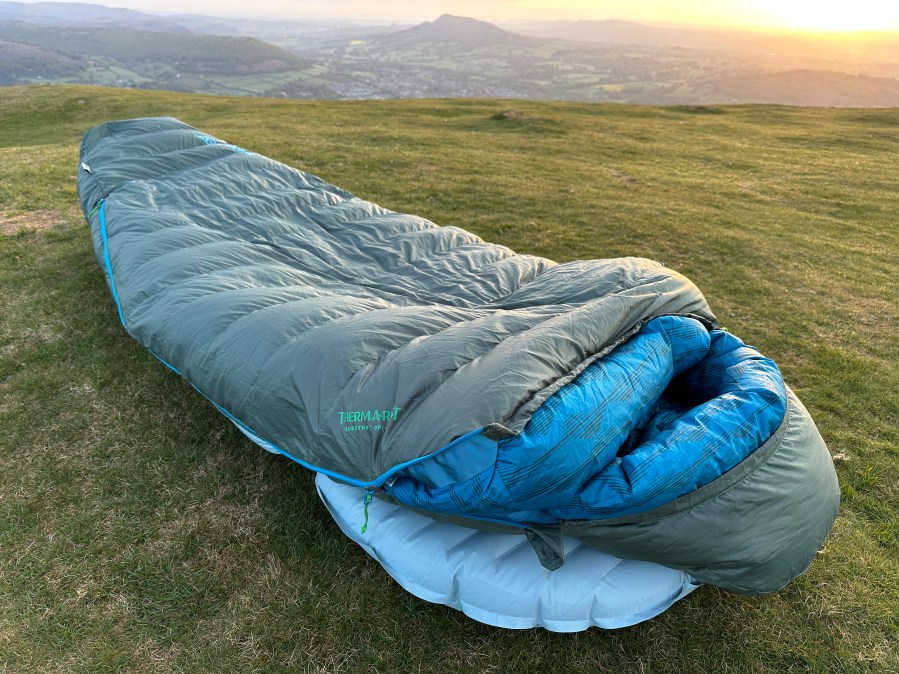
Mats and bags for cold sleepers
Like most of us, I started out buying a sleeping bag based on the advertised temperature rating, but what do these actually mean? The ratings are developed using the catchily titled ISO 23537 standard that uses a heated mannequin in a cold room to test the thermal resistance of the sleeping bag. The ‘comfort temperature’ is the temperature at which an average woman in a relaxed sleeping position is just warm enough, the ‘limit temperature’ is based on when an average man in a curled position is just warm enough, and the ‘extreme temperature’ is the temperature at which an average woman is at risk of hypothermia.
The other key part of your sleep system, your sleeping mat, has an R-value that is based on the temperature resistance of the mat, and is measured by placing the mat between a cold plate (mimicking the ground) and hot plate (simulating a body). While not part of the standard, it is common to see this R-value directly related to temperature comfort.
Why on earth was I getting so cold in kit that was supposedly designed for the conditions? Why did so many women I spoke have the same experience?
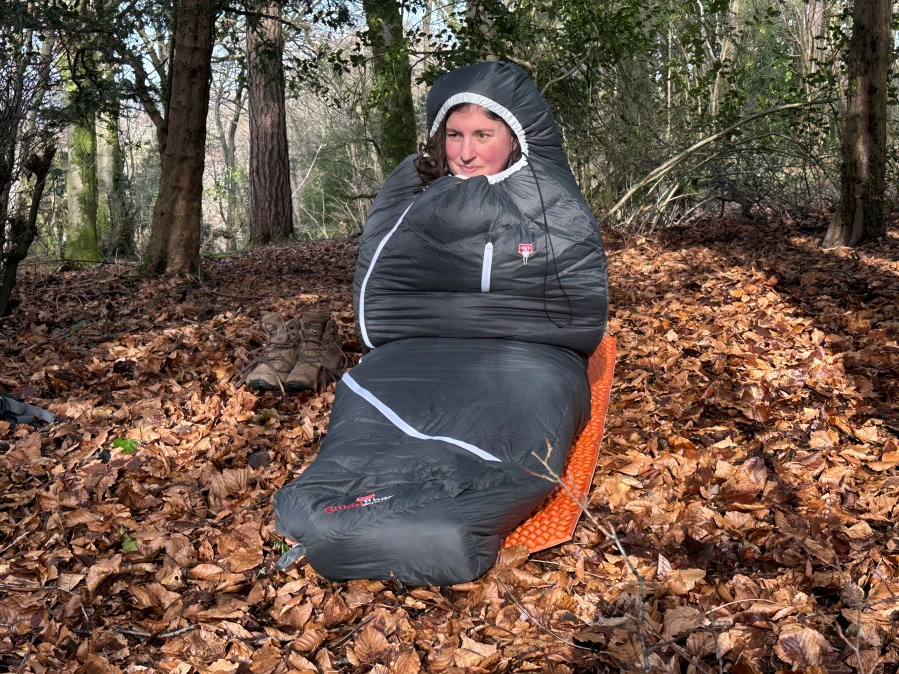
Shock horror, it turns out there’s a slew of scientific research to explain it. While women often have a marginally (around 0.2°C) higher body temperature, our perception of temperature is actually based on our skin temperature and studies have found that women’s hands can actually be up to 1.5°C colder than men.
Body of evidence
There’s a number of reasons behind this. Firstly, metabolism has a significant impact and men often have a higher muscle mass, which results in a higher resting metabolism. On average, men have a 23% higher metabolic rate. This means they burn calories more quickly, which can generate more warmth, and also explains why cold tolerance can change with age as metabolism slows down. Women usually also have more body fat, which doesn’t keep you as warm as muscle. Lastly, hormones play a significant role with high levels of oestrogen (which peak around ovulation) thickening the blood, thus reducing blood flow to extremities.
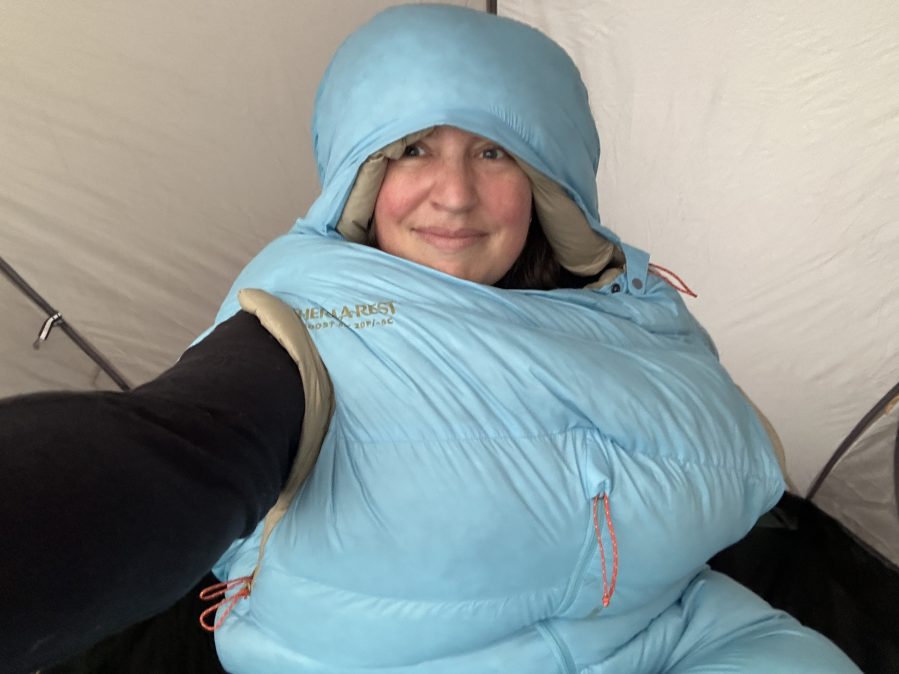
So, if you’ve ever disagreed with someone of the opposite sex around the optimum thermostat setting, there’s an actual reason why! In fact, it’s thought that women generally feel comfortable in 2.5-3°C warmer temperatures than men.
The reality is that among women and men there is another layer of variability, depending on our individual levels of body fat, metabolism, hormones, age and diet. As a woman who has a slow metabolism and higher than average body fat, suddenly my status as a very cold sleeper makes more sense. What it takes for me to be warm is quite simply different to other people.
Never mind the naysayers
The science behind our physiological differences don’t seem to be widely known or understood. Moreover, it can even be attributed to women simply being ‘wrong’ or having less outdoor experience than their male counterparts. I’ve rocked out my -18°C rated sleeping bag in 0°C temperatures many times only to learn, from friends or even total strangers, that I absolutely, most definitely, categorically, did not need that particular sleeping bag in those conditions.
As someone who has spent hours shivering in a sleeping bag that is comfort rated 5°C below the weather I’m camping in, I’m then forced to politely disagree (…or somewhat less politely under my breath, conditions depending!). This goes for mats too. In temperatures where ‘apparently’ I should be fine with an R2 rated sleeping mat, I will continue to happily opt for my R7 choice and sleep nice and toasty – patronising comments be damned!
The most important thing is that we are all comfortable when we camp, regardless of lab tested temperature ratings or standards (or, indeed, subjective opinions dressed up as assumed experience). Understanding my body and how it deals with the cold has a far greater impact on my camping enjoyment than unsolicited advice, however well-meaning it may be.
So, the next time you are offered such advice on sleeping bag warmth or an appropriate camping mat, remember that their experience isn’t absolute. The variability between one body and another can be huge, and what works wonderfully well for them may not be the right choice for you. And if you’re wincing because the role of the advice giver sounds a little too close to home – next time, try asking, not telling. It’s just science.