
A few years ago, I found myself walking alone in the Monadhliath in thick cloud and driving snow. My world had shrunk to a handful of metres: My boots, the sting of wind on my face, and a dim, ghostly line of fence posts guiding me along the ridge. It was that fence, a quiet human-made claim staked across the mountain, which brought the thought to my mind. Someone owns this. The idea felt almost comical out there in the elements. And then, as if to prove the point absurd, the clouds suddenly broke, revealing ridge after majestic ridge stretching west into the distance.
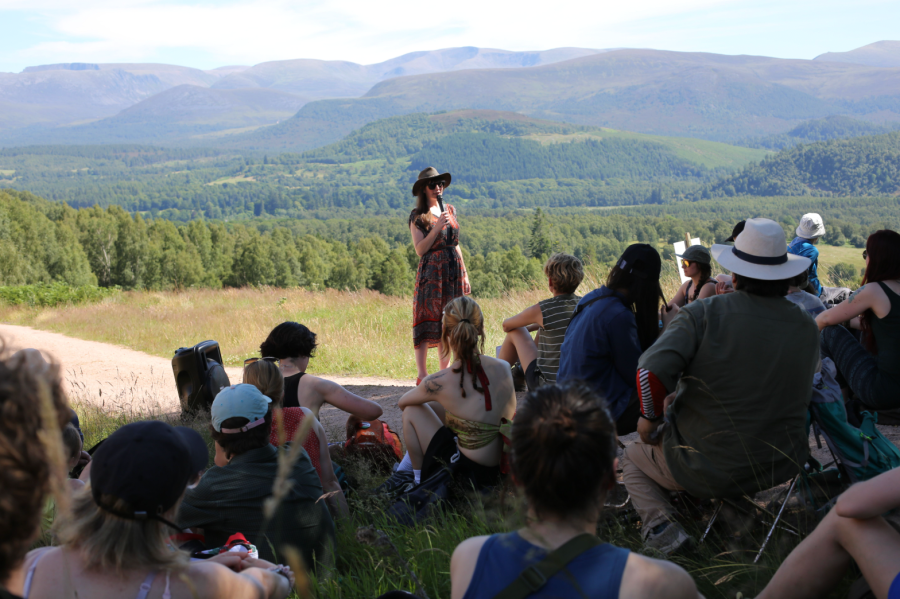
Main image: Sarah Hobbs speaking at Lost Forest Action, Aviemore | Credit: Clem Sandison
How can anyone possibly own the mountains? And yet, they do. A very small handful of people and corporations, in fact, who hold enormous power over what happens to the land, the nature upon it and the communities who live there.
Right to roam, but not to own
We talk a lot about Scotland’s ‘right to roam’ – the right to responsible access – and for good reason. It’s one of the greatest joys of living here: the freedom to wander, camp and explore. Ask any walker in England or Wales and they’ll tell you they wish they had the same. But this freedom hides a harder truth: Scotland has one of the most unequal patterns of land ownership in the world. Just 433 people own more than half our land.
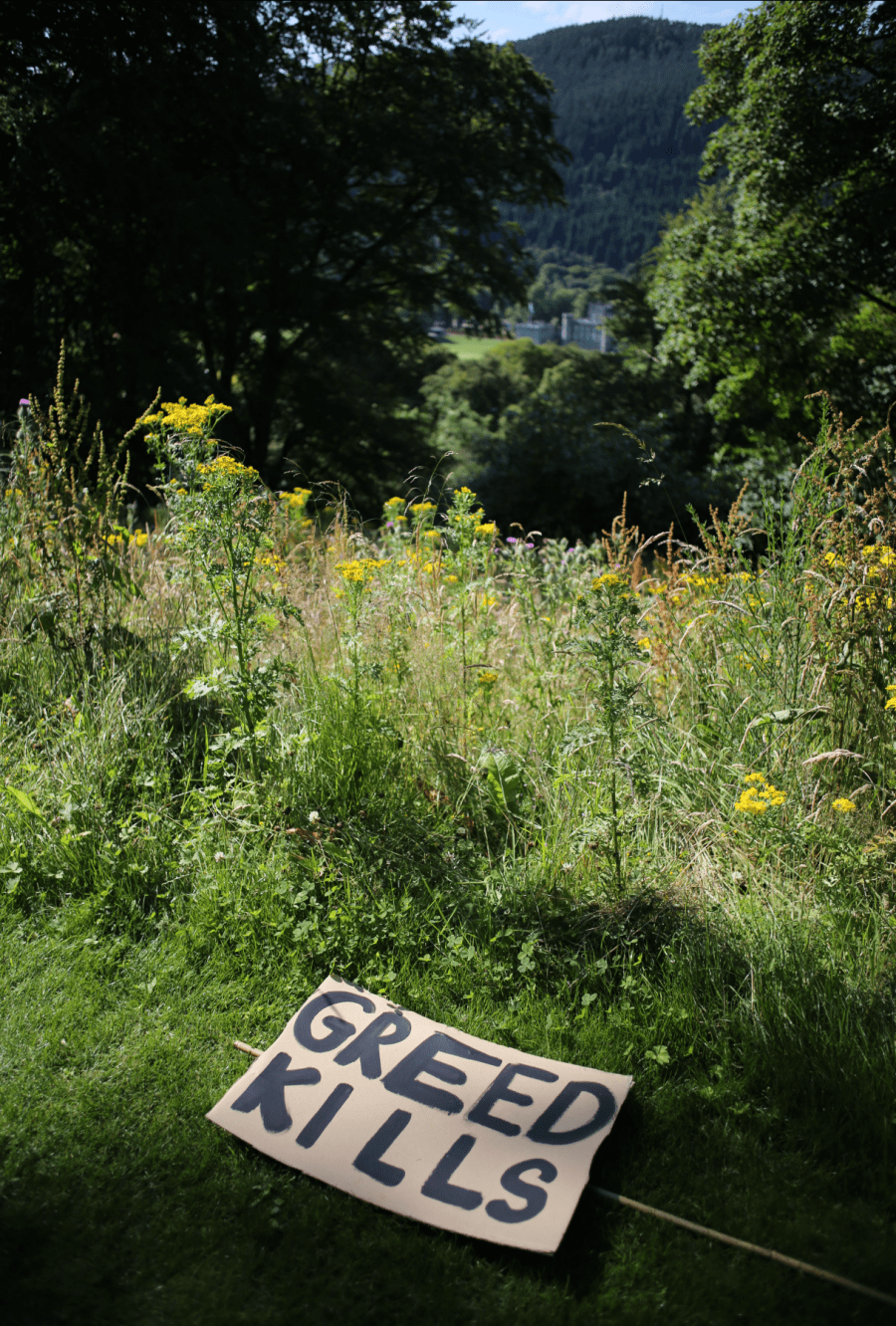
In the Highlands, where people were brutally cleared from the land only 5 or 6 generations ago, the concentration of ownership is most intense. The Scottish Land Commission has been blunt: this level of concentrated ownership is a profound barrier to sustainable, fair, and thriving rural life. The Land Reform Acts since devolution have not improved this situation. In fact, concentration of ownership has increased in the past two decades. It’s not an abstract problem. We can trace many of the issues facing land back to its tiny cohort of owners: disappearing biodiversity, degraded peatlands, overgrazing, a lack of affordable housing and the hollowing-out of rural populations.
More recently, a rush of interest in ‘rewilding’, natural capital projects and carbon offsetting has sent land prices rocketing. On the surface, these initiatives sound pretty good. Trees planted, peat restored, carbon captured. But the side effect has been to transform huge areas of Scotland’s land into merely an investment opportunity for corporations and wealthy individuals. Land is not something you live and work on, it’s an asset to be added to a portfolio.
Priced out of reach
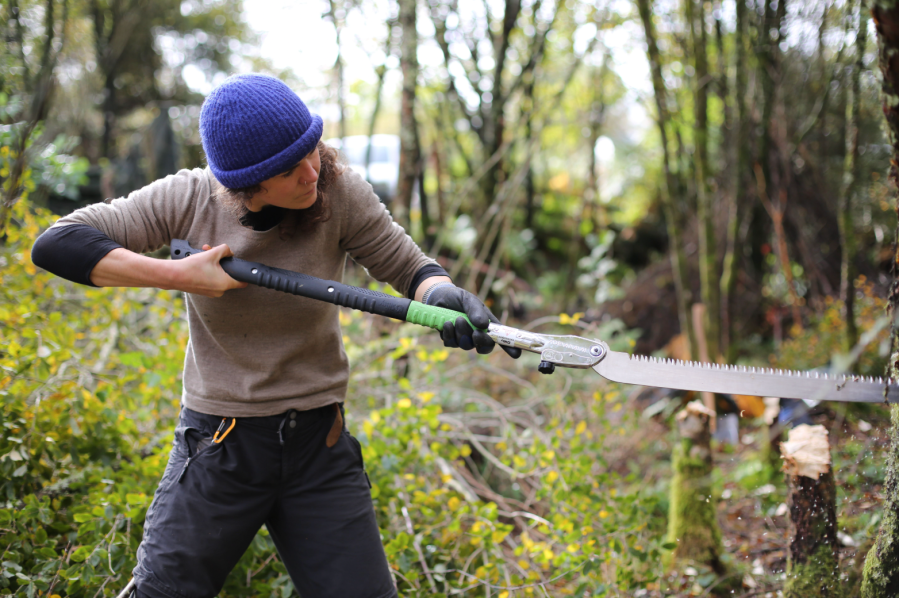
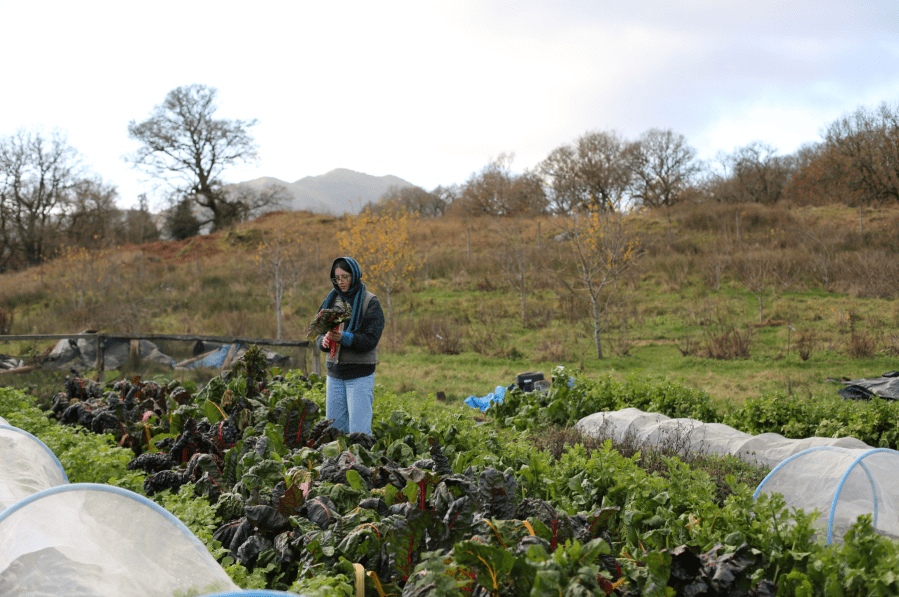
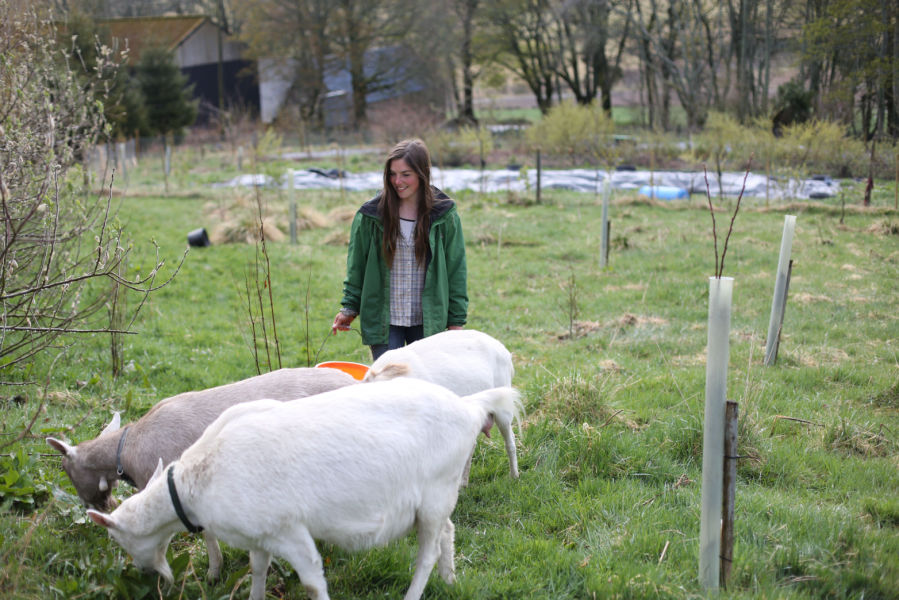
Through my work as a campaigner with the Landworkers’ Alliance – a union for farmers, crofters, foresters, and other land-based workers – I meet many young people who have the skills, training and commitment to farm sustainably and feed their communities, but no access to land. For anyone trying to enter farming, forestry or land-based work, getting hold of even a small piece of land is virtually impossible. That pattern repeats itself in my work with Community Land Scotland. This is something I feel personally – I’d love nothing more than a wee croft to work, but it feels like a dream out of reach.
We have the Code of Access from the 2003 Land Reform Act, and it’s brilliant for recreation. It lets us wander. But it does not give us access to land for the things communities actually need: growing food, planting trees, building renewable energy projects, restoring nature or building affordable homes. We can walk on the land, but we cannot shape what happens to it.
The gathering
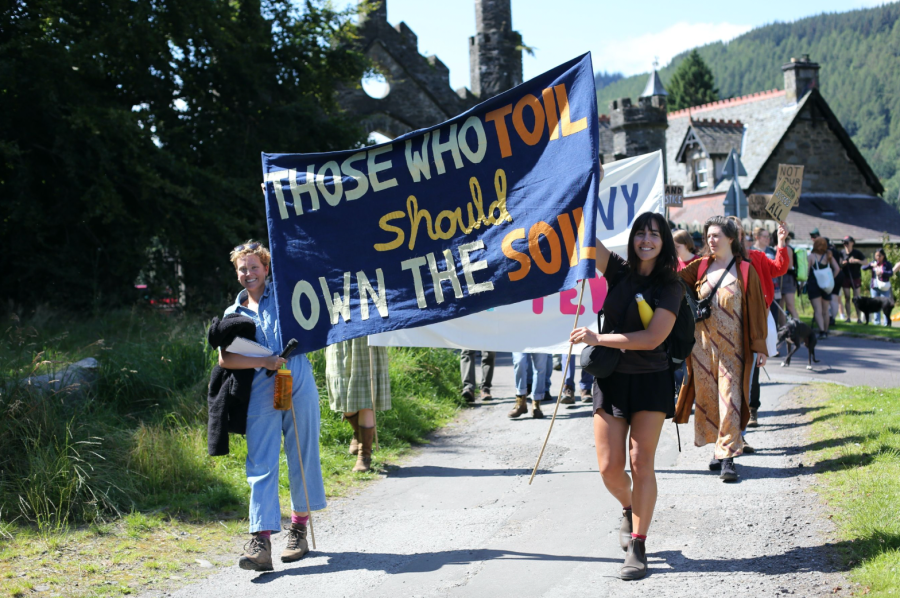
As the new Land Reform Bill developed, the Landworker’s Alliance organised a series of events. In July 2025, we gathered over 70 people on the Kinrara Estate near Aviemore, at that point still owned by the craft-beer giant BrewDog. Their public subsidy funded carbon-offsetting project was named ‘The Lost Forest’ – sadly ironic, as most of the trees later died.
We talked about those who once lived there and were cleared, the current politics of land ownership, and how companies are using land to offset their emissions and polish reputations. We dared to imagine a more positive future, one where people live and work on the land, where nature is restored and where communities hold real power.
That day, the hottest temperature ever was recorded in Aviemore (32.2°C). Climate change and the environmental crisis were very much on our minds as we sheltered from the burning sun under the fragile shade of a few elderly birches. We spoke about the need for real climate mitigation – long-term nature restoration, peatland recovery and agroecology, rather than quick-fix tree planting schemes designed more for PR than for ecological benefit.
The new Land Reform Act
The latest Act finally passed this November, but in a more watered-down form than many of us hoped. For the first time, the sale of large estates (over 1,000 hectares) will be subject to some regulation. There is the potential that estates could be broken up and sold in smaller parcels, if deemed to be in the public interest. Communities will also have a first right of refusal when these large estates go on the market, a strengthening of existing community-buying rights, though it will only apply in rare cases of large land sales.
Large estates must also now produce Land Management Plans, developed in consultation with local communities, setting out how the land will be used, cared for and managed. These must include commitments to biodiversity, climate mitigation and compliance with statutory obligations like the Scottish Outdoor Access Code (SOAC). There is, frustratingly, no legal requirement for landowners to actually follow these plans once they are made. But we can hope that the process of writing them, with public and with community input, will at least nudge some estates toward better practice.
Basically, the Land Reform Act (2025) is a step forward, but it is nowhere near enough.
Grassroots growth
The good news is that a grassroots movement for land reform is growing. The gathering at the ‘Lost Forest’ was just one of many. Others include a mass protest at the controversial Taymouth Estate in 2024, a history tour of sites of land resistance in Skye, an energetic gathering in Dingwall to commemorate the Highland Land League, and workshops in the Western Isles. The second ‘Land Moot’ brought together campaigners from across Scotland in October 2025, and over 100 activists on the Just Walk made their way from Skye to Glasgow to retrace the steps of those displaced during the Highland Clearances. Revive’s ‘The Big Land Question’ is attempting to galvanise support for land reform from the wider general public. Among them, there are calls for taxation of large-scale landownership, caps on land prices, stronger rights for communities to buy land, and new models of local, collective control over land use. It is an exciting time to be working on land reform in Scotland… but not really because of the Land Reform legislation itself.
The disconnect persists. Here in the Highlands, so many work as mountain leaders and outdoor instructors and know the land intimately. And yet, as one guide friend put it, they’re expected to know everything about the land except the people who lived on it and the political history that shaped it. My hope is simple: that people who love Scotland’s outdoors begin to look not just at the land beneath their feet, but at the structures of power behind it. Why do so few people live in the glens, why is so much of the land treeless? Who owns the land we walk, climb and bike on? Who benefits? Who gets to decide?
My hope is that communities have real power, so we can build a land-use system that actually works for both people and for nature, and where the hills aren’t just property to buy and sell, but places people live, work and care for. A country where decisions about the land aren’t made by a handful of wealthy owners, but by the many who depend on it. And then, just maybe, hopefully, I’ll get my croft.
You can find out more about the work of the Landworker’s Alliance at landworkersalliance.org.uk.