
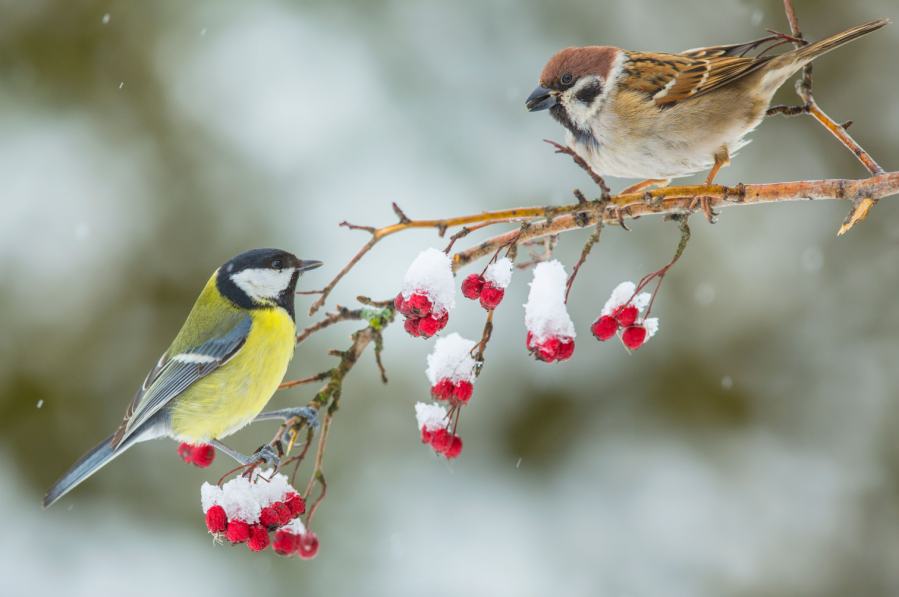
This is a tricky time of year, for all sorts of reasons, underpinned with biting cold and ruthless darkness. My ‘go to’ solution is to look to my community and to find light. This is how I make it through. Winter is when I invite people over for dinner. A lot. It’s not lost on me that birds – such as tits and goldcrests – gather in the chilly months too. Sociability is survival.
Main image: A great tit (left) and tree sparrow dine together | Credit: Ivan Godal / Shutterstock
This month I’m inviting you to ritualise being present for a short while in a woodland, or anywhere scrubby with mature shrubs or hedgerow. Advancing through the landscape is usually the task at hand for outdoors folk, upwards and fellwards, the long slow way or the rocky way. Stopping is usually reserved for lunch or catching breath. But stopping is the purpose this time: because you have to wait for the birds to find you at this time of year, your journey is your observation. Winter feeding flocks are community and light.
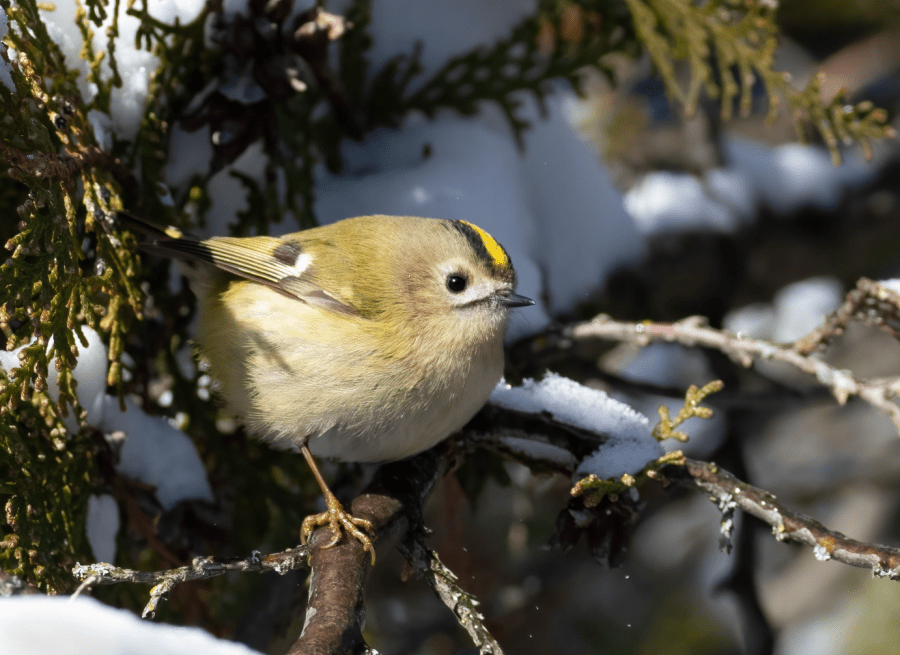
Our most colourful and characterful birds come together at the beginning of Autumn to spend Winter as one feeding group. In the Spring and Summer everyone is coupled up and much less tolerant of mingling. This type of winter gathering is mostly made up of tit species: blue, great, long-tailed and coal, with goldcrests joining for the ride.
The flock is nowhere near as coordinated and awesome as the starling murmuration, another notable winter avian gathering, which is characterised by grace and coordination. On the other hand, our tiny tit flotillas are bursting with untamed energy, peeps and chirps. It’s less of a starling dance and more like the birds are pinballing frantically through the branches.
This is no surprise. Small species like the blue tit have to eat nearly as much as their body weight each day so they have the fat reserves to make it through each long, cold and dark night. Their search-and-gorge mission has to be non-stop when there is daylight. This is a fact I heard when I was little, and it has haunted me with a sort of anxiety ever since. It is why the birds are together: more eyes looking for food and keeping an eye out for predators, never stopping.
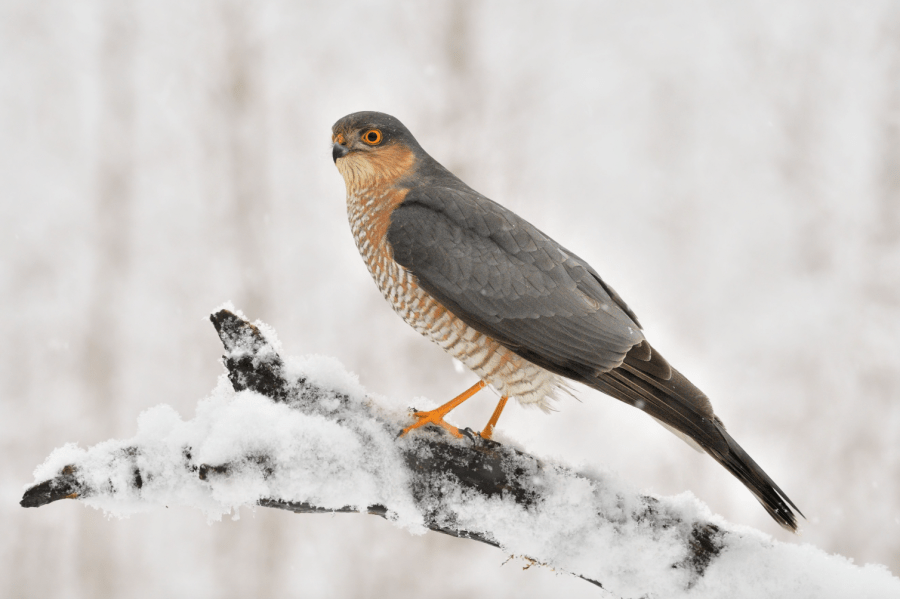
Your job is to find somewhere to rest and to see what flocks of birds come to you. Think of it like being in YO! Sushi: you’ll only waste time and energy going out and looking for birds. Instead, wait for them to come to you. You can (and should) elevate this experience by packing a flask of tea and something outrageously calorie-dense.
In reality, stopping and observing the world around you is an all-year activity; but there’s something quite exciting about waiting for a feeding flock to tumble its way through the branches around you. It is also the brilliance of this method of observation. Your stillness removes your threatening-ness, so birds will come extremely close to you as the feeding train passes you by.
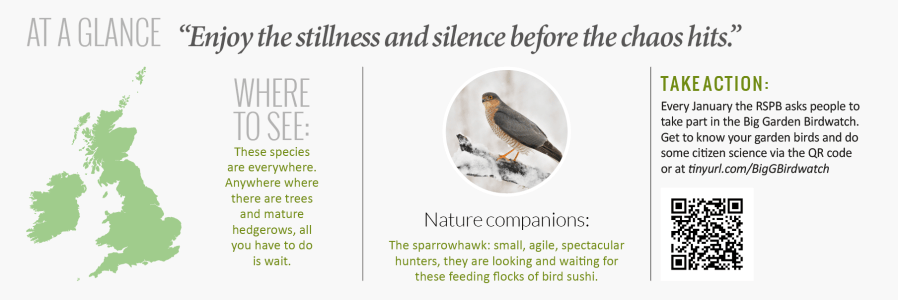
Enjoy the stillness and silence before the chaos hits. It’s just as important to notice the joy of quiet because the feeding frenzy will be over in minutes, leaving you alone once more.