
July brings bugs. Every meadow and hedgerow, garden border and park, will be (should be) quivering with life. Since spring, billions of insects have emerged from hibernation, mated, laid eggs and larvae have pupated into adults. The next generations of insect life will be spreading out en masse to find flowers and nectar, plant sap and smaller insects to predate. They creep and crawl, buzz and shimmer all around us. There will be yet more eggs and larvae tucked in crannies, miniature worlds of hiding spaces and silk-covered egg sacks under every log, tree crevice and area of scrubby undergrowth. Life is abundant, food is abundant, the warm long days set the scene for life to thrive unhindered. The world is pulsating, the mirage effect of summer heat blurs furthermore with fizzing insects on the wing catching the sun as it dips into the golden hour. Dragonflies are hawking above ponds, swollen-thighed beetles and Marmalade Hoverflies settle on plate sized umbellifer flowers, and grasshoppers jump in your presence. The sun has fed the world and plants have materialised, and with it, insect life has occupied this overflowing green matrix all around us. It is awesome. The shieldbug is easily one of my most sought out characters that I like to spend time with in summer.
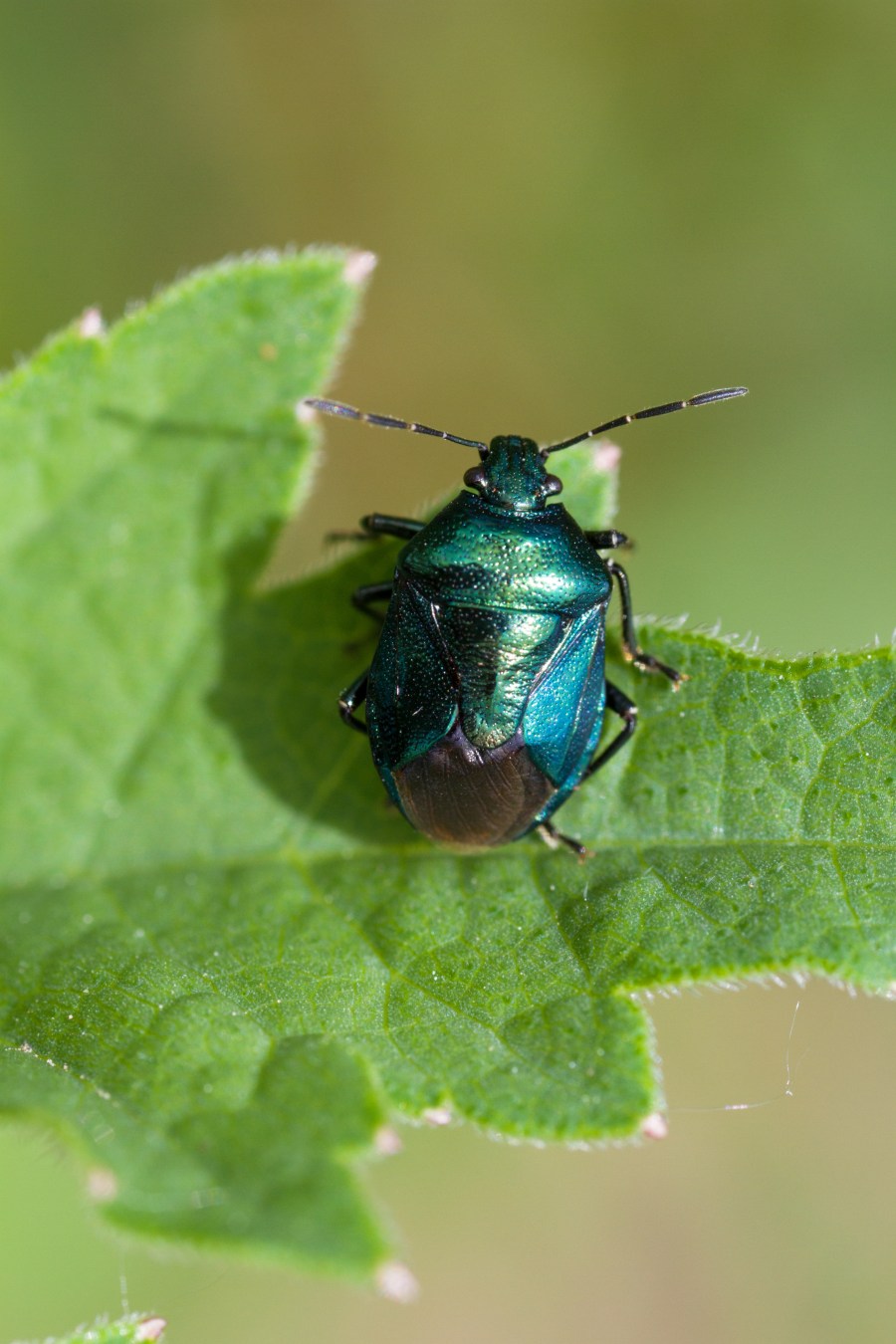
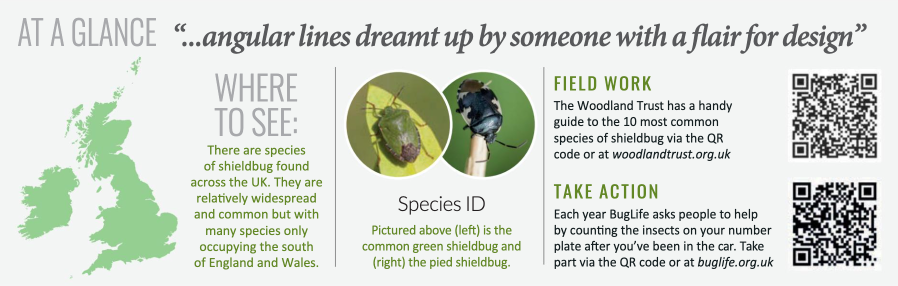
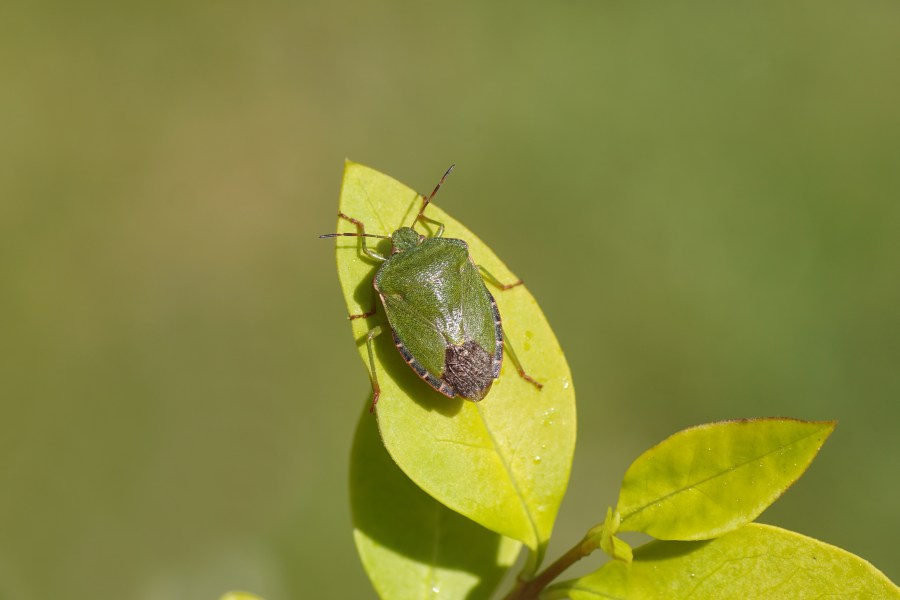
There are around 40 species of this bug in the UK. I enjoy their flattened bodies and the shape their wings make when folded on their backs. Satisfyingly their name reflects their appearance. They really do look like tiny shields. They are as neat as a pin. The angular lines have been dreamt up by someone with a flair for design – someone who understands composition, the satisfaction of symmetry and how to make something pleasing to the eye. I feel the same way about Spindle tree seeds and Barnacle Geese.
We often use the term bug to describe all things that creep, but to be a ‘true bug’, you’ll belong to the order Hemiptra. These bugs are likely to be lumped with beetles, but unlike beetles which have mouthparts that munch, shieldbugs have a piercing rostrum that is used to break through the surface of plants and animals so they can suck out their food. Their wings don’t have a fully hardened sheath which beetles have.
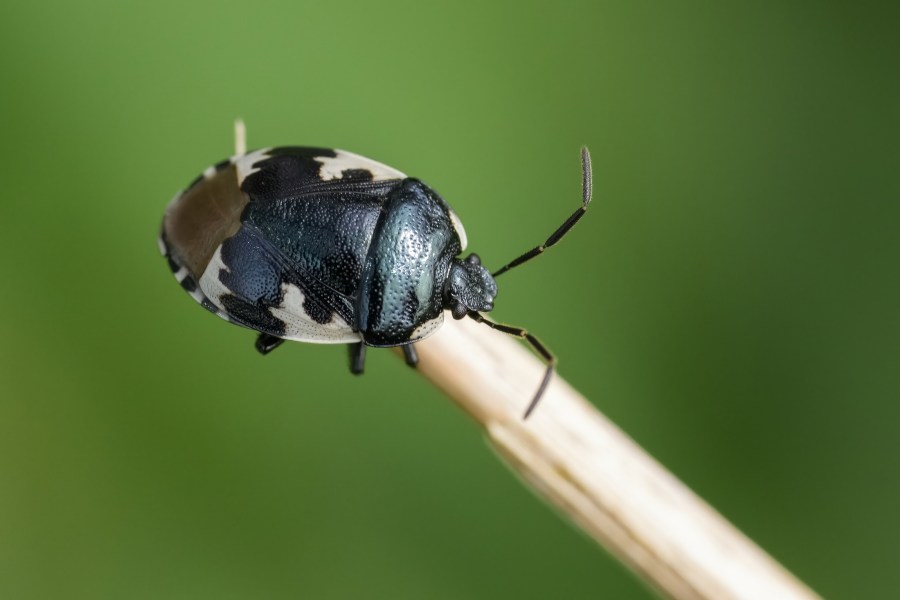
Each species of shieldbug has its own story to tell; blue shield bugs boast a gem-like metallic sapphire appearance and unlike most of their kin, they feast on other insects. Then there’s the pied shieldbug – delightfully black and white. The mother watches over the eggs for weeks and then leads the hatched young to their food plant, which is the type of maternal behaviour we assume is absent from the insect world. Most wonderfully, these bugs have a survival tactic which involves emitting an unpleasant smell (depending on who you’re asking) when they feel threatened, giving them the alternative name of ‘stink bug’.
We have the ability to recognise and distinguish small details of the life around us. Whether that’s flowers, seeds, birdsong or shieldbug species, we are excellent observers. At one time it contributed to our survival; knowing how every element of the natural world nourishes us or is of use. Today I think these observation skills continue to save us. Paying attention to insects can pull you into a deep level of concentration. You are momentarily rescued from silly thoughts that might be otherwise stealing your attention and rewarded with miniature moments of awe and inspiration.