
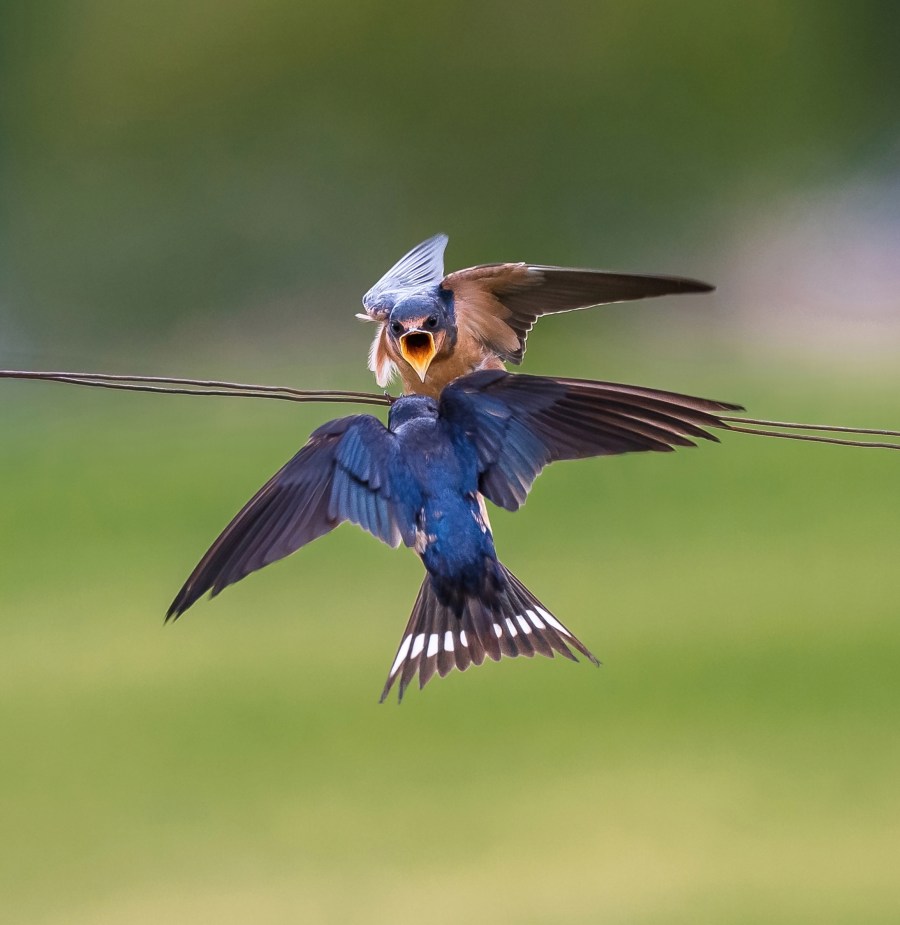
Main image: A barn swallow chick on a wire eagerly anticipating a meal from its parent | Credit: Susan Hodgson / Shutterstock
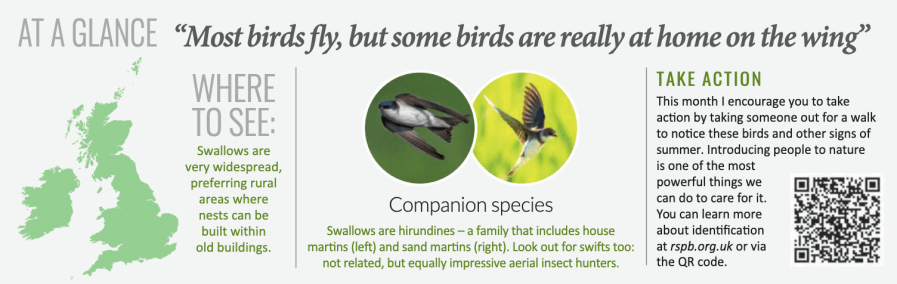
By August life can feel spent. Straw grass and long days stretch into exhaustion. A hot August day can feel like a surprise gift or like a chore. Turbulent weather systems are around the corner as summer metamorphosises into not-summer, but not-quite-autumn either. I find it a confusing time. And yet, as swallows begin to gather on wires overhead, I look up for these clear signifiers that things are changing. It is almost time for them to leave our skies in search of warmer weather. This makes me feel contrary. I’ve grown used to their presence. I yearn for autumn-ness but also don’t want to say goodbye to the swallows so soon. It astonishes me how enmeshed with the seasons we are. To live here is to live with change. It is a constant and epic existence of cycles, revelations and disappearings.
The swallow is one of our most loved birds. They are still recognised widely despite a general downward trend in knowledge about our non-human kin. They have persisted in our cultural consciousness. I think this is partly because they signal the end of winter, and we are a people who love to think about weather, especially when the forecast shifts to something that allows us to confidently pack away the waterproof trousers and thermal underwear.
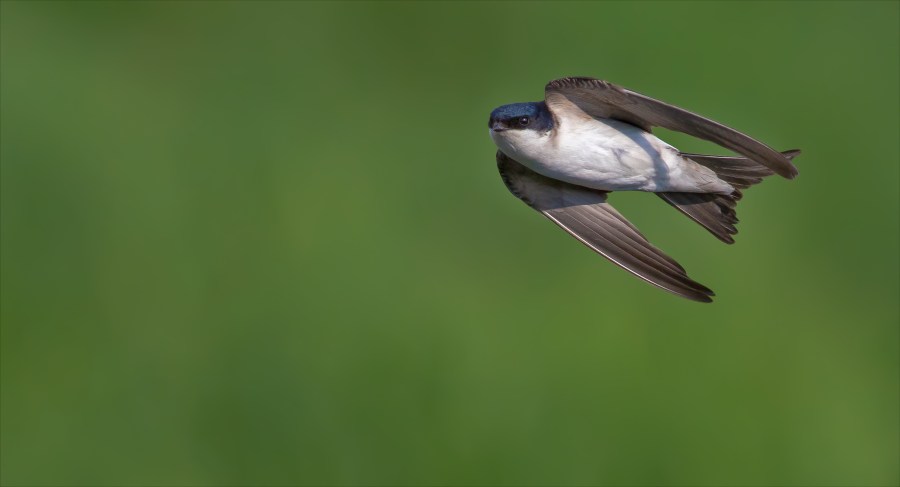
Swallows are small birds, their feathers a dark ultramarine blue which looks black until their plumage catches the light. They have a short stubby beak and a rust red throat. Male birds have modified outer tail feathers. Through sexual selection by the females, this has resulted in the birds evolving long thin needle-like feathers. The nest of the swallow is a mud cup that the birds make by gathering wet earth in their beaks. Tiny bit by tiny bit, these muddy building bricks are built up and create a structure that is able to stick firmly to a wall and strong enough to hold a growing family of swallows, usually 4-5 chicks. As their full name suggest, the Barn Swallow seeks out barns and other structures in which to build their nests – good weather protection and safe from most predators.
Most birds fly, but some birds are really at home on the wing. Flying is the swallow’s way of life, not just a mode of transport. They make the invisible, visible, their presence transforms the skies above our heads into a place rather than simply space. They are aerial hunters, plucking insects out of the air and they move as an artist might move a paintbrush across a blank canvas. It is delicate, peaceful, and a dance.
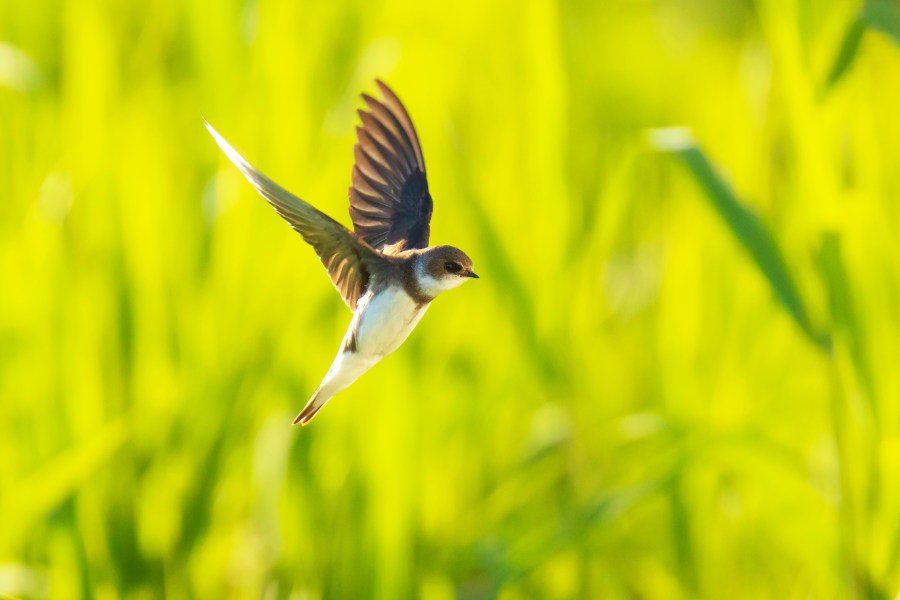
By the end of summer when their chicks have fledged, a swallow will turn its focus on building energy reserves for the long journey back to sub-Saharan Africa. Their journey is a difficult one, flying during the day, often up to 200km a day and making the long journey across the desert.
You will notice that they begin to gather together on wires and in clouds together, hunting insects, their numbers quadrupling after successful chick rearing and fledgling. They congregate, their calm brushstroke energy begins to feel anxious with anticipation. I can feel this energy running through their little bodies. Any day now, when the weather is just right and enough insects have been consumed, something will pull them south.