
May is a time for rockpooling. The waters around our coast warm and become a restorative broth of abundance. The seas give birth to life. And I particularly enjoy just how small this life can be here. Asterisk starfish, rice-grain jellyfish and crabs that would fit on your small fingernail – all minuscule replicas of their fully grown selves. With low spring tides and long days, any coastal walk should be closely interrogated as you plan your route so that you may meet the rocky bit at low tide.
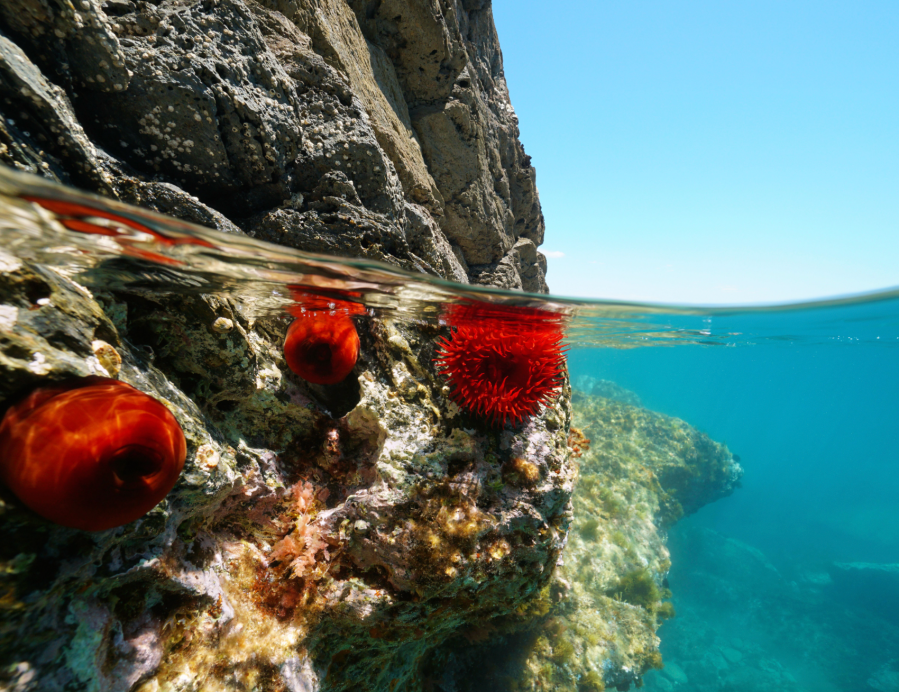
Main image: Beadlet anemones | Credit: Damsea / Shutterstock
Most of my nature-inclined friends will, at some point or another, talk about nature treasures. Things or beings we discover in nature, finds that bring us close to how a detectorist might feel about unearthing a glint of gold. No treasure, and then, suddenly, TREASURE! Rockpools are treasure troves. Staring into a rockpool reminds me of opening my Yorkshire Tea tin as a child. This was where I kept my treasure. You might have had one, too. Somewhere you kept all your important (in the eyes of a child, anyway) objects. When you’re looking into a rockpool it feels like an opportunity to meet the child version of yourself. I find adults don’t rockpool enough.
Rockpools are pieces of the sea left behind when the tide goes out, and what it collects back up when it washes in again. In these pools there are thousands of animals that can thrive in this relentless back and forth, and they are built for it. To take part, it is as easy as looking, crouching down on your haunches, peering into the glassy surface and observing what lives beneath. You might have to move seaweed aside and lift up rocks.
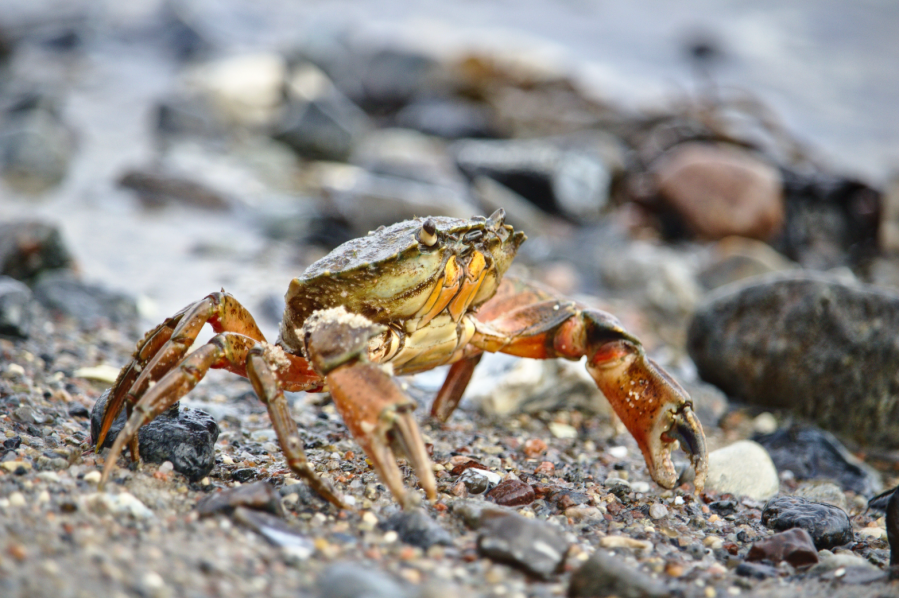
Shore crabs are my favourite animals found here. They are common and hugely diverse in colour, varying from moss green to orange. When they are ready to level up a size, they grow a new exoskeleton underneath the old one before popping out. This leaves the old carapace discarded and often mistaken for a dead crab; when you find one flip it over, the underside is a universe of dark blues and purples. They have pleasing grooves and five distinctive spikes either side of their eyes. Their cartoon-like scuttles sideways are joyous.
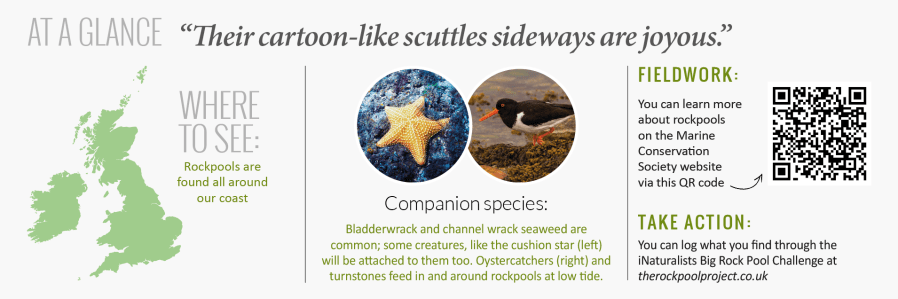
You will meet jelly-like deep ruby beadlet anemones. When out of water, they look like red blobs hanging off the rocks. But when submerged, a hundred velvet hunting tentacles unfurl; they wait for passing prey to sting with venom before rolling the meal into their mouth, which is also their anus, incidentally. Cushion stars are a type of starfish that are a siren for folk who can’t resist touching things which look interesting or cute. These creatures are both. They vary in colour and size, and use their five squidgy arms to creep across the rocks seeking their next meal. You’ll also see shrimps dashing about, sometimes frantically when disturbed, or a butterfish squished under a rock. These are long and vary in colour, but they have unmistakable black dots along their back. There are also sea slugs, seaweed, sea squirts, urchins… a list too long for your low-tide window. But treasure hunting wasn’t meant to be easy.