
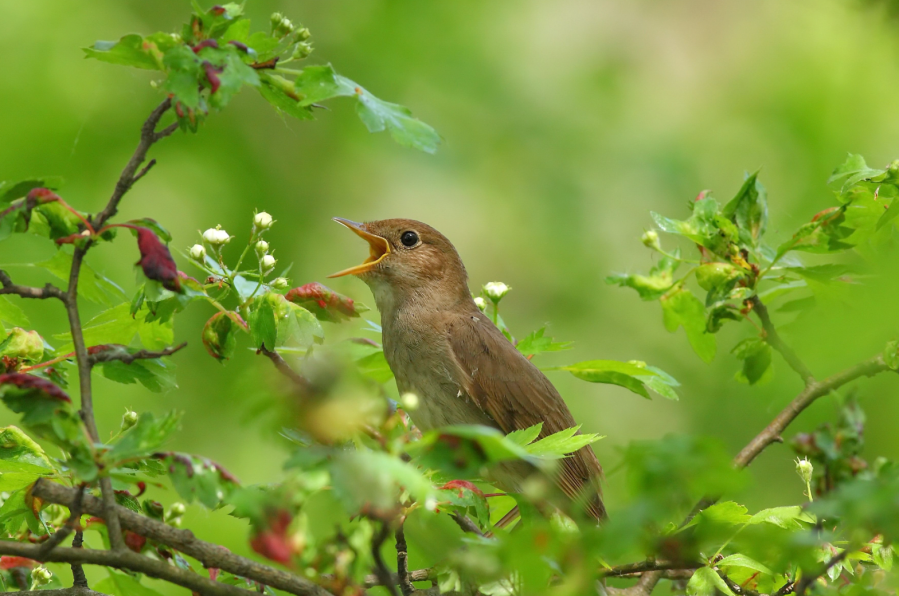
Main image: A nightingale sings on a flowering branch | Credit: Raldugina Oksana / Shutterstock
Emerging deep from within an old Hawthorn, a song burst with the energy of gossip that has been held in for far too long. It has to be heard to be believed. The first time I heard a nightingale sing I wasn’t prepared for how much it would move me. I felt its song vibrating in my chest. It really is like nothing else you will hear in the UK.
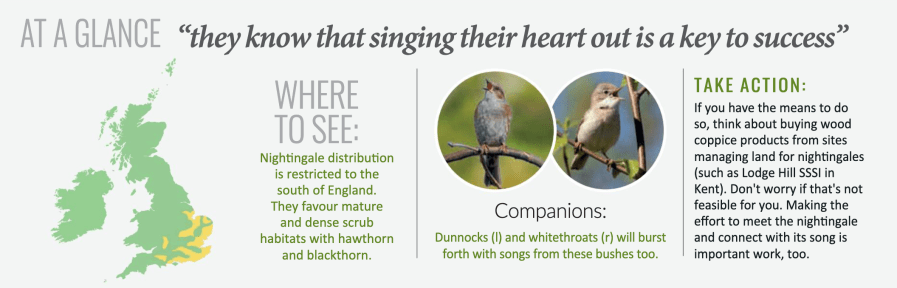
Nightingales are a smallish brown songbird who arrive in the south of England in April to breed, and they leave again at the end of summer to fly south for the winter. As the name suggests, they sing at night. Their complex and beautiful song has been celebrated by humans for centuries. It is exquisite and spellbinding. If your adventures take you to the south of England, it is worth making the effort to seek them out and spend an evening wrapped in warm clothes and their music.
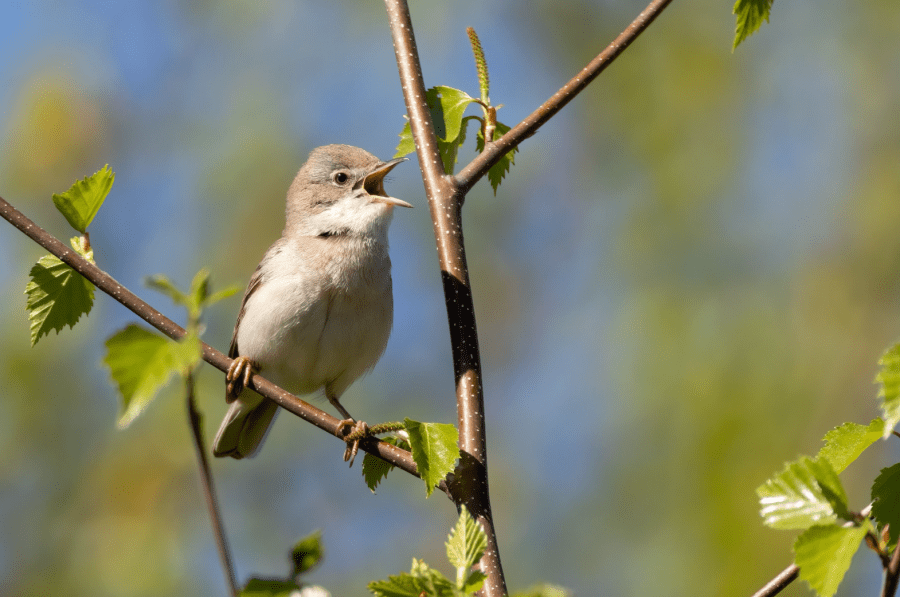
The nightingale has worked out, slowly and at a timescale that we can barely comprehend, that if it travels north to breed, to this land, it will find dense scrub and bushes, under which it can forage an abundance of invertebrates which will be gathered in beaks and turned into growing young nightingales. They know that travelling is worth the effort. And most exceptionally, they know that singing their heart out is a key to success. For millennia, a billion nature interactions have set things in motion.
A thousand years ago, and tens of thousands of years before that, hawthorns sprouted and their bright green leaves unfurled into tiny hands waving at the world long before we began to cast prints of our hands on the walls of caves. Insects have found their niche here too, their stories of life and evolution melding seamlessly with that of this special bird and the scrub they inhabit. Nightingales learned the long way that singing holds territory and attracts a mate, and their song has been passed on from generation to generation. Every year nightingales have flown across the globe to reach their hawthorn or blackthorn bush from which they will sing again.
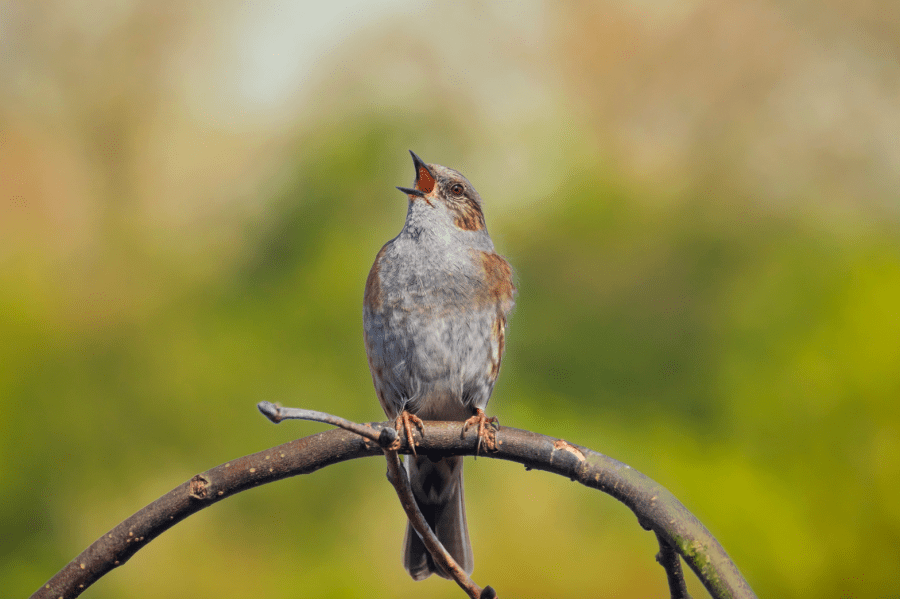
The habitat that they prefer is becoming quite rare. Mature scrub is what they are looking for, but this has decreased due to excessive deer browsing, habitat loss and a reduction in the practice of wood coppice to generate new habitat. It means they have been squeezed into ever smaller islands that have either been managed for them or somehow otherwise remained.
It is now inarguable that nature connectedness is important for humans. I have started to believe that birdsong is specifically vital in rebuilding our relationship with nature and culture. The debate about loss of culture is very active and often violent. My understanding is that our cultural belonging hold-fasts are stories and traditions. A sense of continuity of these is grounding, when we can trace back traditions and stories it gives us a sense of wholeness. Where this is lacking, we can turn to nature, noticing the rhythm of the seasons and in this case, noticing birdsong. The nightingale has been singing its song here, unbroken for deep time. It can be a bridge for us to cross back to a sense of belonging and healing grief along the way.