
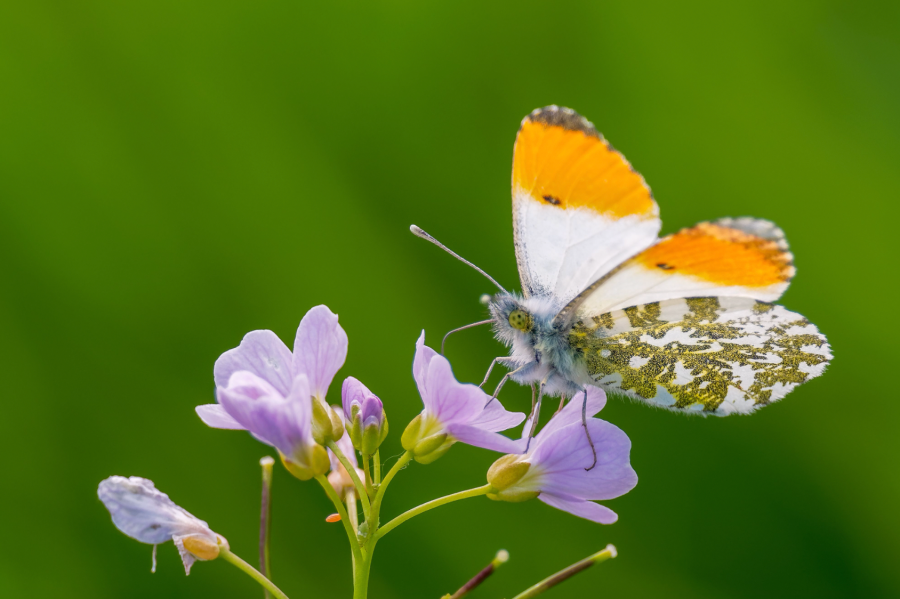
Main image: As above, not so below; a vivid male orange-tipped butterfly | Credit: Cliff Day / Shutterstock
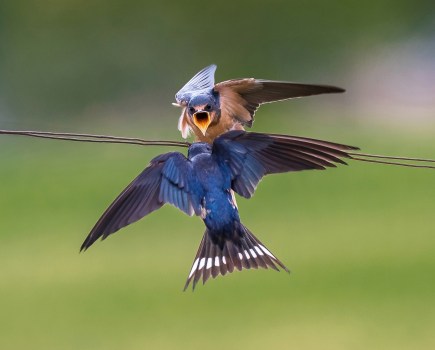
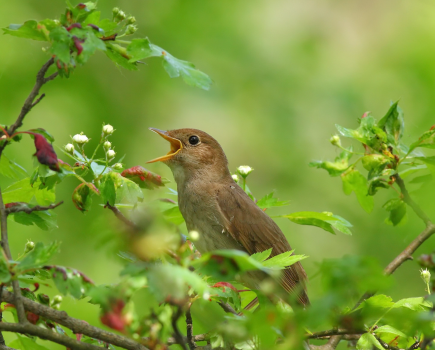
We’ve made it to April. Even if there’s a cold snap, even if the mud situation is maximum squelch, even if wind and rain scupper weekend plans, it is absolutely spring – and time outdoors will unfurl endless new beginnings. Familiar scents and sounds will warm you regardless of the temperature. The days are now longer than the nights, so despite being wrapped up and wary we have the sun on our side. By now the birds are really going for it: blackbird has been singing with robin for months; dunnock and great tit are at it daily too; and soon enough our summer migrants will be arriving to add their vocal flourishes to the mix.
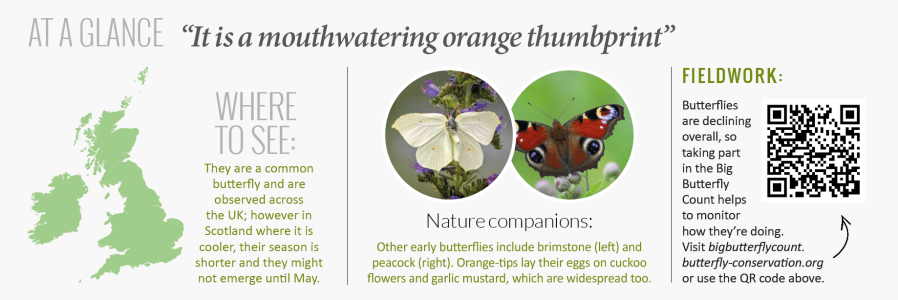
It will be warm enough for butterflies to take to the wing this month. Butterflies rely mostly on external heat to get them moving, hence their dormancy in winter. Orange-tip butterflies spend the coldest months in the chrysalis stage, exquisitely camouflaged as a thorn on a twig. They look as though the pupae is stuck in cobra pose with half the chrysalis pushed upwards. It is one of many tactics butterflies use to make it through the winter; some wait it out as eggs, others as adults, and some species migrate to warmer climates. It is a reminder that thousands of insects are waiting dormant on vegetation that is better left rather than ‘tidied’ away and composted. Orange-tips are one of the earliest butterflies to emerge, and if the conditions are right they will take flight in April and add to the pulsating beat of new life around us. As their name suggests, the tips of their white wings are orange for the male of the species, the females being all white.
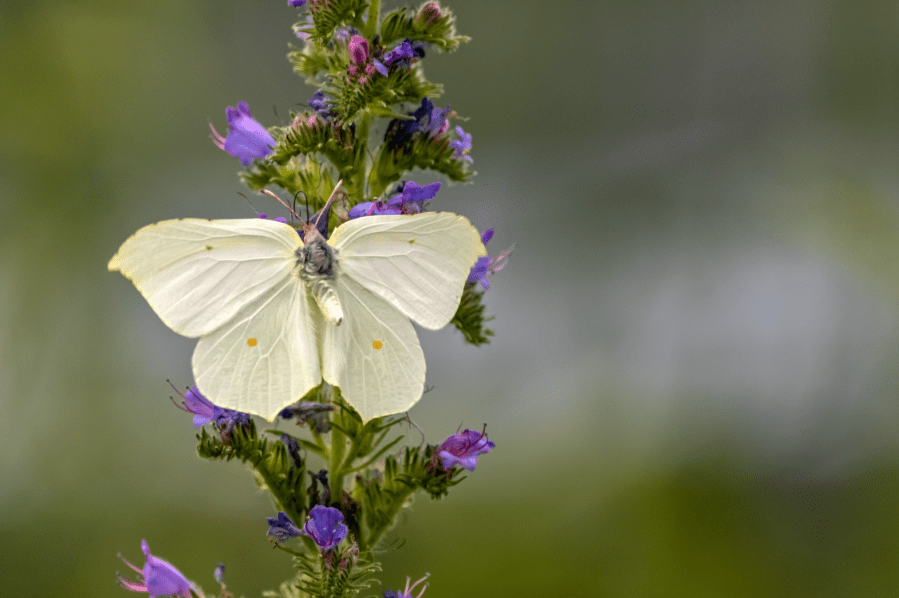
Experiences in nature have the ability to delve deep into your brain and wrench out very old memories. I am transported to the Midlands as a primary school child when I see conkers. In a heartbeat I skip over to South Shields when I hear kittiwakes, and with that in mind I can almost feel my fingers sticking from melted ice cream. Orange-tips tease out a distant memory of visiting Pakistan as children. We would almost constantly rehydrate from the Karachi heat with a bright orange powdered drink called Tang. When I look at orange-tip butterflies I imagine someone has just whipped up a cold glass of Tang, and with powder residue on their fingers they have carelessly smudged the tip of their wings. It is a mouthwatering orange thumbprint, and I can’t not taste Tang when I see them. The underside of their wing is a mottled green lichen, which you’ll see when they are resting.
If you meet an orange-tip this month, make a note to follow its story throughout summer. After emerging, feeding and mating the females will lay their eggs. Butterflies taste through their feet, so landing on flowers is how they discern a nutritious plant worthy of hosting the next generation. The eggs are a miniature grain of ribbed orange rice, and if you carefully look at the stems of the cuckoo flower or garlic mustard, you will see a single shining tangerine egg.