
In the hills you’re exposed to all the elements. The beauty of these places is bound to the way light casts shadows from contours; the shape of the land as exposed as we are. We either don’t know or have forgotten that without deer and sheep, trees would soften the edges and mosaic the monoculture with texture and colour, a buffer to the elements. Our uplands are beautiful, there is no doubt of that, but it is also true that they are lacking. The Meadow Pipit is a bird that epitomises this complicated duality the occurs when places are beautiful but scarred.
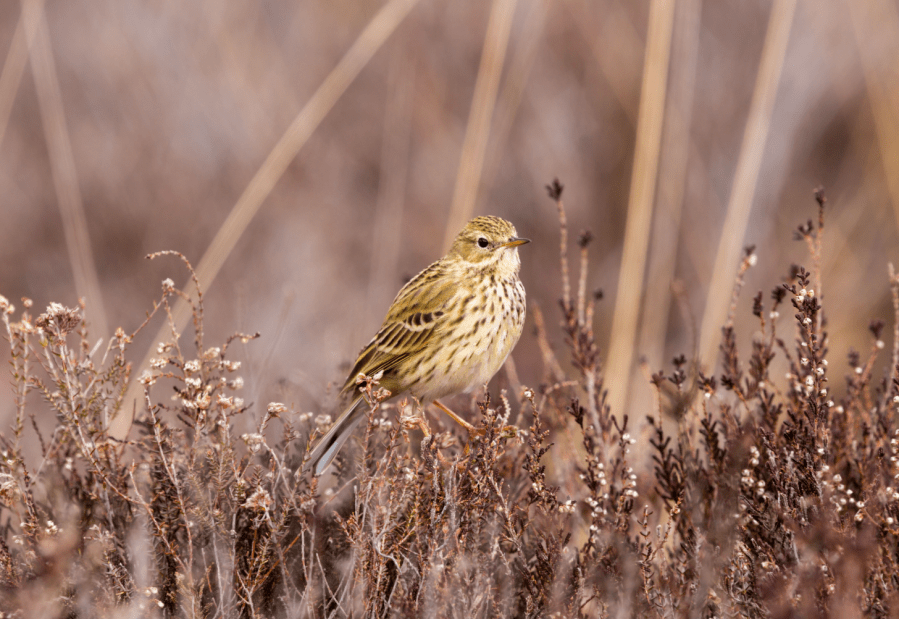
Main image: Alive, vibrant but mostly alone among the heather | Credit: Jordon Sharp / Shutterstock
The weight of learning about the poor ecological state of our most beautiful places weighs heavy like a rucksack on an incline. The Meadow Pipit can teach us a lot about resilience and finding joy in despair, which is something that has been increasingly important to practice. It’s often why we venture outdoors in the first place.
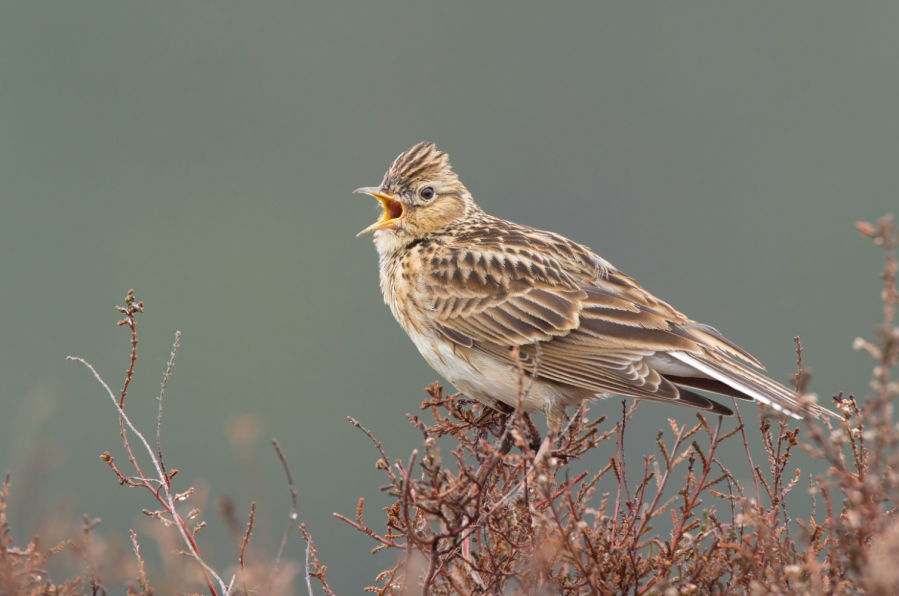
They are small brown birds. In fact, there’s a whole group of birds which are shrugged off as simply ‘small brown birds’. This size and colour demographic deems them not noteworthy. Forgettable. But they are resilient little creatures and they deserve this moment to shine and to be noticed by walkers in our hills and remote places. They have a beautiful, speckled chest and an alert and energetic posture.
You’ll notice them as they shoot up into the air, calling ‘peep peep peep’ as they bounce off in the opposite direction before crashing back down into the scrub or long grass. As their name suggests, they stick close to the ground. Meadows, long grass and scrub are where they make their nest and feed on insects.
They are also the main bird that Cuckoos parisitise. This means that the Cuckoo will lay one egg in a Meadow Pipit nest and when it has hatched it will push the other eggs out, leaving one big Cuckoo mouth to feed and two very obliging parents of a different species. When you notice them, you won’t stop noticing them.
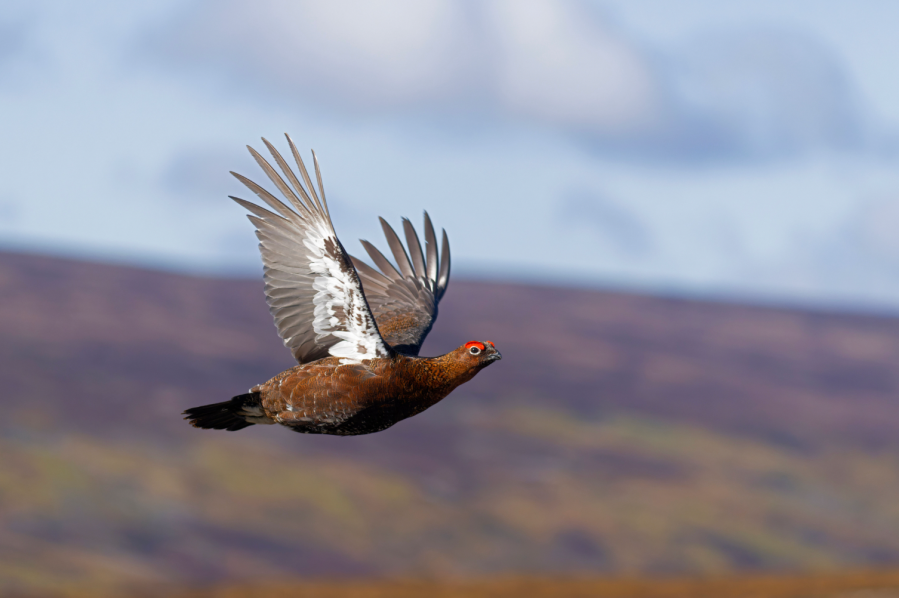
In our uplands and hills, they are very common. In fact, it can often feel like they are the only bird; a monoculture of Meadow Pipits in a monoculture of purple-moor grass or tangles of heather. I feel that they are frustrated, blustering up into the breeze whenever we get close and being noisy about it. Nature often invites us to recognise our own feelings. I feel they are frustrated because I am frustrated.
Their aloneness highlights what has been lost, and I have often caught myself thinking ‘oh, it’s just another Meadow Pipit’. This isn’t the correct reaction, they are so very alive and vibrant and so very there. They dance in the wind and their song in spring lifts me in the same way being out on a windy day can induce a fit of giggles.
Our gift to the hills as we head into autumn is to notice Meadow Pipits, recognise their presence and not to shrug them off.
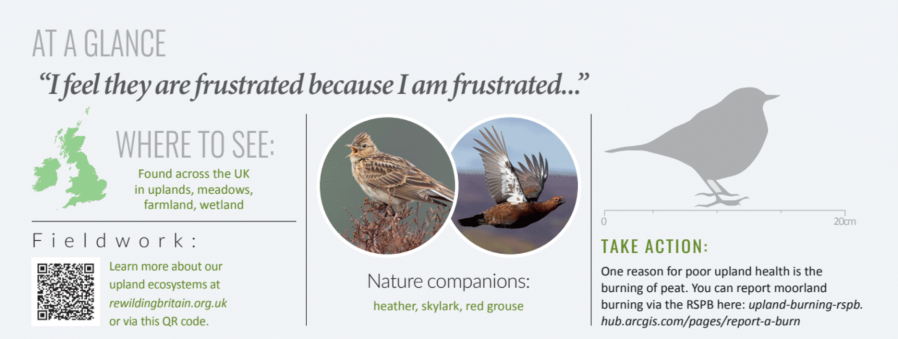
Learn more about upland ecosystems at www.rewildingbritain.org.uk.