
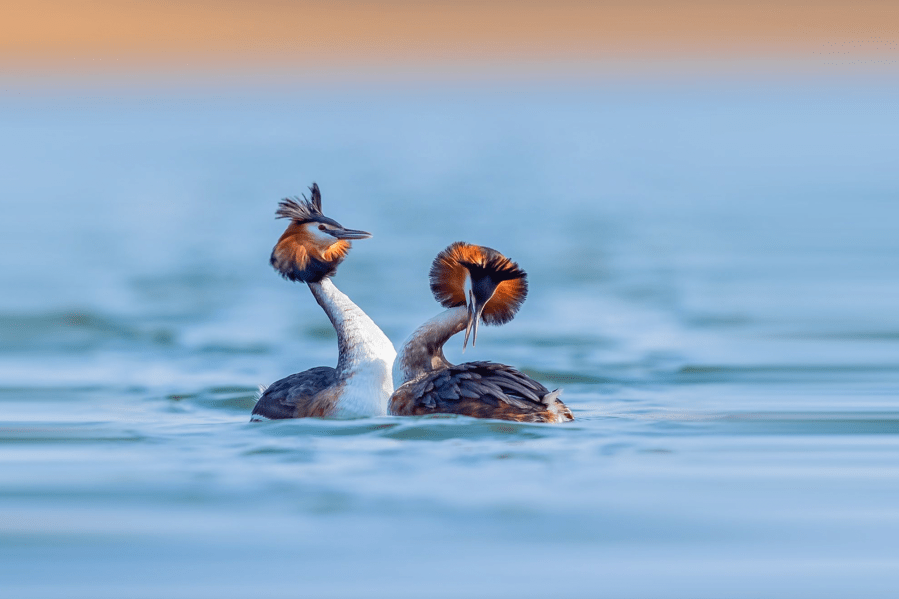
Main image: The courting ritual of great crested grebes… | Credit: Wang LiQiang / Shutterstock
People sometimes ask me what my favourite bird is – or, why birds? It’s a funny question because I don’t understand where it comes from. Such is my fascination for them, my awe of them, my curiosity and reverence, that I don’t know where to begin answering. With each bird that comes to mind, there is an unfurling of a whole world of stories; of the bird itself and the relationship I have to it. As with so many experiences outdoors, it becomes part of who we are. Profound, maybe. However, I usually sputter out something along the lines of: “They’re just great”.
If I had to pin one down, the great crested grebe is right at the top of the list of birds that make you instantaneously recognise the magic of nature. I think I must have a special affinity with these birds as they were on the cover of the RSPB bird guide for many years when I first started working for the charity, yet I’d seen them long before this. To my shame I sometimes don’t remember the first time I saw a particular species.
But I do remember the first time I saw the great crested grebe dance.
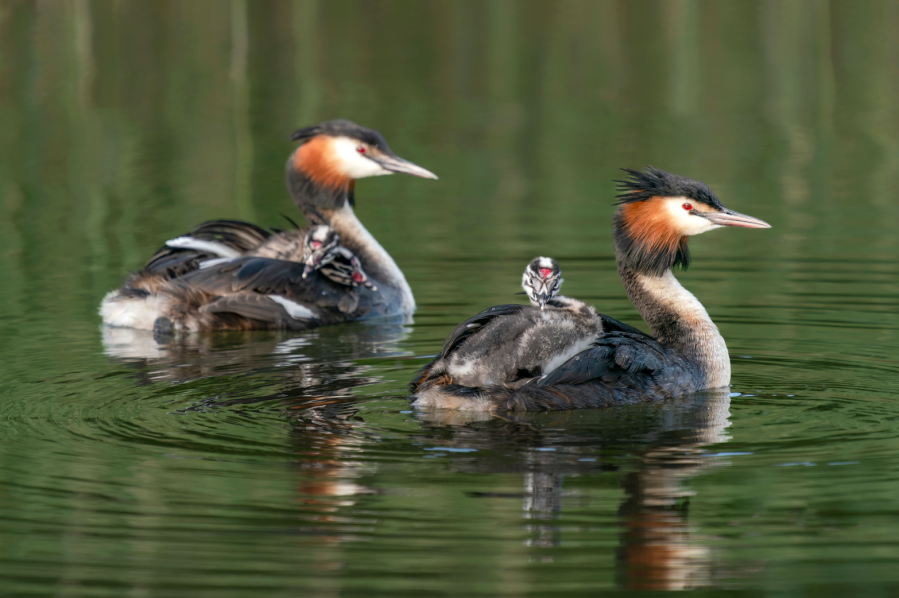
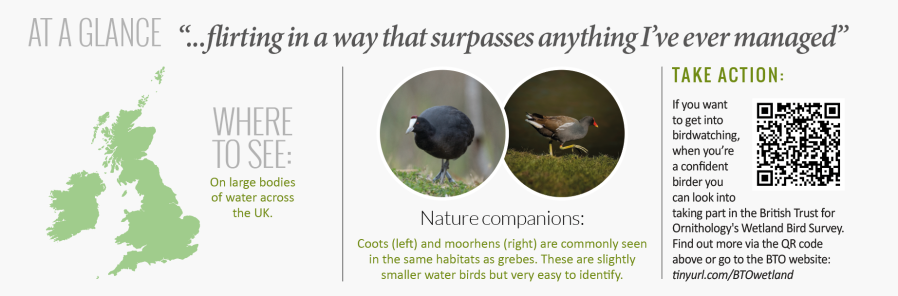
Grebes are water birds. They feed on the water, diving down to catch fish and invertebrates. They build floating nests of vegetation that are so perfectly constructed, keeping the eggs dry and safe and somehow not getting swept away. Their bodies are long and they sit low in the water, slipping below the surface on a feeding mission from time to time before popping up again, almost never where you expect it. (This is a game I like to play.) You’ll find them on large bodies of water – meres, lakes and reservoirs – and they are well worth seeking out in February and March. The most distinguishing feature is their feathered crest; flame-orange feathers with black tips encircle their head, so vibrant it’s almost silly. Birds really are just showing off, whether it’s feather, song or, in this case, dancing. And it’s preposterous and brilliant because we’re offered a free show wherever we find ourselves, if we pay attention.
Grebes pair up in the winter and when the timing is right, when the world has turned and tilted, and the days lengthen and warm, something ancient is triggered into being. A pair of grebes will know somehow that they need to dance together to secure breeding success. A great big stretching history of the dances of their past relatives explodes into an impulsion to move and is realised in this dance.
They rise up together out of the water, their white plumage no longer submerged, facing each other, swinging their heads and moving their bodies in exquisite unison. A mirror of each other and ancient time. They’re flirting in a way that surpasses anything I’ve ever managed. Take note. Gifts of weeds are carried in their beaks and hang like mossy ribbons, and I’m reminded of morris dancing. This March, the water is the stage and you are the audience.