
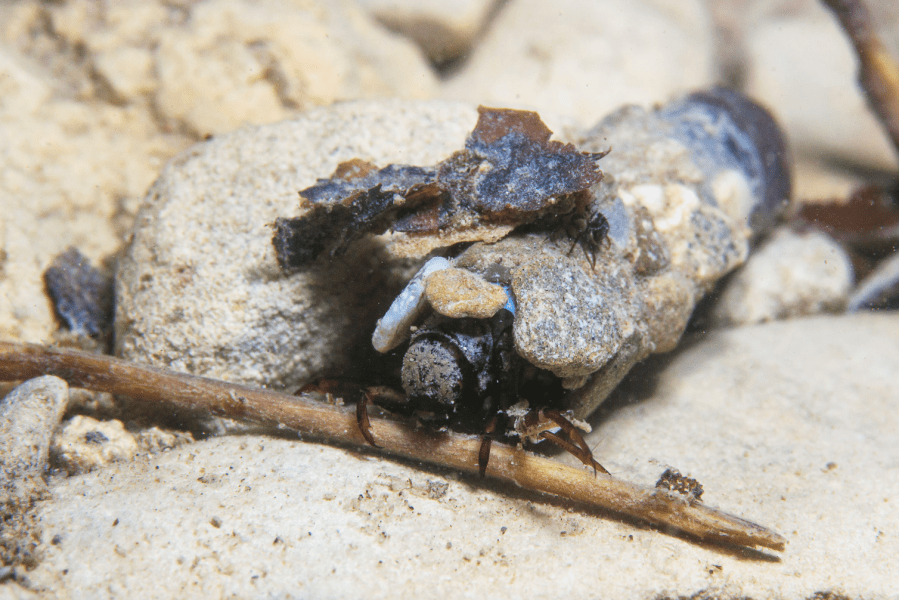
Main image: Caddisfly larvae in it’s stone sleeping bag | Credit: Rostislav Stefanek / Shutterstock
My focus this month has been to connect with the small animals that live in our rivers. Recent headlines have ignited outrage as we learn that rivers have become sewage outlets and many are now a conveyor belt of plastics and forever chemicals. Getting to know what lives in rivers is not only fun and interesting, but also a good way to check on the health of a river.
Just as a landscape without birdsong should be a red flag, a river without invertebrates is a sign of poor health. As the weather warms up, your whole family is invited to become river guardians and get your feet wet. The presence of Caddisfly larvae is a good indicator that a river is healthy.
There are around 200 species – a small flying insect related to butterflies and moths. But it is their life before they take to the air that I am enchanted by. Think of Caddisfly larvae like the caterpillar stage of butterflies. Depending on the species, they can live like this for years before they pupate and transform into adults.
Here’s what makes them special: To protect themselves from being nibbled, caddisfly larvae secrete silk from a glad on their lower lip to bind together vegetation or tiny bits of grit and sand. This forms a sort of protective sleeping bag that they tuck themselves into.
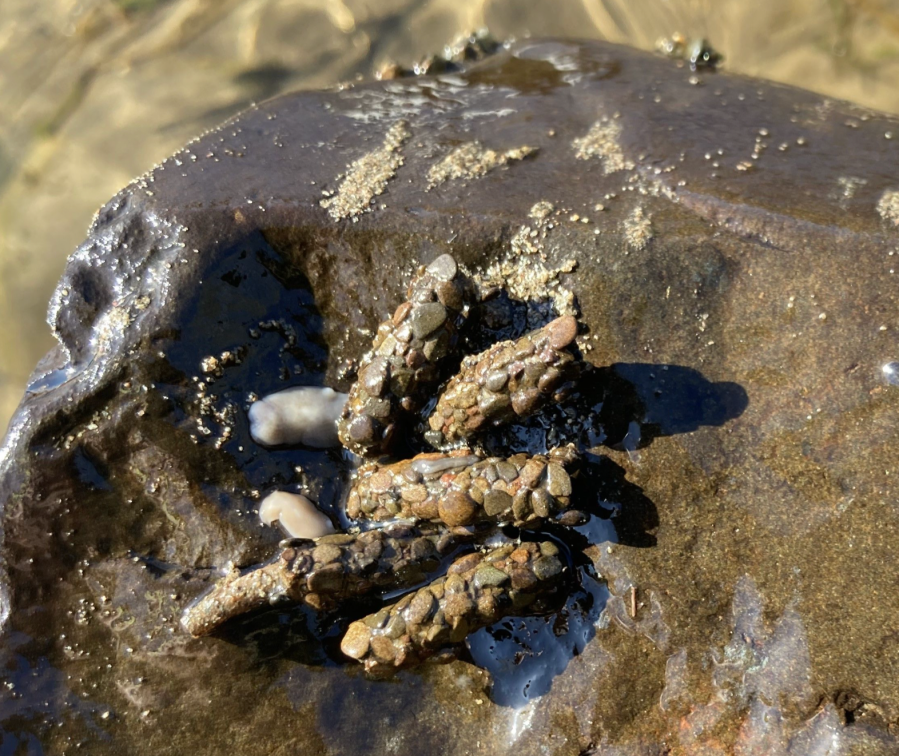
They are able to pop their heads and legs out to move around, and eat algae and other vegetation in the river. It’s a marvel of engineering. When it’s time to pupate, it will attach its pebbly sleeping bag to the underside of a rock, seal the holes at either end and let the metamorphosis begin.
This is how we’re going to find them. Take your shoes off (enjoy the cold squeals) and wade into a shallow section. We’re looking for areas with large pebbly beds, stones about the size of your outstretched hand – big enough to remain still in moving water but small enough for you to flip over, and crucially, the perfect sheltering spot for what we’re looking for. Very slowly turn the large pebbles and see what is underneath.

If you spot a caddisfly case, it might be empty as the pupae has already emerged, or it might still be in there – so be careful not to disturb it. You’re also likely to meet mayfly nymphs wriggling around or aquatic snail species.
Along with other insects, the emergence of caddisflies often happens at the same time. Tens of thousands breaking through the water’s surface on a sunny evening creates a riverine snow globe as their wings twinkle together in the low light.
When we begin to unravel the stories of invertebrate lives, our adventures outdoors are elevated beyond any peak.
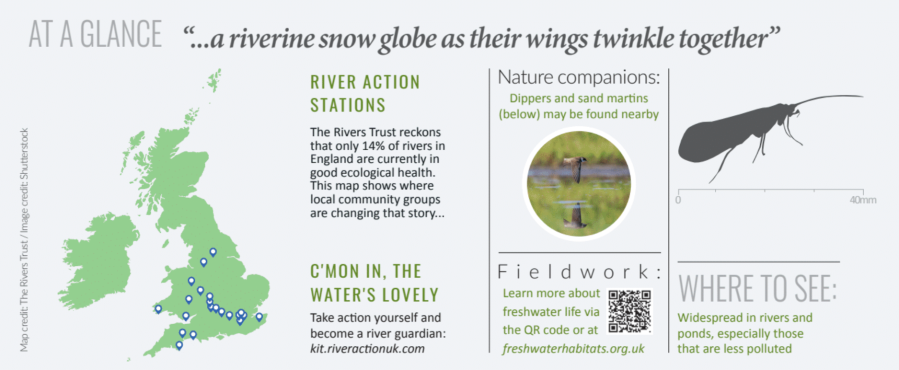
Find out more about freshwater life at freshwaterhabitats.org.uk and take river action at riveractionuk.com.