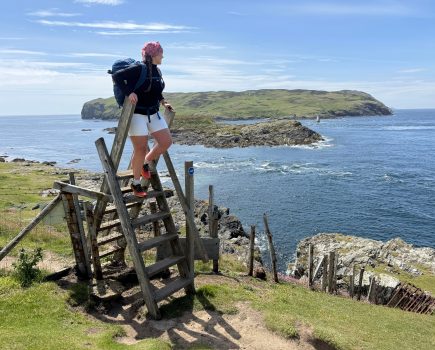

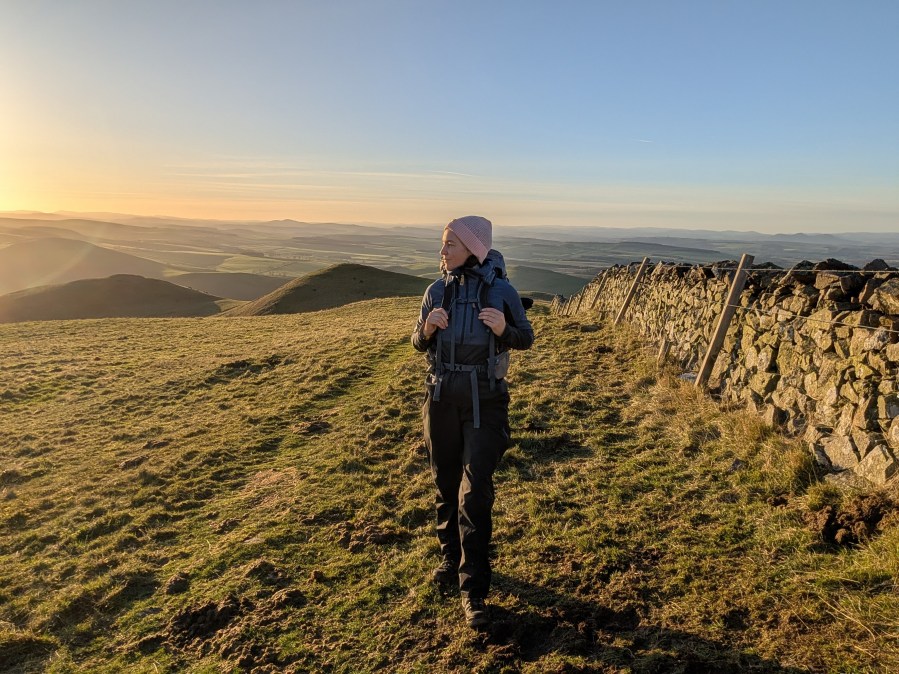
Main image: Julia Clarke hiking up Wideopen Hill, the highest point on the St. Cuthbert’s Way | Credit: Julia Clarke
Whether you’re a nature lover looking for a hassle-free long distance hike, a spiritual seeker on a divine quest, or a history buff, this memorable trail is sure to delight you. With a gentle feel that lends itself more to wandering with wonder than relentless marching, this scenic route follows St. Cuthbert’s religious journey from Melrose in the Scottish borders to Lindisfarne, also known as Holy Island, off the Northumberland coast, and delivers what is best described as quiet adventure.
The trail showcases quintessential British countryside, from lush native woodland to the North Sea, taking in the lovely Cheviot Hills and expansive moorlands of remote Northumberland in the country’s most tranquil national park. Culminating in one of the most distinctive grand finales of any long distance walk, the only way to reach the end point is by crossing the North Sea via a causeway at low tide, taking a path trodden by many pilgrims before you. If the tide isn’t as low as expected, you may find yourself praying in thigh deep icy waters, much like St. Cuthbert himself was occasionally known to do.
Here’s The Great Outdoors‘ guide to the St. Cuthbert’s Way, featuring helpful tips on the following:
- Route details
- When to go
- Myths and legends
- Transport
- Accommodation
- Resupply
- Essential gear
- Further resources
St. Cuthbert’s Way: at a glance
Start: Melrose Abbey, Melrose (NT54734)| Finish: Lindisfarne Priory, Lindisfarne (NU 12618 41732) | Distance: 62.5 miles / 100km | Ascent: approximately 7,300ft / 2,225m | Duration: 5 days | Maps: OL16 The Cheviot Hills, Jedburgh & Wooler, OS Explorer 340 – Holy Island OS Landranger 73, 74, 75
The route
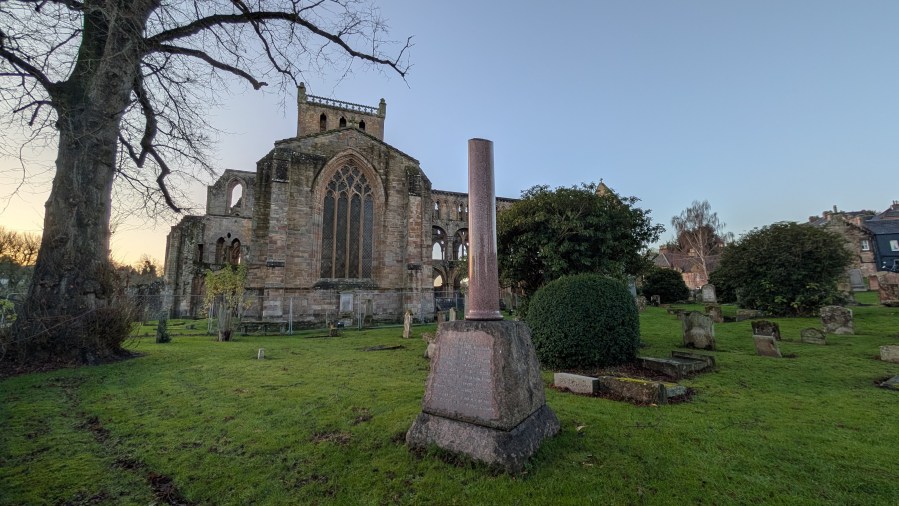
There’s really no other way to describe the experience of walking the St. Cuthbert’s Way than to call it a pilgrimage – whether you choose to kneel at human-built altars or those made by nature is up to you. If it’s religious relics you’re after, the beautiful Abbey at Melrose and the atmospheric Lindisfarne Priory are stunning examples of medieval architecture, and the trail is dotted with churches and shrines where you can pay your respects or simply take a load off.
I personally find divine inspiration in nature and the landscape was enough to bring me to my knees at times. You won’t find soaring summits here – the highest point is the aptly named Wideopen Hill at just 1,300ft (400m) – but the rolling terrain through forests and farmland, over the lovely Cheviot Hills and across sweeping moorland is built for soulful sauntering.
Your direction is never in doubt, thanks to frequent trail markers bearing a distinctive white Celtic cross, and while I’d never encourage you to ditch your map, mine remained mostly inside my backpack. You can place your feet with confidence on the clear path, keep your head up and your senses on your surroundings, enjoying a true sense of immersion in place.
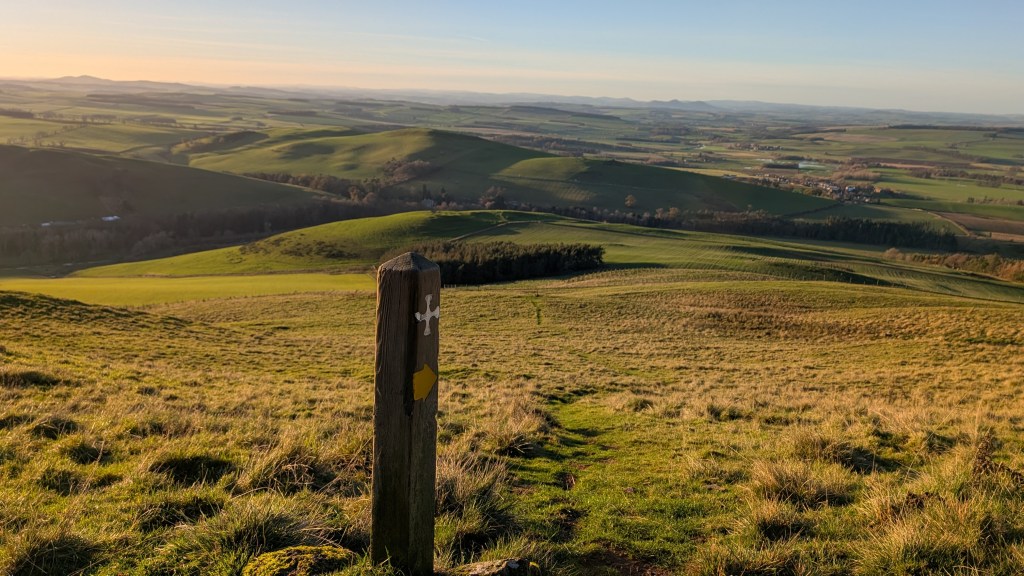
St Cuthbert’s Way waymarker and a path leading downhill in the Northern Cheviots looking back towards the village Morebattle. Credit: Julia Clarke
Pilgrimage has always played a role in supporting local economies as well as prayer, and there are frequent opportunities to visit picturesque communities where you can revive your spirits and chat with locals. There’s no doubt that the briny baptism that concludes your journey is the unique selling point of this trail. The glittering North Sea first comes into view when you climb onto the rocky ridge of the Kyloe Hills, but reaching the tidal island requires careful planning and patience.
Distinct from the road causeway, which you can take if you don’t mind a less romantic route, the 2.5-mile Pilgrim’s Way is marked by a series of posts that guide you across mud flats, tidal sand and saline water shallow enough to cross for a few hours each day. Depending on the conditions, you may find yourself in the exhilarating position of wading through thigh-deep water, and if so my advice is to take the pilgrim’s approach and shed your shoes – a sense of adventure goes a long way here.
Between the frigid waters and the wind whipping off the sea, you’ll arrive at Lindisfarne feeling cleansed in more ways than one, and glad to receive the sacrament of hot coffee and cake at Pilgrim’s Coffeehouse and Roastery.
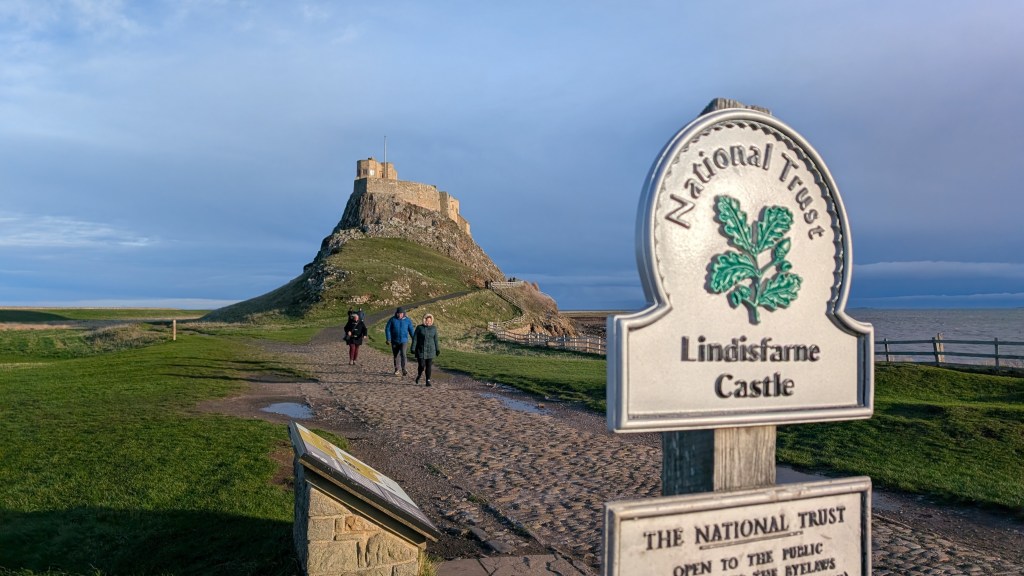
A sign for Lindisfarne Castle. Credit: Julia Clarke
When to walk the St Cuthbert’s Way
Lower elevation makes this trail highly accessible for most of the year and you’re guaranteed to enjoy a lot of solace in this secluded corner of the country. In late November, I was the only thru-hiker and I spent more time communing with grouse, roe deer, red squirrels and wild goats than I did with other walkers. Autumn turns the landscape golden, but daylight is in short supply so be ready to set off at first light.
In the spring, the landscape is awash with wildflowers and during the summer months you’ll enjoy the longest days but may encounter more difficulties finding lodging.
More important than the season is the timing of your causeway crossing – familiarise yourself with the safe crossing times for the date you plan to go, and check your calculations are correct with a local.
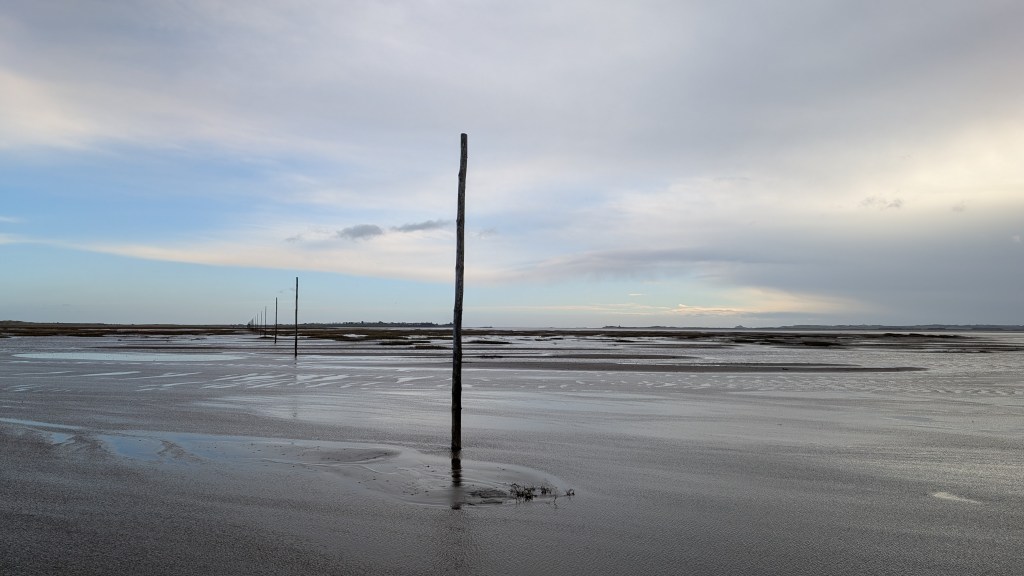
The posts that mark the Pilgrim’s Way across the causeway to Lindisfarne. Credit: Julia Clarke
History & legends
The main character here is St. Cuthbert, a popular 7th century monk who was instrumental in restoring Christianity to Northumbria. The route mirrors the journey he took from his post as prior at Melrose to bishop at Lindisfarne and passes a massive sandstone cave where it’s believed monks hid with his body as they fled Viking raids on Lindisfarne.
St. Cuthbert was known for his immovable spirituality, but he is also considered an early nature conservationist who understood the connection between individual health and the balance of nature. He worked to protect seabirds on the Farne Islands, and today you’ll find a prolific avian population here, with frequent sightings of Grey Herons, Curlews, Oystercatchers, Grey Plovers and Eider Ducks.
Straddling the once-volatile border, there’s plenty to delight history buffs, too, from ancient Roman roads, legendary battlefields and crumbling castles that all reveal details of our bloody past.
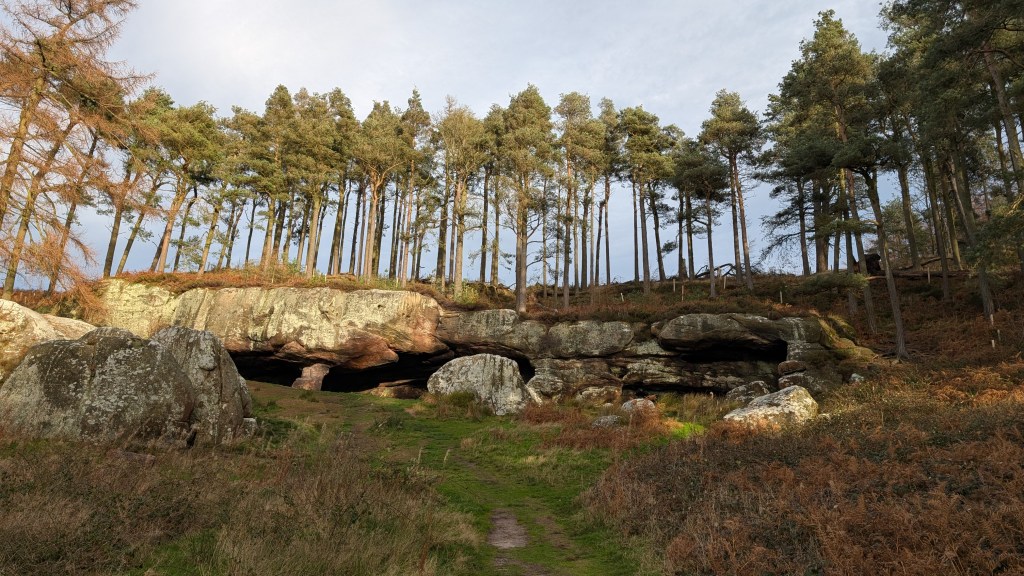
St Cuthberts Cave, a sandstone cave where monks are thought to have hidden with St Cuthbert’s body when they were feeling from the viking raids on Lindisfarne. Credit: Julia Clarke
Transport
Despite the remote terrain, public transport is painless. Tweedbank train station is 45 minutes from Edinburgh, and from there it’s a short bus ride or a 30-minute walk to Melrose. If you’re coming from the south, take a train from Newcastle to Berwick-Upon-Tweed then a bus to Melrose.
At the other end, you can find an occasional bus from Lindisfarne to Berwick train station, but the most convenient option is to arrange a taxi in advance. I recommend the knowledgeable locals at Woody’s Taxis (01289 547009), but there’s also 1st Cab (01289 545 007) and Premier Taxi (01289 330 680). Another option for the more intrepid is to continue walking, back across the causeway then northwards for another 12 miles along the Northumberland Coastal Path to Berwick-Upon-Tweed.
The 68 bus between Galashiels and Jedburgh serves the first portion of the route, while the 67 between Galashiels and Berwick-Upon-Tweed provides flexibility for some of the remainder. You’ll have to divert from the official trail to spend your first night in Jedburgh, but that’s fairly easy to manage with buses and taxis if you don’t want extra mileage.
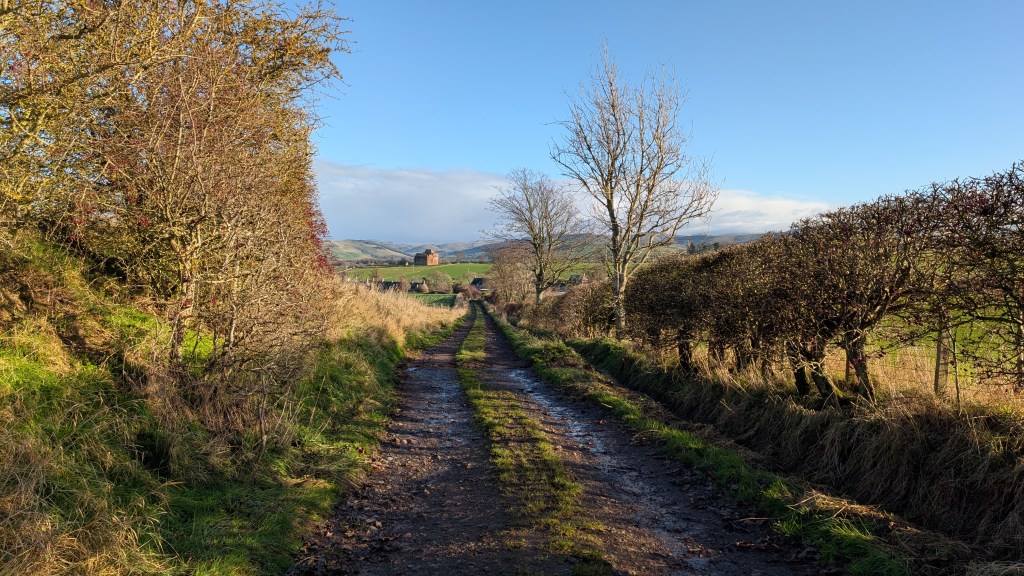
Farm track leading downhill with Cessford Castle visible in the distance. Credit: Julia Clarke
Accommodation
Hamlets and villages come at regular intervals and you’ll find a variety of hotels, inns and hostels to suit your budget – it’s so easy that I planned my walk just four days in advance.
I enjoyed comfortable lodgings at the George and Abbotsford Hotel in Melrose, the Royal Jedburgh, and the Lindisfarne Inn but the real standouts were the 275-year-old Border Hotel in Kirk Yetholm, with its crackling fire and slightly raucous pub, while the family-run Wooler Youth Hostel built during World War II for the Women’s Land Army is warm and accommodating.
Campers beware that you’ll be crossing the border and will have to adhere to two different countryside codes. In Scotland, you can wild camp responsibly in accordance with The Scottish Outdoor Access Code. In England you’ll need to use designated campsites such as Highburn House Caravan Park in Wooler and The Barn at Beal campsite or Hetton Hall caravan and campsite. Camping is prohibited on Lindisfarne.
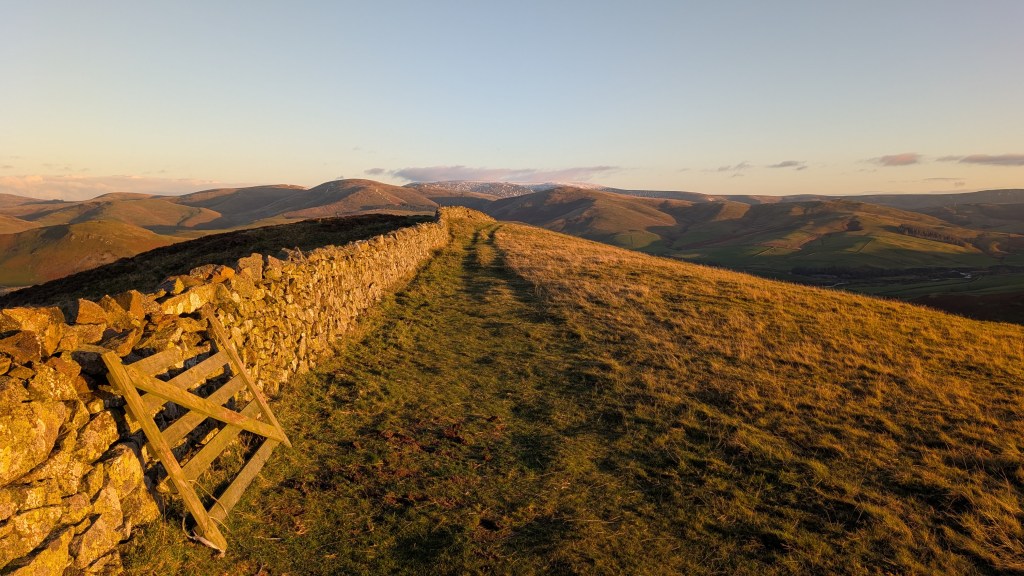
View of the Cheviot Hills from the summit of Wideopen Hill at sunset. Credit: Julia Clarke
Resupply
Though there are long spells where you’re outside the reach of civilisation, nights are spent in or near villages where hotels and pubs will prepare you a packed lunch, and the small shops are well-stocked with snacks and dehydrated meals. The friendly community shop in Morebattle has a coffee machine so you can summon strength for the hills ahead with a hot chocolate.
Essential gear
The environment isn’t overly harsh and the relatively short distance means the usual hiking essentials will suffice including waterproof boots that you’ve broken in properly. A waterproof jacket and trousers are a must, even if you only use them to protect you from the sea breeze.
If you’re hoping to keep your shoes on for the causeway, bring gaiters and consider wearing zip-off walking trousers in case the water is deeper than you anticipate. I was glad for my micro towel to dry off my feet and dry socks when I reached Lindisfarne.
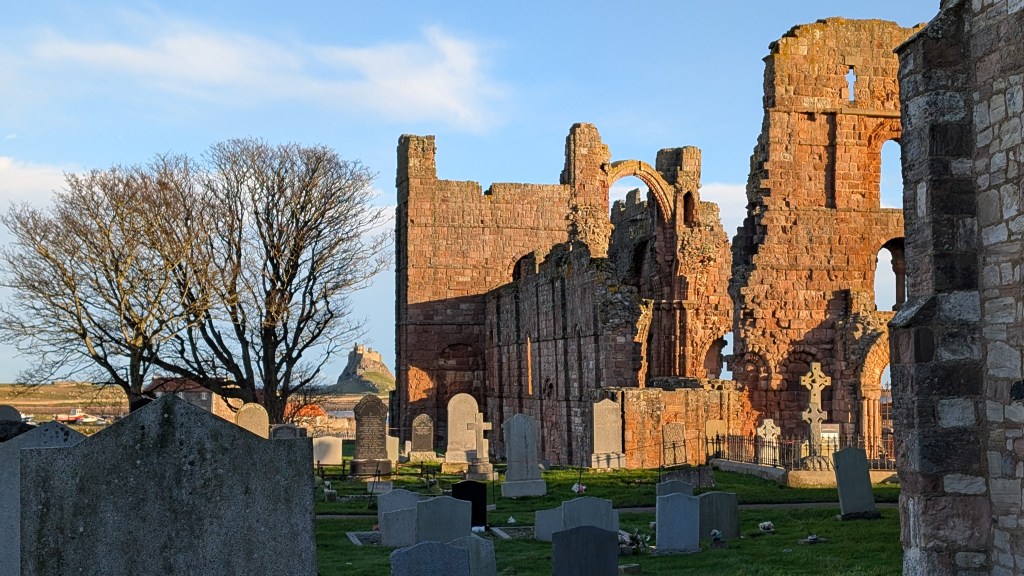
Lindisfarne Priory at sunset. Credit: Julia Clarke
Further resources
You’ll find resources and information at stcuthbertsway.info where you can also request your certificate of completion and order the St. Cuthbert’s Way Official Guide written by Ron Shaw (£16.99) which includes OS maps. You can also find useful practical information compiled by locals at holy-island.uk.
Discover more long distance trails as mapped by our expert contributors.