
There’s no shortage of evidence to demonstrate the benefits of walking for mental health. A large-scale 2024 review published in the British Medical Journal found that physical activity can be up to 1.5 times more effective than counselling or standard medications for treating certain types of mental health issues. And exercising outdoors has an even more positive impact. “Studies show it can be as effective as antidepressants for mild to moderate depression and anxiety, thanks to the sensory stimulation and stress relief nature provides,” says Hayley Jarvis, Head of Physical Activity at the mental health charity Mind.
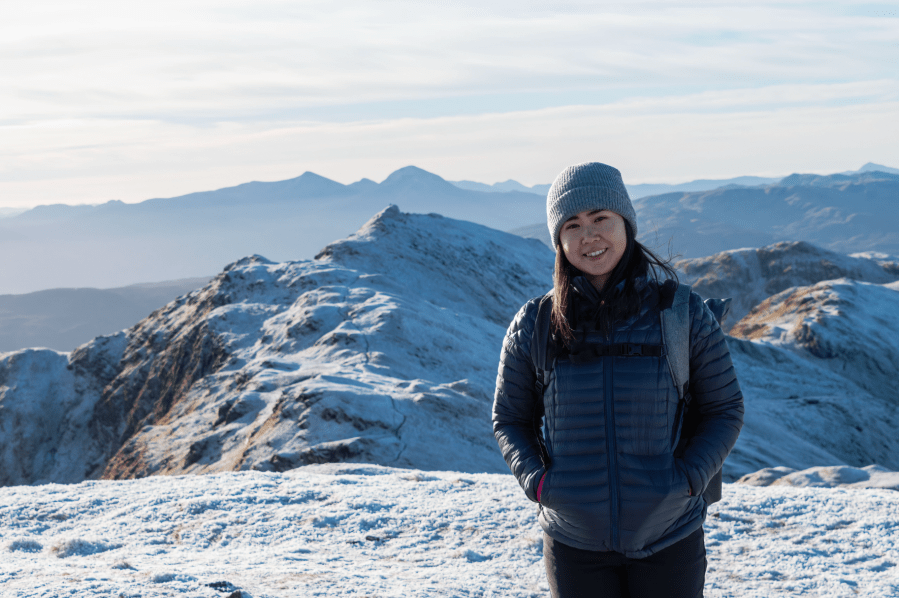
Main image: Smiles abound on the Tarmachan Ridge | Credit: Alex Cooper Photography / Shuttterstock
There’s so much evidence to back up this link that doctors are increasingly prescribing outdoors time to their patients. Post-Covid, the UK government even dedicated £4 million to funding ‘green prescriptions’ in areas particularly hard hit by the pandemic. The result? Major reductions in anxiety and depression symptoms coupled with equally significant improvements across a range of wellbeing measures.
Starting small
If you’re a hillwalker, of course, then you probably know all about the feel-good impact of nature already. But if you’re a hillwalker who’s also suffering from a mental health condition, you might be finding it difficult to act on that knowledge.
“When you’re struggling, it makes it so hard to do the things that we need to do to help ourselves,” says Alex Staniforth, mental health campaigner, adventurer and founder of the charity Mind Over Mountains (mindovermountains.org.uk). He remembers dealing with a particularly debilitating bout of depression not long after returning from an attempt on Everest. “Sometimes getting out and running 5k was like climbing Everest. It would take me all day just to find the energy to get out.”
If this sounds familiar, it’s important to remember that even small steps can bring positive benefits. “It might be that you need to lower the bar,” Alex advises. “If you’re telling yourself that you should run 10k or do a half-day walk and that feels overwhelming, just celebrate the small wins. That might be as simple as 10 minutes standing in the garden.”
Hayley agrees. “Be kind to yourself,” she says. “If going outside feels overwhelming, try opening a window, sitting by natural light, or bringing nature indoors with plants. When you’re ready, aim for short, achievable goals like a five-minute walk. You don’t need hours; even short bursts can help, and aiming for regular activity is key. Longer or more brisk walks can boost fitness and endorphins, but any movement counts – a gentle ramble can still support your mental wellbeing.”

A structured approach
Something that helped Alex manage depression was deciding on a routine and following it. “Having a goal means we’re much more likely to do something, even if we don’t feel like it,” he says. “We never regret going outside and doing something. But it’s really challenging at this time of year, so having those goals is even more important.”
Mental health and fitness coach Gareth Jones (trailrunadvisor.com / Instagram @mental_healthwanderer), who has fought his own battles with anxiety and drug addiction, also emphasises the benefits of clear goals. “Just having a plan can really help,” he says. “If you have a busy work week ahead but you know that on Saturday you’re going to the mountains, having that to look forward to can help you get through the week.”
Gareth adds that good planning and structure are crucial. “If you know you’re struggling with motivation, laying out all your kit – from your socks all the way up to the food you’re going to take – can be helpful,” he says. “Structure is key. A lot of the people I talk to who have poor mental health also have quite messy lifestyles. You might feel up for getting out when you get to the front door – but if you have to go and search for your trainers because they’re lost under the stairs somewhere, that can really affect your motivation.”
Group support
Social commitments can also act as motivation for people with depression and anxiety. “Accountability is important,” says Alex. “Having other people around us – whether that’s joining a club or committing to something with a friend – can really help.”
There are an increasing number of walking groups around the country that specifically cater for people who need mental health support. Mental Health Mates (mentalhealthmates.co.uk) specialises in volunteer-led peer support groups that encourage people to talk through their feelings with walking companions in similar situations. Blackdog Outdoors (blackdogoutdoors.co.uk) organises hillwalking and mountaineering events where people can connect with nature and with one another. Alex’s charity, Mind Over Mountains, offers time with wellbeing coaches and counsellors in a natural setting. Mind offers ecotherapy programmes and walking groups through local subsidiaries; and it’s partnering with the National Trust to create more opportunities for people to experience nature.
While social connections can help motivate and boost wellbeing, it’s important for anyone on a mental health journey not to compare themselves to others. “People are very quick to post their accomplishments on social media, but what you don’t see is the build-up,” says Gareth. “It doesn’t matter where people are now in their lives, they’ve had to work to get there. And you’ll get there too.”
Upping the challenge
There’s plenty of evidence that gentle rambles in nature can improve mental health; but some research also suggests that the challenges incipient in hillwalking and mountaineering can have their own benefits. Mission Himalaya, which explored the impact of sending UK military veterans on a supported high-altitude expedition, found that most participants reported a marked improvement to their wellbeing and mental health. “It’s ingrained in me now that if I put my mind to it, I can achieve anything that I want to,” said one.
Gareth, who has clocked up a series of ultra-running achievements since facing his mental health demons, believes challenges can help build resilience and self-belief. “I don’t do it for the medal or any materialistic thing,” he says. “I do it because I’m showing myself that I’m capable and I can believe in myself; and that opens up new possibilities in other areas of my life as well.”
While setting yourself goals and challenges can be helpful, it’s also important not to beat yourself up if you can’t achieve them. “Challenge is great, but recognise we all have good days and bad days,” says Cory Jones, founding member of First Aid Training Co-operative, which runs mental health first aid courses (firstaidtrainingcooperative.co.uk/mental-health). Listen to the inner you. If you can reach your first objective then stop and take a breath. Just by being outside your mind and body are benefiting from the great outdoors.
“Be flexible with your objectives for the day,” he adds. “It is easy to get fixed on reaching a peak or a certain time to achieve a route in. Sometimes the weather changes or your mood doesn’t allow you to do what you planned. Don’t worry about this, enjoy the day. That mountain will be there another day.”
Holistic approach
It’s important to bear in mind that time in nature isn’t a fail-safe cure for mental health problems. “Connecting with nature is one tool in your mental health toolkit,” explains Hayley. “It works best alongside other support like talking therapy or medication.”
Complimentary therapies can be helpful for some conditions as well. For SAD sufferers, for example, light therapy lamps used for at least an hour before 10am have been shown in multiple studies to improve mood.
Above all, though, don’t try to struggle on alone. The Samaritans run a free 24/7 helpline for anyone who requires immediate support (call 116 123), while Shout offers an alternative if you find talking difficult (text SHOUT to 85258).