
It was the summer of 1985, and Dave Sexton was pitched up on the shore of Mull’s Loch Ba watching conservation history unfold. His tent leaked, the weather was wet and the midges were particularly bad, but Dave wasn’t complaining. He’d waited years for this opportunity, pestering the RSPB head office in Sandy by post until they’d finally offered him a seasonal ‘species protection’ contract on Mull.
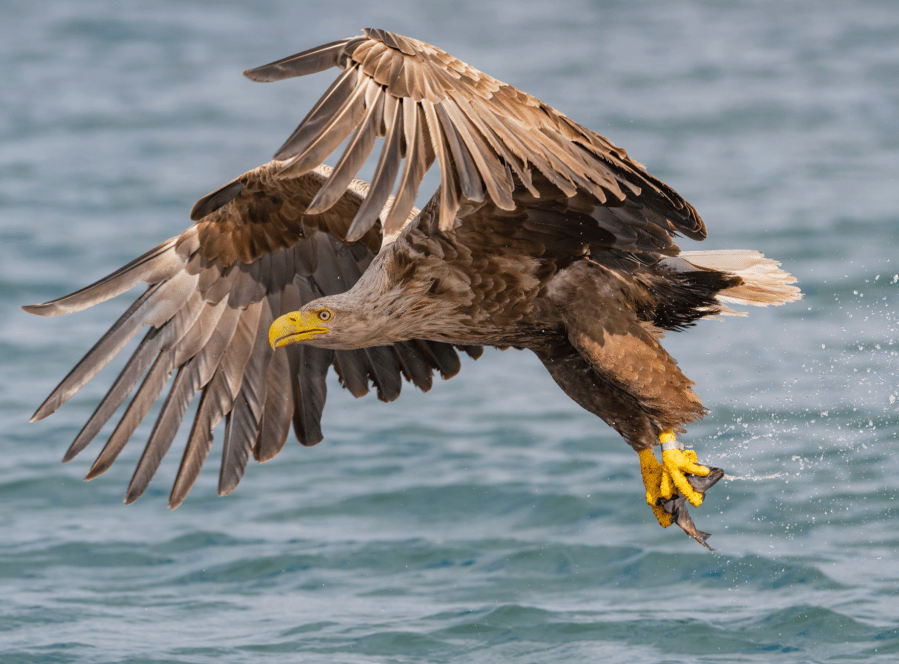
Main image: A white-tailed eagle in flight | Credit: Les Cater / RSPB
His job was to join a team conducting 24-hour surveillance at one of Britain’s most exciting nesting sites. A pair of white-tailed eagles – reintroduced to Scotland in 1975 – had built a nest on the island, and conservationists were hoping they’d produce the first chick to be born in Britain for nearly a century.
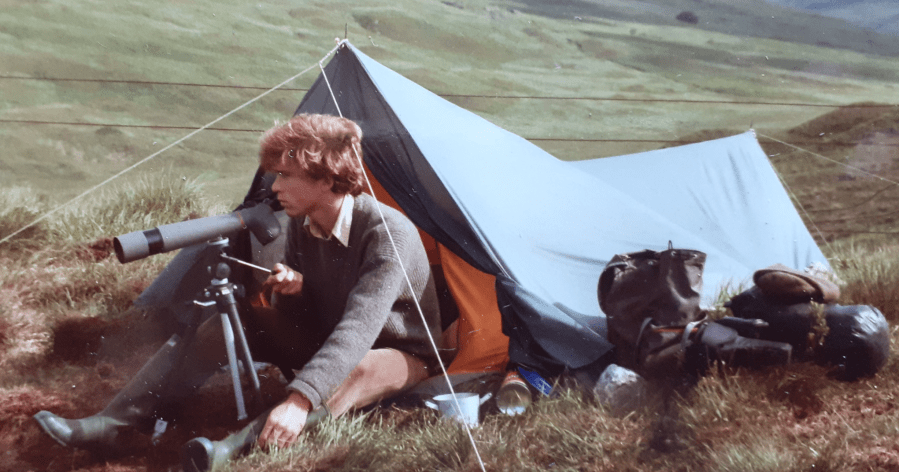
Dave had already spent one summer season surveying the eagles. “I was on duty round the clock with my colleagues protecting their first nest on Mull in 1984,” he says.
“It was unsuccessful because the male wasn’t mature enough – the eggs didn’t hatch. But in 1985, the pair had moved to a new nest, they were both mature… and the eggs hatched! The first chick in nearly 100 years fledged on Mull that year, and we were there witnessing it. That was a great moment.”
Watch the RSPB film Return: A Conservation Success Story 50 years in the making:
The birth of that unique, highly-anticipated chick was the first step towards restoring a keystone species to Britain’s skies. White-tailed eagles (also known as sea eagles) could once be seen across the whole of the UK; their broad diet and habitat versatility made them one of the commonest eagles in this part of Europe.
“But over time their habitat declined,” explains Dave, “and around the late 19th century persecution really took off. It was the Victorian era and game-shooting estates were being formed all around the Highlands. In those days – and even sadly today in places – predators weren’t tolerated. Goshawks, red kites, wild cats, and many other species were all being persecuted in an attempt to get rid of them. And with white-tailed eagles, at least, they succeeded – the last known bird was shot up in Shetland in 1918.”
In the following decades, a few unsuccessful reintroduction attempts were made. But it wasn’t until 1975 that a group of conservationists united for a more concerted effort, centred on the Isle of Rum and headed up by now-legendary ‘project grandfather’ John Love. Around 80 birds were released over a period of 10 years or so – and it was one of these that Dave spotted during a 1980 bird-watching trip to the Isle of Mull.
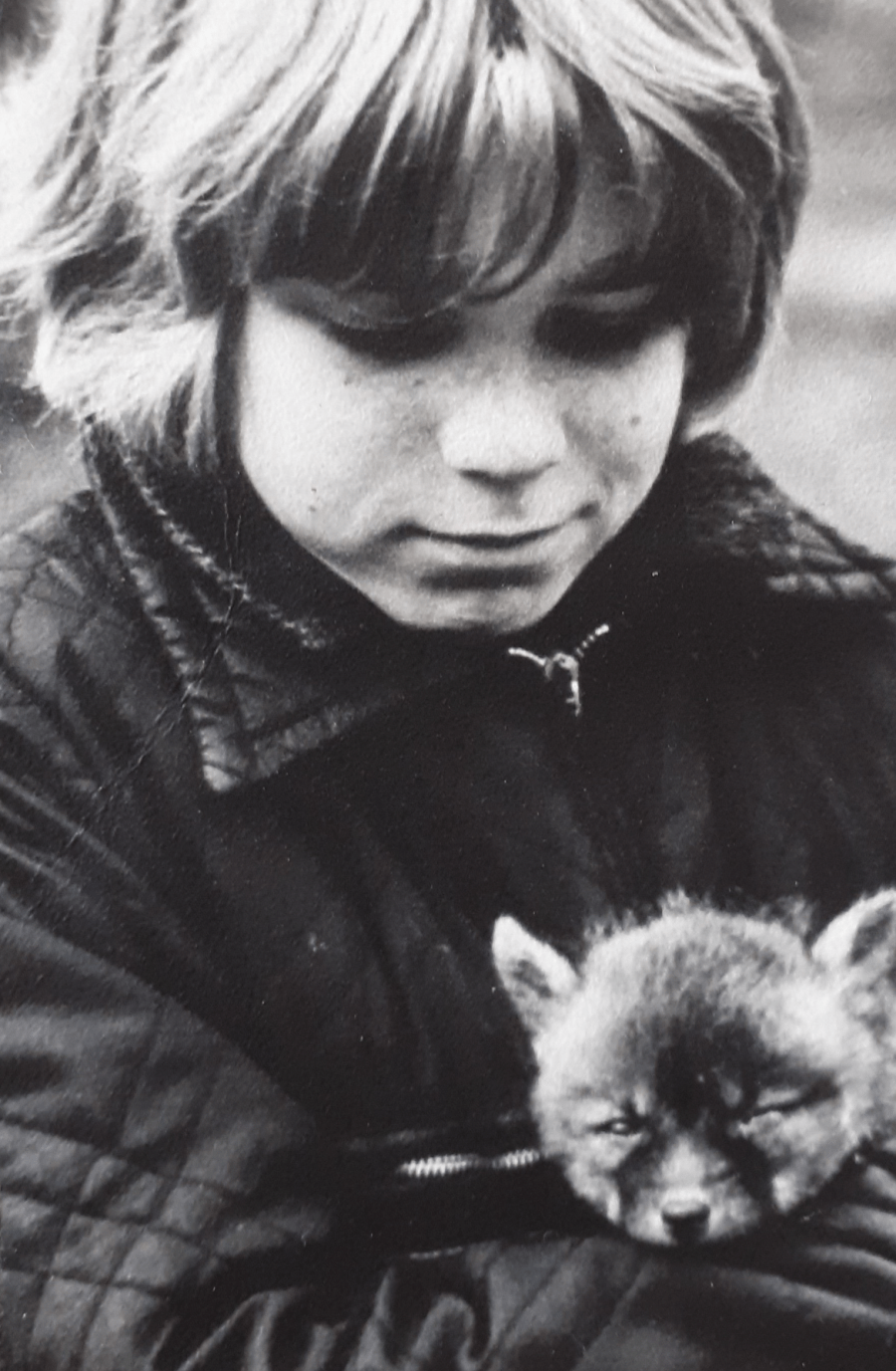
“I had first visited Mull on a school field trip back in 1978,” he says. “I’m from South London; I went to school in New Cross, and I’d never seen anything like the habitat in this amazing place. There were no white-tailed eagles in Mull during that visit… but when I came back in 1980 with a friend, I saw my first white-tailed eagle. It was such a defining moment for me to see this huge bird flapping across a sea loch being mobbed by hooded crows and then soaring up over the hills.”
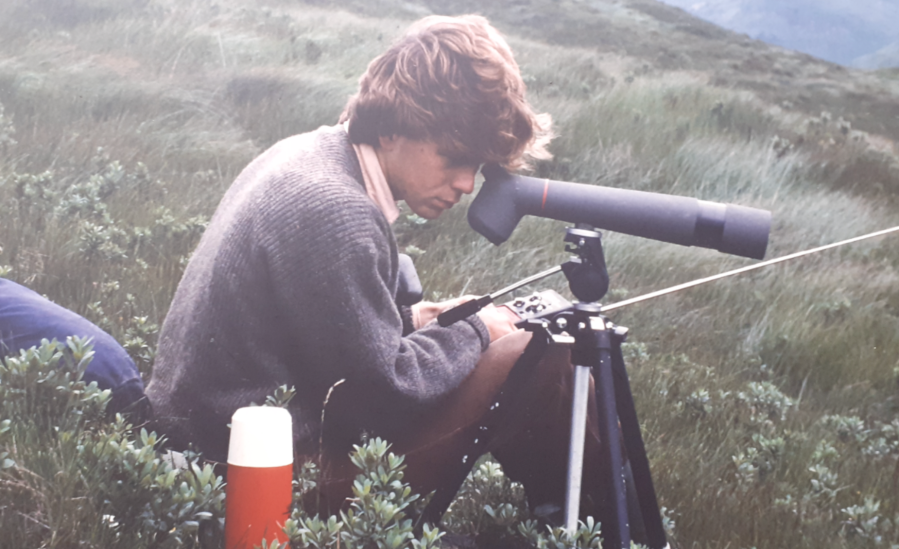
Five years later, after much dogged persistence, Dave found himself guarding that precious nest on Loch Ba. Egg collectors were among the biggest threat – thieves stymied several early nesting attempts by reintroduced eagles. But this was before the days of sophisticated surveillance technology, so the team were reliant on their own eyes and ears to detect suspicious activity.
“We were just there watching for disturbances with a telescope and binoculars,” says Dave. “Quite what we would have done about it if we had seen an egg collector, I’m not entirely sure! At night there were no infrared cameras or anything like that, so we just hoped the eagles would still be there incubating the eggs when we woke up the next day. That was a horrendous summer; it was very wet and the midges were awful. But the excitement, the thrill of what might be happening, kept us going.”
When the chick did finally fledge, the drama wasn’t over. It still had to learn to fly. “Not long after its maiden flight, it plunged into the loch,” Dave remembers.
“It came down thinking it could land, and it just went straight into the water. The very first chick, the first for nearly 100 years, the most precious thing in the world! It was dusk and the light was going. We all lost sight of it, we thought it had drowned. That night was terrible; but we were back at first light and suddenly my colleague Mike Madders saw the chick sitting on a boulder – mum on one side, dad on the other – on the shoreline drying out. If eagles get stuck in the water they can sometimes row ashore with their wings. The relief was overwhelming!”
Dave watched the chick grow all through the summer, only leaving reluctantly when the weather set in. He went on to pursue a successful career in conservation, culminating in a managerial role for the RSPB. But he could never quite get Mull off his mind. That’s why, in 2003, with the full support of his family, he took a big gamble. He traded in the comfortable office job for a temporary, entry-level role as RSPB Mull Officer. “I’ve never regretted it,” says Dave, who’s now lived and worked on Mull for the past two decades.
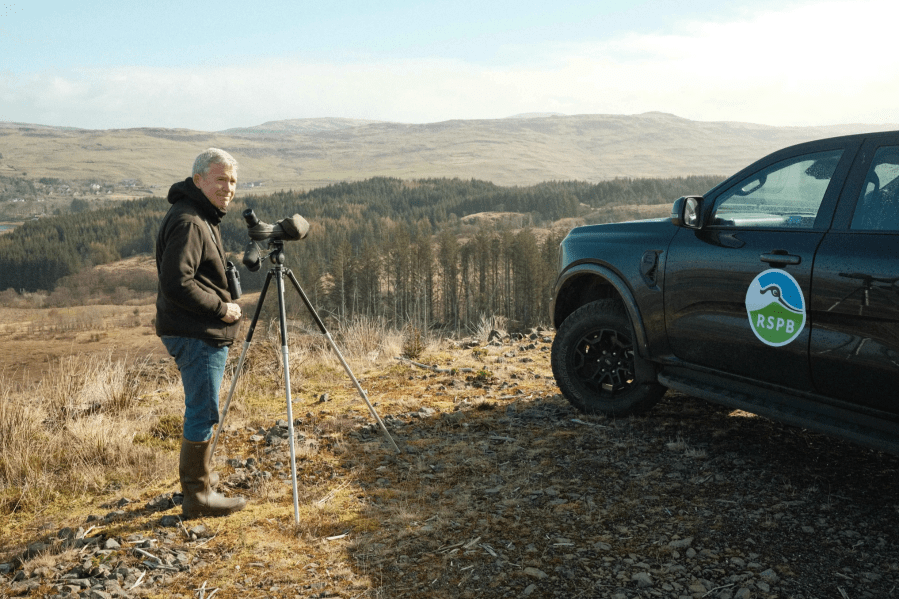
The highlight of his career has been observing the eagles, “getting to know individuals, watching them together, seeing how dedicated and devoted they are and how gentle they are with the chicks. I love watching young white-tailed eagles take to the wing for the first time.” Dave has seen the reintroduction project he joined in the ‘80s become a conservation success story.
There are now an estimated 200 white-tailed eagle pairs across Scotland, including 23 pairs on Mull. The island has become almost synonymous with its most famous feathered inhabitants, particularly since they featured on the first ever episode of Springwatch in 2005.
It’s been good news for the islanders too: a recent study showed that the birds contribute up to £8 million per year to the Mull economy through tourism spending. And, perhaps because of this, they’ve never faced persecution from locals. Not so elsewhere in Scotland. “When they leave the west coast and drift eastwards, that’s where we’ve lost birds,” says Dave. “A few have been shot and poisoned over the years. The first pair that tried to nest in east Scotland had their nest tree cut down. And one young bird was found dead in the Angus Glens having eaten a hare laced with poison; that was on the boundary of a big, intense driven grouse moor.”
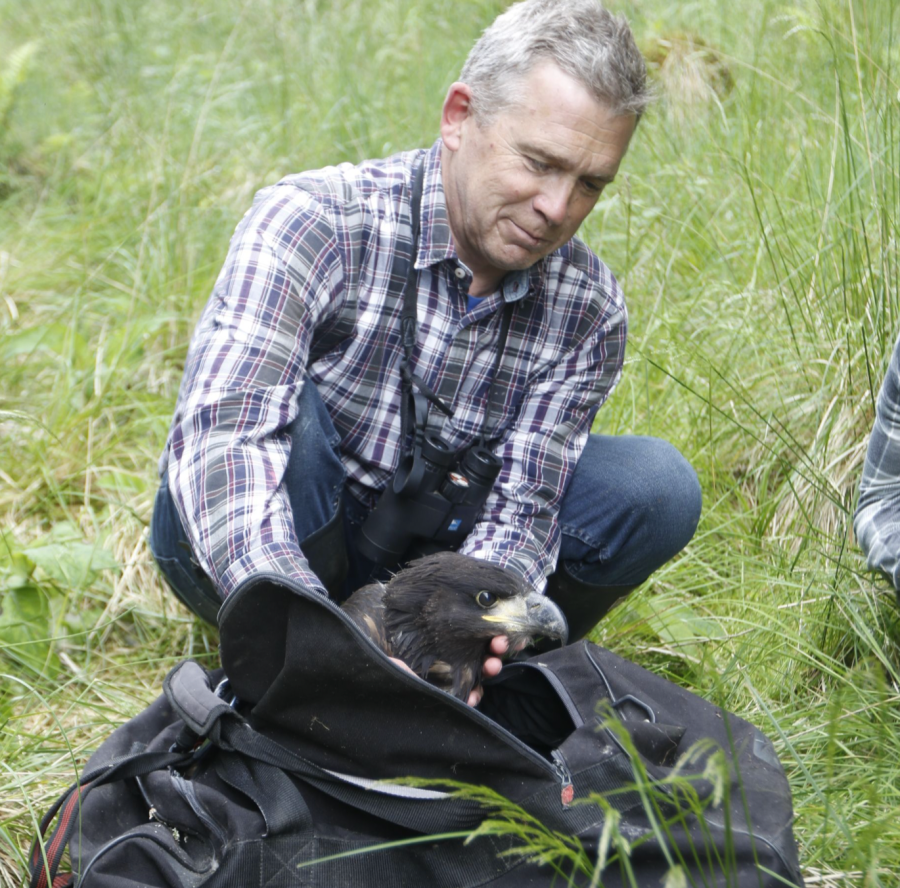
Even in Mull, the birds have their detractors. Farmers sometimes accuse them of taking lambs; and, while Dave says that they are opportunists who mostly steal the carcasses of animals who have been killed by other predators, this has led to what he calls “demonisation” from organisations such as NFU Scotland, “who continually pump out misinformation about what they’re doing to sheep and lambs.”
Altogether, though, as the RSPB marks 50 years since the reintroduction of white-tailed eagles with a new film, there’s plenty to celebrate. Dave says that there are now nests that conservationists don’t know about: a true sign of success.
There’s just one question he’d like to see answered: “I’d love to know what happened to that first chick. He kind of went off on a wing and a prayer, and it would be lovely to think he’s still out there. There’s a bird breeding in Denmark at the moment who hatched in 1985… so believe it or not, it’s not impossible!”