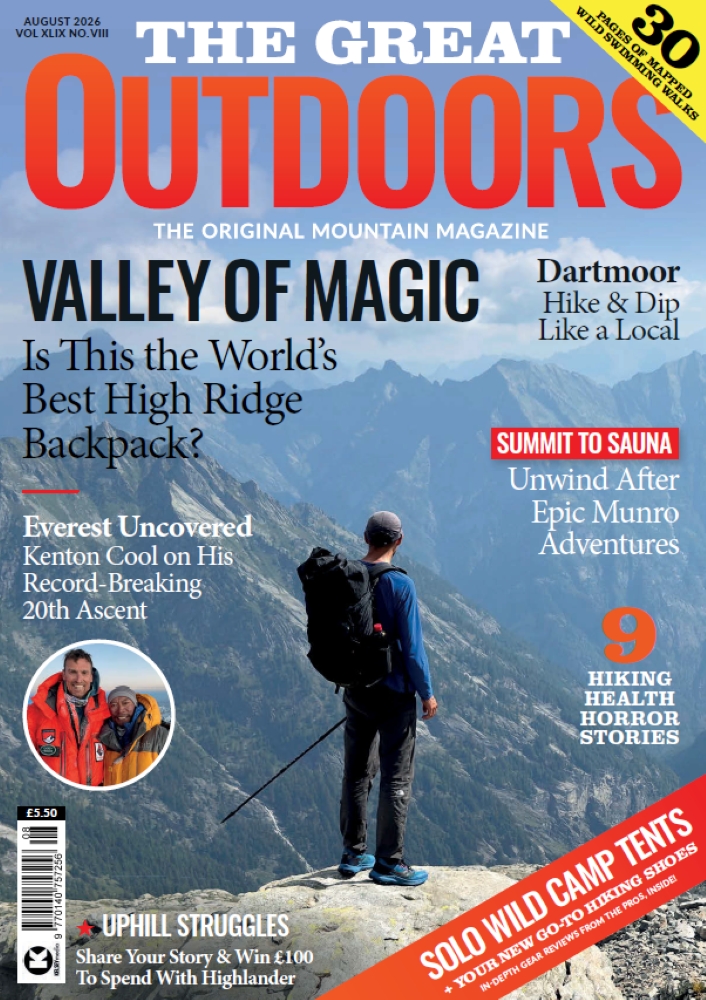

We’ve come a long way since 19th-century mountaineer Annie Smith Peck made international headlines by ascending the Matterhorn in knickerbockers. Mountain women are now the norm (and nobody expects them to wear petticoats) – but the hillwalking world still has a yawning gender gulf. According to a Covid-era survey, only 20% of participants in mountains sports were female. The most recent stats from the BMC sing a similar tune – women made up around 27% of its membership in 2020.
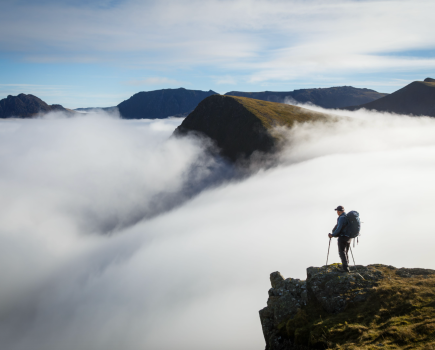
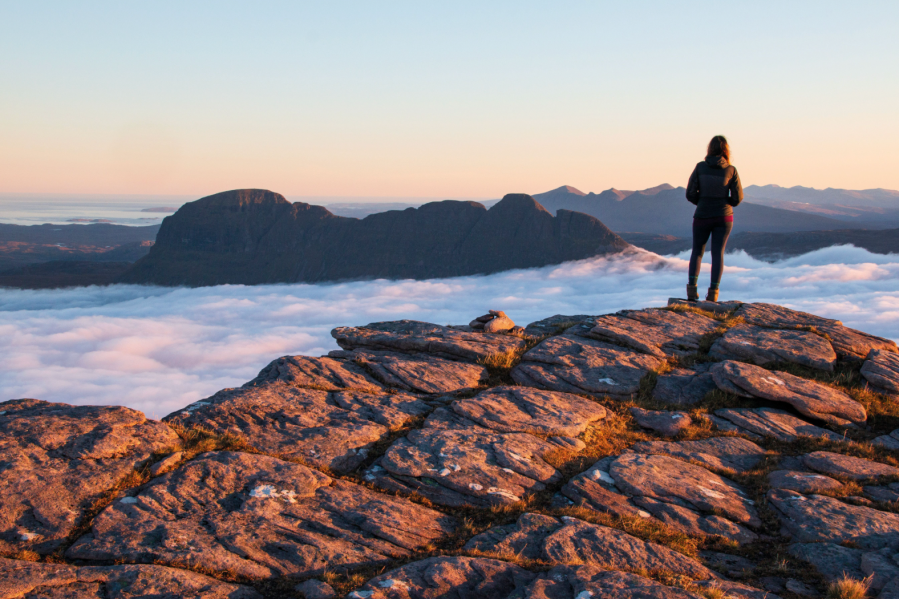
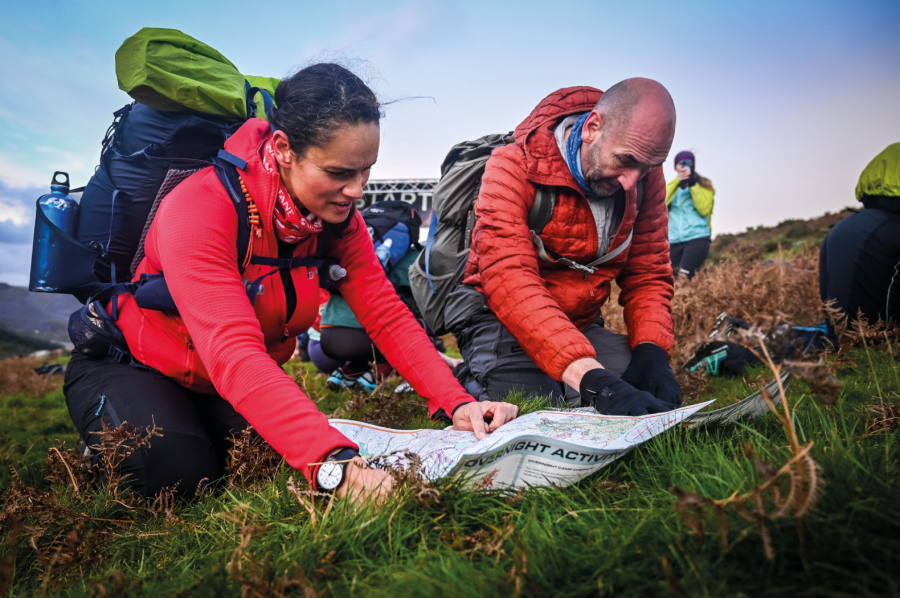
Main image: Sarah Jane Douglas enjoys a cloud inversion from the summit of Cul Mor in the Northwest Highlands | Credit: Dan Bailey
There are post-pandemic signs that the balance might be tipping. Women’s walking groups are popping up all over the country. Instagram is full of ponytailed adventurers celebrating summit success. Many fall into a younger age bracket – a Strava report documents a 108% surge in young women (18-29) embracing the outdoors during the pandemic, compared to a smaller 69% rise across all age groups. The imagery flooding the social media feeds of these newcomers is all ice axe-wielding adventuresses smashing their way through the glass ceiling. But there are plenty of women who were quietly enjoying the great outdoors long before it became #thegreatoutdoors.
The five incredible mountain women featured here share an obsession with the hills that goes far beyond tags and likes. Between them, they’ve beaten cancer and eating disorders, overcome prejudice in its many forms, and bagged literally thousands of peaks.
Their message to a rising generation of young mountain women? Forge your own path, ignore the doubters… and use the %$#@ing walking poles.
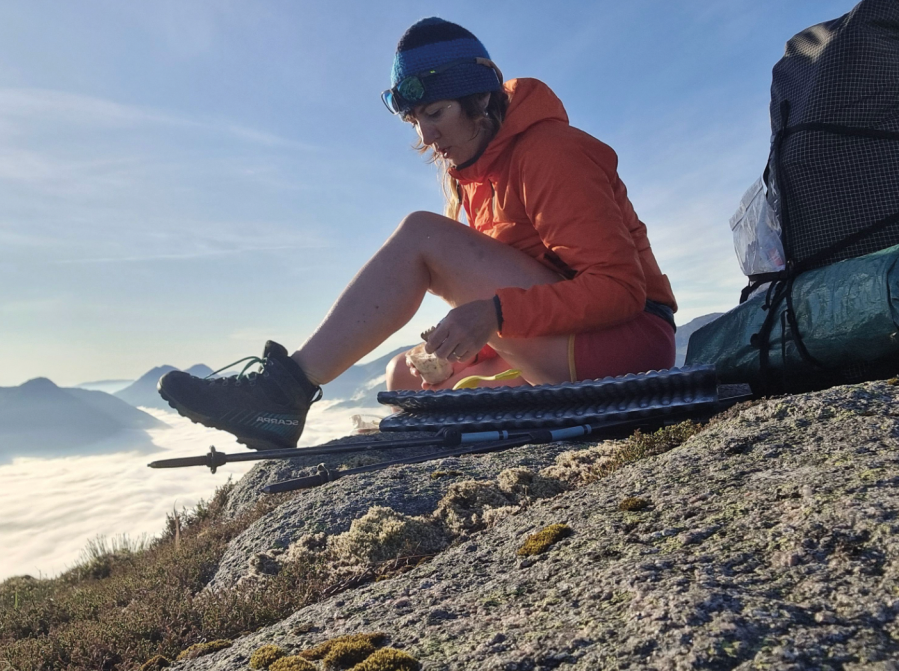
Sarah-Jane Douglas
Writer, compleater and general mountain legend, Sarah-Jane Douglas has always turned to the hills to help her through life’s lows. From losing her mother to breast cancer to fighting her own cancer battle, her story is one of surviving – and thriving – against the odds.
Since the time I got stuck on the roof of our family home at the grand age of two and a half, mesmerised by my view of the distant snow-capped Strathfarrar peaks rising from the Highland landscape, I’ve always felt a fascination for the high places. They seemed to me mysterious then; and though I’ve come to know them intimately in the intervening years, the hills have lost none of their allure. These are the places I go to seek solace.
It was natural that I turned to the hills when, as a young woman, I faced grief and loneliness after the death of my mother. And my embrace of the mountains took on a new urgency when I, too, was diagnosed with the same type of breast cancer that had taken my mum from me. After the oncologist had given me the lowdown on treatments, I remember him asking if I had any questions.
“Yes,” I answered. “Am I still gonna be able to go hillwalking?”
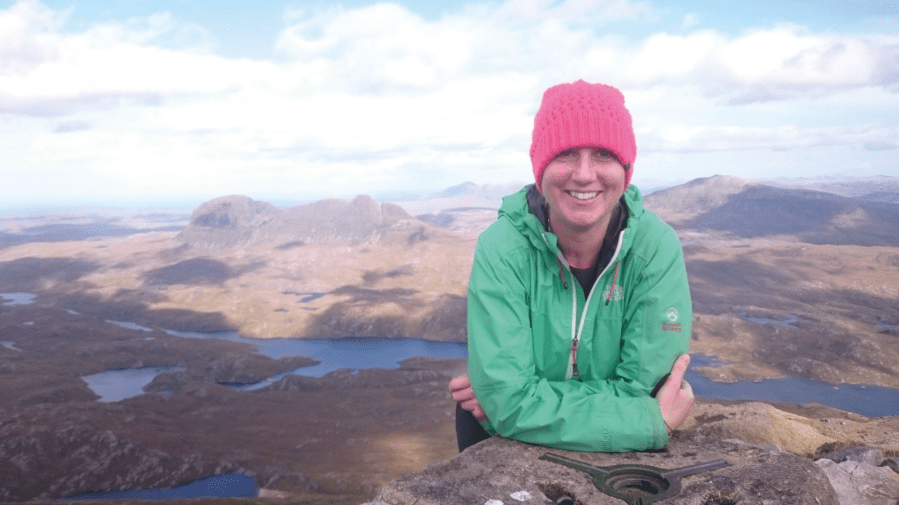
His brow furrowed, and he tilted his head like a confused puppy. He said he’d never heard of anyone wanting to climb mountains during treatment before, and suggested gentle walks along the beach instead. That just wasn’t happening.
Chemo poisoned me to within an inch of my life (paradoxically, to save it), and what followed was a host of physical and mental health issues. When my hair came out in clumps and steroids made my face bloat like a moon, the determination not to be dragged down forced me out and upwards. That was when I ended up navigating my way round another big ‘C’ – the Corbetts. Two journeys began. One, scaling these rugged peaks that stand proud between 2,500 and 3,000 feet. The other, confronting trauma and the fight for survival. Each equally complex and inextricably intertwined.
Though the Corbetts are smaller than their Munro siblings, in many ways I found them more of a challenge. They are often remote and less frequented. These hills held huge appeal for me, because I just wanted to be alone – free of stares and judgement, free to be in the mountains at my own pace, and free to prove to myself that I was still me. Still that same child, still mesmerised by mountain peaks.
To the new generation of women heading for the hills…don’t do it for Instagram, do it for you.
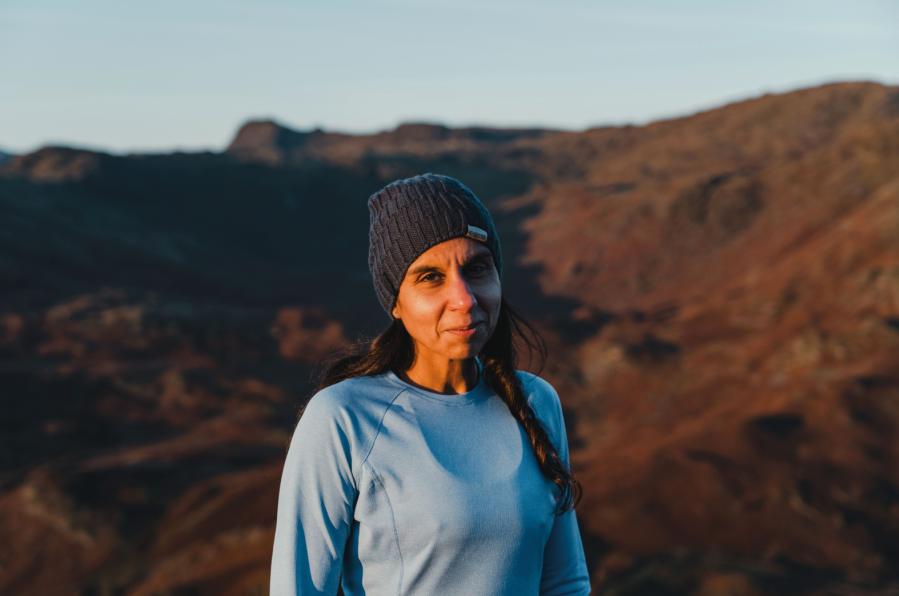
Renee McGregor
An urban upbringing didn’t prevent Renee falling for the peace she found in the mountains. Nowadays, the trail running champion lives in the Lake District and works as a sports dietician for some of the world’s leading athletes.
I grew up in a very urban environment – my family lived above a shop on a council estate, as far away from rolling hills and countryside as you can imagine. When I was 11 years old, I went on a school field trip to Edale in the Peak District. This was my first experience of the countryside.
My parents are first generation immigrants from India. I was born in the UK, but my family were clueless when it came to appropriate kit for ventures into the countryside. I had all the wrong kit – but by the end of that trip, I had the biggest smile on my face. I remember my PE teacher saying to me, “the outdoors suits you, Renee!” I felt free and comfortable in my own skin for the first time.
My love of the mountains was cemented a few years later when my parents, who are very religious, took me on a pilgrimage to the Himalayas to visit a temple that is only accessible six weeks a year. I was quite poorly at this stage with a raging eating disorder; but being in those mountains, I felt peace. I felt accepted, and I felt like me.
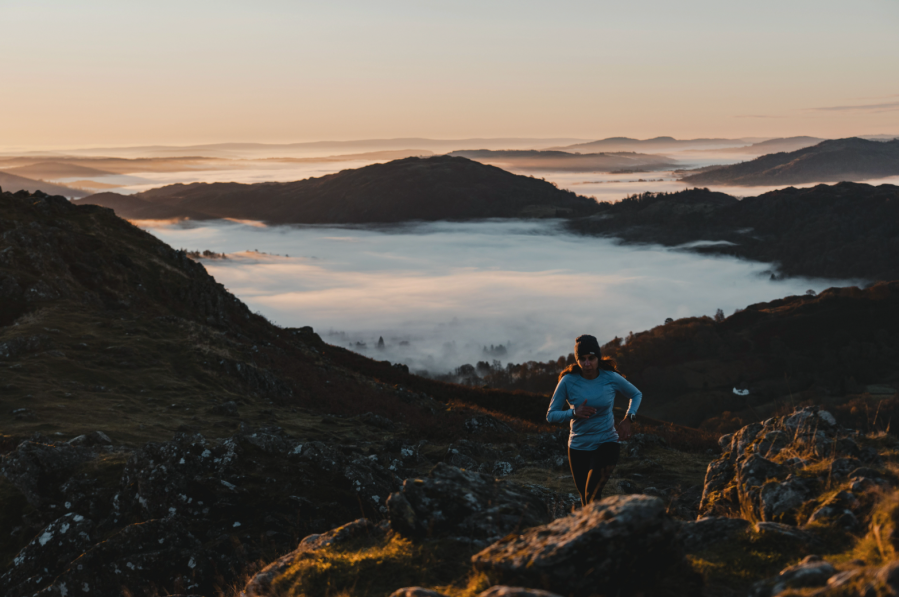
To this day, I am happiest when I am in the mountains. It’s what inspired my move to the Lake District – the mountains talk to me, and they teach me that I am enough.
Running in the mountains has given me so much pleasure. I have met my closest friends and my partner this way, and while I am still always in the minority at races and events, it doesn’t deter me from forging ahead. ‘You can’t be what you don’t see!’ I want to open doors for all those women of colour who equally deserve to benefit from the great outdoors.
My biggest achievements have probably been becoming British trail running champion in the V40 short course category in 2022, as well as finishing as the third woman and ninth overall at the Montane Summer Spine Sprint the same year. I also had a top 9% finish at the Lakeland 50 this year. I’m generally always one of few – if not the only – person of colour at the start of these races.
I’m proud of being asked to be a Montane athlete last year, and to become a Trustee for Black Trail Runners earlier this year are huge highlights for me and means I can continue to forge ahead and try to make the outdoors a place for everyone.
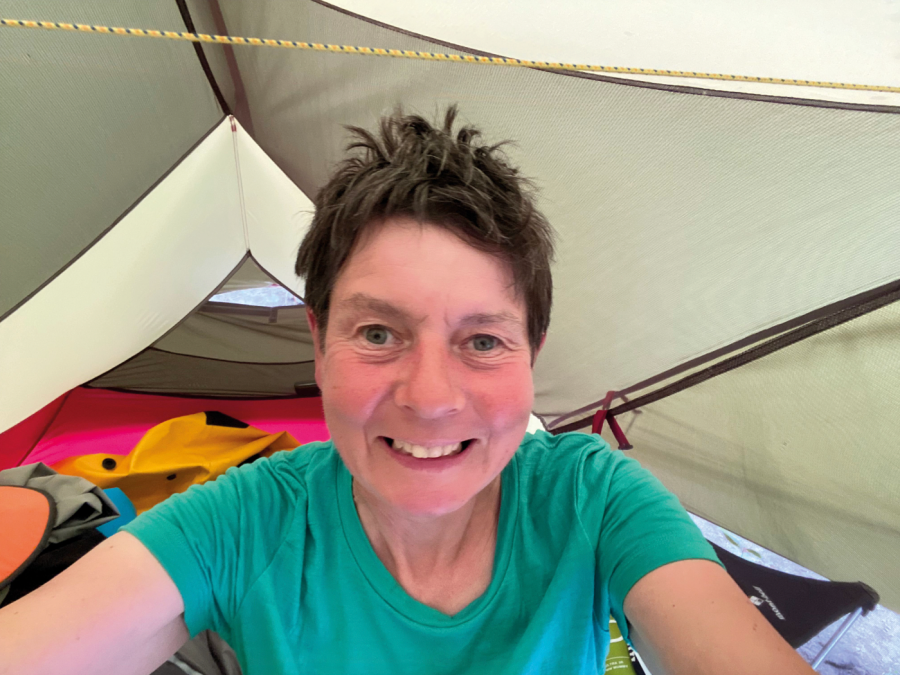
Hazel Strachan
Growing up in a hillwalking culture dominated by men never stopped Hazel from hiking solo. Now she’s a seasoned bivvier, packrafter and record-breaking Munro compleater.
Being outdoors is my birthright. I was born into a farming family in Midlothian, Scotland, and grew up exploring the farm, making dens and loving the land and sky of my territory.
Through the late 1970s and 80’s, this territory expanded to the local hills to search for new species of wildflowers. I became aware that hillwalking was very male biased. Being only 5ft 1 inches tall, female and a solo walker, I was acutely aware of not fitting in. You had to be tough to climb Munros, right? The history of Scottish hillwalking was dominated by men – all the role models were all male. I imagined myself to be invisible and got on with exploring the hills. I realised that I was very good at planning and judging what was within my capabilities.
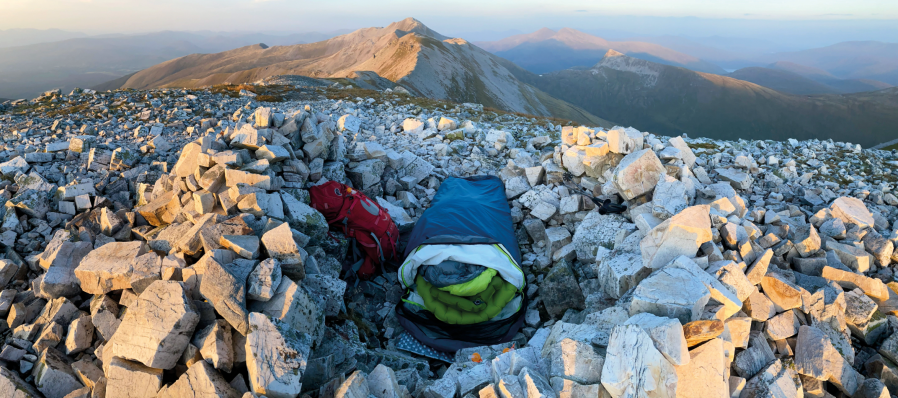
Now I’m nearly finished walking a 13th round of Munros. I’ve experienced so many highlights. There have been tough times – I’ve struggled with painful hip and knee problems – but even these have been part of the valuable growing experience. I will always cherish memories of my winter bivvies across the Fannichs, Cairngorms, Glencoe and many more area. I learnt that I didn’t have to sleep always in a tent, contrary to the media messaging.
It wasn’t until the late 2010s that I began to see more than a handful of solo women on the Munros in the summer (don’t even ask about winter!) My girlfriends suggested that it was a time pressure issue. It can take a full day to climb a Munro, and women often have other priorities. Times have changed since Covid. I now see a lot more women walking and running, solo or otherwise – at long last! I’ve no idea why there’s been this explosion in popularity. Only the women who have embraced the hills over the past few years can answer that.
Mary-Ann Ochota
Best known for her presenting roles on series such as Time Team and Mystic Britain, our 2021 ‘Outdoor Personality of the Year’ winner has introduced thousands of viewers to the joys of outdoor adventure.
I spent most of my 20s in ‘should’ land. I should be fitter, slimmer, braver, more skilled. I should have scrambled that route already, I should be planning that long distance trail, climbing that Munro…I should, should, should. In truth, even though it was part of my job, getting to the outdoors has always been hard.
In the past, I didn’t have much money. I was also a carer for my grandmother and the hustle for work was relentless. Now I have a little more disposable income, but just as little time and different caring responsibilities. The realisation I’ve finally reached? This is it. It won’t get simpler – it’ll just be complicated in different ways.
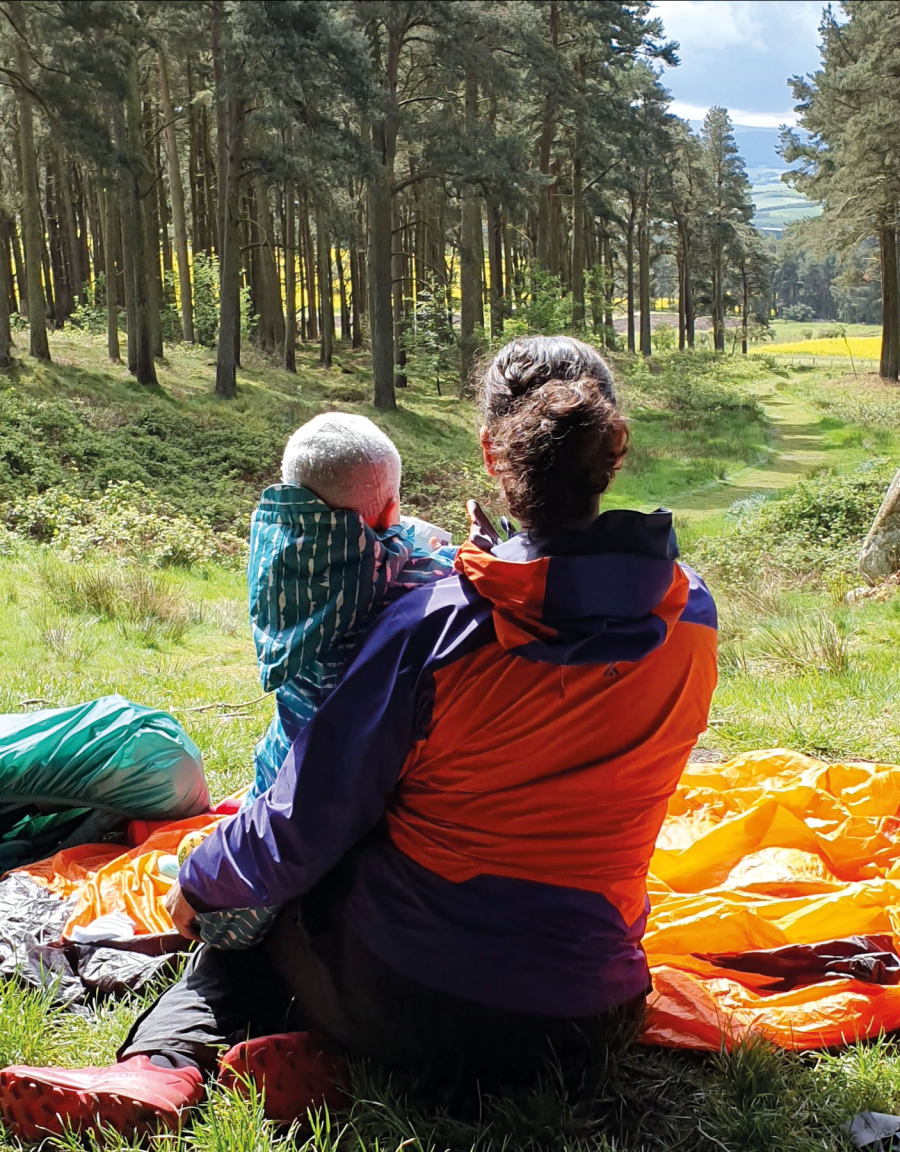
So don’t wait to sort everything out before you say ‘yes’ to an adventure. There will always be a reason to say no – don’t let it dominate your thinking. There are also probably people in your life who will nurture the little seeds of doubt in your mind. Don’t let them in on fragile plans. Only share your plans with people who will encourage the ‘yes’ and support you through the ‘but what if..?’ scenario planning. Only tell the doubters after your plans are solid.
But equally, there is little value in ‘should’. If you don’t want to, or simply can’t, make peace with it. For now, at least. Living in ‘should’ isn’t fun and it erodes self-belief. There will always be people who’ve done more; they often appear on social media. So if someone’s feed makes you feel inadequate, dump it. Limit your exposure in just the same way you would any other toxic substance.
Trust yourself when you think something isn’t right (whether its navigation, risk assessing or kit prep). Even if you’re less experienced than the other people in the group, speak up. And if they don’t listen, don’t go out again with those people – because they’re idiots!
Lastly, if you’re feeling crap then go outside. Better to feel crap outside than feel crap inside.
Fiona Russell
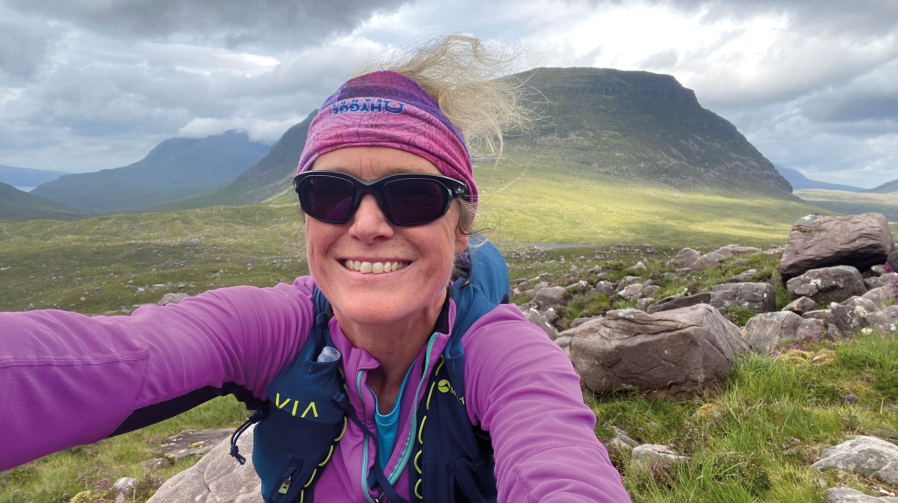
Fiona is a Highlands-based outdoors and adventure journalist, better known as Fiona Outdoors (fionoutdoors.co.uk). She came to hillwalking relatively late, but the mountains have since become both a career and an obsession.
It was a walk of the Five Sisters ridge in Kintail that changed my life and brought my work into sharper focus. I met my now husband, fell in love with Scotland’s mountains, and started to write about my experiences.
I was already sporty – I’ve always run and cycled. But on that day I met someone who wanted to share a passion for walking in the mountains, in particular the Munros. Until then, I’d seen Munro bagging as outside of my comfort zone. I was not a confident navigator (a previous partner told me women can’t read maps!) and I imagined many of the walks to be too long, scary and remote. Ticking off a list of 282 3000ft mountains spread across Scotland seemed wholly unattainable.
Meeting Gordon gave me an entry into a new world – one I quickly realised was exciting and rewarding. At first, I followed him to many spectacular locations as he finished his Munro round. Then I began learning to navigate, took courses in mountain safety, and bought all the right kit.
At this point, in my early 40s, I felt embarrassed to be such a latecomer to the mountains. I thought I would never know enough to stride out in confidence.
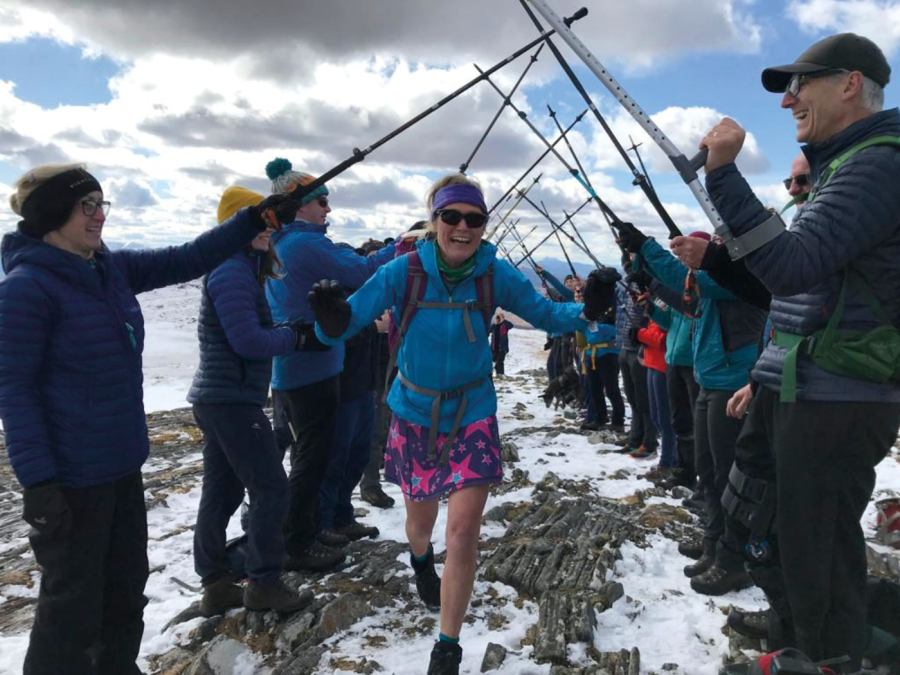
Now, aged 56, I know better. It’s never too late to learn. I’ve completed a Munro round and I’m two-thirds of my way through the Corbetts. I often walk solo and I wild camp on my own. I’ve walked – and run – many hundreds of mountain routes, and I especially enjoy remote adventures.
Several years ago, I moved to the Highlands from Glasgow. I also left an office-based newspaper job and became a freelance journalist, specialising in outdoors topics. I’ve written about my mountain experiences on social media, my website and in many print and online publications. I’m told I’ve inspired many people, especially women and newcomers, to walk in the mountains. This makes my heart sing, because I know so well how the activity can change your life.
In hindsight…
We asked what advice these five inspiring mountain women would give to their younger selves. Here’s what they said.
“Remember: it’s still an adventure, even if you post absolutely no evidence of it on socials. Keep some of that outdoor magic unapologetically for yourself, and in the moment.” – Mary-Ann Ochota
“Dare to walk solo in the mountains once you have the basic skills to do so, because you learn so much more when you rely only on yourself. I worried about getting lost, being scared and unwelcome approaches from strangers – but, in fact, it emboldens and empowers me.” – Fiona Russell
“You don’t need to follow the crowd. Always stick to what feels right in your heart.” – Hazel Strachan
“Remember your goodness, regardless of what the world tells you. No matter how hard life gets, appreciate that nothing is permanent and you will find your joy again.” – Renee McGregor
“USE THE F**KING WALKING POLES!” – Sarah-Jane Douglas