
Snowshoes provide a unique way to enjoy the winter mountains. Although they’re most at home in the Alpine and Scandinavian mountains in winter, they have their place in Scotland too – especially after heavy snow. They allow you to experience landscapes usually reserved for ski tourers. But skiing is expensive, and the skills take time to master. Snowshoeing skills can be learned quickly by anyone with general winter mountaineering experience, making this a highly accessible form of winter travel.
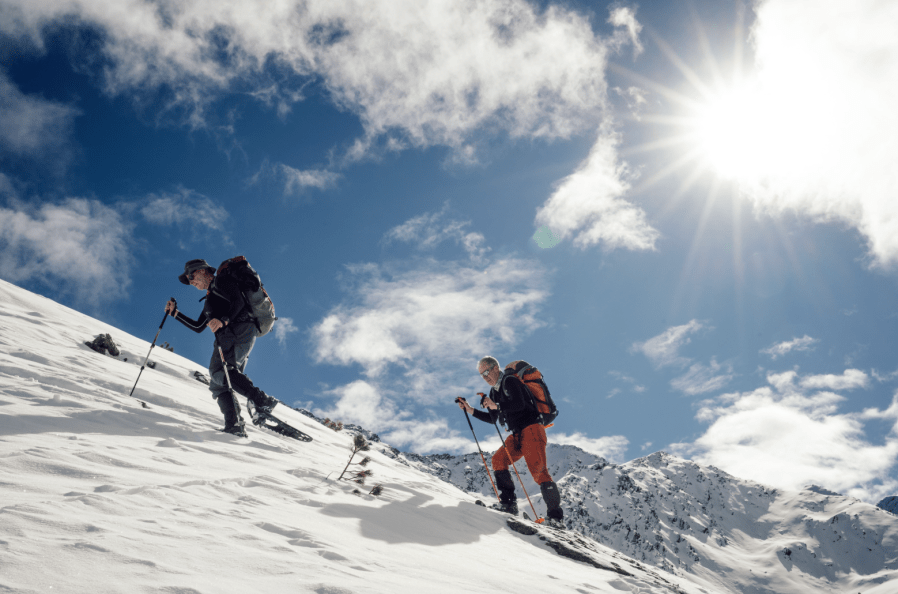
Main image: Climbing steeply uphill in the full sun is hot work – even in February | Credit: Alex Roddie
Training and guiding
If this is your first snowshoeing experience, go in a group and consider tuition; or at least a guided tour. The Austrian Alpine Club (UK) now coordinates several snowshoe hut tours per season and work with experienced guides, offering subsidised rates for members.
Those experienced in UK winter hillwalking will already have most of the basic skills, but tuition is valuable in two areas: technique in using snowshoes on steep ground, and avalanche skills specific to Alpine areas. Instruction in the safe use of avalanche transceiver and probe is particularly important. In the UK, a few instructors have begun offering snowshoe tuition, mostly in the Cairngorms.
Planning and route-finding
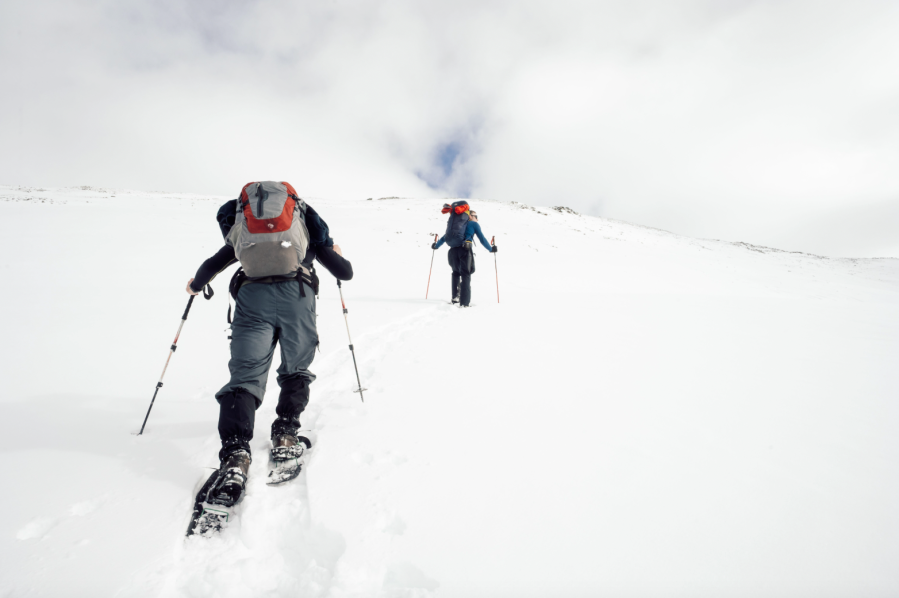
When planning a route, ask yourself whether it’s suitable for snowshoes. On Alpine maps, ski tour lines often indicate possible options. In Scotland, the Cairngorms are a snowshoe Mecca when conditions are right; but you’ll need to pay more attention to route planning. Look at the contours on the map. Slopes steeper than 30° are unsuitable for snowshoes (and also tend to have the highest avalanche risk).
Be honest about your fitness and experience; and avoid ‘summer thinking’. Remember that paths will usually be hidden under snow, everything will take longer than you think, and the summer route isn’t necessarily best. Don’t rely on time estimates from apps. In a whiteout, advance with caution. Throwing snowballs can help you judge slope angle. You can also use your trekking poles, a clinometer, or slope card. Don’t be afraid to deviate from your planned line if an alternative is safer.
Avalanche awareness and rescue
With deep, soft snow often comes increased avalanche risk, making safe route choice doubly important. Plan as you usually would for a winter day, scrutinising weather and avalanche forecasts, plotting a route avoiding unstable slopes, and continually assessing conditions.
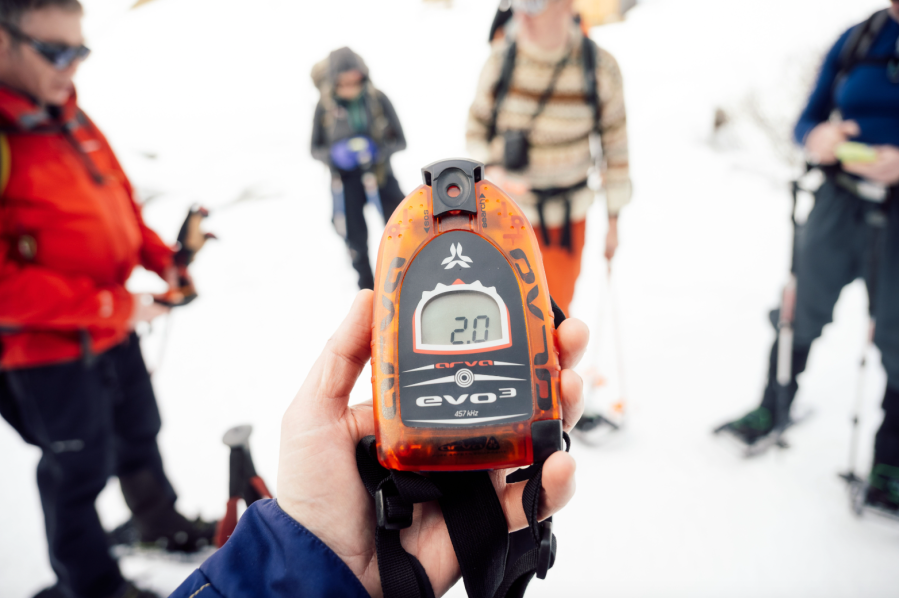
Put new batteries in your transceiver before the trip and check the battery level at the start of every day. Your transceiver should be turned on at all times and broadcasting in SOS mode. Attach it securely to your body underneath clothing. You should also do a signal check when you set out every day. Is every transceiver in the group broadcasting? Remember that devices such as phones, cameras and GPS may disrupt transceivers.
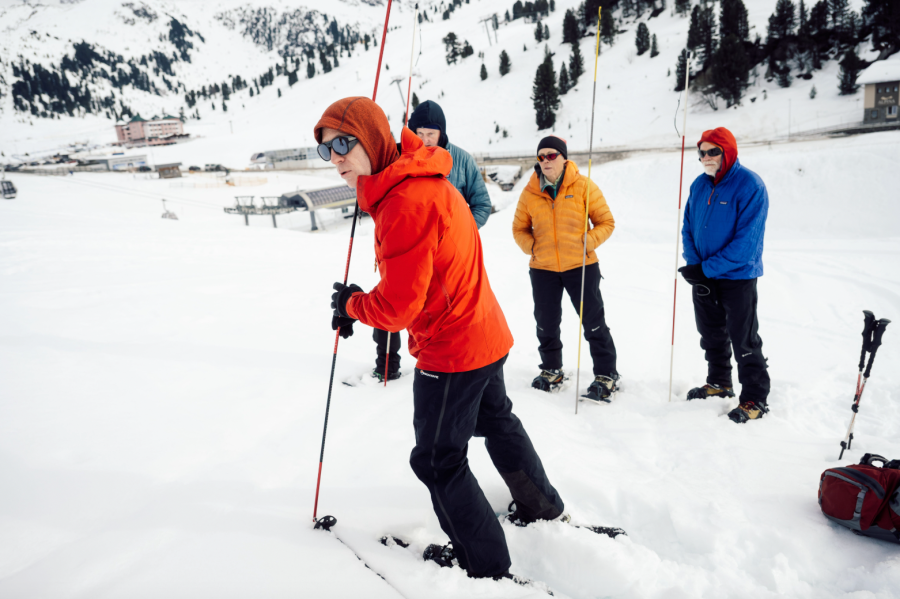
If a phone needs to be used in an emergency, go at least 50m away. If you see someone get avalanched, set your transceiver to search mode and run towards the site. Once a signal is found, move quickly until you’re 3m away, then go onto your hands and knees in the snow, keeping the transceiver at a steady angle. When the spot is found, mark the target with a trekking pole and use a probe to methodically search the area, pushing it through the snow until you feel a body or rucksack. Dig in teams in a V formation, with two people behind you clearing snow as you dig it out.
Ascending and descending
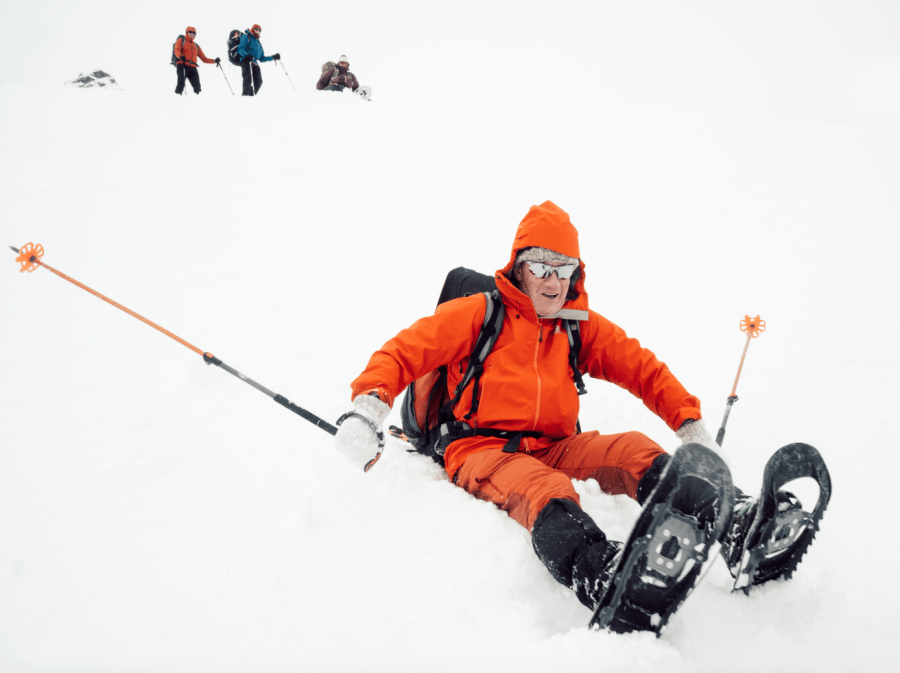
Take care not to trip over your snowshoes – the gait takes some getting used to! When climbing steep slopes, engage the heel lifts. This alleviates strain on your calf muscles. Shorten poles and climb straight up the slope.
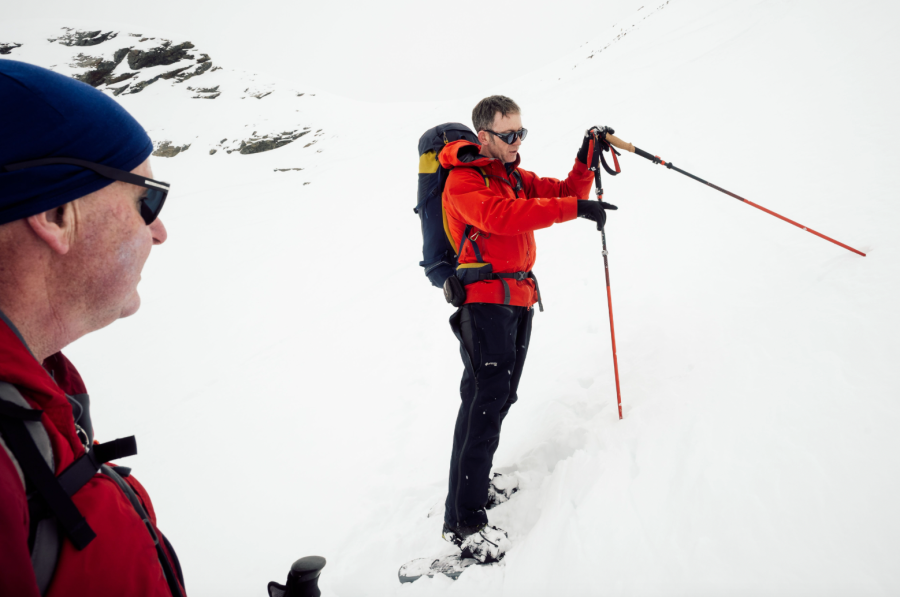
Descending is best done straight down the slope with poles fully extended. Make sure to drop the heel lifts. You can glissade down steep slopes, but make sure you can see the bottom. Use your snowshoes to help you brake. If you fall into a deep drift, cross your poles in an X and use them to gain more flotation.
With thanks to the Austrian Alpine Club (UK) and Mackay Mountaineering
Essential equipment for snowshoeing
Snowshoes
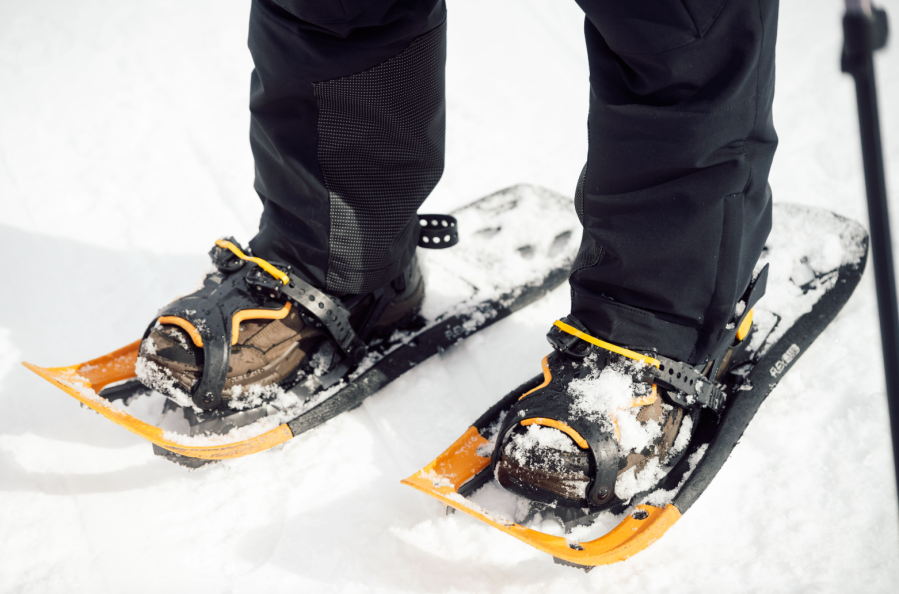
Good alpine snowshoes have an aggressive tread including built-in crampons, good flotation, and heel lifts that can be raised for climbing. Consider hiring before you buy. This could save on baggage fees, too.
Shovel (essential in the Alps and useful in Scotland)
As well as digging out avalanche casualties, it can be used to dig snow holes, temporary shelters, or tent platforms. Look for a compact folding model with an aluminium blade.
Avalanche transceiver and probe
These should be hired and carried when snowshoeing in the Alps. Book online or over the phone before you travel.
Trekking poles and winter boots (at least B2 rated) and other essentials
You’ll also need your regular winter hill gear plus anything you might need in the hut, including silk liner. A Thermos flask is recommended for a hot drink. Unless venturing into more technical terrain, ice axe and crampons aren’t usually carried. However, a lightweight ski-touring axe could be a worthwhile insurance policy in icy conditions. Microspikes can be useful on frozen approaches – and don’t forget mountain sunglasses.