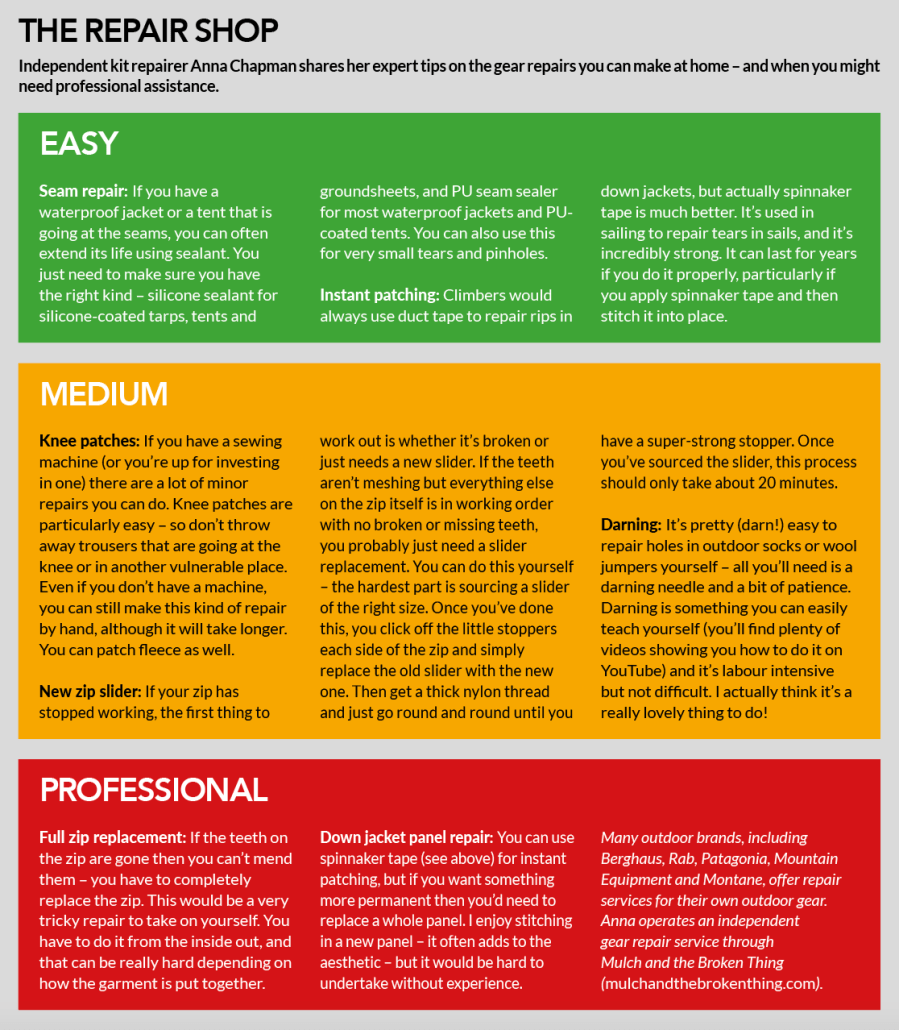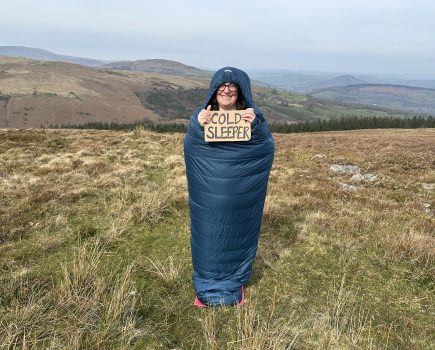

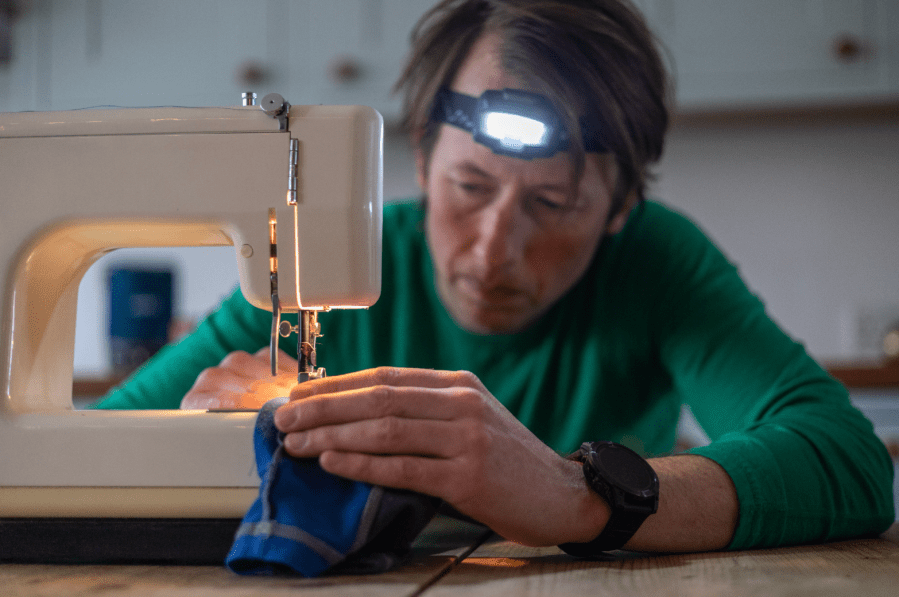
Main image: Plenty of DIY gear repairs can be made if you know the basics of how to fix outdoor gear | Credit: Hanna Lindon
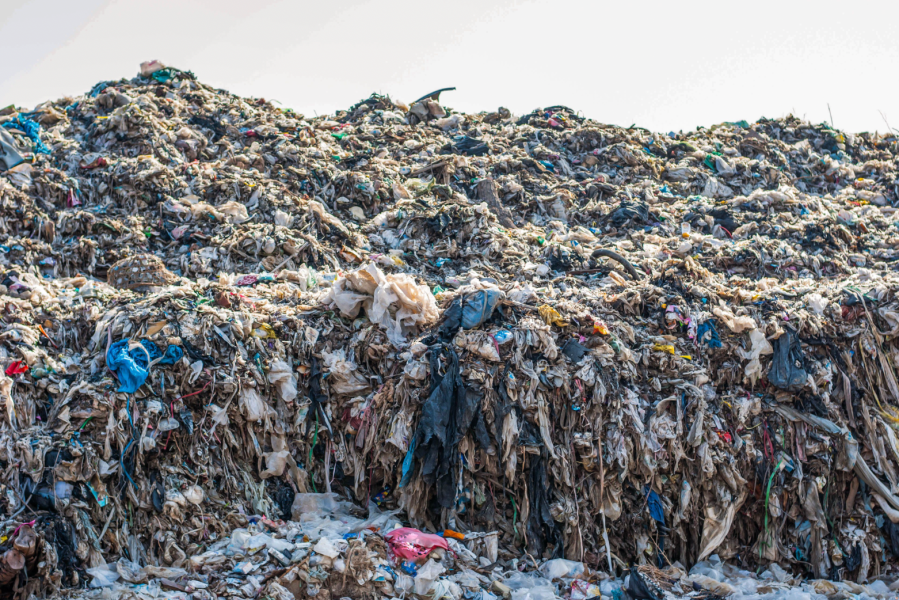
What do you do if you find a hole in your sock? Fifty years ago, the answer would have been to darn the hole and carry on – nowadays, though, you’re statistically more likely to chuck the sock in the bin and order next-day delivery of another pair. We’re living in an age dominated by stack-‘em-high-sell-‘em-cheap fast fashion, with a rubbish truck’s worth of clothes dumped or burned across the world every second and less than 1% of material recycled into new clothes. In the UK, we buy more textiles per person than any other country in Europe and we each ditch an estimated 3.1kg of them every year. That’s bad for the environment, but it’s also not ideal for your finances.
Outdoor gear – particularly the stuff that keeps you warm and waterproof beyond its first outing – tends to be pricy. Staying clothed, shod and wild camping-ready can be the most expensive part of a generally affordable hobby. That’s why it’s well worth putting some effort into extending the life of your gear.
Buyer’s guide
The first pillar of gear longevity is buying the right kit in the first place. According to Anna Chapman of independent outdoor kit repair specialist Mulch and the Broken Thing, different brands have very different approaches when it comes to design. “Certain companies consider repair while they’re designing items,” she says. “Others have a service where, if you buy something, they guarantee that item is repairable and they’ll do it in house. I would say it’s worth paying more for the items you’re going to buy new, knowing that they are repairable.”
Beyond brand name, there are certain features and materials that will be tricky to repair if they break. Anna cites waterproof down jackets – which tend to be extremely costly – as a good example. Multi-layer or coated waterproofs can also be difficult to repair once they begin to delaminate. At the other end of the scale are natural fabrics such as wool, which can easily be repaired at home.
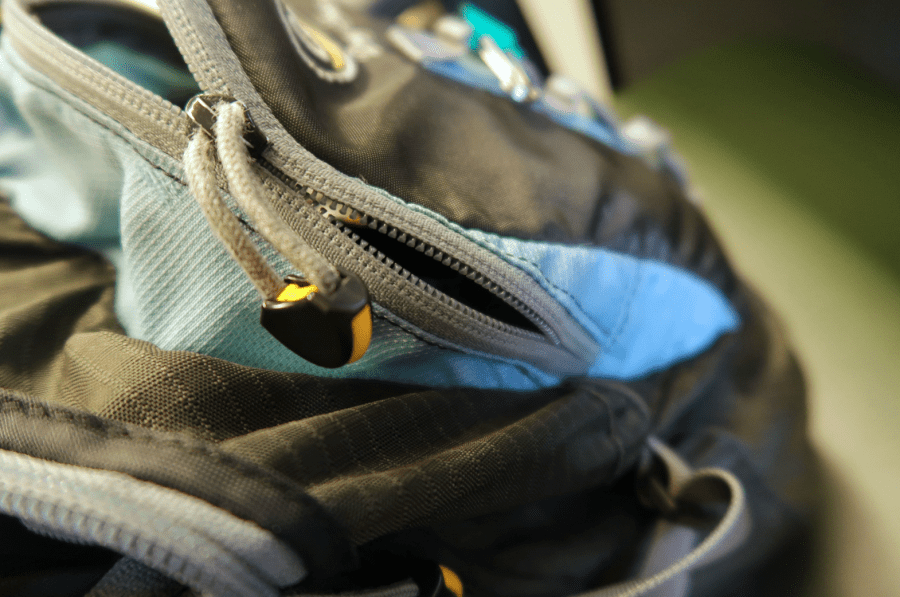
The golden rule of shopping for longevity? Keep it simple. “Don’t go for the super-techy piece of kit with lots of bells and whistles, because you have more things that are going to break,” advises Anna. “The simpler the item, the better. Zips are definitely the weakest element on a lot of kit – so opting, for instance, for a rucksack with a fold-down top will remove that weak point.”
Essential maintenance
There’s plenty you can do to extend the life of your gear, even without DIY repair know-how. First on the list is keeping it clean. “Sometimes people send me a jacket they say has a broken zip, and it’s just that the zip is so dirty it’s not working,” says Anna. “If you can keep your kit clean, it can help prevent breakages as well.” Boots are particularly vulnerable to deterioration caused by a lack of maintenance – dirt lodged in seams and materials can break down both leather and textile fibres, as well as reducing water resistance. Using a nylon brush and paying attention to problem areas such as eyelets and stitching, then following up with a conditioning cream or a water-based proofer, will help extend the life of your walking footwear.
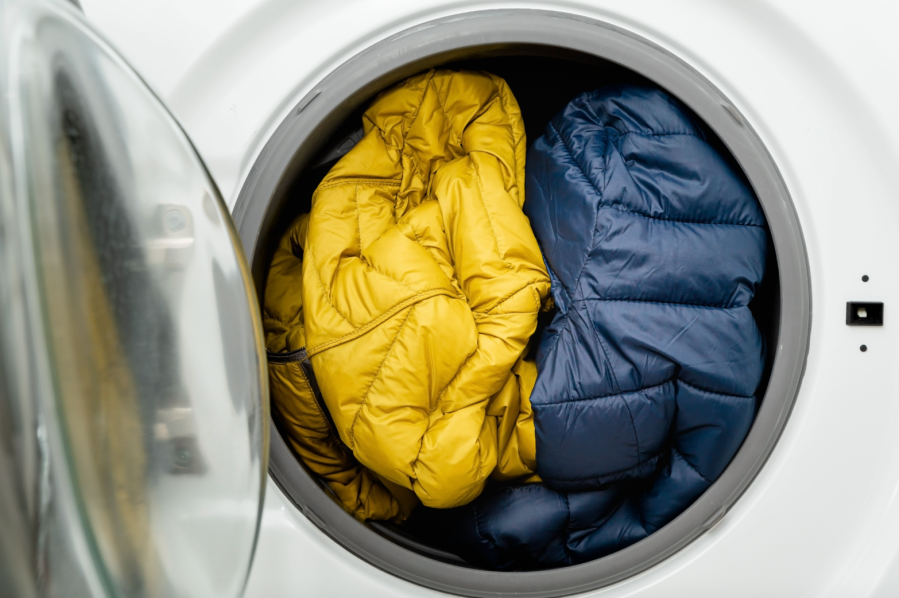
You can wash almost any piece of outdoor clothing, from waterproof jackets to merino baselayers, as long as you use the right process. Anna says that down jackets tend to suffer most from a lack of maintenance, because people are nervous about washing them. “It’s really not something you need to be scared of,” she adds. Your jacket might look like a drowned rat when you get it out of the wash, but you haven’t destroyed it! It’s about drying it in the right way. You don’t need a tumble-dryer or tennis balls, you can dry it fine on the radiator, it’s just about de-clumping the down while you’re drying it. Washing your down jacket won’t just keep the zip going for longer, it also makes the down move so it’s not oily and clumped together, which means the jacket will be warmer.”
Worth wearing – worth repairing
TGO contributors share repair jobs that have extended their favourite items of kit…
Chris Townsend: “The Gregory Paragon 68 has been a favourite pack for many years, but it does have a weak point. The mesh side pockets tear quite easily if you catch them on twigs or they rub against rocks. Having tried other sticky tape that didn’t stay on I recently patched the holes with Tenacious Tape and this seems to be holding. I hope so as the pockets are very useful.”
Hanna Lindon: “I’ve had this Rab down jacket for about 15 years – it’s covered in stains and patches, but it still does the job. A couple of years ago the zip broke, and I got it replaced with a local gear repairer. It ended up costing about £60…better than a new down jacket though!”
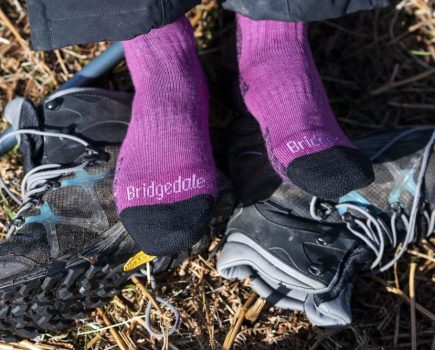
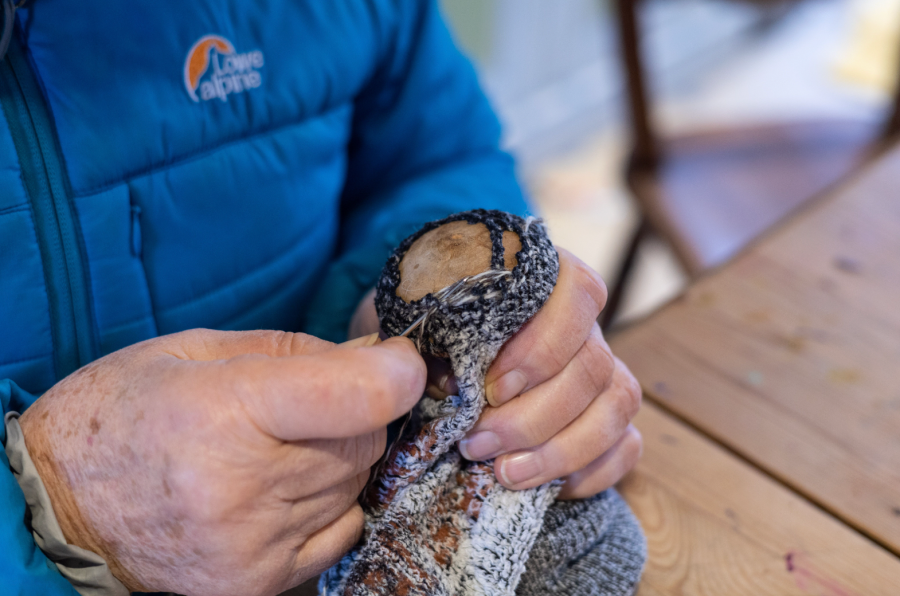
Guy Prince: “I wear holes in my outdoor socks ridiculously quickly – it must be something about the way I walk! Luckily, my mother-in-law is an expert darner and has saved some very expensive socks (like this one, pictured below) from the rubbish bin. She’s teaching me the art, so hopefully my sock budget won’t be quite so excessive this year!”
How to fix outdoor gear