
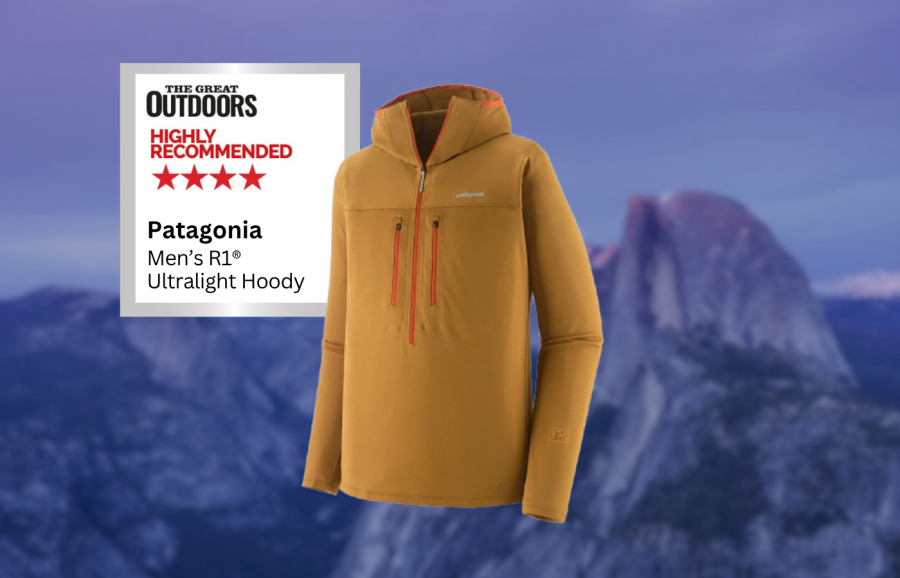
Peter Macfarlane highly recommends the Patagonia Men’s R1® Ultralight Hoody – but the performance comes at a cost.
The Patagonia Men’s R1® Ultralight Hoody is part of a range made for technical climbing and it has a set of features designed to work in that environment, but that doesn’t mean it won’t work for a regular hill walk.
Peter Macfarlane highly recommends
The performance is excellent and the sustainability aspect is welcome with the recycled fabric content.- fit
- features
- fabric
- weight
- features and layout not for everyone
- price
| Quick specs |
|---|
| Price: $199 | £180 (available from Patagonia) Weight: 494g Size Large Fill: N/A Shell: 4.6-oz 100% recycled polyester flat-faced double knit Hood: non-adjustable lycra bound Cuffs: self-fabric low profile Hem: non-adjustable lycra bound Pockets: two chest Sizes: XS – XXL Women’s version? Yes patagonia.com |
The Hoody is a pull-on with a very long zip which is excellent for ventilation. There’s a zipper garage at the top to eliminate chin rubbing with an area of double fabric here for comfort and abrasion resistance, it also helps to shape the neck area when it’s unzipped. Either side of the main zip are two high-set zipped napoleon pockets. These are brilliantly positioned for access on the move even when wearing a shell. The pockets are sized to stop the contents creeping sideways under your rucksack straps, but on balance I’d have liked them to be a little bigger. The hood is simple and fits well, moving with a bare head and layering under a shell perfectly.
Last winter it performed well both under a hard shell and under Paramo, where the light fabric and closer fit was excellent with the Paramo’s bulkier hood. The cuffs and hem are simple stitched-back fabric with enough stretch in the cuffs to pull them up over the elbows for ventilation. The fabric is light and very stretchy almost like a heavy base-layer, but the grid fabric traps warmth and wicks sweat very well. It dries quickly too. The performance is excellent and the sustainability aspect is welcome with the recycled fabric content. I got on well with the climbing specific features because they work perfectly in a general outdoor setting, but the performance does come at a cost.
How Peter tested
Peter has worn these on most outdoor trips from the Munros last winter to the warmer trails of early summer, as well as off the hill. He is 5’11” and takes a size large. Weights are from his scales. This review was first published in the September issue of The Great Outdoors. To compare it with other, see our guide to the best midlayers and fleece jackets for hiking.