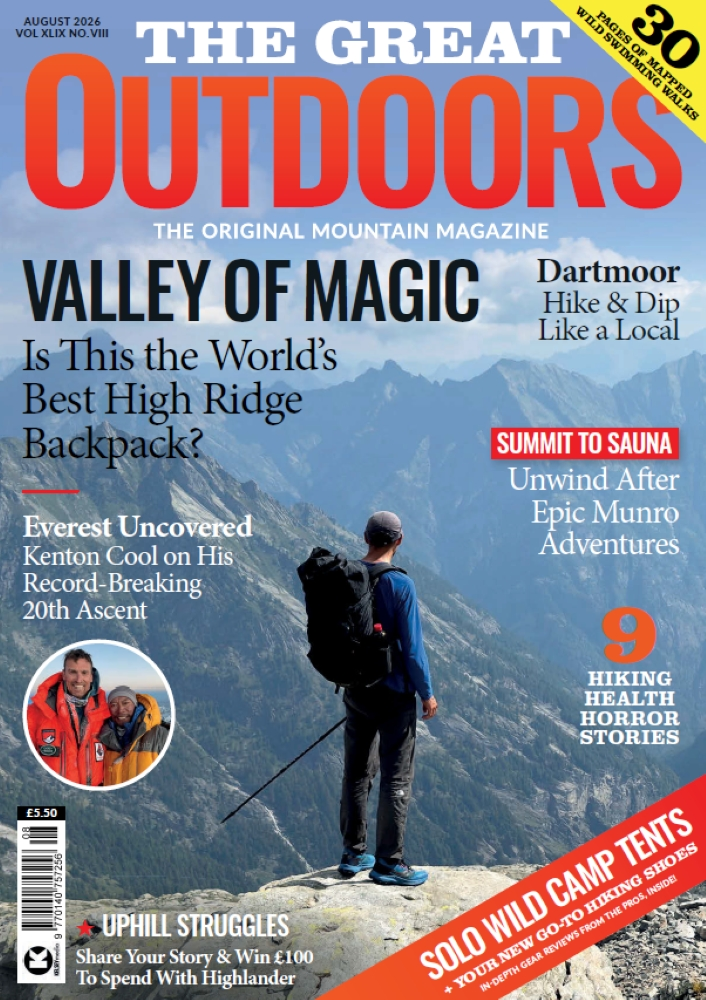

An issue of The Great Outdoors that celebrates our connection with the natural world and helps us hone our natural instincts? Sounds a bit ‘coals to Newcastle’ doesn’t it? Surely that’s what hillwalking (and, by extension, this magazine) is all about: walking, in nature, sleeping in nature, admiring nature from a succession of lofty angles… Plus of course getting frequently soaked, battered and deep-frozen by nature (and finding a masochistic enjoyment in the whole thing).
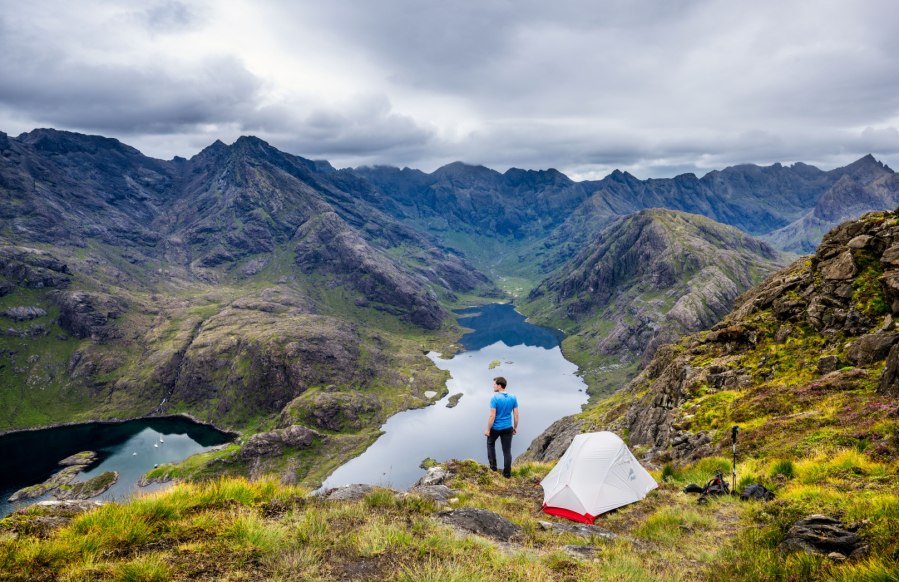
Cover: Some argue this is the best mountain view in Britain | Credit: James Roddie
But it’s very easy to fall into the trap of treating the natural world as a playground – an attractive backdrop against which we can complete our essentially egocentric adventures. Social media encourages this mentality. So does some of the lingo we use to describe our mountainous perambulations. Summit ticks, conquering, bagging, challenges…. all words used many times in this magazine’s past without considering their wider connotations. Perhaps the real theme of this issue, then, is mindfulness in nature. Not the modern Mindfulness™ we’re sold through meditation apps, but simply a heightened awareness of your surroundings, your actions and the interplay between the two.
Highlights of this natural instincts special issue:
- The experts to help us rediscover the lost arts of celestial navigation, foraging, animal spotting and more
- The Last Enchantment: Steph Wetherell discovers bewitching twitching on Orkney
- Lizzie Shepherd helps us see small wonders in the everyday through her camera lens
- We tread lightly in the footsteps of the ghost of the mountain – the elusive Himalayan snow leopard
- Sea-to-summit walks: Our experts map the way to their favourite watering holes on Britain’s finest coastal views
- John King discovers more about the new Green Highlands Goldrush
PLUS: we go on a secret escape; Nadia Shaikh celebrates an explosion of Robin’s Pincushions; Juls Stodel helps one spooked wild camper get acquainted with these ghost-ridden hills; get the latest news from the mountains; read our review of The Art of Julian Cooper; and check our calendar of walking events.
Hone your natural instincts – and more – inside:
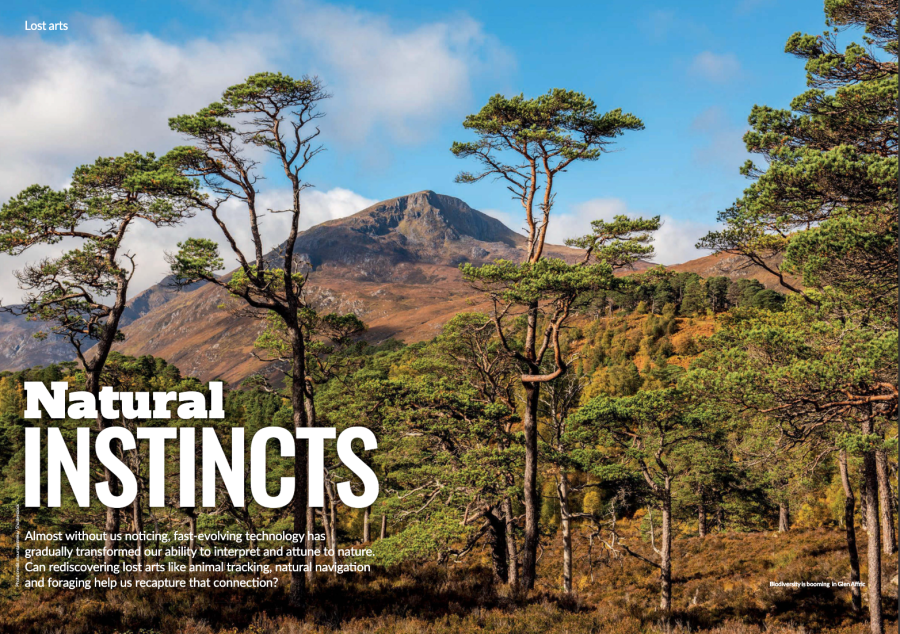
Natural instincts: Almost without us noticing, fast-evolving technology has been gradually weakening our ability to interpret and attune to nature. Perhaps rediscovering lost arts like animal tracking, natural navigation and foraging help us recapture that connection…
“What has the technological revolution ever done for us hillwalkers? Well, there’s lighter packs, more accurate forecasts, dryer feet, food that won’t give you scurvy…. an extremely long list of benefits, in fact, which combine to make the adventurous sphere safer and more accessible than ever before. But while we’ve been occupied with gram-counting, GPS battery life and the hydrostatic head rating of polyurethane coating, it’s been easy to ignore the quiet erosion of our relationship with nature. It’s not that we’re no longer able to appreciate nature. That’s a big part of what hillwalking is all about, isn’t it? Watching red kites circle on the thermals, breathing in the mineral tang of wet rock and the warmth of gorse, listening to the chuckle of a mountain stream as we pause to eat our lunchtime sarnie… But our ability to understand the language of nature, to appreciate the significance of a mark in the ground or a change in wind direction: all of that is dwindling into a niche (and often slightly ridiculed) pastime. We’re like bibliophiles who only look at the pictures in a book because we’ve forgotten how to read the words. And that’s sad, because understanding often brings with it a deeper form of enjoyment. Tapping into this natural language is much easier than learning how to read, because it comes – well – naturally…”
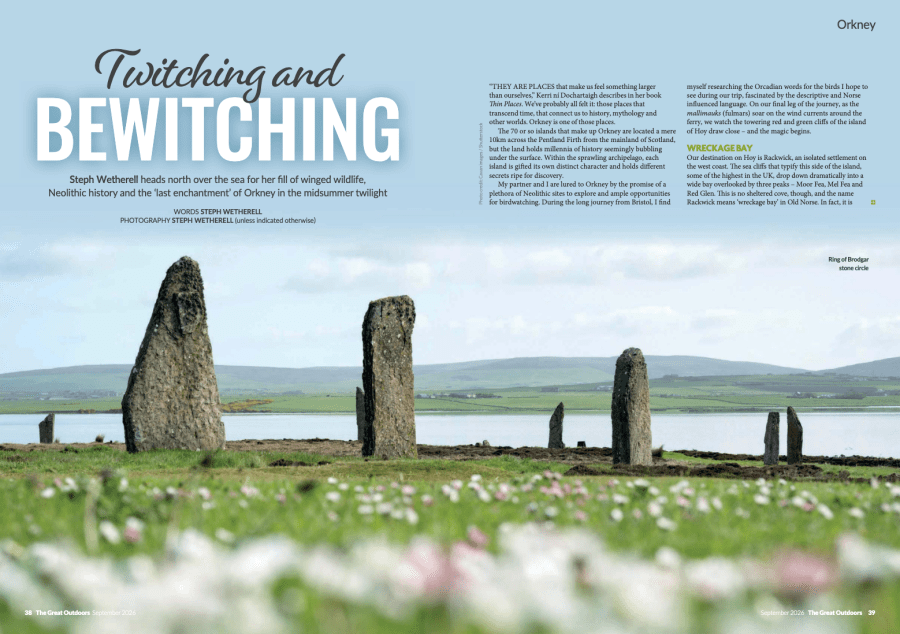
Twitching and Bewitching: Steph Wetherell heads north over the sea for her fill of winged wildlife, neolithic history and the ‘last enchantment’ of Orkney in the midsummer twilight.
“They are places that make us feel something larger than ourselves,” Kerri ní Dochartaigh describes in her book Thin Places. We’ve probably all felt it; those places that transcend time, that connect us to history, mythology and other worlds. Orkney is one of those places. The 70 or so islands that make up Orkney are located a mere 10km across the Pentland Firth from the mainland of Scotland, but the land holds millennia of history seemingly bubbling under the surface. Within the sprawling archipelago, each island is gifted its own distinct character and holds different secrets ripe for discovery...
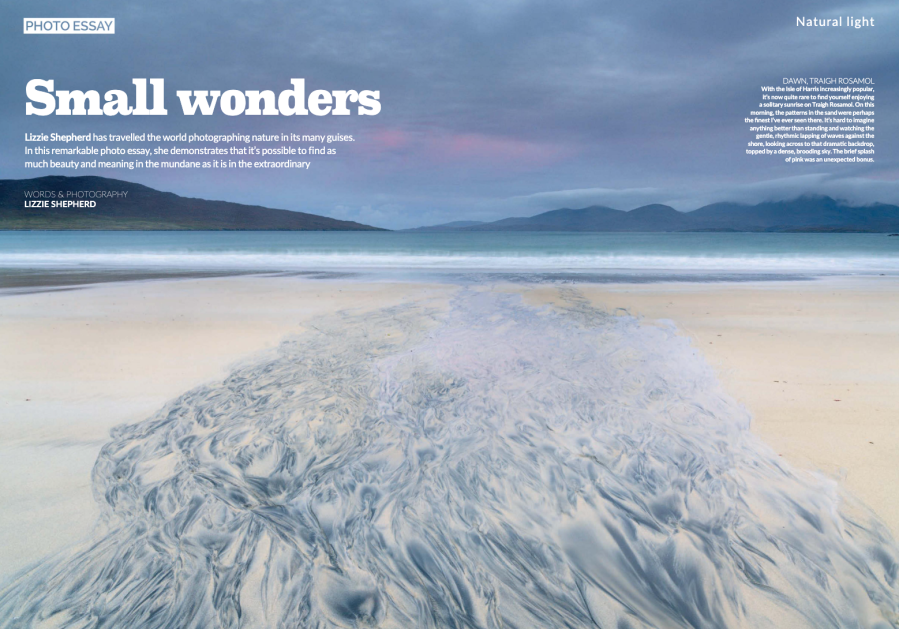
Small wonders: Lizzie Shepherd has travelled the world photographing nature in its many guises. In this remarkable photo essay, she demonstrates that it’s possible to find as much beauty and meaning in the mundane as it is in the extraordinary.
“The older (and possibly slightly wiser) I get, the more I’ve come to realise that you don’t have to travel far to encounter something in the natural world that stops you in your tracks. It’s perhaps easy for me to say, as I’ve been fortunate enough to visit many amazing spots over the years; but I think that travelling to other places also makes me appreciate my locality – and our country in general – that much more. Of course, these things are always relative. It would be disingenuous of me to suggest that I felt the same degree of excitement photographing a ditch filled with decaying leaves as I did a pack of coastal wolves in British Columbia! But both moments were borne from a love and appreciation of the natural world; and each was, in its own way, incredibly fulfilling.“
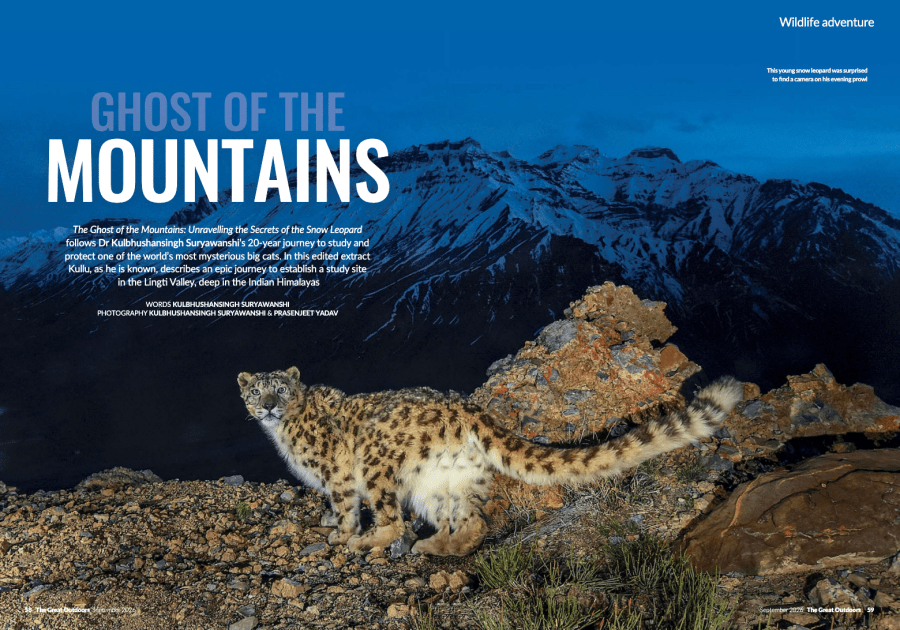
Ghost of the Mountains: The Ghost of the Mountains – Unravelling the Secrets of the Snow Leopard follows Dr Kulbhushansingh Suryawanshi’s (known as Kullu) twenty-year journey to study and protect one of the world’s most mysterious big cats. In this edited extract, the author describes an epic journey to establish a study site in the remote Lingti Valley, in the Indian Himalaya.
“Have you seen the snow leopard? No – isn’t that wonderful?” Peter Matthiessen’s famous words rang in my ears as a young student of wildlife biology. I dreamt of studying the snow leopard in the Himalaya, but I wasn’t sure I would ever get to see these near-mythical animals. I was extremely lucky, and saw my first snow leopards, a beautiful mother and her shy cub – Sunshine and Shadow – within months of starting my field work. Shadow became a constant presence in my life for a few years. But to develop a real ecological understanding of these amazing creatures, I knew I had to go to a place that few had been before. For my further research on the snow leopard, I wanted to know how the availability of wild herbivore prey species like the ibex and blue sheep affected snow leopard preying on livestock – an important conservation issue. To understand this, I needed to understand snow leopard densities and predation rates where there was a total absence of livestock. I needed a study site undisturbed by humans as a control for the experiment…
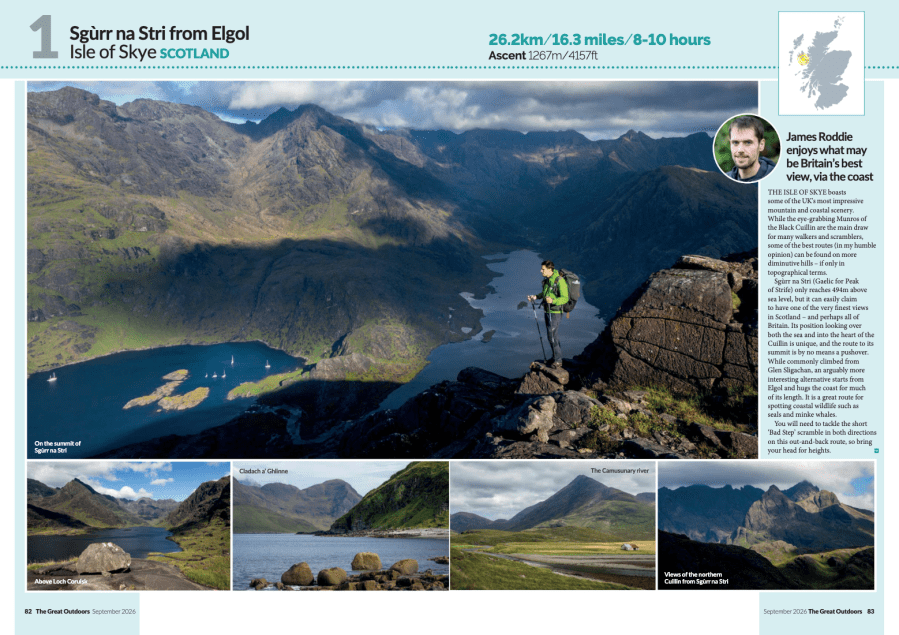
Wild Walks: Our pros map the best sea-to-summit routes in Britain, including one featuring what many dub the greatest mountain view on our isles
On our tiny maritime islands, we’re never that far from a view out to sea. But on the western coastline and islands, an appealing combination of hill and horizon awaits hillwalkers. Our cliffs and mountains offer unique, high-vantage perspectives on vast swathes of the big blue – and perhaps a gentle sea breeze to dry the sweat from your brow on those ascents which are not to be underestimated. Here, the pros share their favourite sea-to-summit routes – including one some even dub Britain’s best view.