
Have you ever unexpectedly run low on phone battery while in the mountains? Perhaps you’ve been out for longer than expected, tried a new app that has used up more battery than anticipated, or been over enthusiastic with how many photos you’ve taken. Selecting the best power bank for you can not only minimise technological faff on the hills, but can also be the difference between safety and an escalating emergency situation.
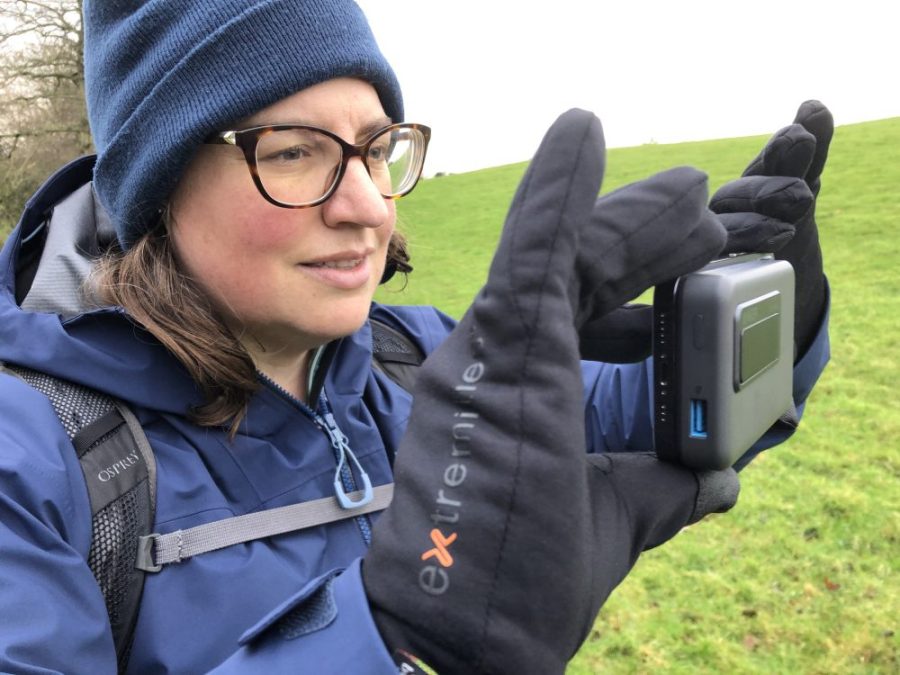
Main image: Steph testing the Anker power bank | Credit: Steph Wetherell
The reality is that we are increasingly reliant on tech in the outdoors, with our phones often being used for photography, navigation and safety as we venture into the mountains. Added to this, people are frequently carrying other kit that needs power – for cameras, lighting or entertainment – with them on adventures. This means that carrying a backup source of power has become a priority for many of us.
A power bank is basically a portable battery to allow you to easily charge devices on the move. For me, I like to carry a small power bank on most of my walks as while I often use paper maps while walking, I use my phone to navigate to and from the start of a walk. In addition, as someone who regularly walks alone, it is my primary route for calling for help if I get into trouble.
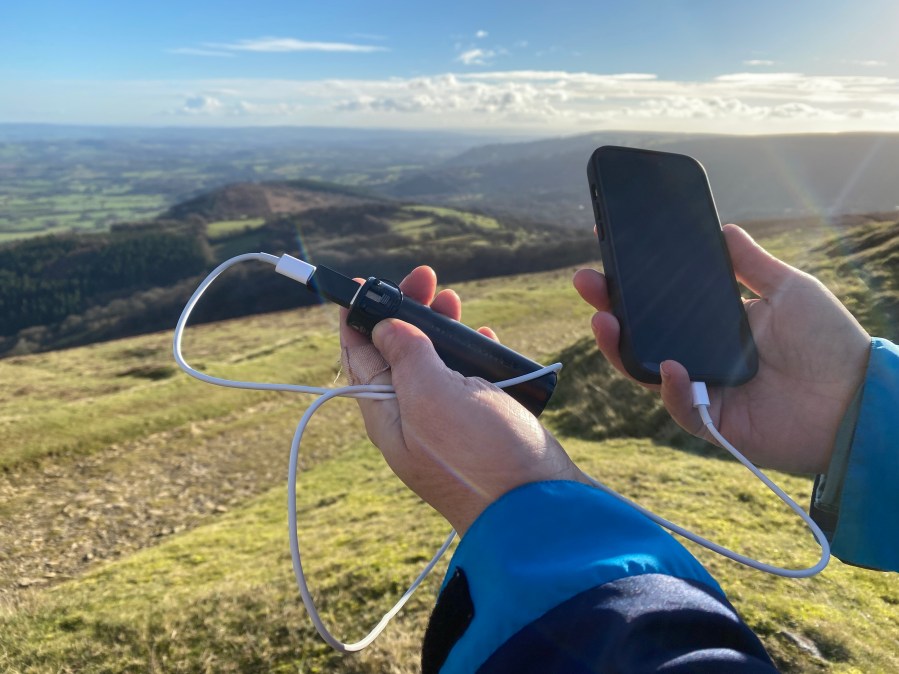
However, as a lover of long distance walking, I am also a fan of a larger capacity power bank that can keep me in touch with the world for days at a time if I’m out in the wilderness. If you carry equipment like cameras or drones with you, it can also be useful to be able to charge these devices on the move to avoid having to carry too many spare batteries.
Whether you’re looking for an emergency piece of kit or a planned recharge, there’s a range of different models and capacities available. However, considering what you want it for and the features you need will help identify the right option for you.
Why you can trust The Great Outdoors
The Great Outdoors is Britain’s original mountain magazine. We have been helping people to explore from sea to summit, valley to mountain top for more than 40 years. We’re here to help you make the most of your time outside. With over 200 years’ experience between them, our gear testing team is the most experienced in Britain, including mountain leaders and instructors, wildlife photographers and rangers, scramblers, hikers, bikers, boaters and runners. Our gear reviews are renowned for their rigour, trustworthiness and independence. Find our more about how we test.
The best power banks we’ve tested
| Quick List |
|---|
| Best overall: Nitecore NPB1 (available from Nitecore) |
| Best value: Charmast C2065 (available from Amazon) |
| Fast power for multiple devices: Biolite Charge 100 Max (available from BioLite) |
| Lightest in test: Nebo 20K (available from Nebo) and Nitecore NPB1 (available from Nitecore) |
| Wireless charging: Anker 633 Magnetic Battery (available from Anker) |
| IP65 water resistant rating: Alpkit Juice Holder (available from Amazon) |
Best overall
Nitecore NPB1
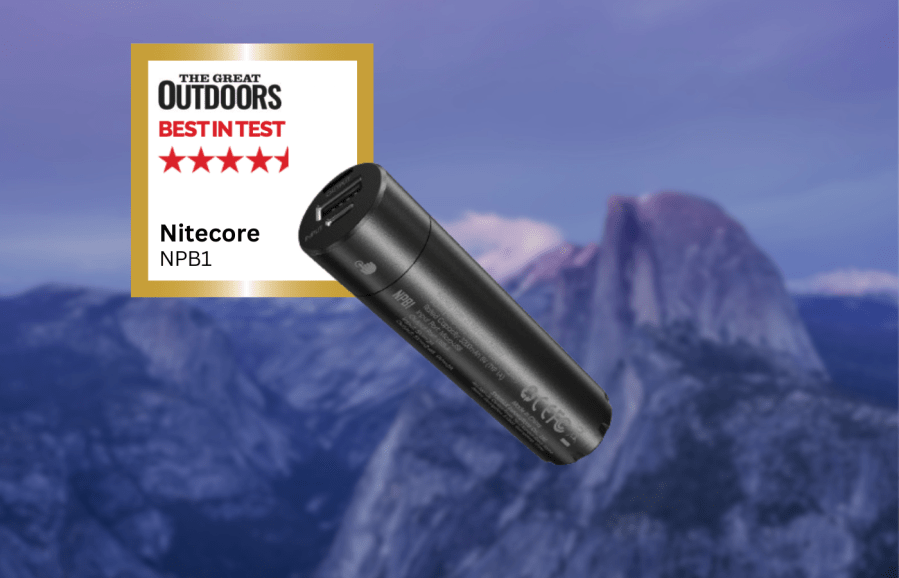
Steph Wetherell’s Best in Test
This is small and light enough to not notice the extra weight, but make sure you carry the right cables.- waterproof
- small
- light
- no USB-C port
| Quick specs |
|---|
| Price: $34.95 | £39.95 (available from Nitecore) |
| Weight: 110g |
| Dimensions: 26.9 x 102.4mm |
| Features: Output: 1 x USB-A, Input: Micro-USB |
| Sizes: 5,000mAh (20,000mAh option also available) |
| www.nitecore.co.uk |
The Nitecore NPB1 is a lightweight and portable power bank, its shape and size making it small enough to carry in a coat or rucksack pocket for easy access. It is also waterproof (to an impressive 30 minutes of up to 2m submersion), meaning you don’t have to worry about having it out in the rain or keeping it in a dry bag. The 5,000mAh capacity was enough to fully charge my phone once.
The main downside is that it doesn’t have a USB-C port (only a USB-A and microUSB) and the maximum output power is 18W. This means it wasn’t particularly quick to charge my phone and feels like it might suffer with cable compatibility issues in the long term as there is a growing shift to USB-C cables. This is a power bank that is perfect to carry on day or overnight walks as it’s small and light enough to not notice the extra weight, but make sure you carry the right cables.
Read more: Steph Wetherell’s full Nitecore NPB1 review
Best value
Charmast C2065
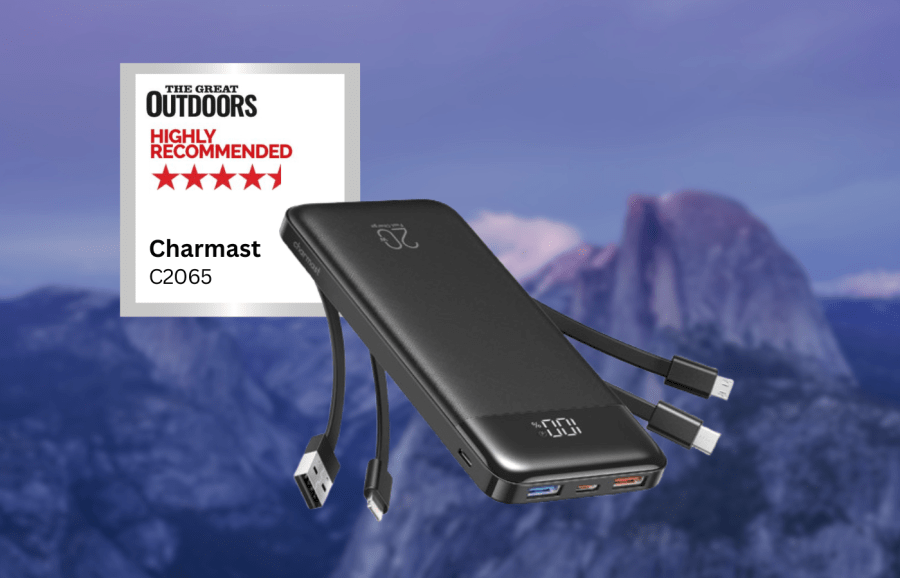
Steph Wetherell highly recommends
This versatile power bank is a great and affordable option for people who want a decent capacity option, the convenience of inbuilt cables and the flexibility of being able to charge multiple devices.- built in cables
- ability to charge 6 devices simultaneously
- affordable
- not weatherproof
| Quick specs |
|---|
| Price: $30.99 | £32.99 (available from Amazon) |
| Weight: 327g |
| Dimensions: 160 x 72 x 19mm |
| Features: Input cables: USB-A, USB-C Input ports: Micro-USB, USB-C Output cables: USB-C, Micro-USB, Lightning (for iPhone) Output ports: 2 x USB-A |
| Sizes: 20,000mAh |
| www.charmast.com |
The Charmast C2065 boasts a 20,000mAh capacity, and with an average modern phone requiring around 5,000mAh of charge, this should give you at least four charges. I actually found I got close to five charges out of it, which depending on how battery hungry you are in your phone/electronics use, might last you a few days or a week. The real winner with this power bank is the inbuilt cables. No more having to remember which cables you need for which device, this one comes armed with a USB-C, micro-USB and lightning cable attached (plus a USB-A for recharging itself). In addition it has a further four ports (2 x USB-A output, 1 x USB-C input and 1 x microUSB input) so you can bring a few additional cables along with you if you need them.
There are several fast charging options, with both the USB-C and Lightening cables supporting 20W charging and one of the USB-A ports up to 22.5W, meaning my phone was fully charged in around an hour and a half. You can also charge multiple devices simultaneously (up to 5). The pack itself is a similar size to other similar capacity power banks, but comes in a little lighter than most 20,000mAh models. Its slim shape also makes it useful for slipping a pocket or tucking inside a bag, and the slightly textured surface makes it a bit grippy and less likely to slip out of your hand. The price point is excellent for a power bank of this capacity, coming in cheaper than banks of half the capacity.
Read more: Steph Wetherell’s full Charamrest C2065 review
Lightest in test
Nebo 20K
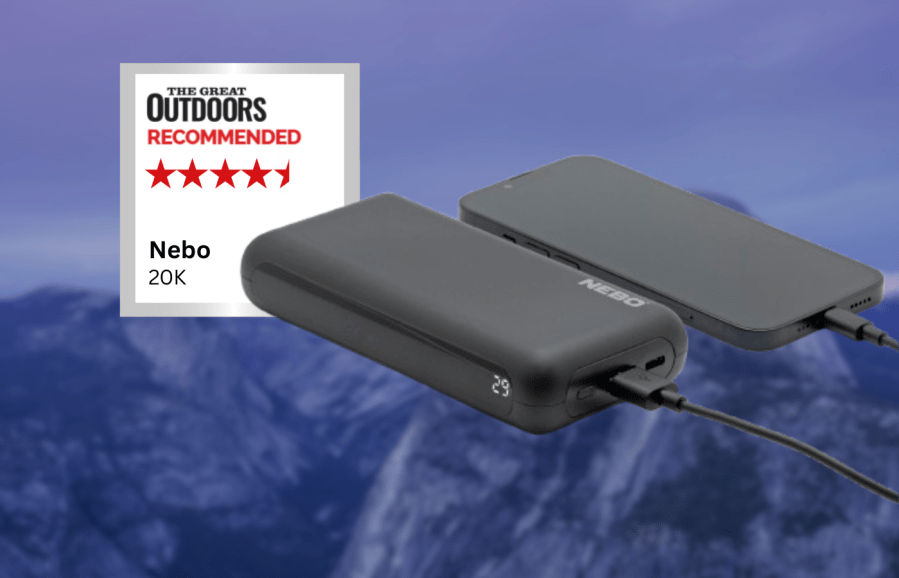
Steph Wetherell recommends
It doesn’t have all the features of a high end power bank, but is perfect for keeping your devices charged for days- large capacity
- limited output ports
| Quick specs |
|---|
| Price: £49.99 (available from Nebo) |
| Weight: 110g |
| Dimensions: 145 x 71 x 25mm |
| Features: Output: 1 x USB-C PD (also input), 1 x USB-A ports |
| Sizes: 20,000 mAh (5,000mAh and 10,000mAh options available) |
| nebotools.co.uk |
The Nebo 20K is an affordable, high capacity power bank that is ideal for a multi-day walking or camping trip. It took a long time to charge up via the USB-C port – not surprising given its 20,000 mAh capacity – but when at capacity, it fully charged my phone around 5 times. It has a digital display giving you an accurate percentage of its charge, which is useful both when charging it up, and also knowing exactly how much power is left, which is really useful if you’re trying to ration your power usage on a long trip. The display for this is surprisingly bright.
This is a really affordable option with a high capacity. It doesn’t have all the features of a high end power bank, but is perfect for keeping your phone and watch and other devices charged for days at a time.
Read more: Steph Wetherell’s full Nebo 20K review
Best for multiple devices
Biolite Charge 100 Max
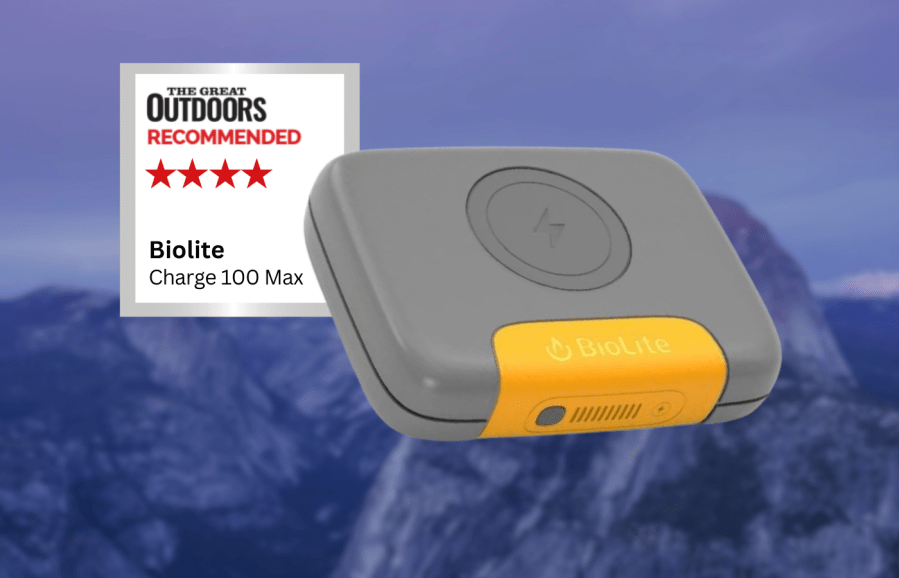
Steph Wetherell recommends
This is a significant investment, but is ideal for those looking for fast power for multiple devices- great for charging multiple devices
- price
| Quick specs |
|---|
| Price: $179.95 | £179.99 (available from BioLite) |
| Weight: 587g |
| Dimensions: 140 x 112 x 35mm |
| Features: 2 x USB-C PD (also input), 1 x USB-C, 1x USB-A ports, Wireless Pad |
| Sizes: 25,000mAh. (6,000mAh, 10,000mAh and 20,000mAh options also available) |
| www.bioliteenergy.com |
The Biolite Charge 100 Max is a large, multi-port power bank that is perfect for those looking to charge multiple devices quickly. The standout aspect of this bank is the five charging ports. Two of these are USB-C PD ports, meaning they can charge compatible devices (such as a laptop) at up to 100W. There is a further regular USB-C, a USB-A and a wireless pad that charges at up to 15W (which is faster than some pads).
The high capacity does come at a cost though, and it’s fairly heavy, coming in at almost 600g. It is robust in design and feels like it would hold up to heavy use, but isn’t waterproof so would need to be protected inside a dry bag. It is however rated to -20C, making it an excellent choice for winter use. At the price point it is a significant investment, so perhaps not for the average user, but is ideal for those looking for fast power for multiple devices.
Read more: Steph Wetherell’s full Biolite Charge 100 Max review
IP65 water resistant rating
Alpkit Juice Holder
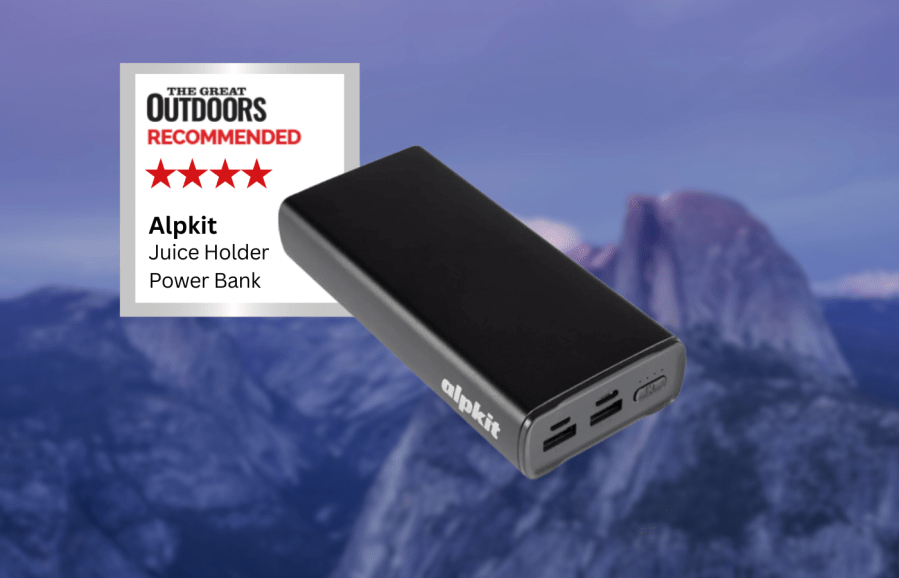
Peter Macfarlane recommends
A lighter model may suit you but the Juice Holder’s performance and reliability has been a source of confidence- long battery life
- simple operation
- heavy
| Quick specs |
|---|
| Price: £29.99 (available from Amazon) |
| Weight: 438g |
| Materials: aluminium case |
| Features: IP65 water resistant rating, various plug in ports, LED indicator lights |
| Sizes: smaller capacity and lighter sizes are available |
| alpkit.com |
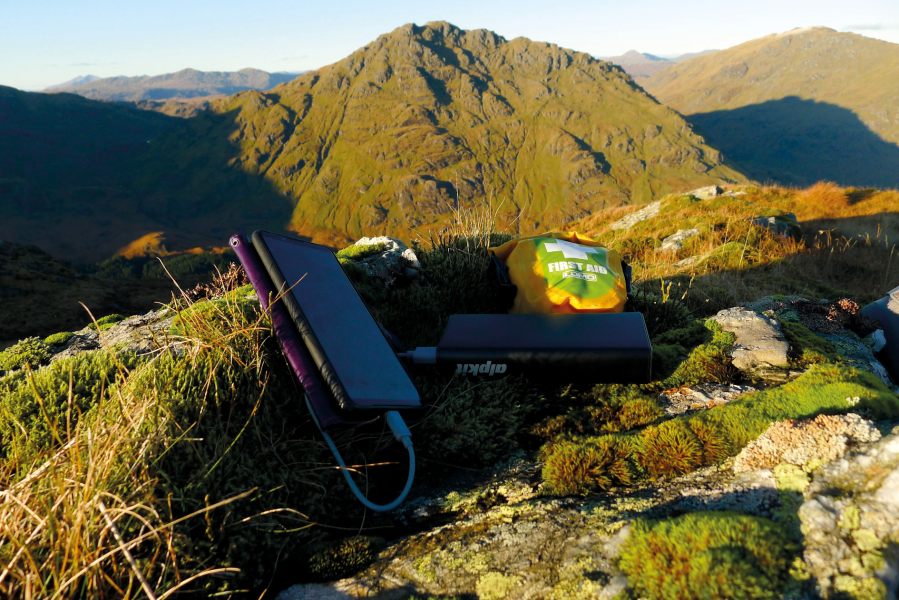
This shift in approach to powering adventures with devices makes power a high safety priority for me and I’ve been carrying the Alpkit Juice Holder, a large capacity power bank with 20,000mAh of stored power across its two internal batteries. Despite the additional weight I’d be carrying I chose the larger Alpkit Juice Holder size to cover all the potential needs I’d face over a number of days in the hills or with a group. With it, I’ve found myself charging two things simultaneously many times.
A lighter model might have been better but the Juice Holders performance and reliability has been a source of confidence.
Read more: Peter Macfarlane’s full Alpkit Juice Holder Power Bank review
Wireless charging
Anker 633 Magnetic Battery
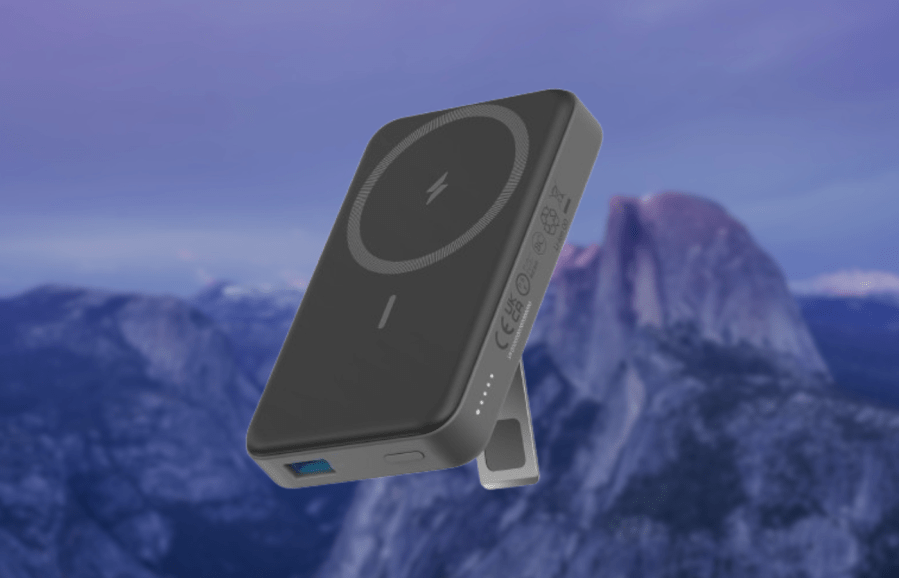
Steph Wetherell’s verdict
This is a portable power bank with useful functionality that comes at a high price and some features not for everyone- multiple charging of devices
- magnetic wireless charging
- need compatible phone/case for wireless charging
| Quick specs |
|---|
| Price: £69.99 (available from Anker) |
| Weight: 216g |
| Dimensions: 107 x 66.5 x 18.15mm |
| Features: 1 x USB-C PD (also input), 1 x USB-A port, Wireless Pad |
| Sizes: 10,000mAh. (5,000mAh option also available) |
| www.anker.com |
Many newer phones are equipped with the ability to charge wirelessly, and the Anker 633 Magnetic Battery power bank harnesses this ability and adds in portability with a magnetic attachment. This means you can have it stuck to the back of your phone while charging (provided you have a compatible case), and still use your phone for navigation and photography without being restricted by cables – not to mention the convenience of not needing to carry a cable with you in order to be able to charge your phone.
The need to have a compatible phone and case means the wireless functionality might not be for everyone. It is still a good and portable power bank with useful functionality even without this, but at this price point might not be the first choice.
Read more: Steph Wetherell’s full Anker 633 Magnetic Battery review
Features to look for in the best power banks
Power capacity
Power bank capacity is measured in milliampere-hours (mAh), and gives you an idea of how much charge the battery holds. This is an important factor to consider when buying a power bank as will vary depending on if you’re looking for something as an emergency backup, or to provide you with reliable power for days at a time. For reference, many modern phones require a power bank of around 5,000mAh to fully charge them once.
Weight
You can expect the weight of a power bank to increase as the power capacity increases, as the primary weight of the device is the batteries it contains. Therefore this is a key factor to consider, especially if you’re looking to reduce or limit the weight you’re carrying on a trip.
Ports
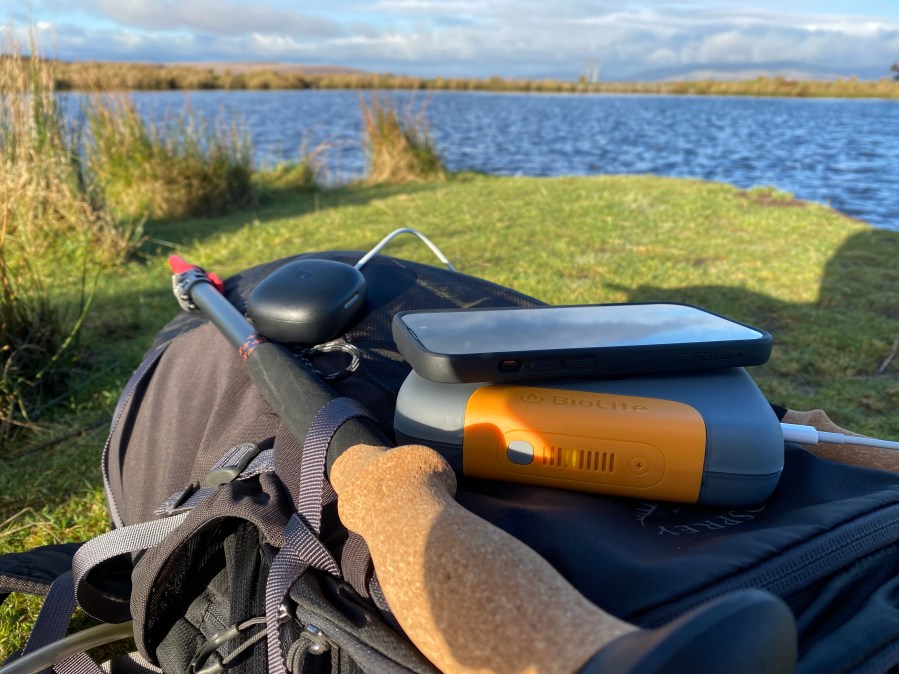
A key factor in picking a power bank is deciding which charging ports you want, and how many devices you want to be able to simultaneously charge. While all banks will have a more traditional USB-A output port, many devices are now coming with a USB-C port that allows faster charging, so it can be worth looking for a power bank with this output if speedy charging is important. Many banks now also use the USB-C port as the input point for charging the bank. Another key question is how many devices you want to charge at the same time, with some power banks equipped with multiple output ports and wireless pads. Do check the maximum total output power though, as charging more devices simultaneously may reduce the power to each.
Durability
The outdoors environment is not always friendly to electronic devices, but how durable the power bank needs to be will depend on how your transport it. A waterproof device can be useful if you want access to it on the move, but if you’re charging in your camp and it’ll be packed in a drybag deep in your bag, this may be less of a priority.
How we test
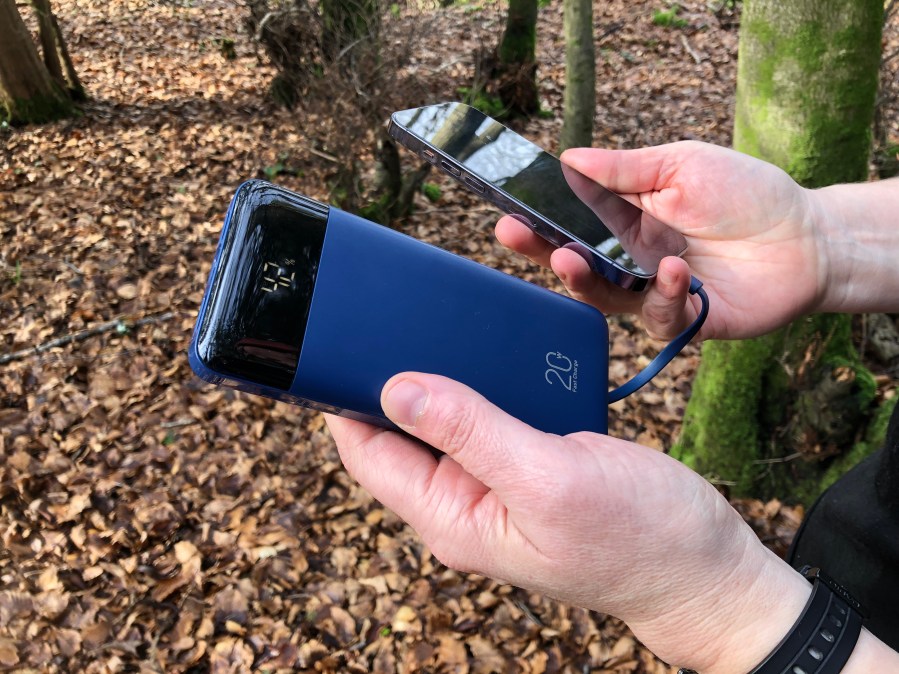
Steph tested these power banks out and about on the hills and mountains in the Brecon Beacons and the Peak District. Steph used them with her iPhone 14 Pro, which is a few years old, and a USB-C cable where possible. This comparative review was first published in the April 2024 issue of The Great Outdoors.
Peter carried and used items from his review of emergency kit, first published in the December 2024 issue of The Great Outdoors, on all of his hill trips throughout 2023 from one winter into the next. This ranged from Munro days to low level trails and he also used the gear multiple times on ranger duties in the Kilpatrick Hills. All weights are from the reviewer’s digital scales.