

This Long ReView of the Patagonia R1 fleece is supported by our friends at Nikwax.
From about the age of thirteen, my Christmas and birthday presents from my parents generally consisted of various bits of outdoor clothing, usually matching with my younger sister! One of these items was a Patagonia R1 fleece, which almost twenty years on, is still a key piece of my winter layering system, and feels as good as new.
Main image: The P1 still going strong after almost 20 years | Credit: Rosie Florence
There’s a reason a couple of top climbers wrote a very catchy song about the R1 and how many big objectives have been climbed in these fleeces! The microgrid fabric was a real step up from the classic fleece, both in terms of warmth and weight. Getting out winter climbing I noticed the difference immediately, I felt much more comfortable hanging around on belays, but not too hot when back on the move. It’s been an excellent layer for long winter hill days, where you don’t have time to faff with changing layers. I often layer it over a merino baselayer, or a Patagonia Capilene, which gives me a really solid system for winter, and then top off with a waterproof when needed.
The other big difference from microfleece is that the fabric construction gives an element of windproofness, due to the tighter knit on the outer layer. It means that even on a breezy day, I’m happy to wear this as my outer layer, where a regular microfleece would let the wind through and feel much cooler. I think this also helps with the longevity of the fleece, as I haven’t had much piling or fluffing on my fleece.
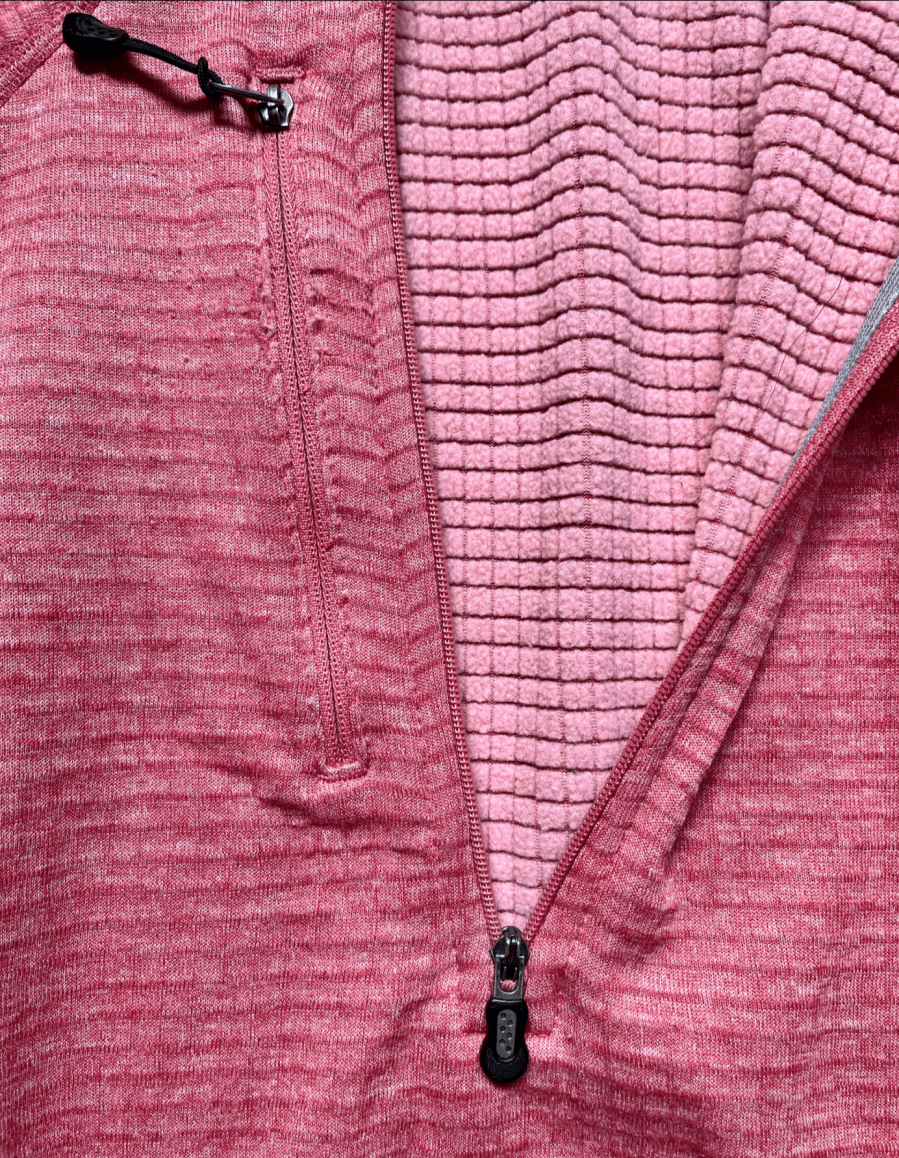
I have the pullover version, which comes with a half zip, making it ideal for venting on the uphills or when you’re putting on a waterproof layer on top. The R1 also comes as a jacket, gillet or with a hood. I really like that the collar zips up relatively tight, as I’m quite sensitive to a drafty neck, and there’s also a little fabric cover to stop your chin getting rubbed by the top of the zip. Similarly, the cuffs are neat and work well to keep you warm but are slimline enough for getting gloves and other jackets over.
After the success of the R1 fabrics, there’s now a range of R1 Air fleeces, which I also use through winter. These are a step up again in the warmth to weight ratio, and are holding up really well too. But they haven’t stopped my original R1 fleece being in regular winter wardrobe rotation.
Caring for the Patagonia R1 fleece
I’m very protective of all of my outdoor clothing, and it’s always washed separately to the rest of my clothes. I will often do a quick handwash of anywhere that gets a bit more use, like the cuffs and collars, before going into a gentle washing machine cycle with a low spin speed. While this isn’t a baselayer, I like using Nikwax Basewash (£4.49) to clean the R1, with a deodorising soap that I know is made for looking after our gear well.
An air dry to finish means that it’s ready to go, and I really see very little wear in a garment that is almost twenty years old! Nikwax also recommend Polarproof (£15.99) to add water resistance to fleeces like the R1.