
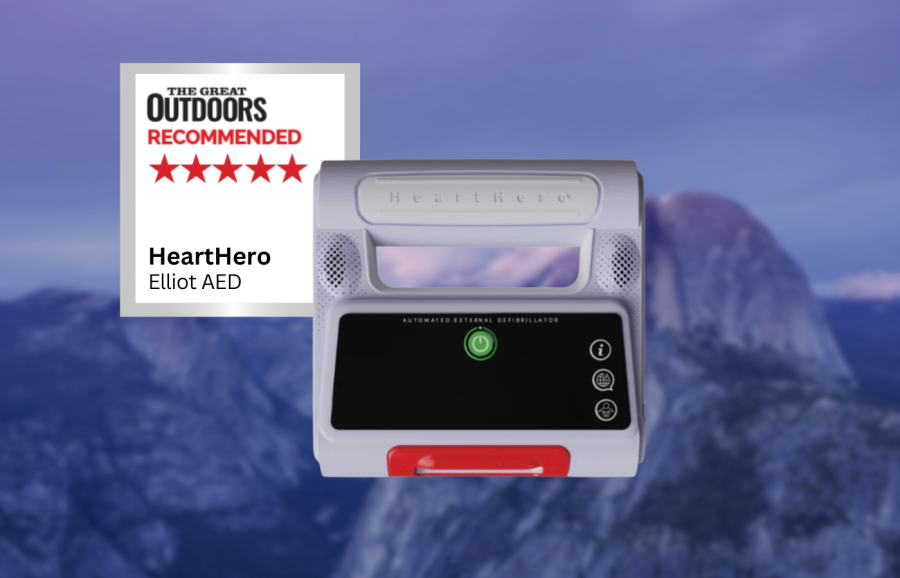
Mountain Rescue member Kirsty Pallas reckons saving lives has never been so portable thanks to the HeartHero Elliot AED.
This isn’t your standard bit of hillgoing emergency kit that you’d expect to see within these pages and it hasn’t had the usual full testing – thankfully, I’ve not had to administer a lifesaving shock to anyone on the mountain! – but it’s not as unusual an item as it might first appear. Statistics from British Heart Foundation show that the survival rate for cardiac arrests outside of a hospital is 1 in 10, and Scottish Mountain Rescue callout statistics show that in 2025, 9% of callouts were to medical emergencies, so thinking that an AED might be useful on the hill isn’t such a strange idea. The HeartHero Elliot AED is the new unit on the block and I think really ups the game in what a portable AED can be.
Kirsty Pallas recommends
Coming in at well under a kilo and with a compact size, it’s not unrealistic to include this in your day-to-day kit. It’s also durable for outdoor use.- lightweight
- durable
- easy to learn to use
- protective case is additional
| Quick specs |
|---|
| Price: £598 |
| Weight: 679g |
| Features: Voice instructions, clear visual indicators, bluetooth linked app, pads are preconnected |
| www.hearthero.com |
Coming in at well under a kilo and with a compact size, it’s not unrealistic to include this in your day-to-day kit. It’s also fairly durable for outdoor use, with a water and dust resistant exterior and a wide ‘in operation’ temperature range. Power is practical, not proprietorial. It works on four Duracell Lithium 123 batteries which can deliver up to 20 shocks or power forty minutes of continuous use and have a shelf life of 10 years. They’re easy to buy, and not an unusual size or shape, which we often see with other outdoor tech.
On delivery, Elliot comes in a cardboard cover, which once opened is full of the information you need for both using the device and looking after someone in cardiac arrest. There’s a key to all of the lights and symbols which might show on the screen of the device, plus how to ready the casualty, in a nice visual format, comic book style. They also don’t shy away from explaining how to treat women, which is extremely important after a survey showed one in three in Britain would be afraid to give CPR to a woman.
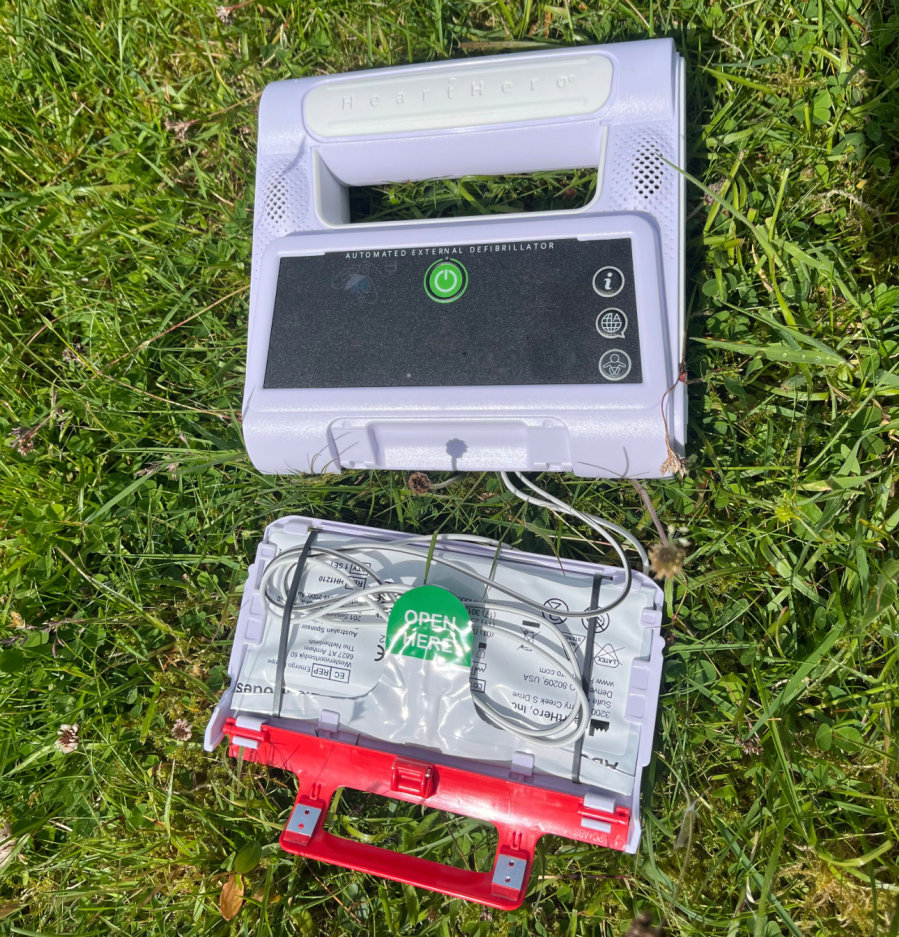
The device stays on at all times, but in a kind of sleep mode, and just needs the push of a button, or to pull a handle to open the cartridge pouch and it’s awake. There’s very loud and clear voice instructions on starting to explain what to do and what the symbols mean. With one push of a button you can put the device in child mode, which will deliver a smaller shock, or change the language to a different preset. The electrode pads stay connected, so you don’t waste any time putting things together, and it’s easy enough to get a new set and change them after use.
Along with the device, there’s a phone app which will connect to the device via Bluetooth and show battery health and more. The app also has a range of training videos so you can be as skilled and prepared as possible. I’ve been really impressed with what HeartHero has packed into this device, and while I haven’t tested it out in anger, it’s nice knowing that I have something which could save someone’s life. As a member of a mountain rescue team, I know that we are unlikely to make it to a medical emergency within a couple of hours. As survival rates for cardiac arrests drop by 10% for every minute that passes, even an ambulance is often too late, so having an AED nearby really is a lifesaving piece of kit.
How we tested
Kirsty is a member of Oban Mountain Rescue. She did not test the Elliot ‘in anger’ but considered performance and features with her mountain rescue experience in mind. For more first aid kits, take a look at our advice and guide to the best emergency kit for hikers.