
On a bright day in the April of 2020, Marisa Wray took a brisk walk down to her local river. It was the beginning of the Covid-19 pandemic; that still, sunny spring when lockdown pressed paused on millions of lives and even the weather seemed to be holding its breath. But Marisa had an extra reason to be anxious. She’d been diagnosed with breast cancer back in February, just before NHS England moved to suspend all ‘non-urgent’ elective operations. As she stood and looked out over the river on that April morning, she knew that she still faced a wait of at least three months for a mastectomy.
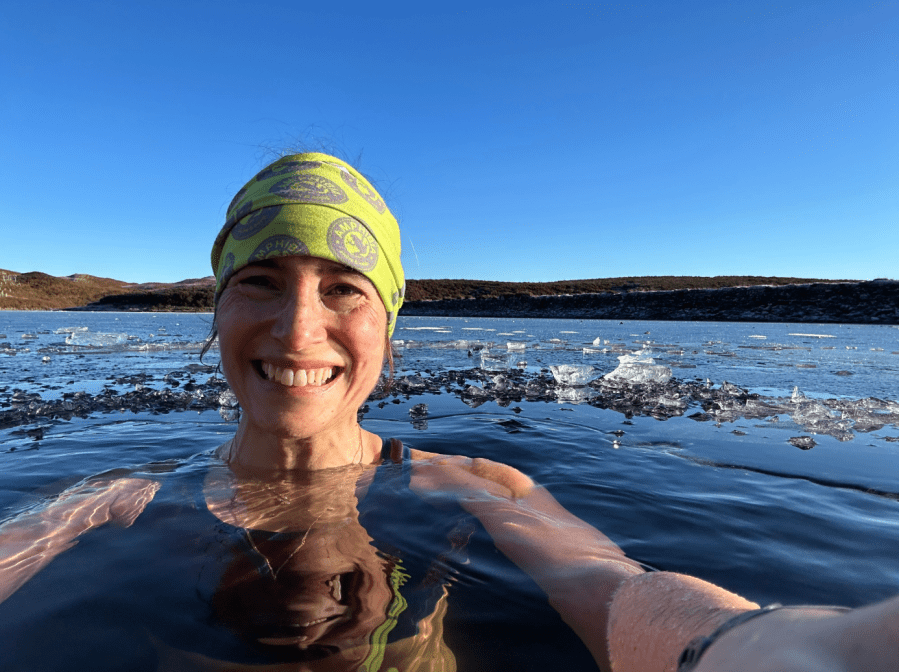
“I’d been walking briskly,” she remembers, “and I was already in a sweat by the time I got to the river. The sun was glinting on the surface of the water. There was this limestone slab sloping down into it. I took one looked at it and thought ‘aaaah’ – and then I took all my clothes off and jumped in!”
Despite the sunny day, she thinks the water was around 10 degrees centigrade. “But it didn’t really matter, because I was so warm. I absolutely loved that feeling of tiny little needles of cold piercing my skin, and having that contrast between how hot my body was and how cold the water was. It just gave me the most massive endorphin rush. And after that, I couldn’t stop myself.”
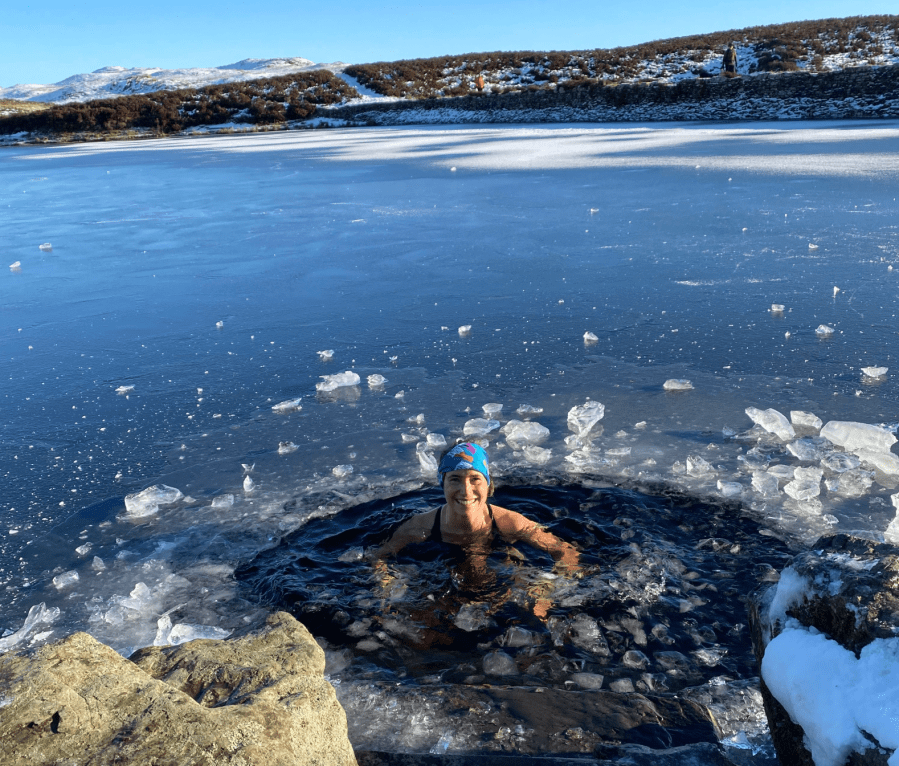
Cold water became Marisa’s psychological saviour during those months of waiting. Her lockdown-allocated hour of exercise was just long enough to jog down to the river and swim for 20 minutes before running quickly back home. She found a place where she could swim up-current to a waterfall and then drift gently downstream again. Relaxing in the swirling eddies of her own ‘personal jacuzzi’, she felt temporarily at peace. “That not knowing, not knowing, not knowing – it’s like torture,” she says. “I was overwhelmed with anxiety; living in this constant nightmare. But wild swimming helped me cope.”
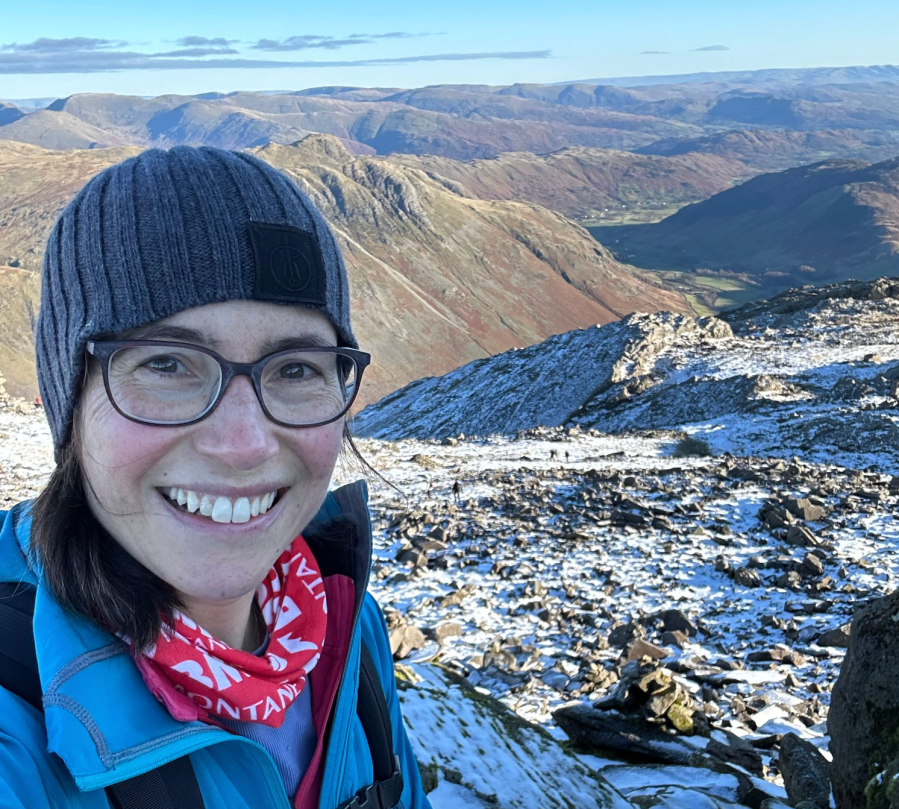
Wild swimming wasn’t Marisa’s first outdoors hobby – she’s a long-time hillwalker and climber who moved to the Lake District in 2010 for more mountain time – but it quickly became the focus of her outings. Within a few weeks of having a mastectomy in July 2020, she was swimming again.
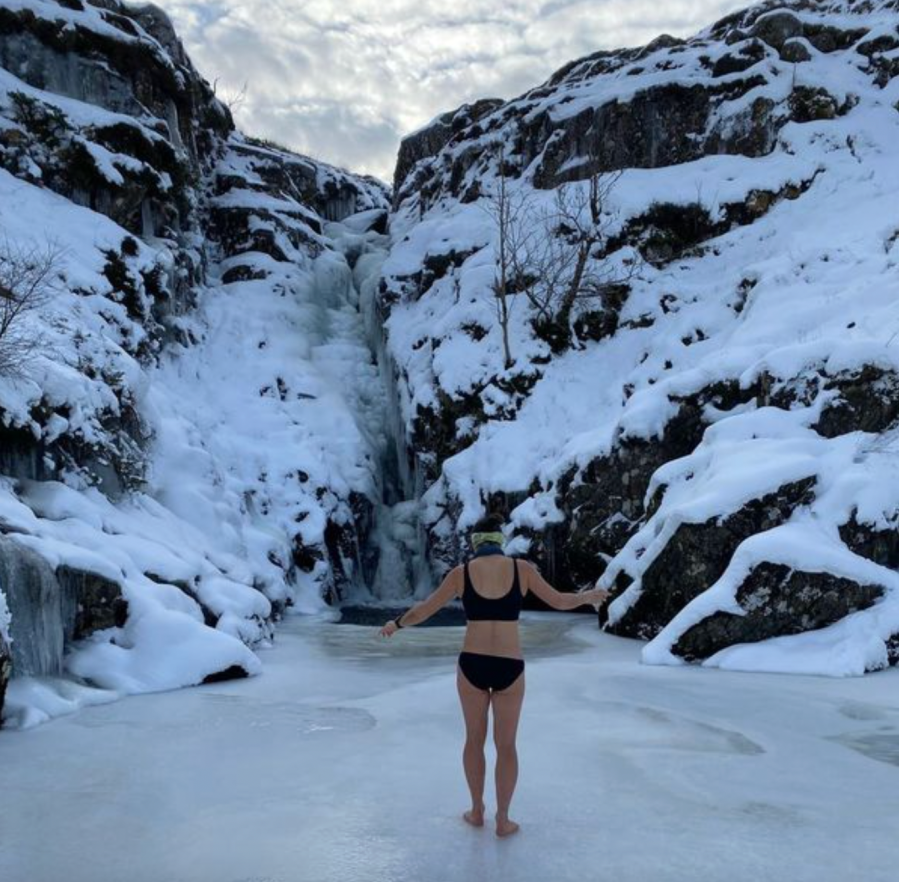
“I’ve got a couple of photos of myself with my clothes on, standing up to my knees in a tarn because my wound wasn’t sufficiently healed and I was so desperate to go for a swim,” she says. “Being the person I am, I hadn’t been able to totally rest. I started going for little hikes about a week after surgery and the wound began pulling apart. It took a bit longer to heal than I was hoping it would, which delayed my return to the water. But about six weeks after my surgery, everything had opened up again after lockdown, and we went on a road trip to Northumberland. We walked across to Holy Island where there was a nice beach, and I went for my first swim in the sea. It was superb. I was so over the moon to get my body back, and from then on I kept swimming weekly.”
It was a natural progression from summer swimming in rivers and the sea to winter swimming in tarns. In December of that year, Marisa broke her first ice with a freezing dip in Angle Tarn below Bowfell. Now, she says, her winter adventures in the hills almost always involve a wild swim – and the secret to entering freezing water happily is to get warm first.
“I can’t just rock up at a swimming venue and go in; I have to put my body through some sort of extreme form of exercise first to make sure my muscles are creating a furnace before going into the water, otherwise I just freeze! And that increases the feeling of wellbeing for me, because of the contrast between my body being really hot and the water being really cold. I particularly love swimming in the snow – that’s the best!”
Marisa has a faff-free approach to winter swimming. She runs to a tarn – often her nearest and favourite spot just outside Kendal – takes off everything other than her underwear, and hops in. Afterwards, she says, it’s easier just to throw her running gear back on over wet togs and head quickly back down the hill. No dry robes, no special gear and no company (“one of my worst nightmares would be swimming as a group”) – although she is careful about conducting a risk assessment at each location and letting her husband know her plans.
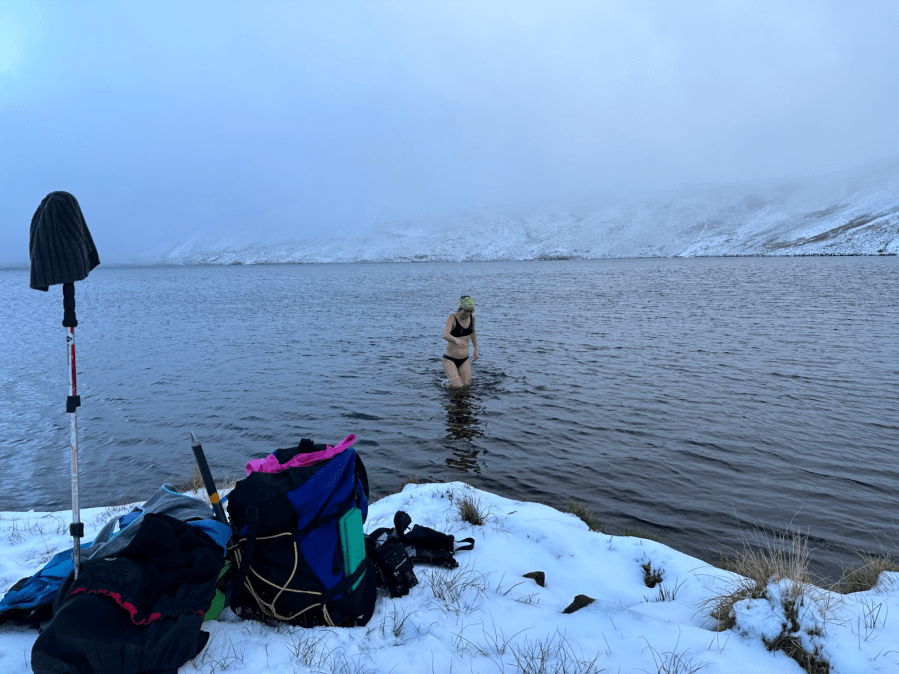
Along with hillwalking and running, cold water swimming has been invaluable in rebuilding her physical and mental health post-cancer. “It’s just so good for you. It brings your cortisol levels down and it’s great for regulating your heart rate and breathing. Nowadays I can immerse myself in cold water and still control my breathing, which is very healthy.”
Marisa remains wryly aware that, had it not been for cancer and for Covid, she might easily have missed out on an activity that she now sees as one of the great joys in life. And those anxious months have left another positive legacy as well. “Having cancer has given me a deeper appreciation of my body, and how my body feels in the great outdoors,” she says. “It’s heightened my experience.”
Marisa’s book Cancer, Covid and Me (£8.99) is available on Amazon. She donates 50% of all royalties to charity.